-
Call Now
1800-102-2727


Defining Features of Living Beings: Cellular Organisation, Metabolism, Consciousness, Homeostasis, Repair and Regeneration, Adaptation, Evolution and Death

Of all the planets present in the universe, what makes Earth different from all other planets?
Look around and contemplate the answer. It's right there!
The existence of life makes the Earth a unique planet.
From there emerges the question - ‘What is life?’.
Life can be defined as a unique and complex interaction of different molecules that results in growth, reproduction, development, responsiveness and adaptation.
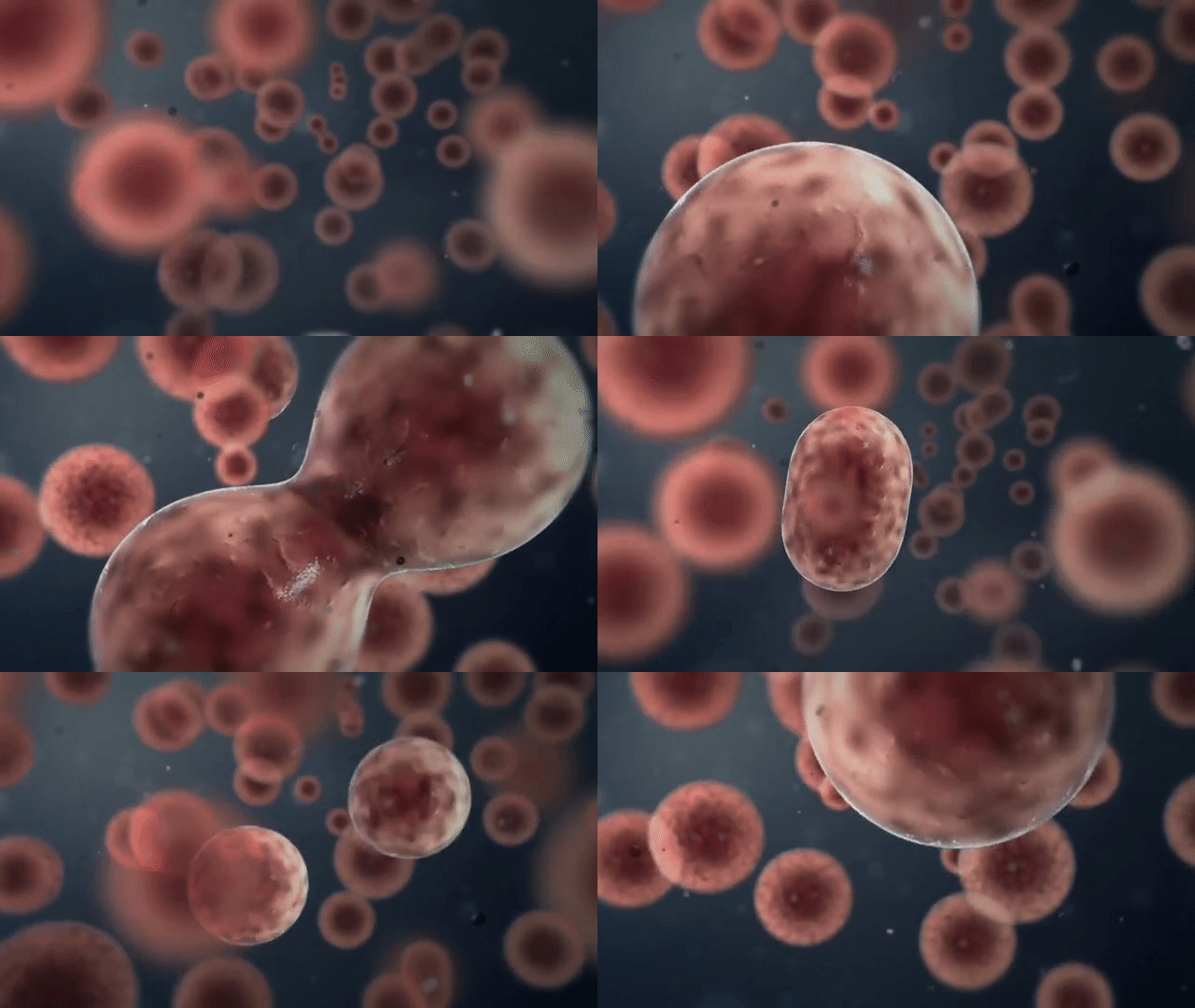
Out of all the characteristics of a living being, there are certain features which make a living being different from a non-living thing. These are considered as the defining characteristics of living beings. Let’s understand more about defining characteristics of living beings.
Table of Contents
Cellular Organisation
The smaller units and subunits that aggregate in a systematic matter to form an organism is referred to as the organisation. Living organisms are basically aggregates of small units, also called cells.
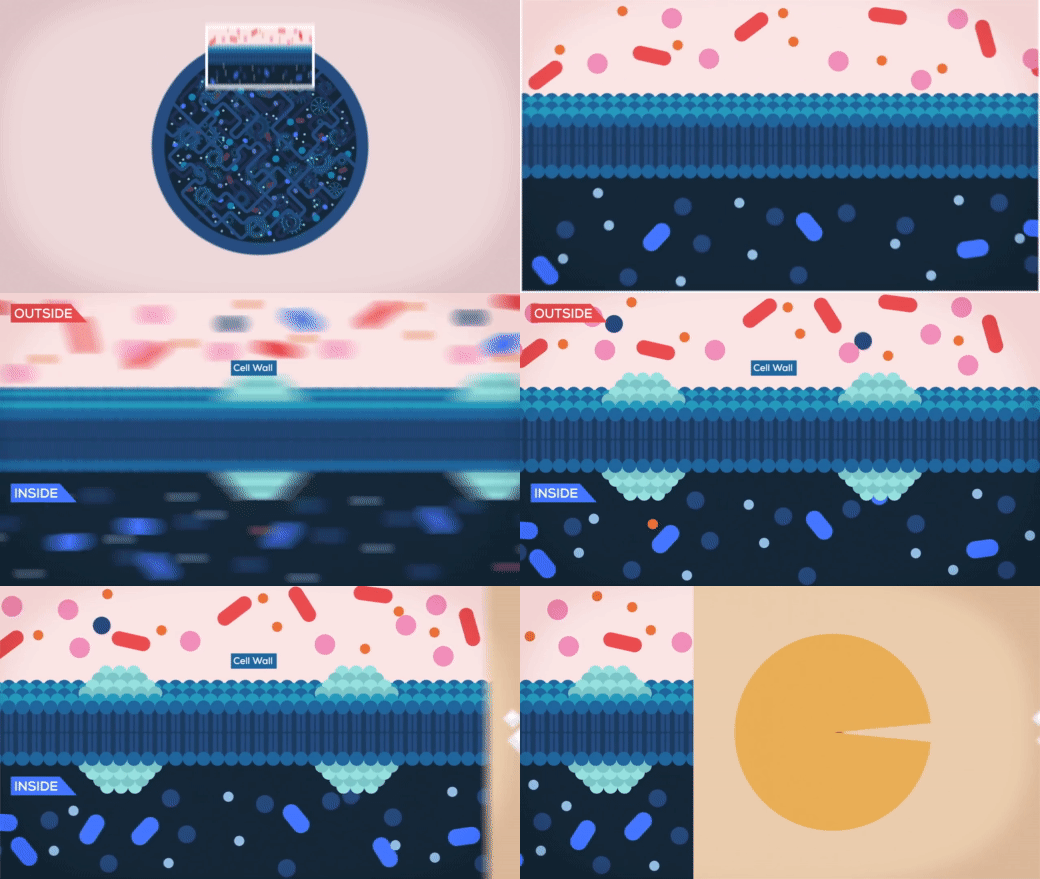
Specific cellular organisation can be seen only in living organisms. Different cell organelles normally interact with each other, so that they can function properly in a cell. The cells may be aggregated into tissues, certain tissues may be aggregated into organs and certain organs may be aggregated to form organ systems to achieve physiological functions.
Since cellular organisations can be observed only in living beings, cellular organisation can be called as a Defining characteristic of living things.
Metabolism
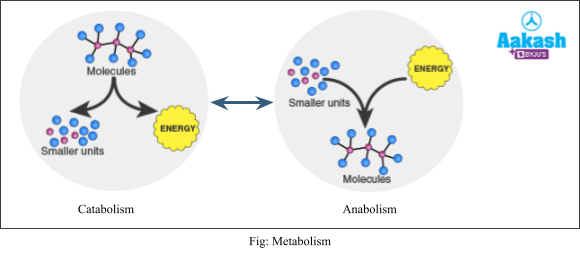
All the chemical reactions that take place in an organism sums up as metabolism.
None of the non-living entities undergo metabolism. Metabolism is exhibited by both the unicellular and multicellular organisms. Hence, metabolism is one of the defining characteristics of living organisms without exception.
Types of Metabolism
Metabolism involves two types of chemical reactions as follows:
Catabolism
The process of breaking down complex substances into simpler substances resulting in the release of energy is known as catabolism. Examples include breaking down proteins into amino acids.

Anabolism
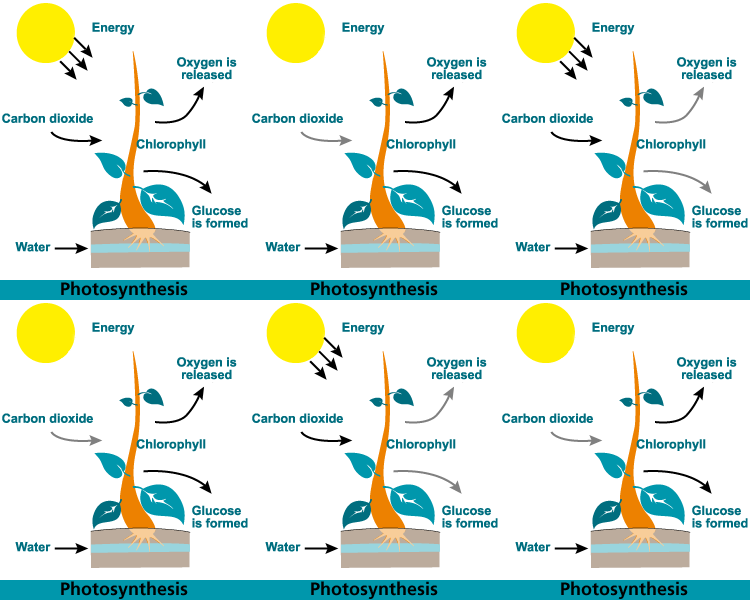
The process of formation of complex substances from simpler substances by utilising energy is known as anabolism. Examples include photosynthesis.
Metabolic Reactions
Metabolic reactions are not restricted to the living system. These can also be performed in an isolated manner in a test tube or laboratory and are considered neither living nor non-living. For example, by joining amino acids together we can make proteins in a test tube.

Consciousness
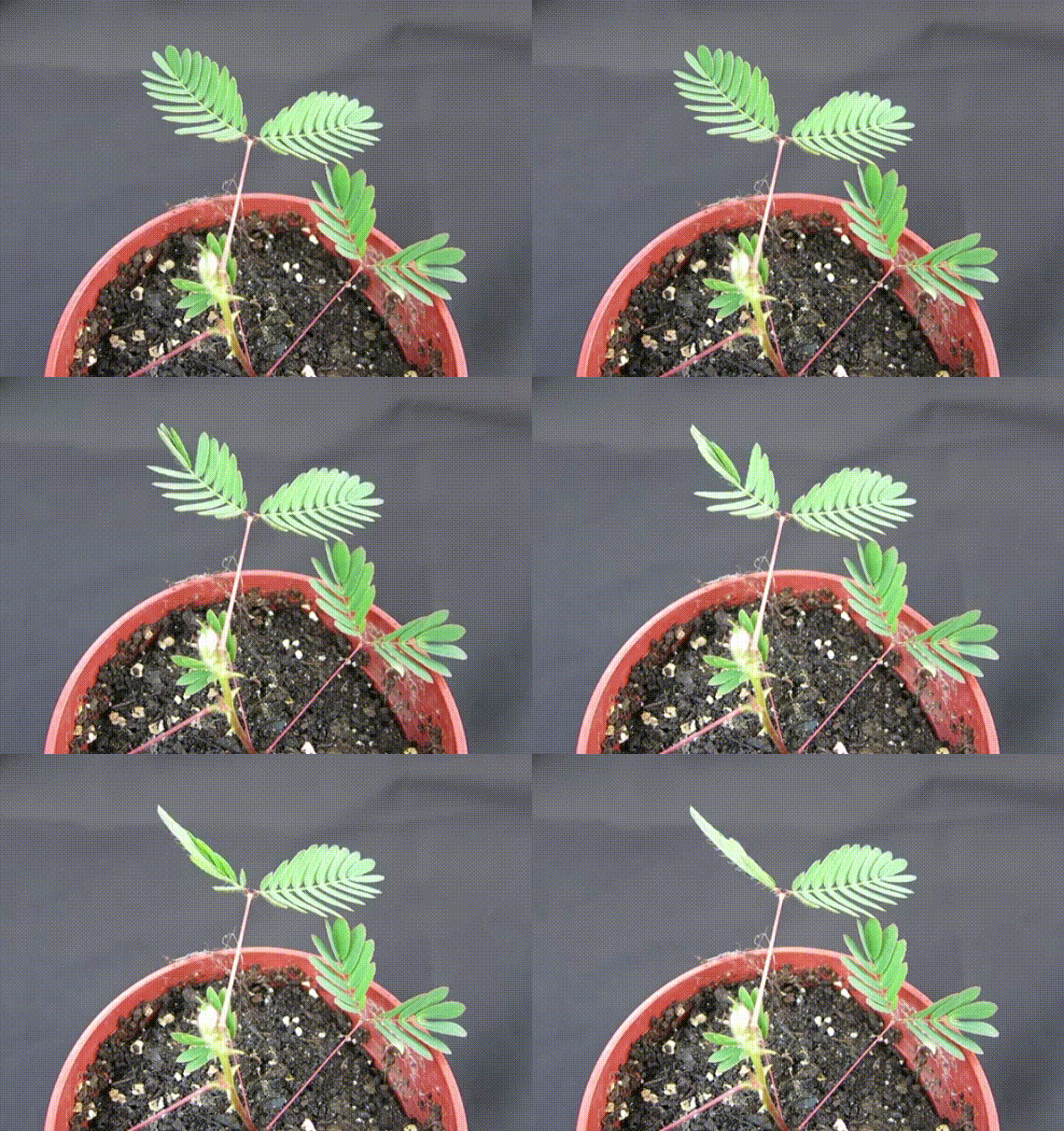
It is the ability of an organism or living being to respond to any stimuli. For example, folding of leaves in the touch-me-not plant or Mimosa pudica upon touching which serves as an external stimulus.
Types of Stimulus
Stimulus can be of three types as follows:
- Physical Stimulus - It is a stimulus that acts on the body from outside. Examples include the response of plants towards sunlight.
- Chemical Stimulus - It is the stimulus exerted by any chemicals like gases, liquids or solids that is capable of creating a response. Examples include response to a bad odour by a human being.
- Biological Stimulus - It is the stimulus created by a biological element. For example, the changes shown by macrophages when it comes in contact with a bacteria.
Consciousness Exhibited by Living Organisms
All prokaryotes to the most complex eukaryotes exhibit consciousness by sensing and responding to environmental cues. Plants respond to various external factors like temperature, light, water, chemicals, pollutants, other organisms etc.
A distinct example is photoperiod which regulates reproduction in seasonal breeders.
Humans are the only living creatures who are self-conscious. In other words, they are aware of themselves.
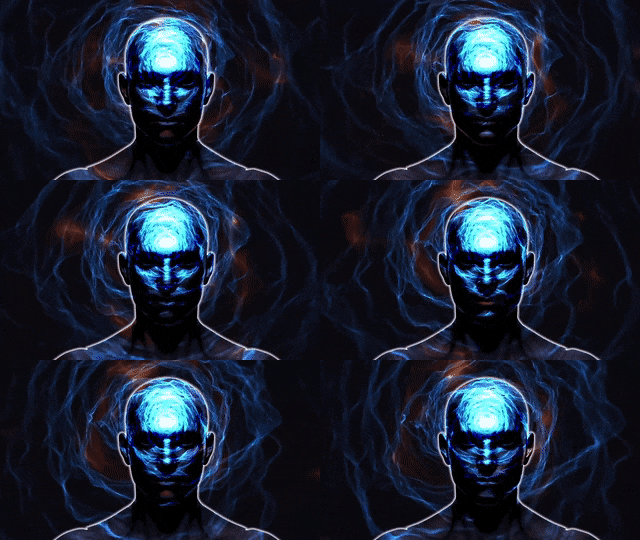
Non-living things lack the ability to respond to external stimuli. On the other hand, all the unicellular and multicellular organisms respond to stimuli. Hence, consciousness is one of the defining features of living organisms.
Homeostasis
Homeostasis is defined as the maintenance of a suitable and constant environment internally in an organism for the functioning of different body organs. It is exhibited by each and every constituent cell of the body. Maintaining homeostasis is a characteristic feature of living organisms. The same is not exhibited by non-living organisms.
Repair and Regeneration
Repair and regeneration is the ability to repair, renew or regenerate the injured or damaged body parts. For example: Healing of wounds in animals.
Body repairing and regeneration such as wound healing is observed naturally in the living organisms.
Adaptation
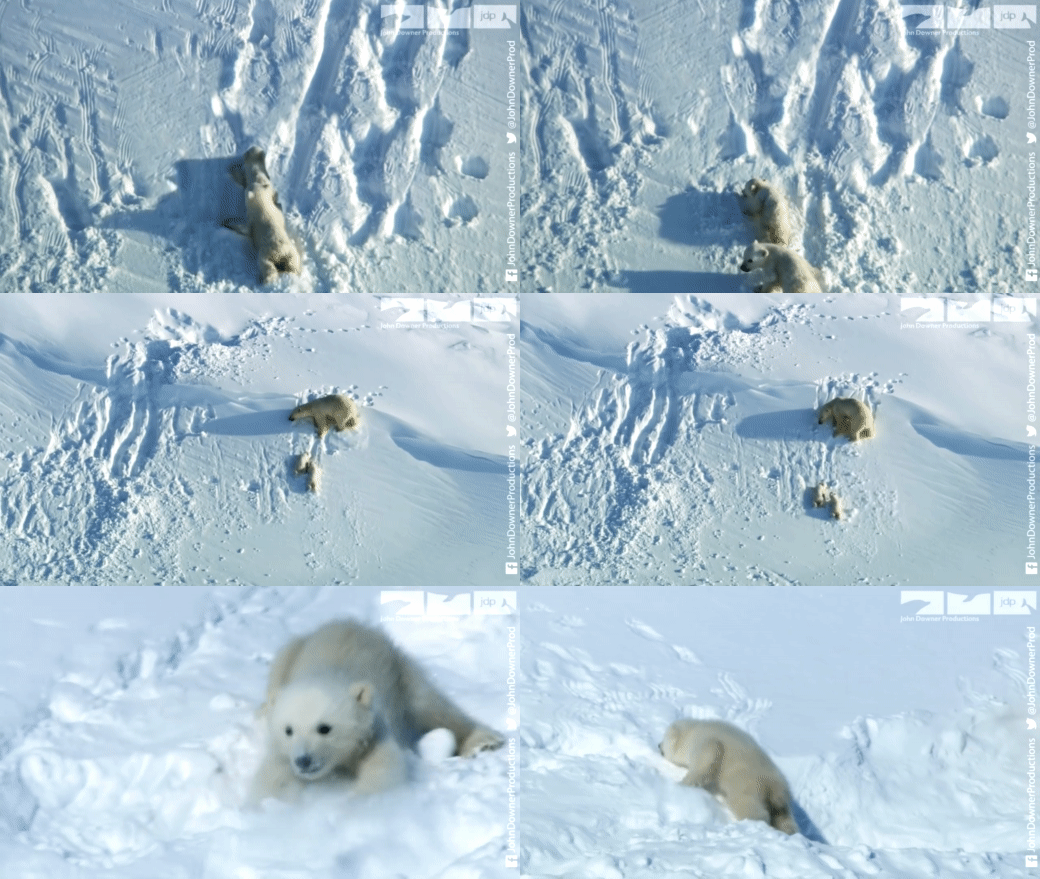
In order to fight the worst conditions, organisms evolve to have certain biological features that help them to survive. These features are known as adaptations.
Types of Adaptations
Adaptations are of two types as follows:
Short Term Adaptations
Certain biological features that come into play only during stress conditions are known as short term adaptations. These disappear once the stress period gets over. For example, slowing down metabolism of most amphibians, reptiles and some mammals during hibernation.
Long Term Adaptations
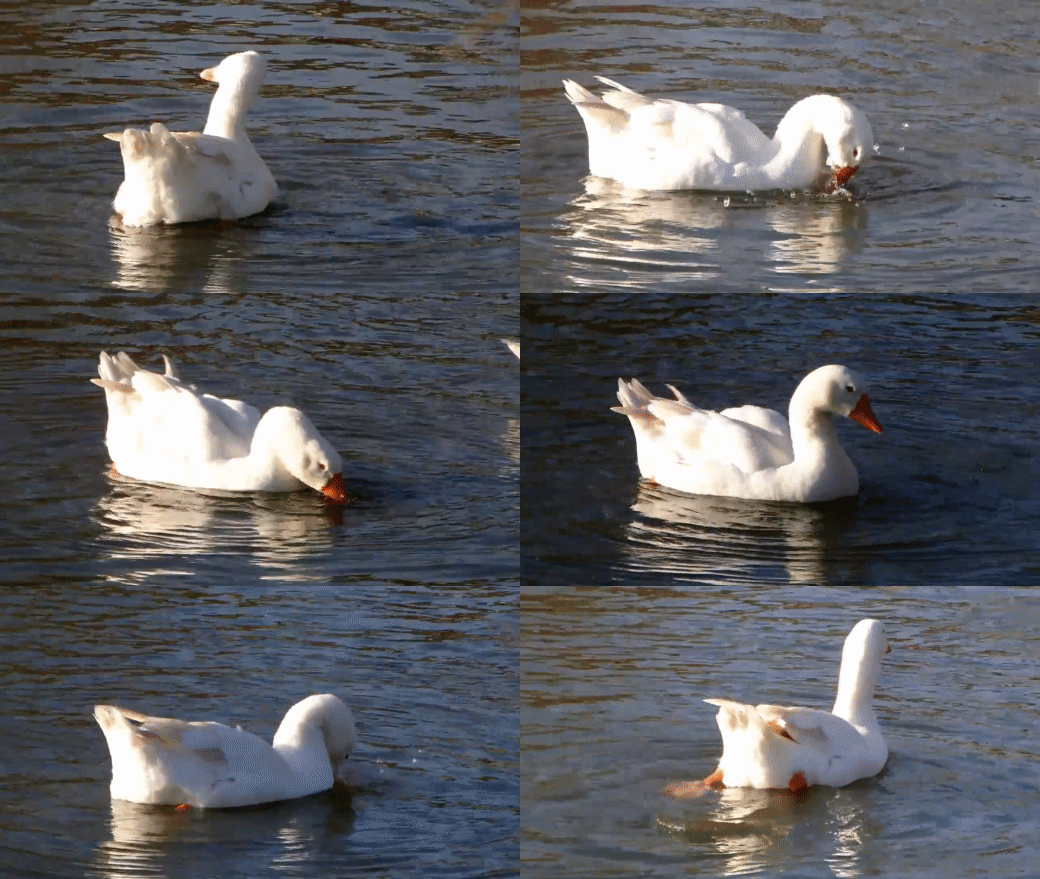
Certain biological features that develop in response to stress conditions and remain throughout life are known as long term adaptations. These features pass on from generation to generation playing a vital role in evolution. For example, adaptation of claws of birds as per their perching habits like clinging and climbing in woodpecker, swimming in duck, running in ostrich, perching in pigeon, striking and catching in hawk.
Evolution
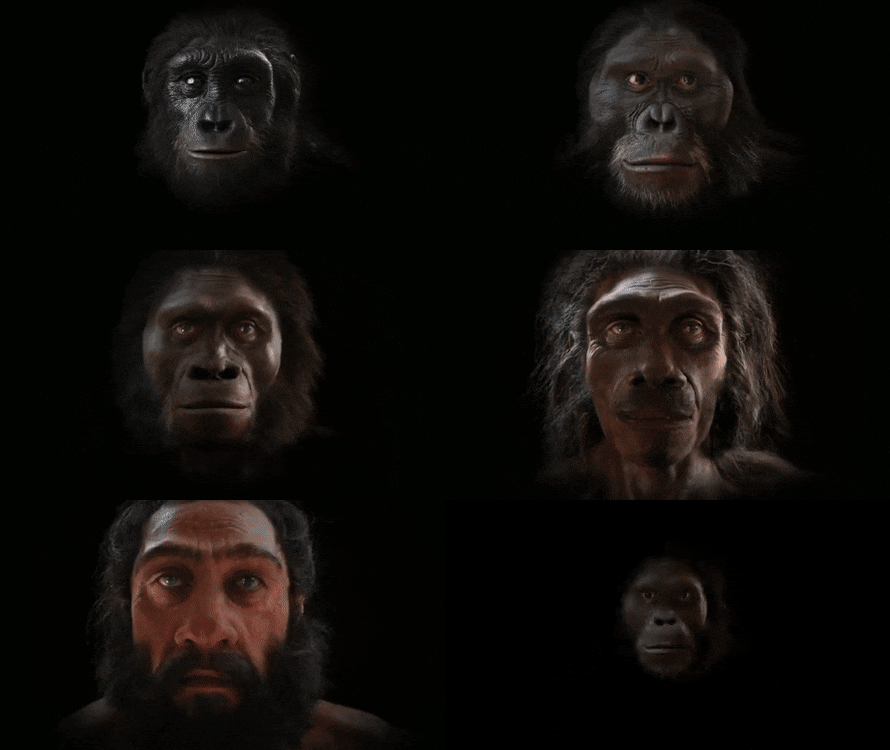
Evolution is the process of change in morphological, physiological or genetic characteristics that are passed on to the next generations as a result of natural selection. It was defined by Darwin. Non-living organisms do not undergo selection pressures and hence, do not exhibit this feature.
Death
The end or termination of an individual’s life is termed as death. Non-living things do not die. Hence, it is the feature of living organisms only.
Signs of Death
An organism shows clinical and biological signs of death as follows:
Clinical signs of death
Certain clinical signs that signify death are the following:
- Stoppage of pulse.
- Stop breathing.
- Stopping the beating of the heart.
- Dilation of pupils.
Biological signs of death
There are different biological signals that signify death. It include the following:
- The brain stops functioning.
- Blood starts to settle in the lower portion of the body
- The body temperature reduces.
- The duration of muscle contraction prolongs.
Causes of Death
Causes of death can be natural or accidental. Natural death may be due to ageing or occurrence of a fatal disease. Death can also be caused due to accidents, natural disasters etc.
Practice problems of Features of Living Beings
Question 1. The tail of the lizard got separated from the body. After a few days, the tail of the lizard appeared again. Which characteristic of living organisms is referred to here?
a. Reproduction
b. Development
c. Regeneration
d. None of the above
Solution: The tail of the lizard appeared again as it was able to regenerate its tail. Repair and regeneration is the ability of living organisms to repair, renew or regenerate the injured or damaged body parts. For example, the healing of wounds in animals.
Question 2. In order to cope with the stress conditions, metabolism of various animals is slowed down. This type of adaptation is termed as ________.
a. Short term adaptation
b. Long term adaptation
c. Permanent adaptation
d. None of the above
Solution: Slowed down metabolic rate is a type of short term adaptation. Certain biological features that come into play only during stress conditions are known as short term adaptations. These disappear once the stress period gets over. For example, slowing down metabolism of most amphibians, reptiles and some mammals during hibernation. Hence, the correct option is a.
Question 3. Which of the following cannot be considered as a defining characteristic of living things?
a. Evolution
b. Consciousness
c. Homeostasis
d. Growth
Solution: Growth is defined as the irreversible increase in mass, size, dry weight and number of an individual. Growth can be seen in both living and nonliving things. Non living things show extrinsic growth i.e. growth that happens due to deposits outside the body. For example: Growth of sand dunes, mountains, boulders, glaciers etc. Since growth can be seen in both living as well as non-living things and thus cannot be the defining property of living beings. Hence, the correct option is d.
Question 4. Arpit touched leaves of the plant which caused the folding of leaves. Identify the plant and the respective defining characteristics of living organisms shown by the plant.
a. Solanum tuberosum; homeostasis
b. Nepenthes alata; adaptation
c. Solanum tuberosum; consciousness
d. Mimosa pudica;consciousness
Solution: Folding of leaves upon touching is seen in the touch-me-not plant or Mimosa pudica. This particular ability of an organism to respond to any stimuli is defined as consciousness. Hence, the correct answer is option d.
FAQs of Features Of Living Beings
Question 1. What is metabolism?
Answer: All the chemical reactions that take place in an organism sums up as metabolism. None of the non-living entities undergo metabolism. Metabolism is exhibited by both the unicellular and multicellular organisms. Hence, metabolism is one of the defining characteristics of living organisms without exception.
Question 2. Is consciousness a defining characteristic of living organisms?
Answer: Ability of an organism to respond to any stimuli is defined as consciousness. For example, folding of leaves in the Chui-Mui plant or touch-me-not plant or Mimosa pudica upon touching which serves as an external stimulus. From all prokaryotes to the most complex eukaryotes exhibit consciousness by sensing and responding to environmental cues. Plants respond to external factors like temperature, water, light, pollutants, chemicals, other organisms etc. A distinct example is the photoperiod, which regulates the reproduction in seasonal breeders. Humans are the only living creatures who are self-conscious. Non-living things lack the ability to respond to external stimuli. On the other hand, all the unicellular and multicellular organisms respond to stimuli. Hence, consciousness is one of the defining features of living organisms.
Question 3. How is anabolism different from catabolism?
Answer: Catabolism is the process of breaking down complex substances into simpler substances resulting in the release of energy while anabolism is the process of formation of complex substances from simpler substances by utilising energy.
Question 4. What is homeostasis? How is it important for living organisms?
Answer: Homeostasis is defined as the maintenance of a suitable and constant environment internally in an organism for the functioning of different body organs. It is exhibited by each and every constituent cell of the body. Different living organisms live in different environmental conditions. For example, polar bears are adapted to live in extreme cold environments while camels are adapted to live in extreme hot environments. It becomes very important to maintain the internal temperature of the body according to the changing environment where homeostasis comes into play. Maintaining homeostasis is a characteristic feature of living organisms.
Other Related Topics
Other Related Topic Of Biology

NEET Related Links
JEE MAIN Related Links
JEE Advanced Related Links
JEE Advanced Eligibility Criteria
JEE Advanced Chemistry Syllabus
JEE Advanced Registration Dates
CUET Related Links
Important Topics
Anemometer : Measurement of Wind Speed
Angular Acceleration Atomic Theory Audible and Inaudible Sound Average Speed and Average Velocity Average Velocity Avogadros Number Avogadros Hypothesis Azimuthal Quantum Number Balanced Force Bar Magnet Biconvex Lens Boyles Law Buoyancy Calorimeter Carnot Engine Celestial Bodies Centripetal And Centrifugal Force Concave and Convex Lenses Concave Convex Mirrors Contact and Non Contact Force Controlled Thermonuclear Fusion Convection Currents Convex Lens Convex Mirror Destructive Interference Difference Between Conduction Convection and Radiation Difference Between Electric Field and Magnetic Field Difference Between Heat And Temperature Difference Between Series And Parallel Circuits Differences Between Acceleration And Velocity Distance and Displacement Distance Time Graph Electrical Force : Electric Forces and Their Types Electromagnetic Waves : Definition, Equation and Properties of Electromagnetic Waves Electromagnetism Electron Spin Fluid Flow : Bernoullis Equation Derivation and Fluid Mechanics Fluid Friction : Types and Factors of Fluid Friction Frames of Reference : Inertial and Non- Inertial Frame of Reference Frequency and Wavelength Frictional Force Importance of Hydrosphere Instantaneous Speed and Velocity Introduction to Motion Kinetic and Potential Energy Difference Law Of Conservation of Energy Layers of the Earth Light Energy Light Sources List of physics scientists and Their inventionsLoudness of Sound
Magnetic Dipole Moment Magnetic Field Non - Contact Force Non - Renewable Energy Ohms Law Optics P Wave Physics Symbols Plane Mirrors Poissons Ratio Projectile Motion Properties of Water : Anomalous Expansion of Water Radius of Gyration Reflection of Light Reflection of Waves Relative Density Resonance Reverberation Rolling Friction Rotation and Revolution Screw Gauge Semiconductors and Insulators Sliding Friction Speed Time Graphs Static Friction Stefan Boltzmann Law Stress Tension Tension Force Thermometer: Clinical Laboratory Thermometer Types of Rocks Types of Waves Uniform Motion and Non Uniform Motion Unit of Voltage Uses of Convex Lens Uses Of Convex Mirror Uses of Electromagnet Uses of Optical Fibre Wave Wavelength of Light What is Scattering of Light Working of Electric Bell Conventional and Non-conventional Sources of Energy Buoyant Force Bulk Modulus of Elasticity Bernoulli’s Principle Angular Momentum Difference Between Speed And Velocity ForceUnit of Heat
Difference between Distance and Displacement Simple Microscope Derivation Of Equation Of Motion Thermometer: Clinical & Laboratory Thermometer Difference between Concave and Convex LensDerivation Of Lens Maker Formula
Unit Of Pressure Velocity Uses of Plane Mirror
Wave Theory of Light
Unit of Density Unit of Light Unit of Force Unit of Magnetic Field Unit of wavelength Unit of Viscosity Uses of Electroplating Young's Modulus
What is the Scattering of Light
Lenz Law Space Wave Propagation Schrodinger Wave Equation Relation between Fahrenheit and Celsius Refractive Index Potentiometer Working Pascal Law Oscillatory Motion Optical Instruments Newton's Laws of Motion - First Law Modulation and Demodulation Magnetic Flux Lens Formula and Magnification Kaleidoscope Faradays Law Epsilon Naught Value Energy Bands Electrostatics Electroscope AC Generator Unit of Current Lithosphere Bending Equation Derivation Difference Between Pound and Kilogram Semiconductor Devices OTEC - Ocean Thermal Energy Conversion Hall Effect Rectilinear Propagation of Light Difference Between Ammeter and Voltmeter Coefficient of Linear Expansion Ampere’s Law Cyclone and Thunderstorm Save The Environment From Pollution Particle Nature of Light Types of DC Motor Uses Of Transistor Derivation of Phase Rule Unit of Humidity

 Call Now
 Let's Chat
 Share
Share