-
Call Now
1800-102-2727


Uses of Ketones: Introduction, Structure and Properties, Uses of Ketones, Practice Problems & Frequently Asked Questions

If you are going to a party or function, you want to create a favourable aroma around you. People apply one of the many available perfumes to have a positive fragrance.
Do you know that the perfumery chemical is hardly 1% of the container volume and the rest are either non-interfering or synergic solvents amounting to almost 99 per cent of the perfume?
One of the most preferred solvents for perfumes is acetophenone which is an aromatic ketone.
Due to an increase in acetophenone use in the creation of perfume and scents, acetophenone is predicted to grow significantly. Acetophenone is also utilised as a direct constituent in a number of pharmaceutical applications.
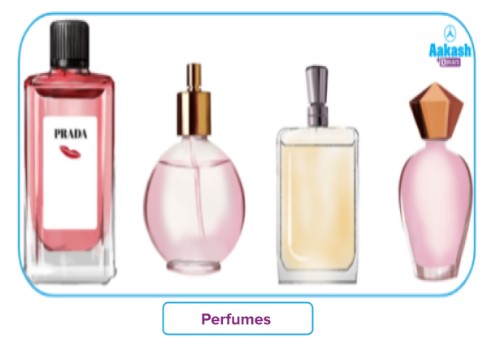
Acetophenone, an aromatic ketone, is what gives perfumes like cherry, jasmine, honeysuckle, and strawberry their distinctive characteristics.
In this article we will discuss in detail the structure, properties and uses of ketones
Table of Contents:
- Structure of Ketones
- Properties of Ketones
- Uses of Ketones
- Practice Problems
- Frequently Asked Questions(FAQs)
Structure of Ketones:
Ketones are organic compounds with the structural formula R (C=O) R' with - C= O as the functional group. R and R' in the molecular formula could be either aryl or alkyl groups or both..
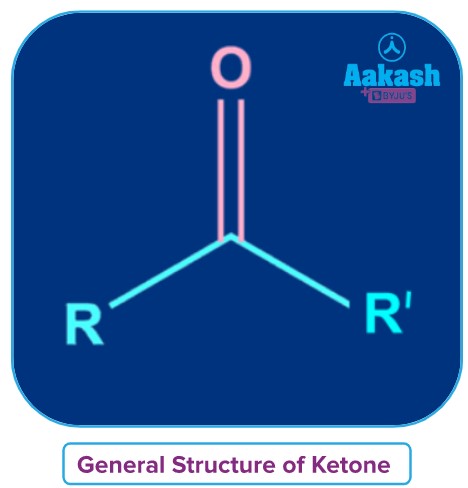
The carbonyl group's carbon is sp2 hybridised and capable of forming three sigma bonds. The fourth valence electron in carbon remains in its ′p′ orbital and joins with the ′p′ orbital in the oxygen atom to form a pi bond. Additionally, the oxygen atom has two electron pairs that do not form bonds. As a result, the three atoms that are connected to the carbonyl carbon and its carbon lie in the same plane. The plane created by the carbonyl carbon and the three atoms has the pi electron cloud above and below it. The molecule is given a trigonal coplanar structure with a bond angle of 120o in this arrangement.
In comparison to carbon, oxygen has a high electronegativity tendency. As a result, the carbon-oxygen double bond in the carbonyl group becomes polarised. Because of its electronegative character, the electron cloud is close to the oxygen atom. This gives carbon a partial positive charge and oxygen a partial negative charge.
Thus, the carbonyl carbon is an electrophilic (Lewis acid) centre, whereas carbonyl-oxygen is a nucleophilic centre (or Lewis base). Carbonyl compounds have stronger dipole moments and are more polar than ethers.
Similar to others, ketones' common names are created by breaking down each alkyl or aryl group connected to the carbonyl atom into its own word and adding "ketone" at the end. The names of the associated alkyl groups are listed in alphabetical order.
|
Formula |
Common name |
IUPAC name |
|
CH3(CO)CH3 |
Acetone |
Propan-2-one |
|
CH3CH2(CO)CH2CH2CH3 |
Ethyl Propyl Ketone |
Hexan-3-one |
|
CH3CH2CH2(CO)CH2CH2CH3 |
Dipropyl ketone |
Heptan-4-one |
|
CH3CH(CH3)(CO)CH3 |
Isopropyl methyl ketone |
3-Methylbutan-2-one |
|
C6H5(CO)CH2CH3 |
Ethyl Phenyl Ketone |
1-phenyl propan-1-one |
Properties of Ketones:
1. Odour:
Lower ketones smell strongly pungent, but as the length of the alkyl group rises, the smell becomes less offensive and more pleasant. In actuality, numerous naturally occurring ketones are commonly utilised in fragrances (Jasmone, acetophenone).
2. Hydrogen Bonding:
Because of the dipoles found in ketones, these molecules can only operate as hydrogen bond acceptors. This is due to the fact that no hydrogen atom is directly connected to the carbonyl oxygen atom. These compounds, on the other hand, efficiently engage in thermodynamically favourable hydrogen bonding (H-bonding) connections with polar molecules such as water.
Because there are no hydrogen atoms connected directly to the carbonyl oxygen atom, ketones cannot hydrogen bond with each other, resulting in the lack of intermolecular hydrogen bonding. These carbonyl compounds, however, can establish hydrogen bonds with water molecules thanks to a carbonyl oxygen atom that functions as a hydrogen bond acceptor.
3. Bonding:
A carbon atom is double-bonded to an oxygen atom to form the functional group "carbonyl" (>C=O). Since oxygen has a greater ability to attract electrons in a carbon-oxygen bond to itself than does carbon, oxygen is often more electronegative than carbon. As a result, a dipole is formed, with a little positive charge over the carbon atom and a small negative charge over the oxygen atom. As a result, the carbon-oxygen double bond acquires a high degree of polarity.
A nucleophile can target the relatively positive carbon atom in the carbonyl group, while electrophiles target the relatively negative oxygen atom. The carbon-oxygen double bond is broken in a process involving carbonyl compounds. A carbonyl group is found in both ketones and aldehydes. As a result, their reactions are remarkably similar in this regard.
4. Boiling Point:
Ketones have higher boiling temperatures than non-polar or weakly polar substances with comparable molecular weights. Because ketones are polar molecules with adequate inter-molecular dipole-dipole interactions between opposing ends of C=O dipoles, their boiling points are lower than those of alcohols or carboxylic acids.
Because they have two electron-releasing groups surrounding the carbonyl carbon and are therefore more polar, ketones among these carbonyl compounds have greater boiling temperatures than isomeric aldehydes.
Uses of Ketones:
Acetone:
- Acetone is employed in the preparation of numerous additional beauty products in addition to being a required component of nail paint remover.
- Acetone is frequently employed as a solvent and denaturant in the beauty sector. Acetone is a typical chemical used in the production of a variety of products, including wet wipes and hair colours.
- In some nations, a procedure known as a "slush facial" that combines acetone and dry ice is employed to help cure skin issues such as acne, chloasma, eczema, rosacea, and sunburn. Trace amounts of acetone are absorbed through the skin and reach the bloodstream, but it is often safe.
- Any woodwork must almost certainly include wood varnish. This common technique gives the furniture a shiny surface by applying a resinous substance that serves as a protective layer. On the other side, the paint wears down with time and seems rusted and unclean. This issue hasn't affected ordinary furniture in a while, but it can detract from the beauty of works of oil painting. A common chemical for removing bad paint is acetone. On the wood of the furniture, rub a soft, fine steel wool pad that has been soaked with acetone.
- Acetone is frequently used as a solvent in fillers and active components in the pharmaceutical sector to guarantee adequate dosing of medication. In actuality, Joseph Lister pioneered the use of acetone as an antiseptic. Acetone is routinely used as an active ingredient in commonly prescribed medications because it aids in delivering the proper dosage of active chemicals and fillers.
- The production of medications is one of the most frequent uses for acetone as a solvent. It is non-toxic and can be inhaled, absorbed through the skin, or both. Due to chemical interactions between living cells, more glucose is produced. It depresses the CNS (central nervous system) when taken in large doses. This organic compound is the best choice for including active ingredients and fillers in pharmaceuticals consumed as liquids or pills. If acetone isn't present in the medication, the majority of pills will be difficult to compress into an appropriate density and won't dissolve completely. Acetone is therefore necessary for a successful treatment strategy.
- Acetone may be used to remove almost anything that would usually be difficult to wash with water, such as stains of coffee and permanent stains of the marker. Because of its exceptional solvent qualities, acetone can successfully remove difficult stains from practically any surface. Acetone is actually so effective at cleaning that it is frequently used in laboratories to remove oil and other persistent contaminants from glass beakers and other equipment.
Ketones:
- To treat opiate addiction, ketones methadone is used. The hormone dopamine is excessively released by opiates. A user's physical dependence on opiates is broken by methadone's ability to attach to the brain's dopamine receptor.
- In humans and other living things, several ketone bodies carry out vital functions. Ketones are produced by the steroid hormones testosterone, aldosterone, cortisone and progesterone.
- Cyclohexanone, a cyclic ketone, is a crucial ingredient in the creation of nylon.
- One of the typical solvents used in fabrics, coatings, paint-thinners, paraffin wax, plastics, etc. is butanone, also known as methyl ethyl ketone.
- Methyl isobutyl ketone(MIBK) is a solvent widely used in cellulose and resin-based paints and adhesives.
Practice Problems:
Q1. What compound has a greater boiling point than ketones among the following?
(A) Alcohol
(B) Alkanes
(C) Aldehyde
(D) None of the above
Answer: (A)
Solution: Aldehydes have a lower boiling point than ketones. This is because the group is surrounded by two alkyl groups that donate electrons, increasing their polarity. The higher boiling point is a result of the stronger polarity and dipole moment. The boiling point of ketone is lower than that of alcohol. In addition to the other two types of intermolecular attraction, hydrogen bonding also exists in alcohol.
Q2. Which kind of hybridization does the carbonyl carbon in aldehydes exhibit?
(A) sp2
(B) sp3
(C) sp
(D) None of the above
Answer: (A)
Solution: Aldehydes are substances that have an alkyl or aryl group attached to hydrogen atoms only. Only aryl or alkyl groups are bonded to the carbonyl carbon in ketones. In both aldehydes and ketones, the carbonyl carbon has undergone sp2 hybridization.
Q3. Which of the following carbonyl compounds is characterised by a pleasant aroma?
(A) Acetone
(B) Acetophenone
(C) Camphor
(D) Vanillin
Answer: (A)
Solution: Acetone is a lower size ketone that is less fragrant than strong aroma compounds such as acetophenone, camphor, and vanillin, which are employed as flavouring agents in many industries.
Q4. The boiling temperatures of two substances A and B were being investigated. When both were put in the same conditions, it was noticed that A began to boil after B. Which of the following can be compound A if compound B is acetone?
(A) Propanal
(B) Propano
(C) n-Butane
(D) Methoxy Ethane
Answer: (B)
Solution: It can be deduced that B has a greater boiling point than A. None of the hydrocarbons, ethers, or aldehydes can constitute compound A because they all have lower boiling points than ketones with comparable molecular weights. The compound A is propanol because alcohols have a higher boiling point than comparable ketones.
Frequently Asked Questions(FAQs):
Q1. Where can you find aldehydes and ketones in nature?
Answer: Aldehydes can be found in scents, plants, creatures, microbes, and the human body. In contrast, ketones are contained in sugar and are created by our liver. Cinnamaldehyde (found in cinnamon) and citral (found in lemongrass) are two naturally occurring aldehydes. Carvone (found in spearmint and caraway) and cortisol (adrenaline) are two naturally occurring ketones. Certain chiral chemicals are also present in nature in their enantiomerically pure forms. The carvone generated from spearmint oil is normally of the (R) enantiomer type, but the one found in caraway seeds is of the (S) enantiomer type.
Q2. Why is it that ketones are less stable than aldehydes?
Answer: In contrast to ketones, the carbonyl carbon found in aldehydes has a higher partial positive charge, which is compensated by the attached hydrogen which becomes more positive to involve in hydrogen bonding. The intermolecular hydrogen bonding makes aldehydes more stable. Ketones on the other hand have no alpha hydrogen and hence lack intermolecular hydrogen bonding, which makes them relatively less stable than aldehydes.
Q3. Why are the lower members of aldehydes and ketones soluble in water whereas the higher members are only sparingly or completely insoluble?
Answer: Ketones and aldehydes are examples of carbonyl substances. They contain the extremely polar functional group carbonyl. Lower aldehydes and ketones can therefore create hydrogen bonds with water when they are dissolved in the water. Solubility declines with the lengthening of the hydrocarbon-rich carbon chain. All aldehydes and ketones can dissolve in organic solvents, and they all have a density that is lower than that of water.
The lowest members of aldehydes and ketones are miscible with water in all proportions because they contain a highly polar carbonyl group, but as the length of the hydrocarbon chain grows because the hydrocarbons contribute to the non-polar part, the solubility diminishes.
Q4. Why is acetone more volatile than ethyl alcohol?
Answer: Due to the absence of direct -OH bonds, ketones, lack hydrogen bonding. While ethanol (ethyl alcohol) has direct -OH interaction. As a result, ethanol(ethyl alcohol) contains hydrogen bonds between its molecules. Hence, in ethanol (ethyl alcohol) more physical bonds need to be broken than in acetone. As a result, acetone evaporates quicker than ethanol(ethyl alcohol).

NEET Related Links
JEE MAIN Related Links
JEE Advanced Related Links
JEE Advanced Eligibility Criteria
JEE Advanced Chemistry Syllabus
JEE Advanced Registration Dates
CUET Related Links
Important Topics
Anemometer : Measurement of Wind Speed
Angular Acceleration Atomic Theory Audible and Inaudible Sound Average Speed and Average Velocity Average Velocity Avogadros Number Avogadros Hypothesis Azimuthal Quantum Number Balanced Force Bar Magnet Biconvex Lens Boyles Law Buoyancy Calorimeter Carnot Engine Celestial Bodies Centripetal And Centrifugal Force Concave and Convex Lenses Concave Convex Mirrors Contact and Non Contact Force Controlled Thermonuclear Fusion Convection Currents Convex Lens Convex Mirror Destructive Interference Difference Between Conduction Convection and Radiation Difference Between Electric Field and Magnetic Field Difference Between Heat And Temperature Difference Between Series And Parallel Circuits Differences Between Acceleration And Velocity Distance and Displacement Distance Time Graph Electrical Force : Electric Forces and Their Types Electromagnetic Waves : Definition, Equation and Properties of Electromagnetic Waves Electromagnetism Electron Spin Fluid Flow : Bernoullis Equation Derivation and Fluid Mechanics Fluid Friction : Types and Factors of Fluid Friction Frames of Reference : Inertial and Non- Inertial Frame of Reference Frequency and Wavelength Frictional Force Importance of Hydrosphere Instantaneous Speed and Velocity Introduction to Motion Kinetic and Potential Energy Difference Law Of Conservation of Energy Layers of the Earth Light Energy Light Sources List of physics scientists and Their inventionsLoudness of Sound
Magnetic Dipole Moment Magnetic Field Non - Contact Force Non - Renewable Energy Ohms Law Optics P Wave Physics Symbols Plane Mirrors Poissons Ratio Projectile Motion Properties of Water : Anomalous Expansion of Water Radius of Gyration Reflection of Light Reflection of Waves Relative Density Resonance Reverberation Rolling Friction Rotation and Revolution Screw Gauge Semiconductors and Insulators Sliding Friction Speed Time Graphs Static Friction Stefan Boltzmann Law Stress Tension Tension Force Thermometer: Clinical Laboratory Thermometer Types of Rocks Types of Waves Uniform Motion and Non Uniform Motion Unit of Voltage Uses of Convex Lens Uses Of Convex Mirror Uses of Electromagnet Uses of Optical Fibre Wave Wavelength of Light What is Scattering of Light Working of Electric Bell Conventional and Non-conventional Sources of Energy Buoyant Force Bulk Modulus of Elasticity Bernoulli’s Principle Angular Momentum Difference Between Speed And Velocity ForceUnit of Heat
Difference between Distance and Displacement Simple Microscope Derivation Of Equation Of Motion Thermometer: Clinical & Laboratory Thermometer Difference between Concave and Convex LensDerivation Of Lens Maker Formula
Unit Of Pressure Velocity Uses of Plane Mirror
Wave Theory of Light
Unit of Density Unit of Light Unit of Force Unit of Magnetic Field Unit of wavelength Unit of Viscosity Uses of Electroplating Young's Modulus
What is the Scattering of Light
Lenz Law Space Wave Propagation Schrodinger Wave Equation Relation between Fahrenheit and Celsius Refractive Index Potentiometer Working Pascal Law Oscillatory Motion Optical Instruments Newton's Laws of Motion - First Law Modulation and Demodulation Magnetic Flux Lens Formula and Magnification Kaleidoscope Faradays Law Epsilon Naught Value Energy Bands Electrostatics Electroscope AC Generator Unit of Current Lithosphere Bending Equation Derivation Difference Between Pound and Kilogram Semiconductor Devices OTEC - Ocean Thermal Energy Conversion Hall Effect Rectilinear Propagation of Light Difference Between Ammeter and Voltmeter Coefficient of Linear Expansion Ampere’s Law Cyclone and Thunderstorm Save The Environment From Pollution Particle Nature of Light Types of DC Motor Uses Of Transistor Derivation of Phase Rule Unit of Humidity

 Call Now
 Let's Chat
 Share
Share