-
Call Now
1800-102-2727


List of Titration reactions - Titrations, Types of titrations and Their respective reactions, Practice Problems & FAQs

For individuals with severe diabetes, lifelong insulin replacement therapy is necessary to make up for the non-existent insulin output caused by the uncontrolled death of the pancreatic cells.
Insulin is normally injected into the bloodstream, once or twice each day, at regular intervals using an insulin pen or more conveniently, a vial and syringe.
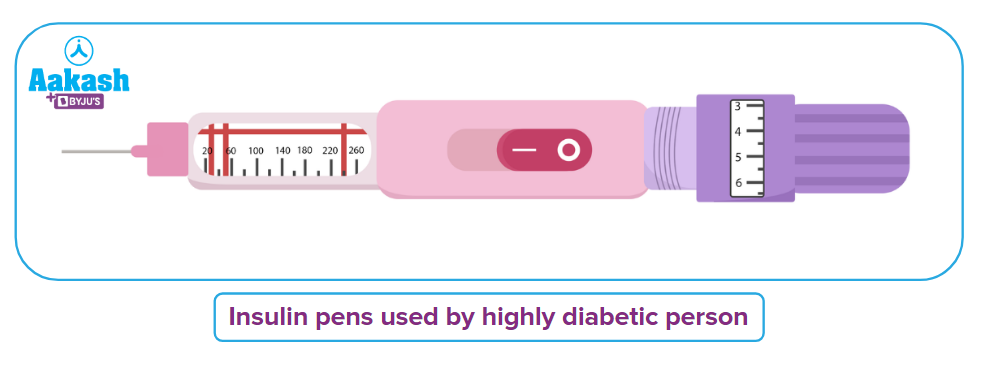
Each person has a unique amount of basal insulin required because it corresponds to their evening and pre-breakfast fasting insulin requirements. This dosage is frequently titrated in order to meet the desired glucose objectives due to variations in people's lifestyles and metabolism.
TABLE OF CONTENT
- Titration:
- Types of Titrations:
- Acid-Base Titration:
- Redox Titrations:
- Precipitation Titrations:
- Complexometric Titrations:
- Practice Problems:
- Frequently Asked Questions – FAQs:
Titration:
Titration, also referred to as titrimetry, is a technique for figuring out an unknown concentration in a reaction mixture when an indicator is present.
Titrant: A solution with a known concentration that is used in the titration.
Titrand: A titrand is any solution with an unknown concentration that is used in the titration.
Equivalence point: The equivalence point is the point at which the amount of titrant is just enough to completely neutralize the titrand in the solution.
Endpoint: It is the point in a titration when an indicator indicates that the solution has received the accurate amount of titrant to complete the reaction.
Types of Titrations:
There are several titration methods when procedures are taken into account. However, the most common titration forms in quantitative chemical analysis are:
- Acid-Base titration
- Redox titration
- Precipitation titration
- Complexometric titration
Acid-Base Titration:
It's a technique for comparing the concentration of an unknown chemical (acid/base) to the concentration of an equivalent amount of the known substance. In a titration, the volume necessary for complete neutralization is calculated by placing a known volume of one solution (acid or base) in a flask and the other solution in a burette.
Experiment
For instance, in the titration of oxalic acid and sodium hydroxide base, a known volume of oxalic acid with a known concentration is obtained in a conical flask and NaOH is added slowly from a burette. Oxalic acid contains the additional indicator phenolphthalein, which is originally colorless. However, the solution turns pink once the reaction is finished. We can determine the unknown base concentration after determining the endpoint.
Redox Titrations:
Redox titration is also known as an oxidation-reduction process. This type of titration uses an electron transfer in the reactive ions of aqueous solutions to carry out the chemical reaction. The reagent used in the following titrations is named after it:
- Iodometry and Iodimetry Titrations
- Permanganate Titrations
- Dichromate Titrations
Iodimetric titration:
Natural free iodine is used in this titration to measure the concentration of reducing agents. However, as free iodine is more volatile and less water soluble, it is combined with enough KI to create the stable and water-soluble complex KI3. The triiodide ion reacts with reducing agents to measure their concentration. As an indication, starch is employed. Iodine and starch combine to produce a rich blue or violet colour.
Note: The disappearance of the colour will be the endpoint in iodometric titrations.
Iodometric titration:
In this titration, liberated iodine is used to measure the amount of oxidizing agents present. Strong acids cause oxidizing agents like chlorate to oxidize iodide and release free iodine when they are present. The amount of released free iodine is equal to the amount of oxidizing agent present. Utilizing a starch indicator, the free iodine can be titrated against sodium thiosulfate. Iodine released is used to indirectly determine the concentration of the oxidizing agent.
Note: The disappearance of the color will be the endpoint in iodometric titrations.
Permanganate Titrations:
In this titration, potassium permanganate serves as an oxidizing agent. Diluted sulfuric acid is utilized to keep it maintained, diluted sulfuric acid is utilized.
The solution is colorless before the endpoint. Potassium permanganate can be used to estimate oxalic acid, ferrous salts, hydrogen peroxide, oxalates, and substances that can be oxidized. While a standard solution of oxalic acid is typically used to calibrate a potassium permanganate solution prior to use.
Dichromate Titrations:
Similar to potassium permanganate, potassium dichromate is an oxidizing agent that can be used in titrations in an acidic medium. The medium is kept acidic by using diluted sulfuric acid.
It is mostly used for iodide and ferrous salt estimation.
Iodine in aqueous solution is used in both iodimetric and iodometric titrations. When in contact with a typical sodium thiosulphate solution, the free iodine reacts. Iodine produces reduced iodide ions after oxidizing sodium thiosulfate to tetrathionate. The difference is in the process used to get free iodine.
Precipitation Titrations:
The insoluble precipitate that develops when the two interacting substances come into contact is the basis for precipitation titration. For instance, when the solution of silver nitrate is introduced to a solution of ammonium thiocyanate or sodium chloride, a reaction takes place that results in a white precipitate of silver thiocyanate or silver chloride.
With the aid of chromate indicators in the case of silver halide reactions and ferrous ions in the case of thiocyanate reactions, the precise endpoint can be determined.
Complexometric Titrations:
At the equivalence point of a complexometric titration, an undissociated complex is generated. There are four ways to measure the concentration using complexometric titrations:
- Direct titration, in which the complex's color serves as a self-indicator.
- Back titration is the process of titrating unreacted ligands with a different titrant after adding excess ligands.
- Titration replacement through the reaction of the complex with a different metal.
- Titrating the acid released during the complex formation is known as alkalimetric titration.
Related Topic Link: Titration using acidified KMnO4 and acidified K2Cr2O7 | Chemistry | NEET | Concept of the Day-
Practice Problems:
Q1. Find n-factor of I in I2 and NaI respectively, in reaction I2+Na2S2O3NaI+ Na2S4O6.
- 1, 2
- 2, 1
- 2, 2
- 1, 1
Answer: (B)
Solution:
Let O.S of I in I2 = x
2x=0
x= 0
Let O.S of I in NaI = y
1+y=0
y=-1
n-factor of I in I2= 2 |-1 - 0| = 2
n-factor of I in NaI = |-1 - 0| = 1
Hence, option (B) is the correct answer.
Q2. On complete neutralization of a 20 mL sample of 0.10 M NH3(aq) versus 0.05 M H2C2O4 (aq)There is a formation of ammonium oxalate. What is the pH of the acidic salt solution at the end? (NH3(aq) ; pKb=4.74)
- 6.8
- 5.13
- 5.28
- 7
Answer: (B)
Solution: (i) Volume of H2C2O4 (aq)
(ii) Concentration of (NH4)2C2O4(aq)
(iii) pH (salt of strong acid and weak base)
pH=5.13
Hence, option (B) is the correct answer.
Q3. Titration of a 10 mL sample of 0.1 M NH3(aq) versus 0.2 M HCl (aq). What is the concentration of Ammonium sulfate formed after titration?
- 0.05 M
- 0.03 M
- 0.06 M
- 0.12 M
Answer: (C)
Solution: (i) Volume of HCl (aq)
(where n is the equivalent factor)
5 mL=V2HCl (aq)
As millimoles of HCl(aq) = millimoles of NH3(aq) = millimoles of NH4Cl(aq) = 1 millimoles
(ii) Concentration of NH4Cl(aq)
Hence, option (C) is the correct answer.
Q 4. 10 mL of 0.2 N acetic acid and 200 mL of 0.1 M KI were used to treat 25 mL of household bleach solution. To reach the endpoints, the released iodine was titrated in 100 mL of 0.5 N Na2S2O3. The molarity of the bleach is:
- 1 M
- 3 M
- 4 M
- 2 M
Answer: (A)
Solution: Household bleach +2KII2+Product
n-factor of S in Na2S2O3
Amount of moles of Na2S2O3 used = VM = VN = 1000.5 = 50 millimoles
Amount of I2 generated =
Assuming 1 mol of household bleach produces 1 mole of I2 , we will have
Amount of household bleach in 25 mL solution = 25 millimoles
Molarity of household bleach = = 1 M
Hence, option (A) is the correct answer.
Frequently Asked Questions–FAQs:
1. How does iodine titration relate to everyday life?
Answer: Iodine titration was used to assess the ascorbic acid concentration of seven different fruits, including grapefruit, lime, banana, watermelon, strawberries, and orange, in order to determine which fruit would best satisfy the body's ascorbic acid needs. Ascorbic acid, also known as vitamin C, is an essential mineral for the immune system.
2. Describe titration used in the pharmaceutical sector.
Answer: Acid-base titrations are often used in the pharmaceutical sector to determine the purity of substances. For instance, acid-base titration can be used to determine the purity of the drug ephedrine, which is typically found in many cough syrups.
3. Is it possible to determine the levels of water hardness using titration?
Answer: Complexometric titration is used to estimate hardness. By titrating with a known concentration of the complexing agent ethylene diamine tetra acetic acid (EDTA), the hardness of water is evaluated.
4. How does titration work to measure water alkalinity?
Answer: By titrating the water sample with sulfuric acid of known pH, volume, and concentration values, the alkalinity of the water can be ascertained. The concentration of alkalinity in water is determined using the stoichiometry of the reaction and the number of moles of sulfuric acid required to achieve the endpoint.

 Call Now
 Let's Chat
 Share
Share