-
Call Now
1800-102-2727


Solubility of Carbonates and Bicarbonates of s-block Elements– Solubility of Carbonates and Bicarbonates of Alkali Metals and Alkaline Earth Metals

Carbonates and bicarbonates of a certain metal are like fraternal twins. They originated from the same source with certain similarities and certain prominent differences in features and traits. They are an integral part of the chemical family, which never fails to impress with their multidimensional capabilities.
Carbonated and Bicarbonates of s-block elements too have been entirely dedicated to the upliftment and improvement of science and technology through their vivid roles and performances. Be it the “Mr. All cleaner"—" washing powder– Sodium carbonate’’ or the “psychiatric drug- Lithium carbonate’’.

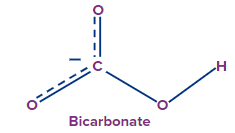
Imagine what would have happened, if scientists had not studied the property of solubility for these metal carbonates? How would we have got such life-saving components? In fact, bicarbonates play an important biochemical role in our system's physiological pH buffering system as well.
We shall now try to understand the solubility traits, of alkali metals and alkaline earth metals.
TABLE OF CONTENTS
- Formation of Carbonates and Bicarbonates of s-Block Elements
- Nature of Carbonates and Bicarbonates of Alkali Metals
- Solubility of Carbonates of Alkali Metals
- Solubility of Bicarbonates of Alkali Metals
- Solubility of Carbonates of Alkaline Earth Metals
- Solubility of Bicarbonates of Alkaline Earth Metals
- Practice Problem
- Frequently Asked Questions-FAQs
Formation of Carbonates and Bicarbonates of s-Block Elements
Oxoacids are acids that contain an oxo group (=O) and at least one hydroxyl group (−OH) attached to the central atom. The presence of the oxo group makes the hydrogen atom in the hydroxyl group acidic in nature. Alkali metals (Group 1) as well as alkaline earth metals (Group 2) form salts with all the oxoacids.
Examples: Na2CO3, Na3PO4, Na2SO4 etc.
Oxoacids of alkali metals are generally soluble in water and are thermally stable. Carbonates are obtained from reactions of carbonic acid with metal hydroxide.
H2CO3 + 2NaOH → Na2CO3 + 2H2O
Carbonate and bicarbonates of alkali metals, as well as of alkaline earth metals, can be obtained by passing carbon dioxide through their alkaline solutions. Carbonates are formed when small amounts of carbon dioxide are passed through alkaline solutions.
2NaOH (aq) + CO2(g) → Na2CO3 (s)+H2O (l)
Small amounts Soluble in water

Small amount Soluble in water
Eventually, bicarbonates are obtained when an excess of carbon dioxide is passed into the solution.
NaOH (aq) + CO2(g) → NaHCO3 (s)
Excess Excess amount is sparingly soluble in cold water

The formation of calcium carbonate is applicable during the setting of lime mortar, which was used in olden times in the construction of buildings.
Also, it has been observed that a white precipitate is formed when an aqueous solution of sodium hydroxide is kept for a long time in containers that are not sealed properly. This is due to the formation of insoluble NaHCO3 when NaOH reacting with the excess of carbon dioxide in the air.
NaOH (aq) + CO2(g) → NaHCO3 (s)
Excess amount is sparingly soluble in cold water.
Nature of Carbonates and Bicarbonates of Alkali Metals
As they are electrovalent compounds, carbonates and bicarbonates are generally solid at room temperature with certain exceptions.
- LiHCO3 does not exist in the solid state which is due to the very small size of Li+ which causes it to possess high heat of hydration and thus it prefers to stay in an aqueous state. Also, Ca(HCO3)2 exist in an aqueous state.
- The polarizing power of the Group-1 metal ions (M+) is less than the polarizing power of group-2 metal ions (M2+). Hence, Group-2 carbonates are more covalent than the carbonates of Group-1.
- Polarizing power decreases as we go down the group, with an increase in the size of metal cations. Hence, the ionic nature increases down the group.
- NaHCO3 and KHCO3 can exist in a solid state. But the bicarbonates of group-2 elements are only known in aqueous solutions.
- Hydrolysis of carbonate: Upon hydrolysis, alkali metal carbonates form bicarbonates and their respective hydroxides.
Na2CO3(aq) + H2O (l) → NaHCO3 (aq) + NaOH (aq)
Solubility of Carbonates of Alkali Metals
- The salts of oxoacids of alkali metals like the carbonates are soluble in water because they have larger hydration enthalpy as compared to their lattice energy.
- Their solubility increase down the group because of an increase in the ionic character of the salts. This is because, as we go down the group for alkali metals, the lattice energy decreases more rapidly than hydration energy due to an increase in the size of cation down the group.
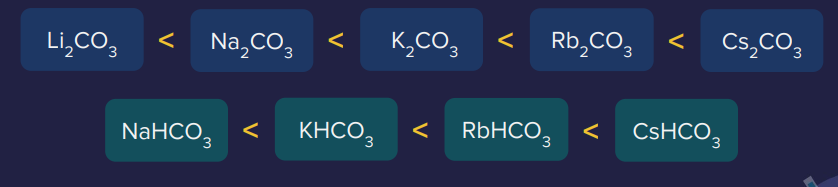
- The order of solubility of carbonates of alkali metals is :
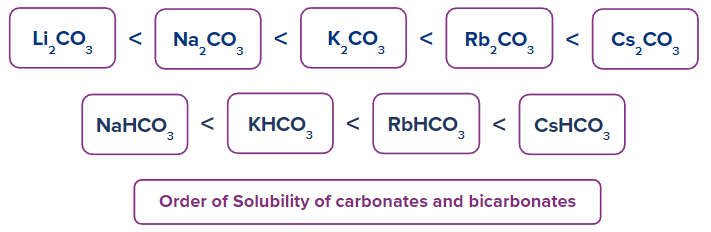
Li2CO3< Na2CO3 < K2CO3 <Rb2CO3 < Cs2CO3
- Li2CO3 is least soluble in water than the corresponding compounds of other alkali metals. This is because of the high lattice energy of Li2CO3 due to the small size of Li+ which forms a strong lattice due to strong electrostatic attraction between the very small Li cation and the carbonate anion and the lattice energy in case of Li2CO3 overpowering the hydration energy.
- If we see the dissolution of Li2CO3 and Na2CO3 , we see that Li2CO3 does not get dissolved in water and is precipitated at the bottom of the beaker. But, Na2CO3 is easily dissolved in water.
Solubility of Bicarbonates of Alkali Metals
- In sodium hydrogen carbonate ( NaHCO3) , the HCO3- ions are linked into a polymeric chain through H-bonding.
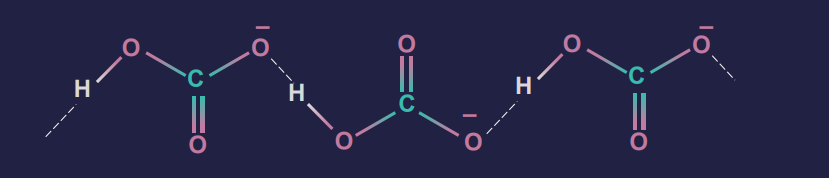

It is seen that the solubility of NaHCO3 is less than KHCO3 . This is because of the difference in their structures. NaHCO3 forms a polymeric chain because of hydrogen bonding and polymers have a tendency to remain insoluble in many solvents because of their larger molecular mass. Hence the solubility of NaHCO3 is very less as compared to KHCO3.
- In KHCO3 , RbHCO3, CsHCO3, HCO3- forms a dimeric anion and hence they have a greater solubilities compared to NaHCO3.
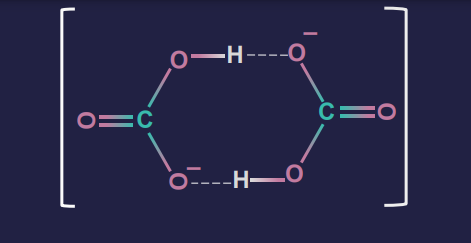
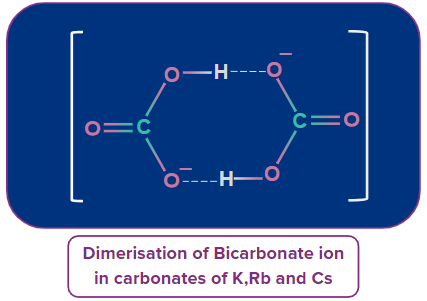
- Thus, the overall solubility trend of Group-1 carbonates and bicarbonates is:
Solubility of Carbonates of Alkaline Earth Metals
- In the case of carbonates of alkaline earth metals, they are rather insoluble in water because of low hydration energy and greater lattice energy as the Group 2 metal cations and carbonate ion size is comparable.
- On moving down the group, their solubility further decreases because their lattice energy remains almost constant but hydration energy decreases (owing to increasing ionic radii) and hydration energy becomes lower than lattice energy.
- The carbonates of alkaline earth metals are insoluble in water.
- They can be precipitated by the addition of Na2CO3 or (NH4)2CO3 solution to a solution of the soluble salts of these metals.
- Beryllium carbonate (BeCO3 ) is unstable (because of the large size difference between Be2+ and CO32- and can only be kept in the atmosphere of CO2.
- The solubility of carbonates of alkaline earth metals decreases as the atomic number of the metal increases down the group because the size of the cation increases down the group. We know that hydration energy and lattice energy are inversely proportional to the radii of the ions. Now, for carbonates, as the decrease in hydration energy is much more than the decrease in lattice energy, their solubility decreases down the group.
- The solubility of the carbonates follows the order:
BeCO3 > MgCO3 > CaCO3 > SrCO3 > BaCO3
Solubility of Bicarbonates of Alkaline Earth Metals
- The bicarbonates of alkaline earth metals do not exist in the solid state, but they are known to exist in solution.
- Calcium and magnesium bicarbonates are responsible for the temporary hardness of the water.
- Owing to increasing ionic radii, hydration energy decreases and becomes lower than lattice enthalpy. Hence, the solubility of alkaline earth metals also decreases down the group.
Be(HCO3)2> Mg(HCO3)2>Ca( HCO3)2>Sr(HCO3)2>Ba(HCO3)2
Practice Problems
Q1. Which bicarbonates are responsible for temporary hardness in water?
A. Mg(HCO3)2 and Ca( HCO3)2
B. Ba(HCO3)2and Ca( HCO3)2
C. Sr(HCO3)2 and Be( HCO3)2
D. Mg(HCO3)2 and Ba( HCO3)2
Answer: (A)
Solution: Calcium and magnesium bicarbonates are responsible for temporary hardness in water. They exist in an aqueous state and when Ca2+ and Mg2+combines with soap, which contains sodium ions, an insoluble precipitate is formed which is called scum. The property of hard water is that it doesn't form lather or foam with soap.
Q2. Which of the following does not exist in a solid state?
A. LiHCO3
B. NaHCO3
C. Mg(HCO3)2
D. KHCO3
Answer: (A)
Solution:
LiHCO3 does not exist in the solid state which is due to the very small size of Li+ which causes it to possess high enthalpy of hydration and thus it prefers to stay in an aqueous state. So the answer is option A.
Q3. The order of solubility of carbonates of alkali metals is:Li2CO3< Na2CO3 < K2CO3 <Rb2CO3 < Cs2CO3. Is this statement correct?
Answer: The solubility of alkali metal carbonates increases down the group because hydration energies decrease with increasing cation size. So, the lower the hydration energy, the lesser will be the solubility in water.
Q4. Why is the solubility of NaHCO3, less than that of KHCO3?
Answer: NaHCO3 forms a polymeric chain because of hydrogen bonding and polymers have a tendency to remain insoluble in many solvents because of high molecular weights. In KHCO3 , HCO3- forms a dimeric anion and hence they have a greater solubility compared to NaHCO3. Hence the solubility of NaHCO3 is very less as compared to KHCO3.
Frequently Asked Questions- FAQs
Question 1. Which is more soluble between sodium carbonate and sodium bicarbonate?
Answer: The size of carbonate ions is smaller than that of bicarbonates. Also, in sodium bicarbonate, the number of ions is 3 as compared to 2 ions in sodium bicarbonate. Lattice energy is directly proportional to the number of ions and inversely proportional to the size of atoms. Therefore, the lattice energy in sodium carbonate is higher than that of sodium bicarbonate. Thus, sodium bicarbonate (NaHCO3 ) is more soluble Na2CO3.
Question 2. Why is the hardness of water caused by dissolved calcium bicarbonate, temporary?
Answer: Water hardness that is caused by calcium bicarbonate is known as temporary, because boiling converts the bicarbonate to the insoluble carbonate. These insoluble carbonates can be filtered and removed from water. Hence, this type of hardness due to calcium and magnesium bicarbonate is temporary.
Question 3. What is the difference between the solubility of carbonates of alkali metals and alkaline earth metals?
Answer: Carbonates of alkali metals, are soluble except for lithium carbonate. Alkaline earth metal carbonates are almost insoluble. Alkali metals form monovalent cations. Alkaline earth metals are divalent cations with greater charge density. Hence, the carbonates of group 1 alkali metals are more ionic than those of group 2.
The hydration energy and lattice energy are both inversely proportional to the radii of the ions. For carbonates of alkaline earth metals, the decrease in hydration energy is much more pronounced than the decrease in lattice energy, and so, their solubility decreases down the group. Whereas, for carbonates of alkali metals, the decrease in lattice energy is less than that of alkaline earth metal carbonates .
So the solubility of carbonates of alkali metals increases down the group, and for alkaline earth metals, it decreases down the group.
Question 4. Which is more soluble: calcium carbonate or calcium bicarbonate?
Answer: The lattice energy of calcium carbonate is greater than that of calcium bicarbonate due to smaller ionic radii of carbonate ion (comparable to that of Ca2+) ions. Hence calcium bicarbonate is more soluble in water.
Related Topics
|
Sodium Chloride |
Alkali Metals |
|
Sodium Hydroxide |
Sodium Carbonate |
|
Thermal Stability |
Calcium Carbonate |

 Call Now
 Let's Chat
 Share
Share