-
Call Now
1800-102-2727


Physical Equilibrium - Solid-Liquid Equilibrium, Liquid-Vapour Equilibrium, Solid-Vapour Equilibrium, Practice Problems and FAQs

Have a close look at the following two images.
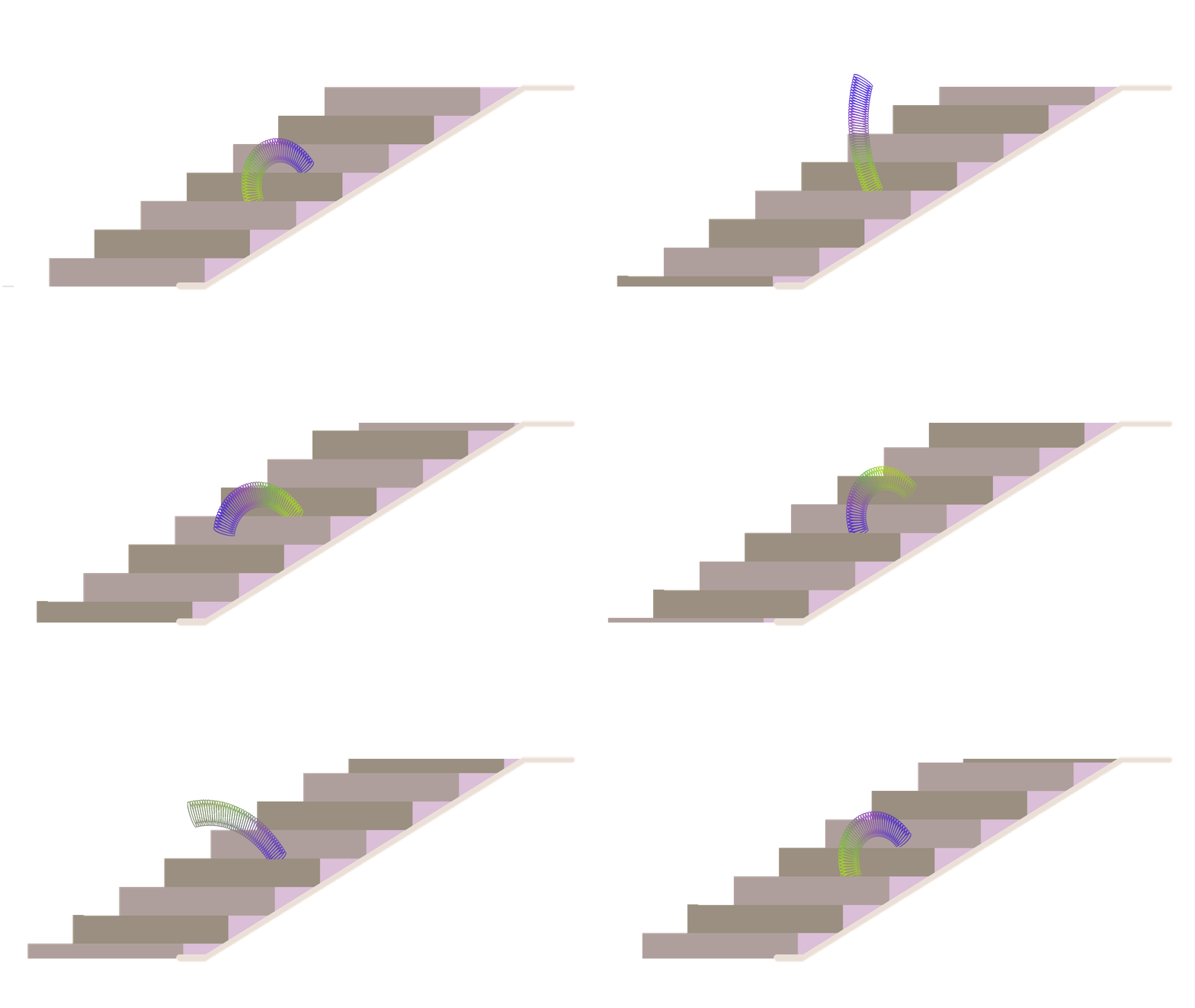
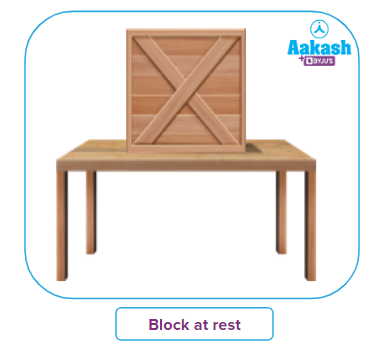
Jumping spring on elevator
First, is the jumping spring on an elevator. It is an example of what is called dynamic equilibrium, The spring and the elevator are dynamic (moving in opposite directions) and still the position of the jumping spring is not getting changed.
The second example of the block at rest represents a static equilibrium because the two opposing forces balance each other.
But do they represent physical equilibrium? NOOOOOO
It is extremely interesting to know that both examples do not represent physical equilibrium. Come let us see some basic conditions of physical equilibrium and their characteristics.
Table of Contents
- Physical Equilibrium
- Types of Physical equilibrium
- Characteristics of Physical equilibrium
- Practice Problems
- Frequently Asked Questions

FIG: Physical Equilibrium
Physical Equilibrium
Physical equilibrium is defined as a condition of equilibrium that involves a change in the physical state and no chemical change.
Physical equilibrium can be divided into the types listed below.
Types of Physical equilibrium
a) Equilibrium of solids and liquids
b) Equilibrium of vapour and liquid
c) Equilibrium of solids and gasses
d) Solids dissolving in liquid
e) Gaseous dissolution in liquid
(a) Equilibrium of solids and liquids
The chemical composition of a solid or a liquid does not change as it melts or solidifies.
However, there is a partial shift at OoC. As a result, it is in a state of physical equilibrium.
H2O(s)⇌H2O(l)
At equilibrium, The rate of melting of ice = The rate of freezing of water
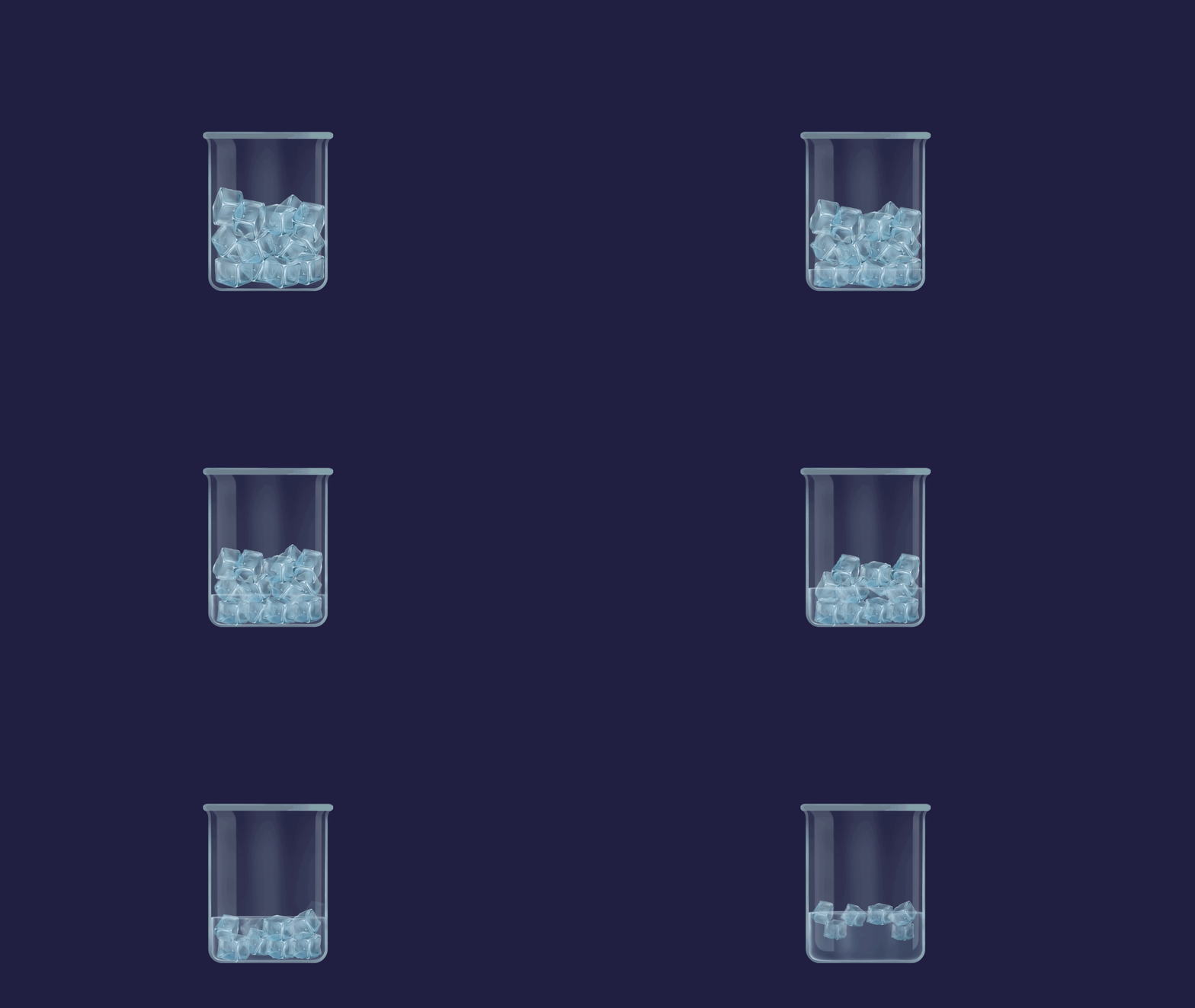
FIG: Ice and water at equilibrium in an
insulated system
(b) Equilibrium of vapour and liquid
The process of converting a liquid into a gas is known as vaporization, while the process of converting gas into a liquid is known as condensation. When the rate of evaporation equals the rate of condensation, a liquid-vapour equilibrium is reached. The liquid-vapour equilibrium of water can be represented as
H2O(l)⇌H2O(g)
At equilibrium, The rate of vaporisation of water = The rate of condensation of vapours

FIG: Illustration of vapour-liquid equilibrium
c) Equilibrium of solids and gasses
A solid transforms into vapour in this system. In a system containing volatile solids such as dry ice, camphor, solid iodine, and so on, this equilibrium will exist. When solid iodine is placed in a closed vessel, the vessel fills up with violet vapour over time, and the colour intensity increases. The colour is the observable property in this case. The intensity of the violet colour will become consistent after a period of time, suggesting that equilibrium has been reached. As a result, the rate at which solid iodine sublimes to produce iodine vapour is equal to the rate at which iodine vapour condenses to produce solid iodine.
I2(s)⇌I2(g)
At equilibrium, The rate of sublimation = The rate of deposition

FIG: Illustration of solid-vapour equilibrium
d) Solids dissolving in liquid
A solid in liquid equilibrium exists between the solute in a saturated solution and undissolved solute. It is a dynamic equilibrium. Dissolution is when a solid, liquid, or gaseous solute dissolves in a solvent to form a solution.
A sugar solution is made by mixing one scoop of sugar with one cup of water in a beaker. At room temperature, however, just a small amount of sugar may dissolve in a given amount of water. A thick syrup of sugar is formed by adding more sugar into the beaker. A saturated solution is formed when no more sugar (i.e., solute) can be dissolved in the solution at a given temperature and any extra sugar added will settle down at the bottom. Some of the solute sugar in the solution comes out of the solution as a part of crystallization. The sugar that is crystallized is compensated by the dissolution of the undissolved sugar molecules into the solution.
At equilibrium, The rate of crystallization = the rate
of dissolution

FIG: Dissolution of sugar in water
e) Gaseous dissolution in liquid
To understand gas in liquid equilibrium, an example of aerated drinks enclosed in a container can be
considered.
When the container is opened, we can see that some of the carbon dioxide gas dissolved in it fizzes out rapidly (i.e., bubbles will come out). This is because of the difference in the solubility of CO2 at different pressures. Inside the container, the CO2 gas is dissolved at very high pressure but when the lid of the containers was opened, there was a decrease in the pressure inside the container and the CO2 gas escaped out in the form of bubbles. A dynamic equilibrium is a Gas in liquid equilibrium established between the molecules in the gaseous state and the molecules that are dissolved in the liquid inside the closed container. This equilibrium is represented as
CO2(g)⇌CO2(aq)

Dissolution of gasses in liquids
Characteristics of Physical equilibrium
1. For gasses, equilibrium is only feasible in closed systems.
2. Both opposing processes proceed at the same pace in equilibrium.
3. At equilibrium, the system's quantifiable attributes remain constant.
4. The amount of quantifiable qualities at any point in time reflects the level of completion, or how far the reaction has progressed forward.
Practice Problems
Q1. Which of the following isn’t a physical equilibrium state?
A. N2(g)+3H2(g)⇌2NH3(g)
B. H2(g)+Cl2(g)⇌2HCl(g)
C. H2O(l)⇌H2O(g)
D. I2(s)⇌I2(g)
Solution: Because chemical changes take place in reactions (A), and (B), these are not examples of physical equilibrium. In option (C), during the melting of ice or option (D), sublimation of iodine, the chemical composition does not change, but only changes from one state to another. As a result, it is in a state of physical equilibrium.
As a result, the correct answers are (A) and (B).
Q2. Which of the following is a physical equilibrium state?
A. O2(g) ⇌O2(aq)
B. H2O(l)⇌H2O(s)
C. H2O(l)⇌H2O(g)
D. I2(s)⇌I2(g)
Solution: These all are examples of physical equilibrium because, in every option, there is a change of state but chemical composition remains the same. So, the correct answers are (A), (B), (C) and (D).
Q3. Which of the following is an example of a physical equilibrium?
A. Peroxide decomposition
B. Water vaporisation
C. Sulphur dioxide is oxidised to sulphur trioxide
D. Chlorine and hydrogen react together
Solution: These all are examples of chemical equilibrium except option (B) because, in options (A), (C) and (D) there is a change of chemical composition but in option (B), change of state happens but chemical composition remains the same.
- Peroxide decomposition: 2H2O2(aq)⇌2H2O(aq)+O2(g)
- Water vaporisation; H2O(l)⇌H2O(g)
- Sulphur dioxide is oxidised to sulphur trioxide: 2SO2(g)+O2(g)⇌ 2SO3(g)
- Chlorine and hydrogen react together: H2(g)+Cl2(g)2HCl(g)
So, the correct option is (B)
Q4. Physical equilibrium is a state of balance between two or more variables.
A. Different states of the same chemical species
B. In the same state, the same chemical species
C. Chemical species differ in different states.
D. None of the preceding
Solution: Physical equilibrium is a state of balance between two or more variables having different states of the same chemical species. So, the correct option is (A).
Frequently Asked Questions
Question 1. Can we assume that every physical equilibrium is a heterogeneous equilibrium?
Answer: Yes, it is true because, in every physical equilibrium, there is the involvement of change in the physical state and if states are different in a reaction, it is heterogeneous in nature.
Question 2. Comment on the statement that all physical equilibriums are not static but dynamic in nature.
Answer: This statement is true as all physical equilibriums are dynamic in nature because when a state transformation occurs, physical equilibrium exists between multiple physical states of a substance. It is dynamic in nature as at the same time, two opposing processes are taking place.
Question 3. Does a block on a surface at rest exist in physical equilibrium or chemical equilibrium?
Answer:A block on a surface at rest neither exists in physical equilibrium nor in chemical equilibrium because For a physical equilibrium, there must be a change in state of the system and for chemical equilibrium, the composition should be varied. but here state and chemical composition both remain the same.
Question 4. Does physical equilibrium be attained in an open container?
Answer: In an open container, no physical equilibrium can be achieved. Let's take an example of liquid gas equilibrium between water and its vapours. Because water vapours are leaving from the container, more liquid water is converted to vapours to take their place. This process continues until all of the water is turned into vapours. Hence, there is no step in between where vapours start converting into water or no equilibrium stage.
Related Topics
|
Law of mass action and Equilibrium constant |
Chemical Equilibrium-Types of Equilibrium |
|
Vant Hoff's Equation |
Reversible and Irreversible reactions |
|
Le Chatelier's Principle |

NEET Related Links
JEE MAIN Related Links
JEE Advanced Related Links
JEE Advanced Eligibility Criteria
JEE Advanced Chemistry Syllabus
JEE Advanced Registration Dates
CUET Related Links
Important Topics
Anemometer : Measurement of Wind Speed
Angular Acceleration Atomic Theory Audible and Inaudible Sound Average Speed and Average Velocity Average Velocity Avogadros Number Avogadros Hypothesis Azimuthal Quantum Number Balanced Force Bar Magnet Biconvex Lens Boyles Law Buoyancy Calorimeter Carnot Engine Celestial Bodies Centripetal And Centrifugal Force Concave and Convex Lenses Concave Convex Mirrors Contact and Non Contact Force Controlled Thermonuclear Fusion Convection Currents Convex Lens Convex Mirror Destructive Interference Difference Between Conduction Convection and Radiation Difference Between Electric Field and Magnetic Field Difference Between Heat And Temperature Difference Between Series And Parallel Circuits Differences Between Acceleration And Velocity Distance and Displacement Distance Time Graph Electrical Force : Electric Forces and Their Types Electromagnetic Waves : Definition, Equation and Properties of Electromagnetic Waves Electromagnetism Electron Spin Fluid Flow : Bernoullis Equation Derivation and Fluid Mechanics Fluid Friction : Types and Factors of Fluid Friction Frames of Reference : Inertial and Non- Inertial Frame of Reference Frequency and Wavelength Frictional Force Importance of Hydrosphere Instantaneous Speed and Velocity Introduction to Motion Kinetic and Potential Energy Difference Law Of Conservation of Energy Layers of the Earth Light Energy Light Sources List of physics scientists and Their inventionsLoudness of Sound
Magnetic Dipole Moment Magnetic Field Non - Contact Force Non - Renewable Energy Ohms Law Optics P Wave Physics Symbols Plane Mirrors Poissons Ratio Projectile Motion Properties of Water : Anomalous Expansion of Water Radius of Gyration Reflection of Light Reflection of Waves Relative Density Resonance Reverberation Rolling Friction Rotation and Revolution Screw Gauge Semiconductors and Insulators Sliding Friction Speed Time Graphs Static Friction Stefan Boltzmann Law Stress Tension Tension Force Thermometer: Clinical Laboratory Thermometer Types of Rocks Types of Waves Uniform Motion and Non Uniform Motion Unit of Voltage Uses of Convex Lens Uses Of Convex Mirror Uses of Electromagnet Uses of Optical Fibre Wave Wavelength of Light What is Scattering of Light Working of Electric Bell Conventional and Non-conventional Sources of Energy Buoyant Force Bulk Modulus of Elasticity Bernoulli’s Principle Angular Momentum Difference Between Speed And Velocity ForceUnit of Heat
Difference between Distance and Displacement Simple Microscope Derivation Of Equation Of Motion Thermometer: Clinical & Laboratory Thermometer Difference between Concave and Convex LensDerivation Of Lens Maker Formula
Unit Of Pressure Velocity Uses of Plane Mirror
Wave Theory of Light
Unit of Density Unit of Light Unit of Force Unit of Magnetic Field Unit of wavelength Unit of Viscosity Uses of Electroplating Young's Modulus
What is the Scattering of Light
Lenz Law Space Wave Propagation Schrodinger Wave Equation Relation between Fahrenheit and Celsius Refractive Index Potentiometer Working Pascal Law Oscillatory Motion Optical Instruments Newton's Laws of Motion - First Law Modulation and Demodulation Magnetic Flux Lens Formula and Magnification Kaleidoscope Faradays Law Epsilon Naught Value Energy Bands Electrostatics Electroscope AC Generator Unit of Current Lithosphere Bending Equation Derivation Difference Between Pound and Kilogram Semiconductor Devices OTEC - Ocean Thermal Energy Conversion Hall Effect Rectilinear Propagation of Light Difference Between Ammeter and Voltmeter Coefficient of Linear Expansion Ampere’s Law Cyclone and Thunderstorm Save The Environment From Pollution Particle Nature of Light Types of DC Motor Uses Of Transistor Derivation of Phase Rule Unit of Humidity

 Call Now
 Let's Chat
 Share
Share