-
Call Now
1800-102-2727


Liquid Solutions: Definition, Components, Properties and Types of Solution, Practice Problems and Frequently Asked Questions

Do you know how deep sea aquatic animals can survive?
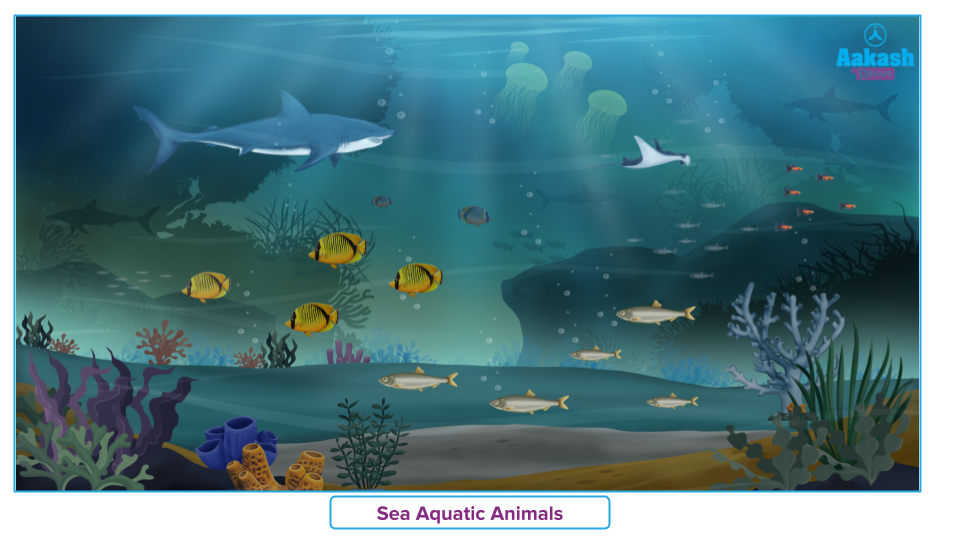
Oxygen (solute) is dissolved in seawater (solvent) and almost every aquatic animal, from the strangest deep sea creatures to common coral-dwelling goldfishes, relies on oxygen dissolved in water to survive. In this case, oxygen (solute) exists as a polar molecule to which water has a natural attraction. The oxygen molecules emitted by aquatic flora, along with the oxygen molecule from the air, mix with ocean waves and diffuse through the water column to reach the organisms.
A mixture of one or more solutes along with the solvent in which they are dissolved is referred to as a solution. The substance that is being dissolved is known as a solute, and the solvent is the medium in which it is dissolved.
Table of Content:
- Definition of Solution
- Components of solution
- Types of Solutions
- Types of Liquid Solutions
- Properties of Solution
- Practice Problems
- Frequently Asked Questions
Definition of Solution:
A solution is a blend of two or more substances and is homogeneous in nature. The composition of a homogeneous mixture is the same all the way through. A true solution is another name for a homogeneous solution. In true solutions, the size of the dissolved particles is equal to that of a molecule. True solutions are known as molecular solutions. True solutions are only made up of soluble components.
Examples of solutions include the familiar salt water, sugar water, metal alloys, vinegar and air.
Components of Solution:
The components of a solution are the substances that make up the solution. For instance, a sugar solution is a mixture of sugar and water.
1. Solvent: The predominant constituent of a solution that dissolves other compounds. The substrate of the solution is also the solvent. For instance, the component water is referred to as the solvent in a solution of sugar in water
2. Solute: To create the solution, the component is dissolved in the solvent. In a sugar syrup, sugar is referred to as a solute.

The examples below show the solvent and solute in some solutions.
Air is a gaseous mixture that is homogeneous. Both the solvent and the solute are gases in this case.
Iodine tincture is an iodine-in-alcohol solution. The solute is iodine, and the solvent is alcohol.
Types of Solutions:
The solutions can be classed into the following group based on the solute and solvent physical states:
|
S.No |
Types of Solution |
Solute |
Solvent |
Examples |
|
1 |
Solid-solid |
solid |
solid |
Alloys like brass, bronze etc. |
|
2 |
Solid-liquid |
solid |
liquid |
Sugar solution, salt solution etc. |
|
3 |
Solid-gas |
solid |
gas |
Sublimation of substances like camphor, iodine etc into the air. |
|
4 |
Liquid-solid |
liquid |
solid |
Hydrated salts, mercury in amalgamated zinc, etc. |
|
5 |
Liquid-liquid |
liquid |
liquid |
Alcohol in water, benzene in toluene |
|
6 |
Liquid-gas |
liquid |
gas |
Aerosol, water vapor in the air. |
|
7 |
Gas-solid |
gas |
solid |
Hydrogen absorbed in palladium |
|
8 |
Gas-liquid |
gas |
liquid |
Aerated drinks |
|
9 |
Gas-gas |
gas |
gas |
A mixture of gases, etc |
Types of Liquid Solutions:
1. Solid-Liquid solution: In order to create uniform mixtures known as solid-liquid solutions, the majority of solids must be dissolved in one or more liquids. In these circumstances, the liquid is known as the solvent, and the solid is known as the solute. When the solute concentration is significantly lower than the solvent concentration, the solution is said to be diluted. When there is a significantly larger amount of solute present, the solution is said to be concentrated. like when sugar is added to water.
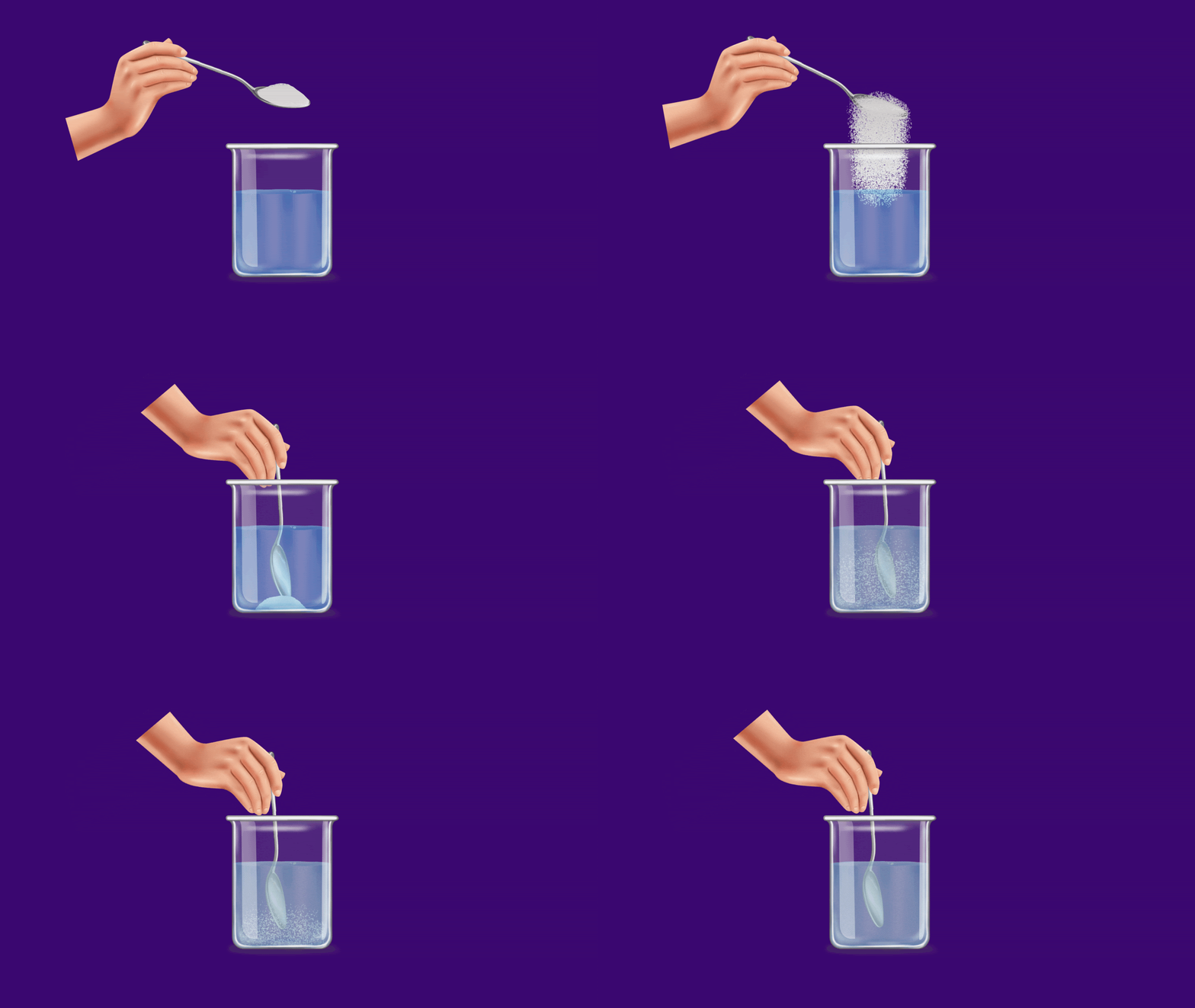
2. Liquid-Liquid Solutions: Both the solvent and the solute are present in liquid-liquid solutions. methanol dissolved in water, as an example.
The system that results from the mixing of two liquids might be homogeneous or non-homogeneous. The following categories of liquid-liquid systems can exist depending on their degree of mutual miscibility.
a) Completely Miscible: Two liquids are considered to be totally miscible when they combine in all quantities to form homogeneous mixtures. A true solution is created when two totally miscible liquids are combined. There are only two types of totally miscible liquids: polar (like alcohol and water) and non-polar (e.g., benzene and toluene).
b) Partially Miscible: When some liquid pairs are combined, they partially dissolve in one another and separate into two layers. As the second layer dissolves the second component into the first, the first layer dissolves the first component into the second. Partially miscible liquid pairs are referred to as these. Phenol and triethylamine are two examples of partially miscible liquid couples.
c) Immiscible: Two liquids that are immiscible do not combine into one another but rather create distinct layers. Examples of liquid couples include benzene and water, carbon tetrachloride and water, and others. When one liquid is polar and the other is non-polar, immiscibility arises.
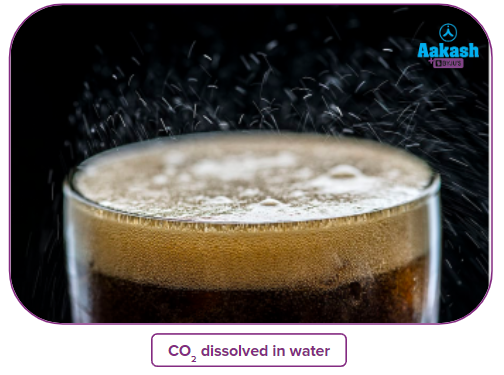
3. Gas-Liquid Solutions: Solutions with a gaseous solute and a liquid solvent are known as gas-liquid solutions. For instance, a water-carbon dioxide mixture or water-oxygen solution
4. Aqueous solution: A solid is dissolved in water to produce an aqueous solution. Aqueous solutions include sodium chloride solutions in water, glucose solutions in water, and soap solutions in water.
5. Non-aqueous solution: A non-aqueous solution is one that is created when a solid is dissolved in a liquid that is not water, such as acetone, benzene,ethanol, carbon disulphide, and so on.
6. Concentrated solution: The amount of the solute in the given solvent is highly concentrated in a concentrated solution. Apple juice, brine solution, and black tea are a few examples.
7. Dilute solution: A dilute solution has a big amount of solvent and a little amount of solute. Examples of diluted solutions include light-colored tea and salt solution.
8. Isotonic solution: Two solutions having the same osmotic pressure are termed as isotonic solutions.
9. Hypertonic solution: A solution having a higher osmotic pressure relative to some other solution is called a hypertonic solution.
Hypotonic solution: A solution having a lower osmotic pressure relative to some other solution is called a hypotonic solution.
10. Saturated solution: A saturated solution is a solution where a given amount of solute is completely dissolved in a solvent at a given temperature.
11. Unsaturated solution: An unsaturated solution is a solution in which more solutes can be dissolved at the same temperature.
12. Supersaturated solution: When a certain concentration of a solute is dissolved at the same temperature, the solution is said to be supersaturated when the solute begins to precipitate out.
Properties of solution:
The following are the most important properties of a solution:
- A solution is a uniform mixture.
- A solution's solute particles are extremely small. It is less than 1 nm in diameter (
 ).
).
- It is impossible to see the particles of a solution even with a microscope.
- A solution's particles pass through the filter paper. As a result, filtration is incapable of separating a solution.
- The solutions are extremely reliable. The solute particles do not separate out when a solution is kept.
- Light is not scattered by a true solution and it won’t exhibit Tyndall effect (This is because its particles are very, very small).
Practice problems:
Q.1. What happens when a solute crystal is added to a supersaturated solution?
(A) It becomes a colloidal solution
(B) The solute dissolves in the solution
(C) The solution desaturates
(D) The solute precipitates out of the solution
Answer: (D)
Solution: When a supersaturated solution is treated with a solute crystal, the solute particles leave the solution and form a crystalline precipitate. Seeding is another term for the addition of the solute crystal.
Q.2.What attribute of water accounts for its peculiar solvent properties?
(A) Pola
(B) Cohesive
(C) Flexible
(D) None of the above
Answer: (A)
Solution: Water is considered to be an universal solvent. It dissolves a larger number of substances than any other solvent. This unique property is due to the water molecule's highly polar nature,arising out of the presence of partially positively charged hydrogen ions and doubly negatively charged oxygen ions.
Q.3. In an endothermic dissolution, what happens to the solubility of the dissolved solute on rising and then lowering the temperature?
(A) Increases continuously
(B) Decreases continuously
(C) Increases and then decreases
(D) Decreases and then increases
Answer: (C)
Solution: When a solution is saturated, there is a thermodynamic equilibrium between the undissolved and dissolved solutes. Solubility increases with temperature for endothermic solute dissolution. So, increasing and decreasing temperatures will increase and then decrease the solubility of the solute, respectively, according to Le Chatelier's Principle of Equilibrium.
Q4. Choose the correct statement on solubility of a gas in a liquid
(A) Increases when pressure decreases
(B) Increases when temperature increases
(C) Decreases when temperature increases
(D) Decreases when pressure increases
Answer: (C)
Solution: As per Henry’s law, solubility of the gas increases is directly proportional to the gas pressure above the liquid. Higher pressure forces more gas particles into the liquid to increase the solubility.
On the contrary, increase of temperature pushes the dissolved gases out of liquid decreasing the solubility.
Frequently Asked Questions:
Q1.What is the effect of heating and cooling on the saturated solution?
Answer: A solution is only considered "saturated" at a particular temperature. When heated to an ambient temperature, a saturated solution becomes unsaturated. This is due to the fact that more solute can dissolve when the temperature of the solution rises due to an increase in the solubility of the solute. Some of the dissolved solutes harden when a saturated solution is cooled to a lower temperature. This is due to the solubility of the solute decreasing as the solution cools.
Q2.What role does solution play in your life?
Answer: Any of the phases of matter can be dissolved in another phase in a solution, which is a homogenous mixture of molecules. Solution chemistry is significant in the laboratory and in nature because most chemical reactions take place in solutions, whether solids, liquids, or gases.
Q3.What conditions affect the making of a solution?
Answer: Factors influencing solution formation:
Proportion of solute and solvent: To dissolve the solute, the solute should be in less quantity and the solvent should be in greater quantity.
Size of solute particles: Smaller solute particles dissolve more quickly.
Solvent temperature: As the temperature rises, the solute dissolves faster due to the rapid movement of molecules.
Q4. Is salt and water a mixture or a solution?
Answer: Salt and water is both a solution and a mixture. The solute, salt, can be dissolved in water, and the solute is evenly distributed throughout the solvent. As a result, it is a solution. It's also a mixture because the constituents can be separated mechanically, by distillation. Distillation is performed by boiling the mixture. The water in the solution turns to steam and is captured as condensation and the salt remains.

 Call Now
 Let's Chat
 Share
Share