-
Call Now
1800-102-2727


Physical Properties of Group-13 Elements- Introduction, Electronic Configuration, Properties, Practice problems and FAQs

Suppose you go to a shop to purchase utensils for household purposes. Can you tell me what are the properties you look for when you want to select a particular type of utensil?
You will definitely look for something which is light in weight and at the same time does not get corroded easily. Based on this can you tell me which element is widely used in the manufacturing of utensils? You must be thinking of stainless steel but it is an alloy and not metal. One metal which has all the desired properties is aluminium. Aluminium is a group-13 element and due to its properties like low density, strength, corrosion resistance etc. aluminium is widely used in manufacturing industries like aerospace manufacturing, utensils manufacturing, food packaging material manufacturing etc. Let's go through this article to know and compare the physical properties of the elements belonging to group-13.
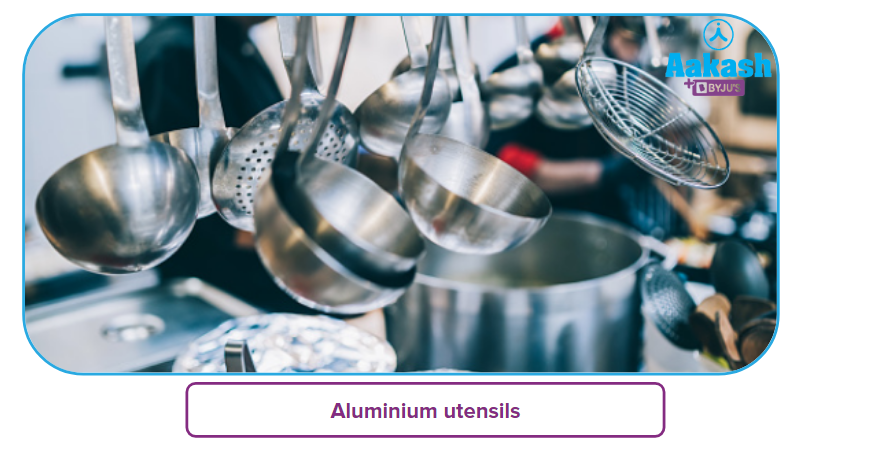
Table of content
- Introduction to Group-13 Elements
- Electronic configuration of Group-13 Elements
- Physical Properties of Group-13 Elements
- Practice Problems
- Frequently Asked Questions-FAQs
Introduction to Group-13 Elements
Boron (B), Aluminum (Al), Galium (Ga), Indium (In), and Thallium (Tl) are elements in Group 13 of the periodic table having an outermost electronic configuration of ns2np1 in which the last electron enters the p-subshell and are categorised as p-block elements. The chemical properties of the elements of group-13 are almost similar due to a similar outer electronic arrangement. Even yet, there are some differences in the nature and properties of the elements in this group, such as boron's non-metallic nature. Other members of this group, on the other hand, are metallic in nature. Aluminium is found in the form of bauxite, cryolite, and alumina silicate minerals, whereas boron is found in borax. Sulphide minerals contain other elements such as indium, gallium, and thallium.
Electronic configuration of Group-13 Elements
All the Group 13 elements have the same outermost electronic configuration. In general, it can be represented as ns2 np1, where ‘n’ stands for the valence shell number.
|
Element |
Atomic number |
Electronic configuration |
|
Boron |
5 |
[He] 2s2 2p1 |
|
Aluminium |
13 |
[Ne] 3s2 3p1 |
|
Gallium |
31 |
[Ar] 3d10 4s2 4p1 |
|
Indium |
49 |
[Kr] 4d10 5s2 5p1 |
|
Thallium |
81 |
[Xe] 4f14 5d10 6s2 6p1 |
As can be seen from the electronic configuration, the outermost shell of the group-13 atoms has 3 electrons; thus, their valency is 3. In order to stabilize their valence p-orbital, they need three electrons to be removed. As the last electron lies in the p-orbital, it also justifies its position in the p-block of the periodic table.
Physical Properties of Group-13 Elements
Oxidation states of group-13 elements
- Elements of this group show two different types of oxidation states +1 and +3. However, the stability of +1, the oxidation state decreases on moving down the group and the stability of + 3 oxidation state decreases due to the inert pair effect.
- The inert pair effect describes the unwillingness of s-subshell electrons to participate in chemical bonding. The effective nuclear charge pulls valence electrons present in the s-subshell tightly down the group due to poor shielding of d and f-orbitals, limiting their participation in bonding.
- Inert pair effect starts from n4 (here ‘n’ belongs to period number) due to poor shielding of d-orbital electrons which starts in the 4th period but is significant in the 6th and 7th period of the periodic table as electrons are filled in the f-subshell.
- Both +1 and +3 oxidation states have been seen in Ga, In, and Tl and compounds of Tl+ are more stable than Tl3+.
Order of stability of compounds with +1 oxidation state of central atom: Ga+ < In+ < Tl+
Order of stability of compounds with +3 oxidation state of central atom: B3+ > Al3+ > Ga3+ > In3+ > Tl3+
Atomic and ionic radius of group-13 elements
- Atomic radius of the group-13 elements increase on moving down the group from boron to thallium except for gallium which has abnormally smaller size. The increase in atomic radius down the group is because of an increase in the number of shells due to which the distance between the nucleus and valence shell electron increases resulting increase in size.
The order of atomic size of group-13 elements: B < Ga < Al < In < Tl
- Atomic size of gallium is abnormally less than aluminium because in the case of gallium 10 electrons are filled in d-orbitals and due to poor shielding of d-orbitals, there is a strong attraction of valence shell electrons from the nucleus which leads to a contraction in the size of an atom and is known as scandide contraction or d-orbital contraction.
- The difference in the atomic size as we move from indium to thallium decreases because of poor shielding of f-orbitals electrons filled in the case of thallium which leads to the stronger attraction of valence shell electrons from the nucleus and contraction in the size of an atom.
- The same trend is observed in the case of the ionic radius of an element belonging to this group with both +1 and +3 oxidation state.
The trend in the ionic radius with (+1) oxidation state: Ga+ < In+ < Tl+
The trend in the ionic size with (+3) oxidation state: B3+ < Al3+ < Ga3+ < In3+ < Tl3+
Note: It is important to note that the shielding effect of d-orbitals electrons is more than the f-orbitals electron.
The order of screening effect is s > p > d > f.
Density of group-13 elements
- Density of the elements gradually increases from boron to thallium due to a greater increase in the atomic weight of the element as compared with its atomic volume which also increases due to an increase in atomic size.
The trend in the density of group-13: B < Al < Ga < In < Tl
- Boron and aluminium have comparatively lower values of density as compared with other elements of group-13 (i.e Ga, In, Tl) because of lower atomic weight as compared with the atomic volume of other elements present in the group.
Melting points and boiling points of group-13 elements
- Melting points of group-13 elements does not show a regular trend. The melting point first decreases from boron to gallium and then increases in the case of indium and thallium.
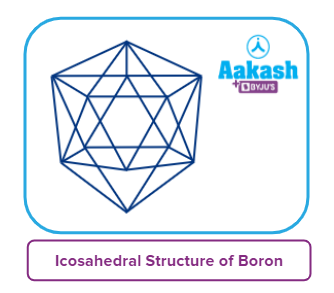
- The melting point of boron is maximum in its group because the melting point depends upon the packing and boron exists as a giant covalent polymer structure in both solid and liquid states. Therefore, more energy will be required to overcome the attraction force present between the molecules and therefore melting point exceptionally increases. Boron exists in the form of an icosahedron crystal in a solid-state.
- Gallium has the lowest melting point in its group because it exists as a discrete diatomic molecule.
The trend in the melting point of group-13 elements: B>Al>Tl>In>Ga
- Boiling point of the elements present in the group-13 decreases from boron (B) to thallium (Tl).
The trend in the boiling point of group-13 elements: B>Al>Ga>In>Tl
Electronegativity of group-13 elements
- Electronegativity of the elements present in group-13 decreases from boron to aluminium but then electronegativity of other elements present in this group from gallium to thallium increases slightly.
The trend in the electronegativity of group-13 elements: B>Tl>In>Ga>Al
- Electronegativity decreases as atom size increases from boron to aluminium, but it increases from gallium to thallium because 10 electrons are added in the valence d-subshell of gallium and indium and 14 electrons are added in the valence shell of thallium which results in poor shielding of d and f-orbital electrons and increases the electronegativity value.
Ionisation enthalpy of group-13 elements
- Ionisation enthalpy of group-13 elements does not follow a uniform trend and irregularly decreases on moving down the group. In actual ionisation energy decreases from boron to indium but in the case of thallium ionisation energy is exceptionally high followed by the gallium.
- In the case of thallium, 10 d-orbital electrons and 14 f-orbital electrons are filled and due to poor shielding of d and f-orbital electrons, the ionisation energy of thallium increases.
- In the case of gallium due to poor shielding of 10 d-orbitals electrons, the valence electrons feel a stronger attraction force from the nucleus and therefore more energy is required to remove the electron as compared with the aluminium atom.
Trend in the first ionisation enthalpy of group-13 elements: B>Tl>Ga>Al>In
Note: It is important to note that the shielding effect of d-orbital electrons is more than the f-orbital electrons and more the shielding effect, the lesser will be the ionisation enthalpy.
The order of screening effect is s > p > d > f
Metallic and non-metallic character of group-13 elements
- Metallic property of an element is determined by the tendency to accept electrons and vice-versa for the non-metallic character of an element.
- On moving down the group from boron to aluminium metallic character increases due to the increase in the size of the atom but the metallic character in case of gallium to thallium decreases slightly due to poor shielding of d-orbital electrons in case of gallium and indium and poor shielding of d and f-orbital electrons in case of thallium. Effective nuclear charge increases which decreases the tendency to remove the valence electron and exhibit electropositive character.
- Boron is non-metal, whereas aluminium possesses a metallic character. But gallium, indium and thallium exhibit lesser metallic properties as compared to aluminium.
Reduction potential and oxidizing nature of group-13 elements
Standard reduction potential (E0(SRP)) value for (M3+ --> M) where ‘M’ represents the element present in group-13 (except boron). The standard reduction potential value becomes less negative as we move from Aluminium to indium and in the case of thallium, the standard reduction potential value becomes positive which signifies that on moving down the group generally the reducing tendency of element increases. This is due to the fact that on moving down the group stability of +3 oxidation decreases due to the inert pair effect.
|
Elements |
Standard reduction potential (E0(SRP)) (M3+ --> M) in Volt |
|
Boron |
-0.87 |
|
Aluminium |
-1.66 |
|
Gallium |
-0.56 |
|
Indium |
-0.34 |
|
Thallium |
+1.26 |
A similar trend can also be observed in the standard reduction potential (Eo(SRP)) value for (M+ --> M) in the case of thallium is (-0.34 V) which also shows that reduction of (Tl+) is difficult and it is the more stable oxidation state of thallium due to the inert pair effect.
Practice Problems
Q1. Select the correct option for the element which exhibits the highest melting point in group-13.
- B
- Al
- Ga
- Tl
Answer: (A)
Solution:
Melting points of group-13 elements does not show a regular trend. The melting point first decreases from boron to gallium and then increases in the case of indium and thallium.
The melting point of boron is maximum in its group because the melting point depends upon the packing and boron exists as a giant covalent polymer structure in both solid and liquid states. Therefore, more energy will be required to overcome the attraction force present between the molecules and therefore melting point exceptionally increases. Boron exists in the form of an icosahedron crystal in a solid state.
The trend in the melting point of group-13: B>Al>Tl>In>Ga
Q2. Select the correct option to identify the most stable oxidation state of indium and thallium respectively.
- In+, Tl+
- In+, Tl3+
- In3+, Tl+
- In3+, Tl3+
Answer: (C)
Solution: Elements of this group show two different types of oxidation states +1 and +3. However, the stability of +1 the oxidation state increases on moving down the group and the stability of + 3 oxidation state decreases due to the inert pair effect.
Inert pair effect starts from n4 (here ‘n’ belongs to period number) due to poor shielding of d-orbital electrons which starts in the 4th period but is significant in the 6th and 7th period of the periodic table as electrons are filled in the f-subshell.
Both +1 and +3 oxidation states have been seen in Ga, In, Tl in case of Indium(In) higher oxidation state(+3) is more stable than lower oxidation state (+1) but in case compounds of Tl+ are more stable than Tl3+.
Order of stability of compounds with +1 oxidation state of central atom: Ga+ < In+ < Tl+
Order of stability of compounds with +3 oxidation state of central atom: B3+ > Al3+ > Ga3+ > In3+ > Tl3+
Q3. Select the correct option which represents the correct trend for the given property for group-13 elements.
- B>Al>Ga>Tl>In (Ionisation energy)
- B>Tl>Al>In>Ga (Melting point)
- B<Al<Ga<In<Tl (Atomic size)
- B>Tl>In>Ga>Al (Electronegativity)
Answer: (D)
Solution:
- Ionisation enthalpy of group-13 element does not follow a uniform trend and irregularly decreases on moving down the group. In actual ionisation energy decreases from boron to indium but in the case of thallium ionisation energy exceptionally increases followed by the gallium.
Trend in the first ionisation enthalpy of group-13 elements: B>Tl>Ga>Al>In
- Melting point of group 13 element does not show a regular trend but the melting point first decreases from boron to gallium and then increases in the case of indium and thallium.
The melting point of boron is maximum in its group because the melting point depends upon the packing and boron exists as a giant covalent polymer structure in both solid and liquid states. Therefore, more energy will be required to overcome the attraction force present between the molecule and therefore melting point exceptionally increases. Boron exists in the form of icosahedron crystal in a solid state.
Trend in the melting point of group-13 elements: B>Al>Tl>In>Ga
- Atomic radius of the group-13 element increase on moving down the group from boron to thallium except for gallium which has abnormally smaller size because of increase in the number of shells due to which the distance between the nucleus and valence shell electron increases resulting increase in size.
Trend in the atomic size of group-13 elements: B<Ga<Al<In<Tl
- Electronegativity of the elements present in group-13 decreases from boron to aluminium but then electronegativity of other elements present in this group from gallium to thallium increases slightly.
Trend in the electronegativity of group-13 elements: B>Tl>In>Ga>Al
Q4. Select the correct reason from the given options for the exceptional high melting point of boron element in its group.
- Boron exhibits ionic nature
- Due to giant covalent structure of boron
- Due to high electronegativity value
- Due to high charge/mass ratio in case of boron.
Answer: (B)
Solution:
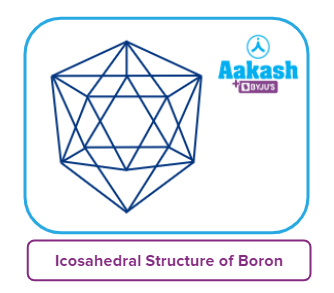
The melting point of boron is maximum in its group because the melting point depends upon the packing and boron exists as a giant covalent polymer structure in both solid and liquid states. Therefore, more energy will be required to overcome the attraction force present between the molecule and therefore melting point exceptionally increases. Boron exists in the form of icosahedron crystal in a solid state.
Frequently Asked Questions-FAQs
Q1. What is the nature of oxides formed by the elements of group-13?
Answer: Elements of group-13 mainly forms three different types of oxide acidic, amphoteric and basic oxides and the acidic nature of the oxide decreases as we move down the group because metallic character generally increases on moving down the group and metal has a general tendency to form basic oxide.
Nature of oxides of group-13 elements:
|
Formula of Oxide |
Nature of Oxide |
|
B2O3 |
Acidic |
|
Al2O3 |
Amphoteric |
|
Ga2O3 |
Amphoteric |
|
In2O3 |
Basic |
|
Tl2O |
Basic |
Q2. Why does boron form a complex having coordination number four but other elements of this group exhibit higher coordination number?
Answer: Coordination number is determined by the number of atoms surrounding the central atom. Boron belongs to the 2nd period, 13th group and doesn't have a vacant d-orbital in the valence shell. when the valence electron is excited it can form a complex with a maximum of four atoms. So, the coordination number is 4 as in the case of [BF4].- Whereas an element below boron can expand its octet due to the presence of vacant d-orbital and form the complex with coordination number 6 like [Al(H2O)6]3+, GaCl63-,TlCl63- etc.
Q3. Why does boron exhibit anomalous behaviour in its group?
Answer: Boron exhibits unusual behaviour in group 13 for the following reasons:
- Boron is small in size and has a high ionisation enthalpy value when compared to the other elements in the group.
- Because boron lacks d-orbitals, hence, it is unable to expand the octet.
- Boron has the highest electronegativity value among group-13 elements.
Because of these factors, boron can display the allotropy feature while other elements do not. Due to the lack of d and f-orbital electrons, boron does not show the inert pair effect. Boron is a non-metal and a poor conductor of electricity, whereas the other elements in the group have metallic properties and are good conductors of electricity.
Q4. Why is the first ionisation energy of beryllium more than boron but the trend reverses in the case of the second ionisation energy value?
Answer: First ionisation energy of group-13 elements () is less than group-2 elements because in the case of group-2 elements, they have stable fulfilled electronic configuration. But in the case of 2nd ionisation energy when the one electron is removed from boron it attains a stable electronic configuration () and therefore has a higher value of ionisation energy than the corresponding group-2 element ().

 Call Now
 Let's Chat
 Share
Share