-
Call Now
1800-102-2727


Gibbs Free Energy- Definition, Standard Gibbs Free Energy, Temperature Dependence, Practice Problems and FAQs

Have you ever wondered about our life without traffic signals? We know that if it is red, everybody needs to stop and move only when it is green.
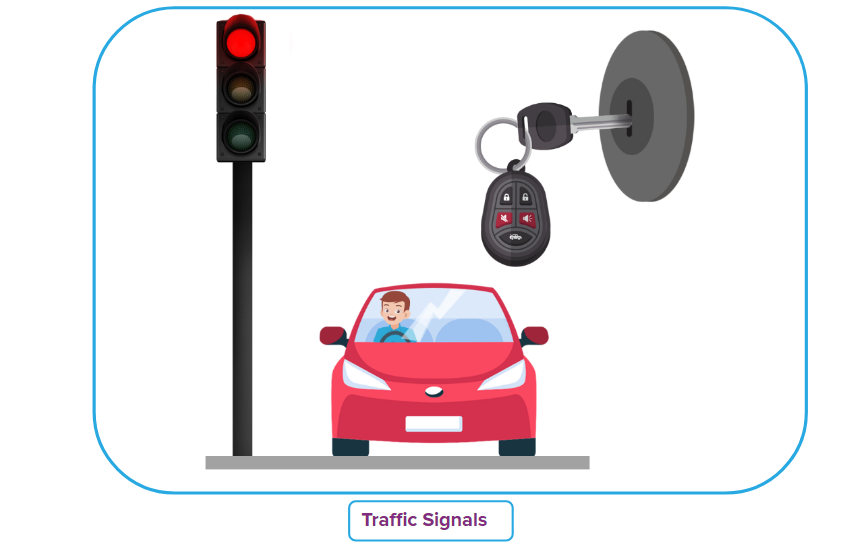
This makes everybody's life so much more systematic and better as it is all standardized. As a chemist, our life would be much easier if we get a clear picture of spontaneity for all types of processes i.e. whether a process will happen or not or if it happens then from which state to which state, the process occurs spontaneously, which sadly we didn’t get yet.
First, we thought of defining spontaneity in terms of enthalpy, ΔH. Exothermic processes are supposed to be spontaneous. But then we came to know that even endothermic processes are spontaneous, for example, evaporation. Then we introduce entropy and conclude that if its change is positive, the reaction is spontaneous and if it is not the reaction is nonspontaneous.
But that also didn’t work out at all. So, we need a thermodynamic property which can determine the spontaneity of the process/reaction. Josiah Willard Gibbs in 1870 gave the term Gibbs free energy which tells about the feasibility of a process/reaction.
Let’s understand the term Gibbs free energy and will understand how it is related to the feasibility of the reaction.
Table of Content
- Gibbs Free Energy
- Gibbs Helmholtz Equation
- Standard Gibbs Free Energy
- Standard Gibbs Free Energy Change in a Chemical Reaction
- Gibbs Free Energy and Equilibrium Constant
- Spontaneity of a Reaction
- Effect of Reaction Type, Change in Entropy and Temperature on the Feasibility of a Reaction
- Gibbs Free Energy and EMF of a Cell
- Practice Problems
- Frequently Asked Questions - FAQs
Gibbs Free Energy
From the knowledge of entropy, we can say that the sum of the change in entropy of the system and surrounding predicts about the process whether it is spontaneous or not. In chemical thermodynamics, it is rather preferred to focus on the system, not on the surrounding. So, to get an idea of which process is spontaneous or not, we need to define a new state function known as Gibbs free energy.
Gibbs free energy is equal to the enthalpy of the system minus the product of the temperature and entropy of the system.
G=H-TS
Where,
G = Gibbs free energy
H = enthalpy
T = Temperature
S = Entropy
H, T and S are state functions. So, G will also be a state function.
The unit of G would be the same as that of energy (J or Cal).
Gibbs Helmholtz Equation
For a process that takes place reversibly;
Multiplying the above equation by -T, we get;
(∵ ΔHSystem=-qSurrounding & ΔSSystem=qSystemT )
(-TΔSTotal) term expresses the entropy change of the universe, but just be considering the thermodynamic properties of the system.
(-TΔSTotal) term is denoted as ΔG, then we have;
Equation ii is known as Gibbs Helmholtz equation.
Standard Gibbs Free Energy
The standard free energy of formation of any substance is related to the formation of substance from its elements in their most stable state of aggregation, at standard conditions of pressure and temperature (1 atm and 298 K) . ΔGovalues for all the components of a reaction are known as the standard Gibbs free energy change.
Standard Gibbs Free Energy Change in a Chemical Reaction
The standard Gibbs free energy change of a chemical reaction can be calculated using the formula mentioned below:
Sum of the standard Gibbs free energy of formation of products
Sum of the standard Gibbs free energy of formation of reactants
For example:
Consider the following reaction;
We need to calculate the standard Gibbs free energy change for the above reaction if Gfo(HI)=1300 J/mol.
Now, the standard Gibbs free energy change for the substances in the elemental form would be zero.
I.e.,
Gibbs Free Energy and Equilibrium Constant
Consider a reversible reaction;
A+B ⇌ C+D
ΔGfor this reaction can be represented as:
ΔG=ΔGo+RTlnQ
Where, Q is the reaction quotient.
At equilibrium, Q=K (equilibrium constant) & ΔG=0
So, the equation becomes;
Spontaneity of a Reaction
ΔG<0; Spontaneous reaction
ΔG>0; Nonspontaneous reaction
ΔG=0; Reaction is at equilibrium
Effect of Reaction Type, Change in Entropy and Temperature on the Feasibility of a Reaction
|
Reaction Type |
Sign of ΔH |
Sign of TΔS |
Sign of ΔG |
Behaviour of the Reaction |
|
Exothermic Reaction |
-ve |
+ve |
-ve |
Spontaneous |
|
-ve |
-ve |
-ve (at low temperature) |
Spontaneous |
|
|
-ve |
-ve |
+ve (at high temperature) |
Non-spontaneous |
|
|
Endothermic Reaction |
+ve |
-ve |
+ve |
Non-spontaneous |
|
+ve |
+ve |
+ve (at low temperature) |
Non-spontaneous |
|
|
+ve |
+ve |
-ve (at high temperature) |
Spontaneous |
Gibbs Free Energy and EMF of a Cell
The relation between the change in Gibbs free energy and the EMF of the cell is:
Where, n is the number of electrons involved in the balanced electrochemical reaction, F is Faraday’s constant (1F=96500 C) and E is the EMF of the cell.
Similarly, it can be written:
, where, Eo is the standard EMF of the cell.
Practice Problems
Q1. Which of the following statements regarding the spontaneity of a reaction is incorrect?
- If ΔS is positive (and ΔH is negative), the reaction is spontaneous.
- If ΔS is negative (and ΔH is positive), the reaction is nonspontaneous.
- If ΔS is negative (and ΔH is positive), the reaction is spontaneous.
- If ΔS is equal to zero (and ΔH is zero), the reaction is at equilibrium.
Answer: (C)
As we know; ΔG=ΔH-TΔS
|
Sign of ΔH |
Sign of TΔS |
Sign of ΔG |
Behaviour of the Reaction |
|
-ve |
+ve |
-ve |
Spontaneous |
|
+ve |
-ve |
+ve |
Non-spontaneous |
If ΔS & ΔH =0, ΔG=0, which mean reaction is at equilibrium.
Q2. The value of the Keq for the reaction; A ⇌ 2B is 1 × 10⁻⁶. The value of standard entropy change would be: (Given: ΔHO=6245.4R J and T=300 K)
- 7R J/K
- 10R J/K
- 12R J/K
- 14R J/K
Answer: (A)
At equilibrium;
And ΔGo=ΔHo-TΔSo.
So by using above two equations we get;
ΔSo=7R J/K
Q3. If the value of ΔGo=482.5 kJ, the value of Eo would be:
(Consider the reaction; Al3++3e-→ Al)
- -1.45 V
- -1.67 V
- 1.45 V
- 1.67 V
Answer: (B)
Solution: We know;
According to the reaction;
Q4. For the reaction to be spontaneous:
- ΔG=0
- ΔG<0
- ΔG>0
- ΔH<0
Answer: (B)
For the reaction to be spontaneous, ΔG should be less than zero.
Frequently Asked Questions - FAQs
Q. Is Gibbs free energy change always negative?
Answer: Gibbs free energy change is not always negative. When the reaction is spontaneous at a given temperature, it is negative, and for the non-spontaneous reaction, Gibbs free energy change is positive.
Q. What is the value of ΔGo when the value of the equilibrium constant is 1?
Answer: The standard Gibbs free energy change at equilibrium can be calculated by using the below-mentioned formula:
If equilibrium constant (Keq) is 1.
Q. What is the value of Gibbs free energy change for a reaction at equilibrium?
Answer: For a reversible reaction at equilibrium, ΔG must be equal to 0. ΔGo can only be zero if the value of the equilibrium constant is 1.
Q. Can Gibbs free energy value have a negative value?
Answer: Gibbs free energy can not be negative because it's a thermodynamic property of a substance and it can not have a negative value. Gibbs free energy change can have a negative value.

 Call Now
 Let's Chat
 Share
Share