-
Call Now
1800-102-2727


Fructose Structure

Fructose is a six-carbon-membered carbohydrate. It is a ketose monosaccharide abundantly present in plants, thus being known as fruit sugar. It is also known as levulose, where ‘ose’ represents carbohydrate nature. The ‘levu’ exhibits its ability to rotate the plane polarised light to the left direction.
Table of Contents
- Fructose Structure
- Fructose Digestion
- Physical Properties of Fructose
- Chemical Properties of Fructose
- Forms of Fructose
- Health Implications of Fructose
Fructose Structure
The reducing sugar fructose is generally present in ring, cyclic or chain-like form. The chemical name of fructose is a polyhydroxy ketone. The ring forms between the second to fifth carbon. Thus, fructose forms a five-membered or hemiketal ring. The chemical formula of fructose is  . The fructose exhibits stereoisomerism in cyclic form.
The carbon at the centre of the hemiketal functional group is anomeric. The hemiketal group comprises ether oxygen and alcohol groups attached to two different carbons.
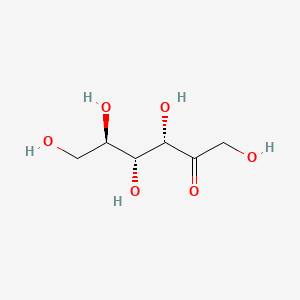
Figure: A 2D form of fructose
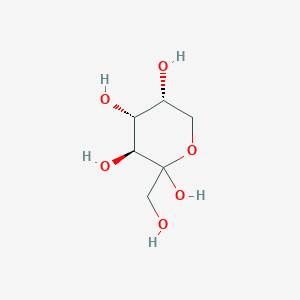
Figure: A 2D form of cyclic fructose
Fructose Digestion
It is easily digestible sugar for humans. The digestion occurs in the liver, and the abundance leads to liver issues as well due to its conversion into fat molecules, which accumulate, thus causing chronic medical conditions.
Physical Properties of Fructose
The fructose obtained by hydrolysis of oligomeric carbohydrate sucrose has the following physical properties:
- The molar mass of the molecule is 180.156 grams per mole, and the melting point is degree Centigrades.
- It has the highest solubility in water and tastes sweet.
- It is odourless and sticky sugar,
- The Fructose readily absorbs moisture from surrounding elements, thus hygroscopic.
- The rate of moisture release is comparatively slower in fructose. This makes it a good humectant in the presence of high moisture-holding capacity.
Chemical Properties of Fructose
The wide chemical properties seen in fructose are:
- It undergoes anaerobic fermentation by yeast and bacteria, thus serving as its primary carbon source.
- The fermentation of fructose yields ethanol and carbon dioxide.
- It exhibits a Maillard reaction due to its presence as an open structure.
- It is mutagenic.
- The dehydration of fructose results in hydroxymethylfurfural (“HMF”).
Forms of Fructose
Fructose is generally found in two forms, crystalline and corn syrup.
- Crystalline Fructose: It comprises solely fructose molecules and hence acts as the best natural; sweetener. It contributes to the texture and consistency of bakery products along with a browny appearance.
- High Fructose Corn Syrup: It comprises fructose and glucose present in almost equal amounts. It is formed by corn starch processing and is commercially used in ice creams, bakery items, soups and others.
Health Implications of Fructose
Moderation is the key to the intake of any diet. Heavy fructose intake is certain to cause health problems like
- High weight gain leads to overweight or obesity conditions
- Subsequently resulting in hypertension and other comorbid conditions like diabetes and cardiovascular diseases
- Increased addiction adds to the disorders
- Damages immune system
- Liver damage
Practice Problems
Q1. What is the visible cue on the reaction of fructose with Molich's reagent?
a. Presence of red precipitate
b. Presence of violet ring
c. No reaction
d. Presence of white precipitate
Ans. b. Presence of a violet ring
Fructose reacts with Molich's reagent yielding a violet ring.
Q2. What is the differentiating factor between glucose and fructose?
a. Aldehyde and ketone group
b. A number of participating carbon in their cyclic form
c. their metabolism and absorption
d. All of the above
Ans. d. All of the above
Glucose has an aldehyde group, forms a six membered ring and is a primary energy source. Fructose has a keto group, forms five-membered rings and is metabolised in the liver.
Q3. Which is the polymeric form of fructose?
a. Cellulose
b. Lignin
c. Glycogen
d. Inulin
Ans. d. Inulin
Inulin is composed of fructose units and is classified as fructan.
Frequently Asked Questions
Q1. Why is fructose highly used in beverages and foods?
Ans. Its sweet nature is attributed to its usage as a sweetening agent. The extraction from plants further makes this form of sugar easily available at a lower cost.
Q2. What are the applications of fructose?
Ans. Fructose is low calorie and low glycemic index sugar with an enhanced sweetening effect. Thus it is used in food for diabetics, feeding formula, baked products and beverages. However, it has addictive properties, and hence moderate intake is recommended.
Q3. How can I avoid excess fructose intake?
Ans. Avoid processed and packaged food. Read the labels and make it normal to completely avoid fructose or inverted fructose-containing packaged products, as they are addictive and lethal in the long term.
Q4. Does fructose exist in different forms or isomers?
Ans. Fructose can exist in different isomeric forms, including α-fructose and β-fructose. The two isomers exhibit differences in the orientation of specific hydroxyl groups around the ring structure.

 Call Now
 Let's Chat
 Share
Share