-
Call Now
1800-102-2727


Formation of Esters

Esters are a group of organic compounds that are derived from carboxylic acids and alcohols. They have the general formula of RCOOR'. Here, R and R' represent alkyl or aryl groups, which can either be different or the same. Esters are widely used in perfumes, flavours, pharmaceuticals, solvents and plastics.
Table of Contents:
- What is an Ester?
- Esterification of Carboxylic Acids
- Formation of Esters Using Acyl Chlorides
- Formation of Esters Using Acid Anhydrides
What is an Ester?
An ester is an organic compound that consists of the functional group -COO-, which is formed by the condensation of a carboxylic acid and an alcohol.
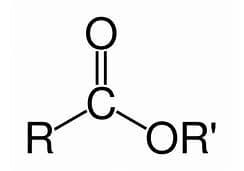
The above diagram shows the general structure of an ester. Here the R can be a hydrogen atom, an alkyl or an aryl group. R' can be an aryl or alkyl group but not a hydrogen atom.
Solubility of Esters
Esters are polar molecules that cannot form hydrogen bonds with themselves or water. Due to this, they have a low boiling point compared to carboxylic acids and alcohols of the same molecular weight. Interestingly, they are more soluble in organic solvents than they are in water.
The Characteristic Smell of Esters
An ester has a characteristic fruity or floral smell. This makes them useful for artificial flavouring and fragrance. Methyl butanoate smells like pineapple, ethyl pentanoate smells like banana, and benzyl acetate smells like jasmine.
Nomenclature of Esters
The name of an ester is derived from the names of the acid and alcohol it is made from. The suffix “-oate” replaces the “-ic” or “-oic” acid endings, and the prefix alkyl or aryl represents the alcohol group. For example, the ester created from ethanol and ethanoic acid is called ethyl ethanoate.
Esterification of Carboxylic Acids
One of the most common methods for forming esters is by heating a carboxylic acid with an alcohol in the presence of a strong acid catalyst, such as concentrated sulfuric acid or hydrochloric acid. This is called Fischer esterification, and it is a reversible reaction. The general equation for this reaction is:

The mechanism of this reaction involves the protonation of the carbonyl oxygen of the carboxylic acid, making it more electrophilic. The alcohol then attacks the carbonyl carbon, forming a tetrahedral intermediate. The proton is transferred to the hydroxyl group, which then leaves as water. The remaining proton is removed by a base, such as another alcohol molecule, to form the ester.
For example, if you are making propyl propanoate from propanol and propionic acid, the following reaction will occur:

|
This reaction is both slow and reversible. |
Formation of Esters Using Acyl Chlorides
Another method for forming esters is by reacting acyl chlorides with alcohols or phenols. Acyl chlorides are carboxylic acid derivatives with a chlorine atom attached to the carbonyl carbon. Acyl chlorides are very reactive electrophiles that can easily react with nucleophiles such as alcohols or phenols to form esters.
The general equation for the reaction of acyl chlorides with alcohols is:
|
|

The mechanism of this reaction involves the attack of the alcohol on the carbonyl carbon of the acyl chloride, forming a tetrahedral intermediate. The chloride ion then leaves as a good leaving group, forming the ester. A base, such as a pyridine, is often used to neutralise the hydrochloric acid that is formed as a byproduct.
An example of this method is the formation of ethyl ethanoate using ethanoyl chloride and ethanol.

The advantages of using acyl chlorides or acid anhydrides over carboxylic acids for forming esters are that they are faster and more efficient reactions, and they can also be used with phenols, which do not react with carboxylic acids.
The disadvantages are that they are more expensive and hazardous reagents, and they produce more byproducts that need to be separated from the ester.
Formation of Esters Using Acid Anhydrides
Another way of forming esters is by reacting acid anhydrides with alcohols and phenols. Acid anhydrides are derivatives of carboxylic acids that have two acyl groups joined by an oxygen atom. Like acyl chlorides, acid anhydrides are very reactive electrophiles that can easily react with nucleophiles such as alcohols or phenols to form esters.
The general equation for the formation of esters using acid anhydride is:

The mechanism of this reaction is similar to that of acyl chlorides, except that the leaving group is a carboxylate ion instead of a chloride ion. A base, such as a pyridine, is also used to neutralise the carboxylic acid that is formed as a byproduct.
An example of this method is the formation of ethyl ethanoate using ethanol and ethanoic anhydride.

Solved Problems
Example 1: Write the equation for the formation of ethyl propanoate from propanoic acid and ethanol.
Solution:

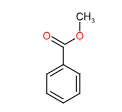
Example 2: What is the name and structure of the ester formed by the reaction of benzyl chloride and methanol?
Solution: The name of the ester is methyl benzoate, and its structure is:
Practice Problems
Q1. Write the name and structure of the ester formed by the reaction of acetic anhydride and phenol.
Q2. Write the equation for the formation of butyl ethanoate from ethanoic acid and butanol.
Frequently Asked Questions
Q1. What is an esterification reaction?
Answer: The reaction by which ester is formed from the condensation of a carboxylic acid with alcohol is called the esterification reaction.
Q2. What are some methods to purify esters?
Answer: Esters can be purified using distillation, extraction and crystallisation.
Q3. What factors affect the rate and yield of esterification?
Answer: Factors like temperature, concentration and type of catalyst and the ratio and type of reactants affect the rate and yield of esterification.

 Call Now
 Let's Chat
 Share
Share