-
Call Now
1800-102-2727


An Overview of Flora and Fauna, Practice Problems and FAQs

We all are part of an ecosystem. An ecosystem is considered as a biological community of interacting organisms and their physical environment. You know that it includes abiotic and biotic components. Examples include pond ecosystems.
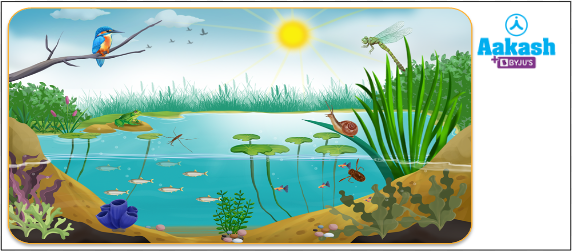
Fig: Pond ecosystem
Can you tell me what are the abiotic and biotic components of an ecosystem? Yes, abiotic components include water, air, inorganic ( like nitrogen) and organic (like carbohydrates) nutrients present in soil, water and air. Biotic components include living organisms like producers, consumers and decomposers. Flora and Fauna are the most important part of the biotic components. So let’s understand more about flora and fauna in this article.
Table of contents
- Flora
- Taxonomic hierarchy - Common to plants and animals
- Importance of flora
- Fauna
- Importance of fauna
- Importance of plants and animals
- Differences between flora and fauna
- Practice Problems
- FAQs
Flora
Flora is a collective word that represents a group of plant life present in a particular geographic area. It generally represents the entire Kingdom Plantae or Metaphyta. This word originated from Latin and means ‘Goddess of the flower.’ Flora of a region depends on various factors prevailing in that area. It differs based on the location. For example, desert plants and aquatic plants. These plants possess adaptations to thrive in that particular area. Cactus plants (Opuntia) are found in deserts and they show adaptations such as modified leaves or prickles to help them save water and protect themselves from predators.

Fig: Flora
Taxonomic hierarchy - Common to plants and animals
While categorising the organism, the relationship between each organism will make them get added in a particular group or category. Hence the organisms with similar characteristics will get into the same group. Each category is called a taxon and these taxa are arranged in different levels.
The framework by which taxonomic groups or taxons are arranged in definite order, from lower to higher categories or in progressively complex categories is called taxonomic hierarchy. It is also called the Linnaean hierarchy because it was first proposed by Linnaeus. He first used only five categories and they were the class, order, genus, species and variety. Phylum includes different classes of animals. The term Phylum is used in the classification of animals and the term Division is used in the classification of plants. For example, division Thallophyta includes class Rhodophyceae (red algae), class Phaeophyceae (brown algae) and class Chlorophyceae (green algae). The last one was discarded and three more added in its place, so that now there are seven obligate categories as follows:
- Kingdom
- Division
- Phylum
- Class
- Order
- Family
- Genus
- Species
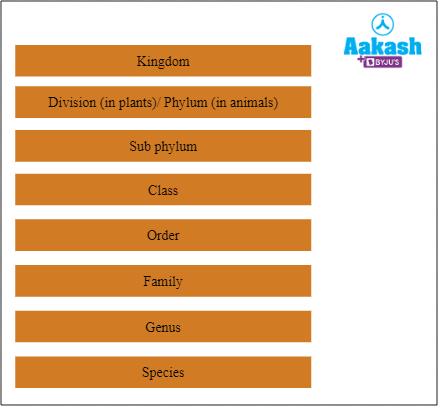
Fig: Categories in taxonomic hierarchy
Above the Kingdom there is one more taxonomic category, which is the domain. Categories in the hierarchy are thus in ascending order. Hence as we go from the lowest rank i.e., species towards the Kingdom the number of similar characters decreases.
Importance of flora
The following are the importance of flora:
- They provide food, like fruits, vegetables, cereals, pulses etc.
- They produce oxygen as a byproduct of photosynthesis.
- They provide medicines. Examples include tulsi (Ocimum tenuiflorum), poppy (Papaver somniferum) etc.
- They help to reduce soil erosion.
- They reduce air pollution.
- They provide shade during the hot and sunny days.
- We obtain oils, spices and perfumes from the plants.
- They provide paper, timber, wood etc.
- They provide fibres like cotton, jute, etc.

Fig: Importance of flora
Fauna
The animals present in a region are referred to as fauna. Fauna, or ‘Faunus,’ is the name of the goddess of Earth and fertility in Roman mythology. The Kingdom Animalia or Metazoa includes a wide variety of animal types. The classification of Kingdom Animalia is considered more complex than the classification of plants.
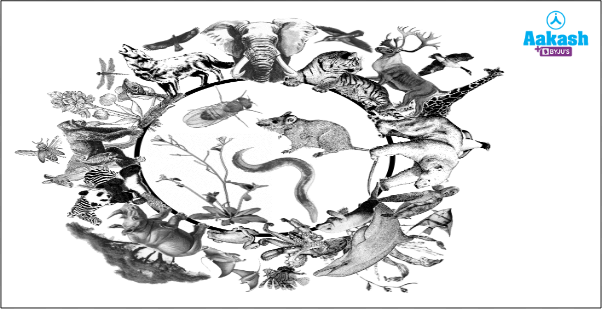
Fig: Fauna
Classification of fauna
On the basis of origin fauna is classified into the following types:
Cryofauna
It includes the animals that live in or close to the cold regions. Examples include Polar bears (Ursus maritimus).
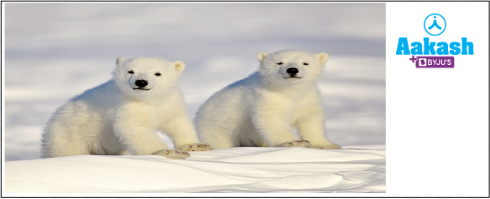
Fig: Polar bear
Epifauna
It includes the aquatic animals that live on the bottom of an aquatic body. Examples include star fishes (Asterias) and barnacles (Cirripedia).
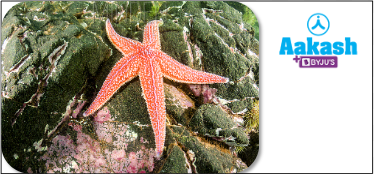
Fig: Star fish
Cryptofauna
It includes the animals that live in protected or concealed microhabitats. Examples include sponges and ascidians.
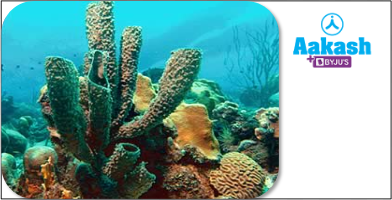
Fig: Sponges
Benthic fauna
It includes the animals that live on top of the sediment settled at the seafloor. Examples include oysters and mussels.
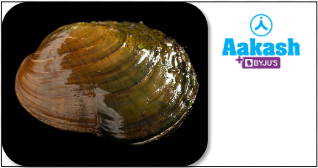
Fig: Mussel
Infauna
It includes those aquatic organisms that live within the bottom substratum of the water body. Examples include snails and flatworms.

Fig: Apple snail
Limnofauna
It includes the organisms that live in freshwater. Examples include rohu (Labeo rohita).
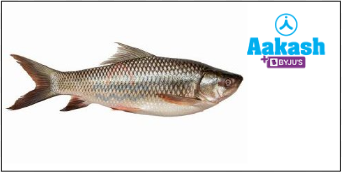
Fig: Rohu
Macrofauna
It includes the large animals present in a particular region or time. Examples include earthworms, snails etc.
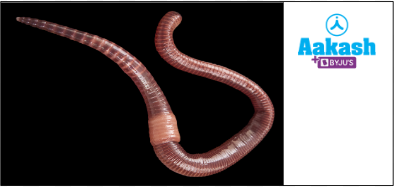
Fig: Earthworm
Meiofauna
It includes the small benthic invertebrates that live in both freshwater and marine environments. Examples include copepods, polychaetes etc.
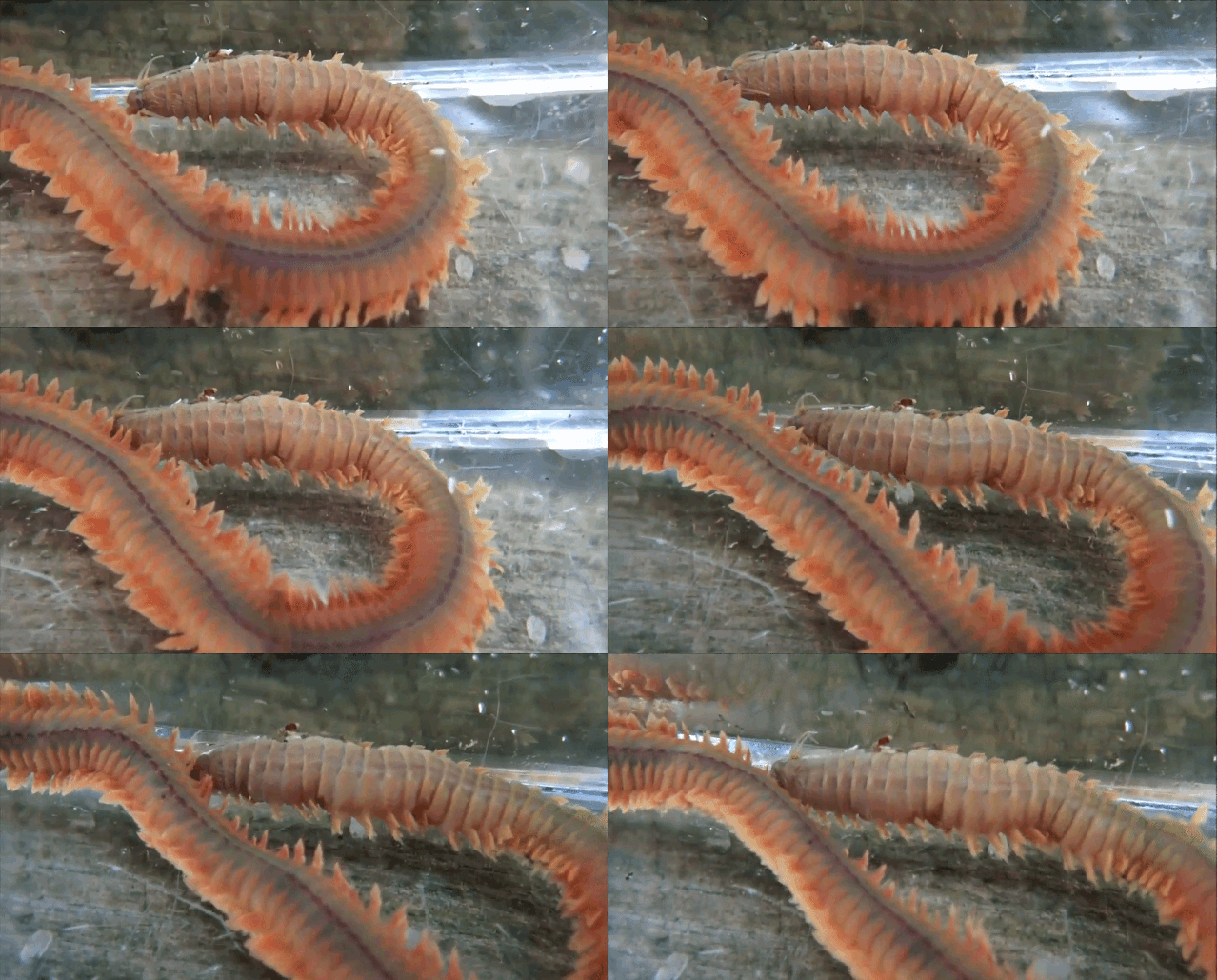
GIF: Nereis
Mesofauna
It includes the macroscopic soil animals. Examples include the members of the phylum Arthropoda or Aschelminthes.
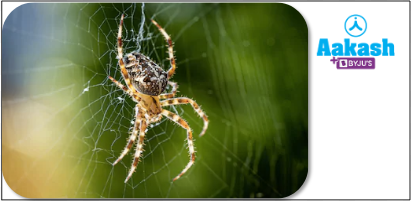
Fig: Spider
Microfauna
It includes very small animals. Examples include the protozoans.
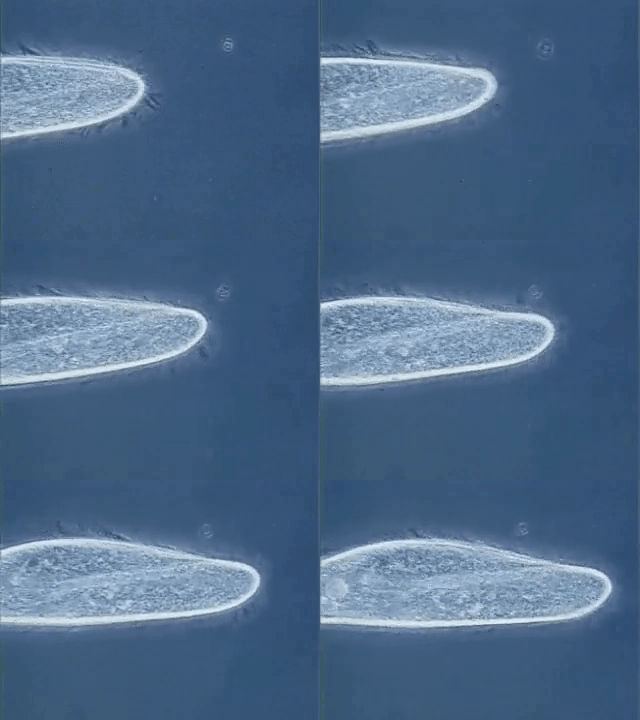
GIF: Paramoecium
Stygofauna
It includes the organisms that live in groundwater systems or aquifers. Examples include Bathynella sp.
Troglofauna
It includes those small cave-dwelling animals that have adapted to the dark surroundings. Examples include cockroaches and arachnids.
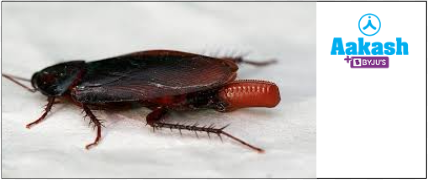
Fig: Cockroach
Xenofauna
It includes alien organisms that are similar to animals.
Avifauna
It includes all the birds. Examples include macaw, crow etc.

Fig: Macaw
Pisci fauna
It includes all the fishes. Examples include shark, Catla etc.
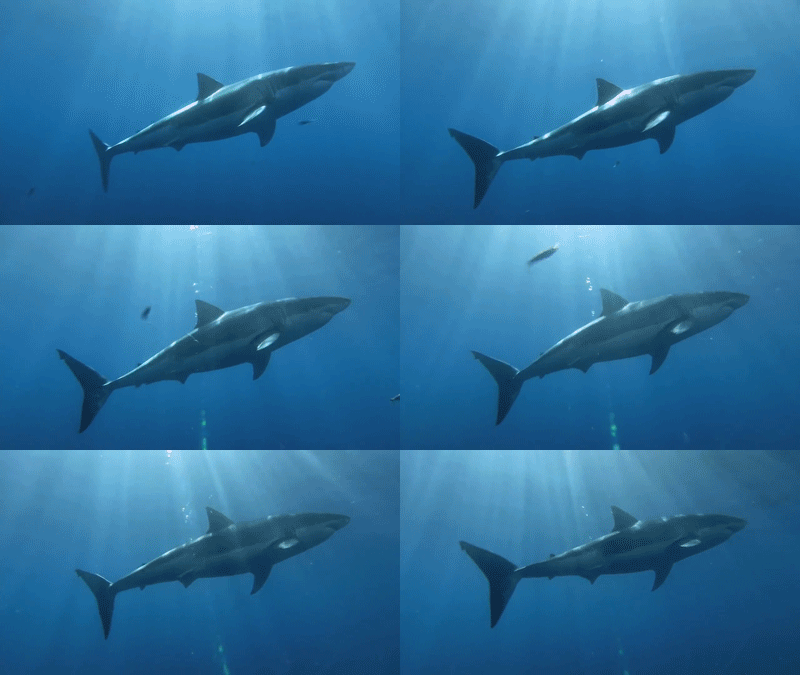
GIF: Shark
Microfauna
It includes microorganisms, like bacteria, viruses etc. Examples include Chlorobium.
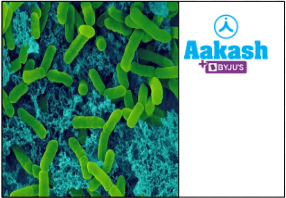
Fig: Chlorobium
Importance of fauna
The following are some of the importance of fauna:
- Cattles are used for the production of milk and meat.
- Animals like camels, horses and elephants are used for transportation.
- Fowls like hens and ducks are used for the production of eggs and meat.
- Members of Kingdom Animalia like dogs, cats, sheep, fishes, birds and goats are domesticated.
- Fishes are used for food, manures, fish oils, glues, and medicinal purposes.
- Honey bees are used for the production of wax and honey.
- Silkworms produce silk.
- Animals like donkeys, horses, and elephants are used for carrying heavy loads.
- Animal litter is used as a source of manure.
- Sheeps are reared for their meat and wool.
- Animal skins are used for making leather.
- Many industries depend on animals like marine exports, pearl and leather producers etc.
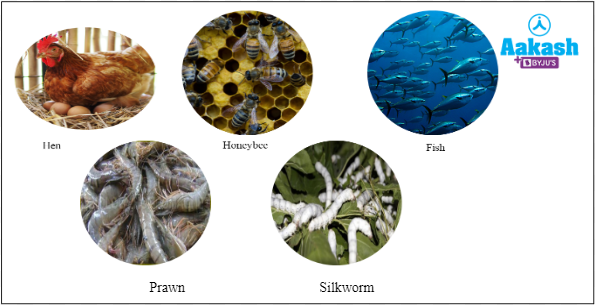
Fig: Importance of fauna
Importance of plants and animals
The following are the importance of plants and animals:
Required for the ecological harmony
Plants and animals are critical for the survival of human beings. The oxygen released by plants is used by animals for respiration. The carbon dioxide released by the fauna is used by the flora in photosynthesis. Some animals and plants have medicinal properties. They are part of the food webs and chains. Proper maintenance of them is required for ecological balance. Animal and plant wastes are used as manures. Decomposers and detritivores are required for nutrient mobilisation and nutrient cycling.
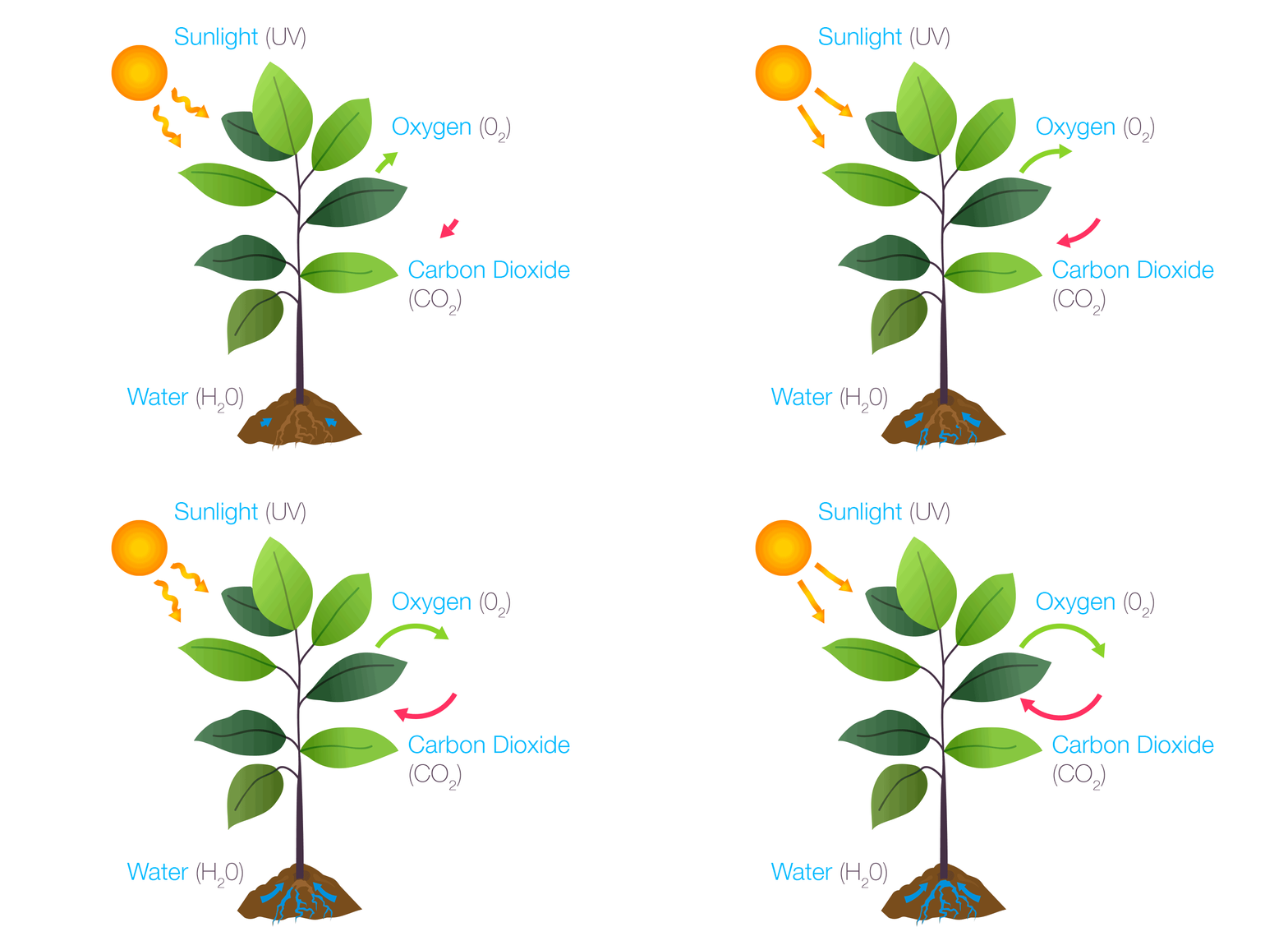
GIF: Photosynthesis in plants
Aesthetic benefits
Both the flora and fauna provide aesthetic benefits. We have biosphere reserves, national parks, forests, zoos, botanical gardens, sacred groves and other places to enjoy the beauty of nature.

Fig: Forest
Local economic growth
Local people benefit from tourism. The income is generated mainly by the natural attractions like flora and fauna present in that region. Examples include the diverse flora and fauna of the Amazonian forests. This brings in an estimated $50 million annually to the Brazilian economy.
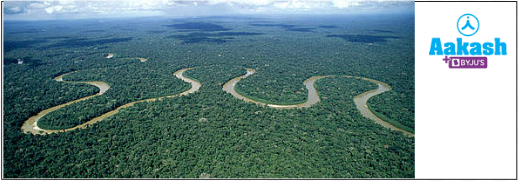
Fig: The Amazonian rainforest
Industrial growth
Many industries depend on the flora and fauna prevalent in the region. For example, near the shores we have marine food processing units.

Fig: Plant and animal products
Plant and animal life in the Indian Continent
The Indian Continent is considered as the combined areas of India, Sri Lanka, Nepal, Pakistan, Bhutan, and Bangladesh. The flora and fauna of this continent varies. It includes 2000 different bird species, 500 distinct animals, 30.000 distinct insect types, a variety of fishes, amphibians, and reptiles. Elephants, the Royal Bengal tiger, rhinos, bison, and lions are among the country's wildlife species. The diverse flora includes the Alpines, deciduous forests, softwoods, evergreen forests, oaks, pines, spruces, laurels, deodars, maples, bamboos, and tall grasses.
Differences between flora and fauna
The following are the major differences between the flora and fauna
Flora |
Fauna |
|
It represents all plant life |
It represents all animal life |
|
Most of the members make their own food |
They depends on plants or other animals for food |
|
Study of flora is called Botany |
The study of fauna is called Zoology |
|
They lack mobility |
Members are motile |
|
They possess a cell wall in the cell |
They lack a cell wall in the cell |
|
Chlorophylls are present |
Chlorophylls are absent |
|
The main storage product is starch |
The main storage product is glycogen |
|
Climate affects flora |
Fauna affects the climate |
|
Examples include grasses, palm trees, sunflowers, algae etc. |
Examples include lions, prawns, earthworms, tigers, cows etc. |
|
|
Fig: Fauna |
 Fig: Flora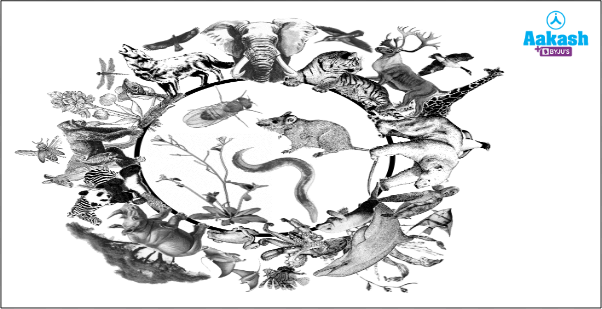
Practice Problems
- Biology is the science of _______________.
- Biome
- Living processes
- Life forms
(D) Both B and C
Solution: Biology is the study of living organisms. It can be classified into Botany (study of plants) and Zoology (study of animals). It involves studying about the life forms and the living processes happening in them.
- Life forms: Living beings are known as life forms.
- Living processes: The processes occurring in living beings that are responsible for their growth, movement, reproduction and ultimately life, are known as living processes. Hence the correct option is ‘D’.
- Each kind of animal, plant, or organism that we see, represents a ____________.
(A) Species
(B) Population
(C) Genus
(D) Family
Solution: Species are the group of organisms that have fundamental similarities between them and can naturally interbreed. Different species have morphological differences and members belonging to different species cannot naturally interbreed. We see different types of plants, animals and organisms around us and they all are of different species. For example, Mangifera indica (mango) is a type of plant and Panthera leo (lion) is an animal. Hence the correct option is ‘A’.
- _______________ make sure that each organism has only one name around the world.
(A) Local name
(B) Scientific name
(C) Trivial name
(D) All of the above
Solution: Scientific names are the names given to organisms by biologists which are accepted worldwide. Scientific names follow the rules of binomial nomenclature given by Carolus Linnaeus. According to this universally accepted system of nomenclature, the name of an organism has two parts: a generic name followed by a specific name. For example, Mangifera indica. Hence the correct option is ‘B’.
- The biological classification of animals and plants was first proposed by ______________.
(A) Aristotle
(B) Whittaker
(C) Linnaeus
(D) Bentham and Hooker
Solution: Aristotle was the pioneer in classifying organisms into plants and animals. He further classified plants as shrubs, herbs and trees, based on the morphological characters of plants. He also classified animals based on presence or absence of blood. Hence the correct option is ‘A’.
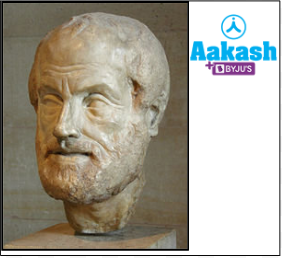
Fig. Aristotle
FAQs
- What is meant by Verdura?
Answer: A plant or a part of the plant other than a fruit which is used as food is called Vendura.
- Which country is well known for its flowers?
Answer: The largest flower producing country in the world is the Netherlands. It contributes around 68% of the annual flower production.
- Which is considered as the longest-living insect?
Answer: The queen of termites is known to live for around 50 years. Some scientists say that they may live upto 100 years.
- What is the main difference between microflora and flora?
Answer: Flora is a collective word that represents a group of plant life present in a particular geographic area. It generally represents the entire Kingdom Plantae or Metaphyta. The collective word that represents bacteria and other microorganisms in a host is microflora.
Fig: Microflora

NEET Related Links
JEE MAIN Related Links
JEE Advanced Related Links
JEE Advanced Eligibility Criteria
JEE Advanced Chemistry Syllabus
JEE Advanced Registration Dates
CUET Related Links
Important Topics
Anemometer : Measurement of Wind Speed
Angular Acceleration Atomic Theory Audible and Inaudible Sound Average Speed and Average Velocity Average Velocity Avogadros Number Avogadros Hypothesis Azimuthal Quantum Number Balanced Force Bar Magnet Biconvex Lens Boyles Law Buoyancy Calorimeter Carnot Engine Celestial Bodies Centripetal And Centrifugal Force Concave and Convex Lenses Concave Convex Mirrors Contact and Non Contact Force Controlled Thermonuclear Fusion Convection Currents Convex Lens Convex Mirror Destructive Interference Difference Between Conduction Convection and Radiation Difference Between Electric Field and Magnetic Field Difference Between Heat And Temperature Difference Between Series And Parallel Circuits Differences Between Acceleration And Velocity Distance and Displacement Distance Time Graph Electrical Force : Electric Forces and Their Types Electromagnetic Waves : Definition, Equation and Properties of Electromagnetic Waves Electromagnetism Electron Spin Fluid Flow : Bernoullis Equation Derivation and Fluid Mechanics Fluid Friction : Types and Factors of Fluid Friction Frames of Reference : Inertial and Non- Inertial Frame of Reference Frequency and Wavelength Frictional Force Importance of Hydrosphere Instantaneous Speed and Velocity Introduction to Motion Kinetic and Potential Energy Difference Law Of Conservation of Energy Layers of the Earth Light Energy Light Sources List of physics scientists and Their inventionsLoudness of Sound
Magnetic Dipole Moment Magnetic Field Non - Contact Force Non - Renewable Energy Ohms Law Optics P Wave Physics Symbols Plane Mirrors Poissons Ratio Projectile Motion Properties of Water : Anomalous Expansion of Water Radius of Gyration Reflection of Light Reflection of Waves Relative Density Resonance Reverberation Rolling Friction Rotation and Revolution Screw Gauge Semiconductors and Insulators Sliding Friction Speed Time Graphs Static Friction Stefan Boltzmann Law Stress Tension Tension Force Thermometer: Clinical Laboratory Thermometer Types of Rocks Types of Waves Uniform Motion and Non Uniform Motion Unit of Voltage Uses of Convex Lens Uses Of Convex Mirror Uses of Electromagnet Uses of Optical Fibre Wave Wavelength of Light What is Scattering of Light Working of Electric Bell Conventional and Non-conventional Sources of Energy Buoyant Force Bulk Modulus of Elasticity Bernoulli’s Principle Angular Momentum Difference Between Speed And Velocity ForceUnit of Heat
Difference between Distance and Displacement Simple Microscope Derivation Of Equation Of Motion Thermometer: Clinical & Laboratory Thermometer Difference between Concave and Convex LensDerivation Of Lens Maker Formula
Unit Of Pressure Velocity Uses of Plane Mirror
Wave Theory of Light
Unit of Density Unit of Light Unit of Force Unit of Magnetic Field Unit of wavelength Unit of Viscosity Uses of Electroplating Young's Modulus
What is the Scattering of Light
Lenz Law Space Wave Propagation Schrodinger Wave Equation Relation between Fahrenheit and Celsius Refractive Index Potentiometer Working Pascal Law Oscillatory Motion Optical Instruments Newton's Laws of Motion - First Law Modulation and Demodulation Magnetic Flux Lens Formula and Magnification Kaleidoscope Faradays Law Epsilon Naught Value Energy Bands Electrostatics Electroscope AC Generator Unit of Current Lithosphere Bending Equation Derivation Difference Between Pound and Kilogram Semiconductor Devices OTEC - Ocean Thermal Energy Conversion Hall Effect Rectilinear Propagation of Light Difference Between Ammeter and Voltmeter Coefficient of Linear Expansion Ampere’s Law Cyclone and Thunderstorm Save The Environment From Pollution Particle Nature of Light Types of DC Motor Uses Of Transistor Derivation of Phase Rule Unit of Humidity

 Call Now
 Let's Chat
 Share
Share