-
Call Now
1800-102-2727


Some Common Enzymes and Their Actions- Enzymes, Function of Enzymes, Common Enzymes and their Actions, Practice Problems and FAQs

Chemical industries need sophisticated equipment, control mechanism, power source, and critical operating conditions for each product they produce. But, the most complex chemical industry in the world is the biological species. Why so? Because they operate at normal conditions of pressure and temperature and are not specific for any specific input or output.
Whatever they consume is broken down into simple units and reunited with new molecules needed for them. These chemical reactions are causally done on a routine basis.
Many biological reactions are not possible in chemical laboratories at all.
For example, is there anybody who has not been injured by bleeding in their childhood days? But you must have noticed that the bleeding doesn't last long!
What could have caused the bleeding to stop?
Because it looks like a clump of dried blood, some people call this type of clot a scab. Clotting of the blood is a normal bodily process. Coagulation is another term for it. When you get a cut or an injury, your body sends platelets and other special proteins to the site of the injury to form a clot. Unless the cut or injury is severe, the clot will clog the area where the injury occurred.
But do you know what is responsible for blood clotting?
Yes, you are most likely correct! Thrombin is a naturally occurring enzyme responsible for blood clotting. This naturally occurring enzyme is essential in the conversion of fibrinogen (a glycoprotein complex) to fibrin, which is primarily responsible for occluding blood vessels and stopping bleeding.
Like this, all the changes occurring in biological species are facilitated by what is called ‘Enzymes’.
Let us learn about important enzymes and their functions in this article.
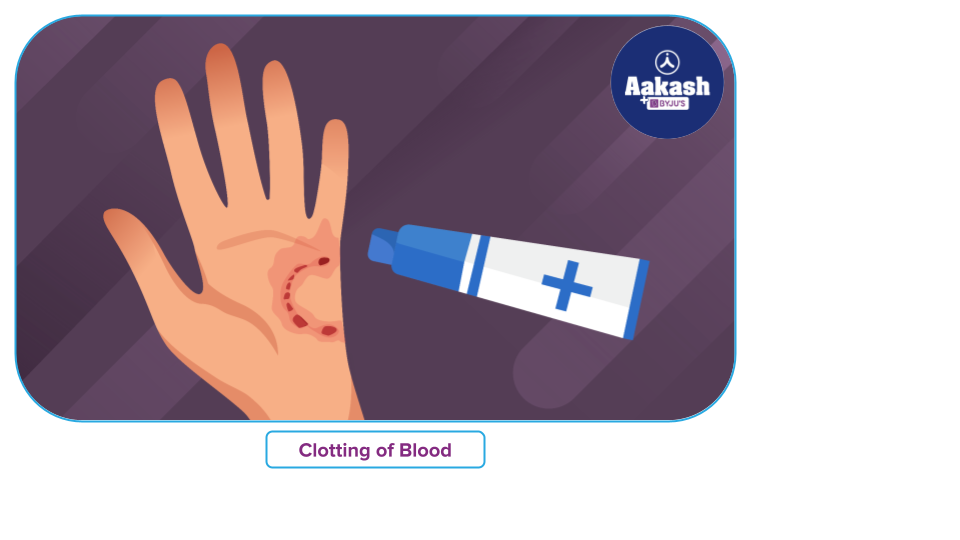
Table of Content
- Enzymes
- Function of Enzymes
- Some Common Enzymes and Their Actions
- Practice Problems
- Frequently Asked Questions-FAQs
Enzymes
Enzymes are biological protein polymers that catalyse the chemical changes in biological species.
Most enzymes are catalytic proteins that perform a variety of functions. In the cell, a number of enzymes that are required for life carry out metabolic processes and other chemical reactions. A large number of amino acids are strung together in a precise and one-of-a-kind configuration.
Enzymes can be found in all cells of the body. All metabolic reactions in the body are catalysed by enzymes. The majority of life's critical processes are carried out by enzymes.
With the exception of ribozymes, most enzymes are proteins. They have a quaternary three-dimensional structure and are one of a kind. Repeated folding or supercoiling of peptide chains and interconnecting results in the formation of quarternary structures such as fissures or pockets. Apart from this common structure with any protein, enzymes have crevices suitable for docking specific reactant molecules(substrate) facilitating their conversion to product. Enzymes like a lock and substrate-like keys are made for each other. These crevices are called ‘activate sites’ and are molecule specific and hence reaction selective.
Enzyme structure and its functions are determined by the amino acid sequence. As a result, a change in the amino acid sequence alters the structure and active site of the enzyme.
Functions of Enzymes
Enzymes perform a variety of functions in the human body as well as it is industrially important. Among them are the following:
- Enzymes help with signal transduction. The most common enzyme used in the process is protein kinase, which catalyses protein phosphorylation.
- They convert the large molecules into small molecules that the body can easily absorb.
- They help the body produce energy. ATP synthase enzymes are involved in energy synthesis.
- It regulates ion movement across the plasma membrane.
- Enzymes use a variety of biochemical reactions such as oxidation, reduction, hydrolysis, and others to eliminate non-nutritive substances from the body.
- They control cellular processes by reorganising the cell's internal structure.
- When highly specific catalysts are required, enzymes are used in the chemical industry and other industrial applications.
- Protein engineering is a thriving field of study that entails attempting to create new enzymes with novel properties, either through rational design or in vitro evolution.
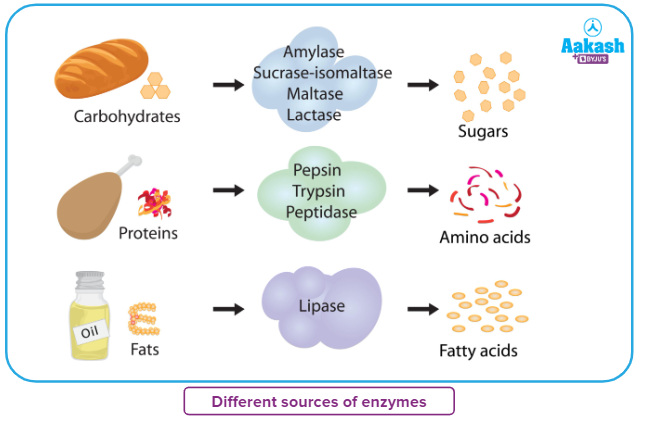
Some Common Enzymes and Their Actions
|
Important enzymes |
Functions |
|
Proteases |
It is the enzymes that break down proteins in the body or on the skin. |
|
Amylase |
is an enzyme that catalyses starch hydrolysis into sugars. Amylase is found in the saliva of humans and some other mammals, where it initiates the chemical digestion process. |
|
Glucosidase |
Catalyse the hydrolysis of starch to simple sugars. In humans, these enzymes aid in the digestion of dietary carbohydrates and starches to produce glucose for intestinal absorption, resulting in an increase in blood glucose levels. |
|
Diastases |
Diastase aids in the digestion of starch by breaking it down into small soluble sugar molecules known as glucose. |
|
Invertases |
Invertase is a plant and microorganism-derived enzyme that catalyses the hydrolysis of the disaccharide sucrose into glucose and fructose. |
|
Lipase |
Is an enzyme that the body uses to break down fats in food and absorb them in the intestines. Lipase is made in the pancreas, the mouth, and the stomach. |
|
Lactase |
This enzyme aids in the breakdown of lactose, a sugar found in milk and other dairy products. Lactase is generated by cells that surround the small intestine's walls. |
|
Nucleases |
The cleavage of phosphodiester bonds is catalysed by DNA nucleases. These enzymes are essential in various DNA repair processes such as DNA replication, base excision repair, double-strand break repair, and so on. |
|
Lysozyme |
is an antimicrobial enzyme produced by animals that is part of the innate immune system. It is also known as muramidase or N-acetylmuramide glycohydrolase. |
|
DNA polymerases |
The primary function of DNA polymerases is to replicate the genome accurately and efficiently in order to ensure the preservation of genetic information and its faithful transmission through generations. |
|
Urease |
is an enzyme that catalyses the hydrolysis of urea, resulting in the formation of ammonia and carbon dioxide. |
|
Aminoacylase |
Aminoacylases are enzymes that catalyse the hydrolysis of an N-acetyl group from N-acyl amino acids. These enzymes are thought to be involved in xenobiotic metabolism. Additionally, there is commercial interest in developing aminoacylases for the production of chiral amino acids. |
|
β-Galactosidase |
The enzyme -galactosidase catalyzes the conversion of disaccharide lactose to produce galactose and glucose, which are then used in glycolysis. |
|
Glucose isomerase |
Is responsible for the reversible isomerization of glucose to fructose and xylose to xylulose. It's a key enzyme in the industrial production of high-fructose corn syrup. |
|
Alkaline proteases |
Its catalytic function is to hydrolyze protein peptide bonds. It can hydrolyze a wide range of peptide bonds in a number of different proteins. |
Practice Problems
Q1. Select the correct option for the enzyme which catalyses starch hydrolysis into sugar molecules.
A. Lactase
B. Proteases
C. Urease
D. Amylase
Answer: (D)
Solution: Amylase is an enzyme that catalyses starch hydrolysis into sugars. Amylase is found in the saliva of humans and some other mammals. Whereas, lactase aids in the breakdown of lactose, a sugar found in milk and other dairy products. Urease is an enzyme that catalyses the hydrolysis of urea, resulting in the formation of ammonia and carbon dioxide. Proteases are the enzymes that break down proteins in the body or on the skin. Therefore, option(D) is correct.
Q2. Which of the following enzyme is required for the breakdown of protein in the body?
A. Nucleases
B. Proteases
C. Invertase
D. Amylase
Answer:(B)
Solution: Proteases are the enzymes that break down proteins in the body or on the skin. On the other hand, Amylase is an enzyme that catalyses starch hydrolysis into sugars. Amylase is found in the saliva of humans and some other mammals. The cleavage of phosphodiester bonds is catalysed by DNA nucleases. Invertase catalyses the hydrolysis of the disaccharide sucrose into glucose and fructose. Therefore, option(B) is correct.
Q3. Which of the following represents the function of an enzyme?
A. It regulates ion movement across the plasma membrane.
B. It helps the body produce energy. ATP synthase enzymes are involved in energy synthesis.
C. They convert the large molecules into small molecules that the body can easily absorb.
D. All of the above
Answer: (D)
Solution: There is a wide range of applications of enzymes from the digestion of food to the chemical industry. Some important function of the enzyme includes:
- It regulates ion movement across the plasma membrane.
- It helps the body produce energy. ATP synthase enzymes are involved in energy synthesis.
- They convert the large molecules into small molecules that the body can easily absorb.
Therefore, option (D) is correct.
Q4. Select the correct option with respect to the enzyme.
A. Enzymes can be found in all parts of the body.
B. A particular substrate can bind to a particularly active site of the enzyme via weak interactions
C. The majority of life's critical processes are carried out by protein which is an enzyme.
D. Urease is an enzyme that catalyses starch hydrolysis into sugars
Answer: (B)
Solution: Enzymes can be found in all cells of the body. All metabolic reactions in the body are catalysed by enzymes. A particular substrate can bind to a particularly active site of the enzyme via weak interactions. The majority of life's critical processes are carried out by enzymes. Amylase is an enzyme that catalyses starch hydrolysis into sugars. Amylase is found in the saliva of humans and some other mammals. Therefore, option(B) is correct.
Frequently Asked Questions-FAQs
Q1. What are the different types of enzymes?
Answer: According to the International Union of Biochemists (I U B), enzymes are classified into six functional classes based on the type of reaction they catalyse. Isomerases, lyases, hydrolases, oxidoreductases, transferases, and ligases are the six types of enzymes.
Q2. What is an enzyme's active site?
Answer: The active site is a small portion of an enzyme where substrate molecules can bind and undergo chemical changes. The active site contains crevices made of amino acids that can form weak bonds with the incoming substrate molecule, hold them and allow them to undergo chemical reactions and release the products. Each active site is substrate specific and hence reaction selective.
Q3.List some important processes which take place in the body with the help of enzymes.
Answer: Some important processes which take place in the body with the help of enzyme includes DNA replication, digestion of food, helps in transporting material to the cell etc.
Q4. What are cofactors?
Answer: Some enzymes are unable to function unless they bind to a specific non-protein molecule known as a cofactor. Cofactors are non-protein substances that bind to enzymes. A cofactor is required for an enzyme to function. An apoenzyme is an enzyme that lacks a cofactor. The holoenzyme is made up of an enzyme and its cofactor.

 Call Now
 Let's Chat
 Share
Share