-
Call Now
1800-102-2727


Dinitrogen Physical Properties: Introduction of Dinitrogen, Physical Properties of Dinitrogen, Uses of Dinitrogen, Practice Problems & Frequently Asked Questions(FAQs)

When you went for the first time to purchase crispy timepass packed snacks, you might be thinking that packet is big and so a lot of the eatables will be there. After paying the money you might have realised that the packet is nearly empty and contains only small amounts of the eatable.But then what else wa inside that fooled you? Is it there to fool the purchaser or it has a purpose? Come let us find answer to these questions.
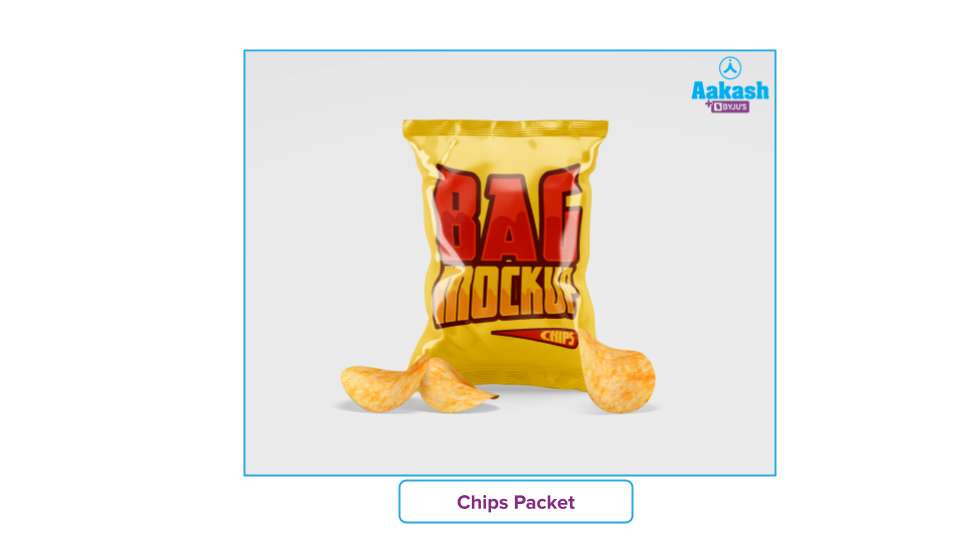
Yes, a lot of chips and gas!
The gas is not air, but nitrogen.
Yes, Why nitrogen?
Nitrogen is mostly inactive and can be considered relatively inert. This nitrogen prevents the contents of the packet from reacting with air or oxygen and gets oxidised which leads the products to become stale.
Due to oxygen's high reactivity and propensity to combine with other molecules whenever possible, chemical reactions are triggered.
An additional motive is to prevent rancidity. Nitrogen stops the oxidation of fats and oils.
Table of Content:
- Introduction of Dinitrogen
- Physical Properties of Dinitrogen
- Uses of Dinitrogen
- Practice Problems
- Frequently Asked Questions(FAQs)
Introduction of Dinitrogen:
A Scottish scientist named Daniel Rutherford made the discovery of nitrogen in 1772. Lavoisier determined that it was an element and gave it the name azote. The current name for nitrogen comes from the well-known nitrogenous compound nitre. The first element in the periodic table's group 15, nitrogen, has the electronic configuration 1S2 2s2 2p3. N2 stands for nitrogen in its natural molecular form. Nitrogen or N2 (Dinitrogen) are prepared using the same process. They function similarly and have the same physical and chemical characteristics. All plant and animal proteins, which are essential for life processes, must contain nitrogen.
The nitrogen element belongs to Group 15. Its small size, high electronegativity, high ionisation enthalpy, and lack of vacant d-orbitals set it different from the other Group 15 members.
A diatomic molecule with a triple bond constitutes the Nitrogen molecule. Its bond enthalpy is therefore very high. Because nitrogen has short bonds and a high inter-electronic repulsion of non-bonding electrons, the catenation tendency is weaker in nitrogen than it is in P-P. The ability of nitrogen to form pp multiple bonds with itself makes it unique. Due to the lack of vacant d-orbitals, nitrogen exhibits a maximum covalency of four. Therefore, nitrogen cannot create a d-d bond.
Physical Properties of Dinitrogen:
- It is a gas that has no taste, odour or colour.
- Despite being non-toxic, animals still perish in nitrogen atmospheres due to a lack of oxygen.
- It is least soluble in water.
- The temperatures at which it melts and boils are 63.2 K and 77.2 K respectively.
- Nitrogen-14 and nitrogen-15, the two naturally occurring isotopes of nitrogen, can be separated through chemical exchanges or thermal diffusion.
- Since it makes up more than 99 percent of all the nitrogen on the planet, nitrogen 14 is the most abundant nitrogen isotope.
- It is a stable chemical element that does not emit radiation. The most frequently used element is nitrogen-14, which finds use in biological research, biochemicals, food preservation, and agriculture. Nitrogen-14 is widely distributed in the atmosphere and among many types of living things.
- N2 is practically non-reactive at room temperature. It does not burn and does not permit combustion. At normal temperatures, N2 chemical inertness is related to the molecule's high stability due to the triple bond.
- A triple bond joins the two nitrogen atoms in a N2 molecule. The triple bond has a very high bond enthalpy, which is the measure of how much heat energy is needed to break a chemical bond. Due to its extremely high bond dissociation enthalpy, N2 has a very low reactivity with the majority of chemicals.
- On the other hand, as the temperature rises, reactivity increases quickly. It forms predominantly ionic nitrides when it directly combines with some metals at higher temperatures, and covalent nitrides when it does so with nonmetals.
- Nitrogen condenses into a colourless liquid, which then solidifies into a mass that resembles snow.
- Under very mild circumstances, it has been known to react with metals like lithium, alkali metals, and calcium. These processes are known as surface tarnishing reactions, and the end result is a metal nitride, like Li3N.
Uses of Dinitrogen:
- In many food production steps, nitrogen is used to preserve the quality of the final product. Compressed nitrogen is now frequently used by manufacturers to replace oxygen when packaging perishable foods. Foods like fruits, vegetables, meats, and snacks can last longer without oxygen. Additionally, nitrogen shields food from damage during transportation.
- Nitrogen-filled auto tyres perform significantly better than compressed air-filled tyres. The fuel efficiency of your car can be increased by adding nitrogen to the tyres. Nitrogen is more difficult to expel from a tire's cavity than compressed air , so the pressure inside the tyre stays constant for a long time. The car's engine runs more smoothly when the pressure is ideal.
- Nitrogen can improve your car's fuel efficiency as well as the durability of its tyres. Compressed air contains water vapour, which causes the wheels to rust. However, nitrogen reduces the chance of corrosion and lengthens the tire's lifespan.
- Additionally, tyres inflated with nitrogen provide greater safety than tyres inflated with compressed air. Nitrogen-inflated tyres are the best option regardless of the weather. Both in dry and wet conditions, these tyres guarantee consistent performance. Nitrogen-filled tyres will help you improve your driving experience and smooth the ride if you frequently travel on highways.
- Nitrogen is frequently used by producers to replace oxygen in highly explosive chemical plants. It is typically used in risky environments like factories, production facilities, and chemical plants to prevent fires and explosions. One can avoid explosions in their manufacturing facilities by reducing the oxygen level.
- Nitrogen is used during the construction of electronic devices to permanently join two parts. Commonly named as soldering. By lowering the surface tension, nitrogen is used in this process to provide a cleaner breakaway from the electric bond. In addition, nitrogen is essential for keeping computers from overheating.
- In laboratories, researchers and scientists need a particular setting to accurately conduct experiments and record results. In order to do this, nitrogen is used to regulate humidity, temperature, and oxygen levels. In this way, the gas aids in maintaining the ideal environment needed to conduct delicate procedures and tests with large machinery. In addition, many different kinds of lab apparatus need nitrogen for purging.
- Because it can be used for purging, nitrogen has emerged as a crucial component for the entire steel sector. In order to create a stronger, more durable, and corrosion-resistant stainless or aluminized steel product, molten residue is blown away using nitrogen gas.
- The production of ammonia is the primary application of N2. It is also employed in the production of some other significant chemicals, including nitric acid and calcium cyanide.
- In a number of metallurgical processes, it is employed to supply an inert atmosphere. When freezing food items and preserving biological materials, liquid nitrogen is used as a refrigerant. Additionally, cryosurgery utilises it.
- It serves as an inert diluent for chemicals that react.
- Liquid nitrogen is used for cryoscopic storage and low temperature experiments.
Practice Problems:
Q1. Why doesn't nitrogen form pentahalide?
(A) Due to absence of vacant d orbitals
(B) Due to lack of p orbital
(C) Both A and B
(D) None of the above
Answer: (A)
Solution: Pentahalides cannot be formed by nitrogen. Five valence electrons are present in nitrogen. The valence shell of it contains s and p orbitals. The d orbitals of nitrogen are not vacant. It is unable to expand its octet. It can only have 8 valence electrons, in other words. Therefore, nitrogen cannot be pentavalent.
Q2. What among the following doesn't exhibit allotropy?
(A) phosphorous
(B) Nitrogen
(C) Arsenic
(D) All of the above
Answer: (B)
Solution: Because nitrogen is small and highly electronegative, it does not exhibit allotropy. Due to strong interelectronic repulsions between non-bonding electrons brought on by the short bond distance, the single N-N bond is weaker than the P-P bond. As a result, it doesn’t exhibit allotropy.
Q3. Why is nitrogen preferred for cooling materials and the welding process?
(A) It’s a gas and can easily be handled
(B) It is an inert gas
(C) It has an extremely low freezing point
(D) It is non-toxic
Answer: (B)
Solution: Nitrogen is an inert gas that is not reactive. However, nitrogen gas is still the most preferred because it completely eliminates the possibility of explosions and unwanted oxidation. This keeps metals from corroding in the welding industry. Nitrogen is used for packaging in the food industry because it creates a pressurised environment that reduces package collapse.
Q4. What is the nitrogen atom's highest possible covalency?
(A) Two
(B) Three
(C) Four
(D) Five
Answer: (C)
Solution: The number of electrons that an atom can share in order to form chemical bonds is referred to as covalency. Typically, it is the number of bonds the atom has formed. In the case of nitrogen, its atom can share up to four electrons; one of its atom's electrons can be found in the s-subshell while the other three are located in the p-subshell. Additionally, its covalency is limited to four because there are no d-orbitals.
Frequently Asked Questions(FAQs)
Q1. What are nitrogen tanks used for?
Answer: Utilising nitrogen prevents oxidation and creates a secure, inert environment that "sweeps" away gases produced by furnaces. In order to facilitate plasma cutting, this can also be used as a laser cutting aid. Numerous upstream and midstream electrical applications make use of nitrogen.
Q2. Why is nitrogen essential?
Answer: The delicate balance of elements necessary for sustaining life is a crucial area of study, and nitrogen's place in the environment is no exception. Lack of nitrogen causes plants to turn yellow, grow slowly, and yield smaller fruits and flowers. To promote crop growth, farmers may apply nitrogen-containing fertilisers to their crops. Scientists predict that without nitrogen fertilisers, we could lose up to one-third of the agricultural crops that are important for our food supply and other uses. However, we must understand how much nitrogen is required for plant growth because an excess can contaminate waterways and harm aquatic life.
Q3. What is Eutrophication?
Answer: Additionally, extra nitrogen may drain or leech from the soil into underground water sources or enter aquatic systems as surface runoff. Eutrophication is the process of a lake or other body of water having an excessive amount of nutrients (such as nitrogen,phosphrous), which results in a dense growth of aquatic plant life, such as algae. When the water is enriched with too much nitrogen, it results in eutrophication, which accelerates the growth of algae and plants.
Q4. How is commercial dinitrogen produced?
Answer: Commercial production of dinitrogen involves the liquefaction and fractional distillation of air. Liquid oxygen is left behind after the separation of liquid dinitrogen. Dinitrogen is created in a laboratory by combining sodium nitrite and ammonium chloride in an aqueous solution.

 Call Now
 Let's Chat
 Share
Share