-
Call Now
1800-102-2727


Difference Between DNA and RNA - DNA, RNA, Functions of DNA and RNA, Comparison of DNA and RNA, Practice Problems, FAQs

Covid pandemic has spread and devastated people across continents and nations alike. Many vaccines have been developed in a record sort time to reduce the human loss. Now,every common human has a bit of understanding of this virus spreading this disease.and the cure available.
India itself has a record of developing a vaccine for the first time and immunized more than
200 crore doses have been administered.
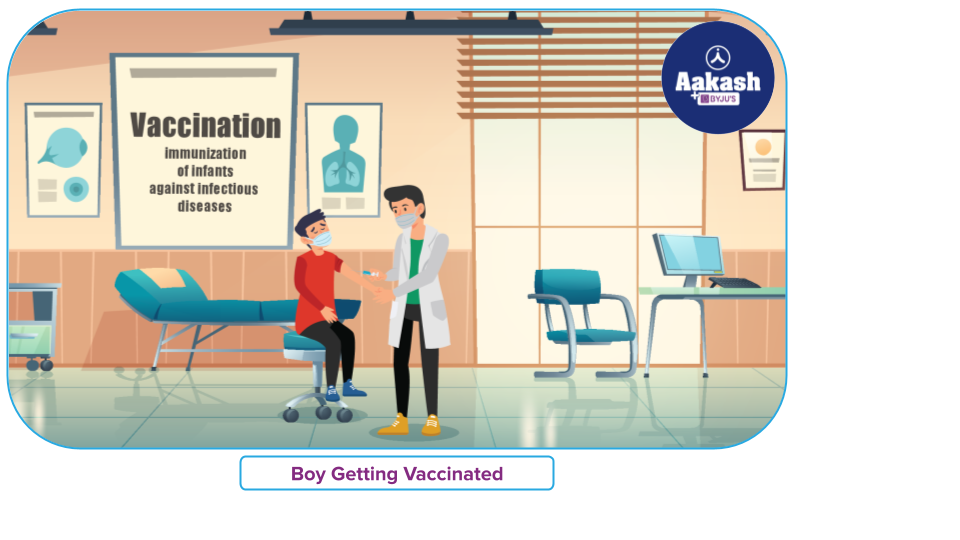
India produced Zycovid-D vaccine. Americans produced the Pfizer vaccine.
But as a student , we should know more than the common man regarding, how these vaccines are prepared and what do they contain? They are based on DNA and RNA.
Zycovid-D vaccine contains a DNA plasmid vector containing the gene encoding the SARS-CoV-2 spike protein. The receiver's cells then generate the spike protein, arousing a protective immune response, as with other DNA vaccines.
The Pfizer vaccine works on the mRNA technique. The vaccine's mRNA instructs your cells on how to replicate the spike protein. When the body is exposed to the real virus, It will be recognised and know how to combat it.
What are those DNA and RNA? DNA and RNA are the fundamental molecules that control and differentiate any biotic(living) species -human, animal or plants.
Let’s have a tour of this article to know more about DNA and RNA and their similarities and differences.
Table of content
- Introduction to DNA and RNA
- Structure and Functions of DNA
- Structure and Function of RNA
- Difference Between DNA and RNA
- Practice Problems
- Frequently Asked Questions - FAQ
Introduction to DNA and RNA
DNA, or deoxyribonucleic acid, is a partially inherited material found in all living things.Both DNA and RNA are complex long chain polymer molecules made from nucleotide units. A nucleotide is made by serially connecting a heterocyclic nitrogen base, a Penta carbohydrate and a phosphate. The heterocyclic bases are five in number -namely, adenine, thymine, guanine, cytosine and Uracil. RNA contains a ribose sugar, while DNA contains deoxygenated ribose and hence they derive their name.
The deoxyribonucleic acid in an individual's chromosomes helps regulate a wide range of visible and invisible characteristics. Visible characteristics include- race, colour, and gender. Blood groups and susceptibility to inherited diseases are some examples of invisible characteristics.
RNA is a ribonucleic acid that aids in protein synthesis in our bodies. This nucleic acid is in charge of the creation of new cells in the human body. It is typically derived from the DNA molecule. The only difference between RNA and DNA is that it has a single strand as opposed to two strands in DNA and it only contains a single ribose sugar molecule.. RNA is also known as an enzyme because it aids in the process of chemical reactions in the body.
Structure of DNA
The nucleotide in DNA is made from deoxygenated ribose sugar, a phosphate and four of the nitrogen bases, adenine, thiamine, cytosine and guanine. A polymer helical linear chain of different nucleotides is formed with deoxygenated ribose, phosphate and any one of the four bases in some order. Similarly, one more chain is formed. The sugar-phosphate is the backbone forming the outer edges.The two helical chains are interlinked by the bases such that adenine joins with thymine and guanine joins with cytosine through hydrogen bonds.
Adenine and thymine are joined by two hydrogen bonds, whereas cytosine and guanine are joined by three hydrogen bonds respectively. The nitrogenous bases are arranged within the helix structure. The bases are stacked inside the double helix. The linked bases are like ladder steps connecting the two helical strands.
The two strands are parallel and run in opposite directions.Twists or turns in the double helix's two sugar-phosphate backbones occur every ten base pairs, maximizing base-pair packing efficiency. DNA is thus made up of a double-helical structure.

Functions of DNA:
- A few hundred to millions of DNAs combine to form a gene. Two such copies of genes are present and one each is inherited from each parent. The genes are positioned in chromosomes.
- Our cell's nucleus contains chromosomes, which are tightly packed DNA structures.of genes. These chromosomes help in the transfer of genetic information from parent to daughter cell. This type of genetic transfer is also known as vertical transfer.
- DNA is capable of replicating itself.
- DNA can dissociate into individual strands to be transcriptionally processed to form single complementary RNA strands. These RNa strands are translated to form proteins. This implies that DNA serves as the basic genetic code for protein formation also
- DNA does not play a structural role in the cell; however, it can be broken down with the help of nucleases to replenish the cell's supply of nucleotides and their components.
- The structure of DNA is also used to study animal evolution and co-relationships. The minute traces of blood or hair found at the crime scene contain enough DNA to be sequenced and used to track down the perpetrator.
Structure of RNA
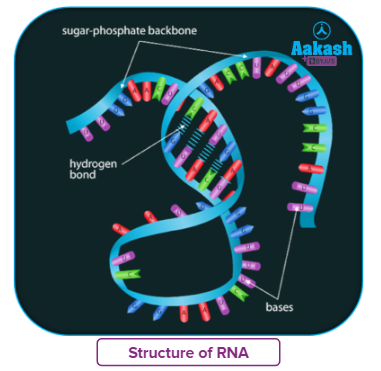
Ribonucleic acid (RNA) is a single-stranded helix that contains nucleotides with a complete pentose sugar, and nitrogenous bases such as uracil(U), adenine(A), cytosine(C) and guanine(G), and a phosphate group. Instead of thymine(T) which is present in DNA, uracil(U) serves as a nitrogen base in RNA. Uracil(U) and adenine(A) are the major building blocks of RNA, and they both form base pairs connected with the help of two hydrogen bonds. The cell contains various types of RNA, such as tRNA, rRNA, and mRNA and which perform various functions for the cell. Other non-coding RNAs are also present in the cell.
Functions of RNA:
- Messenger RNA (mRNA) is made up of triplet nucleotides (codons) that each code for different amino acids that make up a protein. These mRNAs serve as the foundation for protein synthesis.
Ribosomal RNA (rRNA) helps in the synthesis of small and large subunits of ribosomes. These ribosomes bind to mRNA and cause the codon to be translated into amino acids.
- Transfer RNA (tRNA) is approximately 70-90 nucleotides long and aids in the transfer of amino acids to the ribosomal subunit at the site of protein synthesis.
- Ribozyme, a catalytic enzyme found on ribosomes, causes biochemical reactions in the cell such as gene splicing.
- RNA can also be used to detect an underlying viral infection as a diagnostic parameter.
Differences between DNA and RNA
|
Parameters |
DNA |
RNA |
|
Structure |
DNA is made up of a double-helical structure. The sugar-phosphate backbone is formed by alternating deoxyribose sugar molecules and phosphate groups, which form the outer edges. The two strands are parallel and run in opposite directions. |
Ribonucleic acid (RNA) is a single-stranded helix that contains nucleotides with complete pentose sugar, and nitrogenous bases. Generally, the length of the RNA is much shorter as compared with the length of DNA. |
|
Synthesis |
DNA goes through a replication process from parent cell to daughter cell in the form of chromosomes. |
RNA is synthesized from DNA through a transcriptional process to form complementary RNA strands. |
|
Function |
It helps in the transfer of genetic information from parent to daughter cell. Responsible for the activities of all cells. |
It transports the genetic code from the nucleus to the ribosomes, where it is translated into proteins |
|
Sensitivity to Ultraviolet rays |
UV light has the potential to damage DNA. |
RNA provides a larger resistance to getting damaged by UV light. |
|
Molecular mass |
It generally has higher molecular mass as compared with RNA. |
It has a lower mass as compared with DNA. In comparison to different numbers of RNA(i.e. tRNA, rRNA, and mRNA ) tRNA has the lowest molecular mass due to a smaller number of nucleotides followed by rRNA and mRNA. |
|
stability |
DNA is comparatively more stable in the alkaline medium and less susceptible to getting hydrolyse. |
RNA is comparatively less stable in the alkaline medium as hydrogen atoms can easily deprotonated. |
|
Nitrogenous base present and pairing |
There are four nitrogenous cyclic bases present in the DNA molecule which include adenine (A), thymine (T), guanine (G), and cytosine. Adenine and thymine are joined by two hydrogen bonds, whereas cytosine and guanine are joined by three hydrogen bonds respectively. The purines(adenine and guanine) and pyrimidines (cytosine and thiamine) bases are found in equal proportions. |
There are four nitrogenous bases- uracil(U), adenine(A), cytosine(C) and guanine(G), and a phosphate group. Instead of thymine(T) which is present in DNA, uracil is present in RNA. Uracil and adenine both form base pairs connected with the help of two hydrogen bonds. The purines(adenine and guanine) and pyrimidines (cytosine and uracil) bases are found in equal proportions. |
Practice Problems
Q1. Which among the given nitrogenous bases is not present in the RNA structure?
- Thiamine
- Adenine
- Guanine
- Uracil
Answer:(A)
Solution: Ribonucleic acid (RNA) is a single-stranded helix that contains nucleotides with a complete pentose sugar, nitrogenous bases such as uracil(U), adenine(A), cytosine(C) and guanine(G), and a phosphate group.Instead of thymine(T) which is present in DNA, uracil(U) serves as a nitrogen base in RNA.
Q2. Which of the following options is correct with respect to the structure of DNA?
- DNA is the single-stranded helix that contains nucleotides with complete pentose sugar, and nitrogenous bases.
- Four nitrogenous bases present in DNA are - uracil(U), adenine(A), cytosine(C) and guanine(G)
- Adenine and thymine are joined by two hydrogen bonds, whereas cytosine and guanine are joined by three hydrogen bonds respectively
- Nitrogenous bases are arranged outside the helix structure
Answer: (C)
Solution: DNA is made up of a double-helical structure that contains nucleotides with a complete pentose sugar, nitrogenous base present. The four nitrogenous bases present in the DNA are thiamine (T), adenine(A), cytosine(C) and guanine(G). The nitrogenous bases are arranged within the helix structure. Adenine and thymine are joined by two hydrogen bonds, whereas cytosine and guanine are joined by three hydrogen bonds respectively. Therefore option (C) is correct.
Q3. Select the correct option with respect to the RNA molecule.
- Ribonucleic acid (RNA) is a single-stranded helix that contains four nitrogenous bases uracil(U), adenine(A), cytosine(C) and guanine(G)
- RNA can also be used to detect an underlying viral infection as a diagnostic parameter.
- Messenger RNA (mRNA) is made up of triplet nucleotides (codons) that each code for a different amino acid that makes up a protein
- All of the above
Answer: (D)
Solution: Ribonucleic acid (RNA) is a single-stranded helix that contains nucleotides with a complete pentose sugar, nitrogenous bases such as uracil(U), adenine(A), cytosine(C) and guanine(G), and a phosphate group. Instead of thymine(T) which is present in DNA, uracil(U) serves as a nitrogen base in RNA.
The cell contains various types of RNA, such as tRNA, rRNA, and mRNA and which perform various functions for the cell. Messenger RNA (mRNA) is made up of triplet nucleotides (codons) that each code for different amino acids that make up a protein. These mRNAs serve as the foundation for protein synthesis.
RNA can also be used to detect an underlying viral infection as a diagnostic parameter.
Q4. Select the correct option with respect to the function of the DNA molecule?
- The structure of DNA is also used to study animal evolution and co-relationships
- The replicated DNA is transcriptionally processed to form complementary RNA strands which are translated to form protein.
- Chromosomes contain DNA, which helps in the transfer of genetic information from the parents to the offspring.
- All of the above
Answer: (D)
Solution: Some important functions of DNA include:
- The structure of DNA is also used to study animal evolution and co-relationships
- The replicated DNA is transcriptionally processed to form complementary RNA strands which are translated to form protein.
- Chromosomes contain DNA, which helps in the transfer of the genetic information from the parents to the offspring
Therefore the correct option is (D)
Frequently Asked Questions-FAQs
Q1. How was the double helical structure of DNA discovered?
Answer: The first X-ray image of DNA, led to Watson and Crick's discovery of its molecular structure. Rosalind Franklin created it using the X-ray crystallography technique, which revealed the helical shape of the DNA molecule. Watson and Crick discovered that DNA is made up of two chains of nucleotide pairs that encode all living things' genetic information.
Q2. What is denaturation or melting of DNA?
Answer: The nitrogenous bases present in two strands of the DNA are weak and break when heated or with the change in the pH of the medium. The separation of the DNA strand is called denaturation or melting of DNA.
Q3. What is the difference between mRNA and rRNA?
Answer: Messenger RNA (mRNA) is made up of triplet nucleotides (codons) that each code for different amino acids that make up a protein. These mRNAs serve as the foundation for protein synthesis. Whereas, rRNA with protein forms structural components of the ribosome and provides the surface for the attachment of mRNA and tRNA. Renaturation occurs when separate single strands rewind after cooling.
Q4. Where can RNA act as genetic material?
Answer: Generally DNA is the hereditary material which transfers hereditary character from one generation to the other generation(i.e from parents to the offsprings) and RNA in the case of eukaryotes and prokaryotes participate in the synthesis of protein but in the case of some viruses like measles virus, rabies virus, TMV, HIV (retrovirus), mumps virus, poliovirus, influenza virus etc RNA is the genetic material.

 Call Now
 Let's Chat
 Share
Share