-
Call Now
1800-102-2727


Dalton’s Theory – Postulates, Limitations and Merits of Dalton’s Atomic Theory, Practice Problems and FAQ

The curiosity to explore more about matter came into inception about 2000 years ago. The word ‘atom’ was introduced to the world by Greece, where they called it ‘Atomos’. The initial idea given without any concrete evidence was that matter consists of many smaller particles. Democritus proposed that matter is made up of unbreakable, indivisible particles called atoms in the 5th century BCE. This concept survived the Dark Ages because it was preserved by the Roman poet Lucretius.
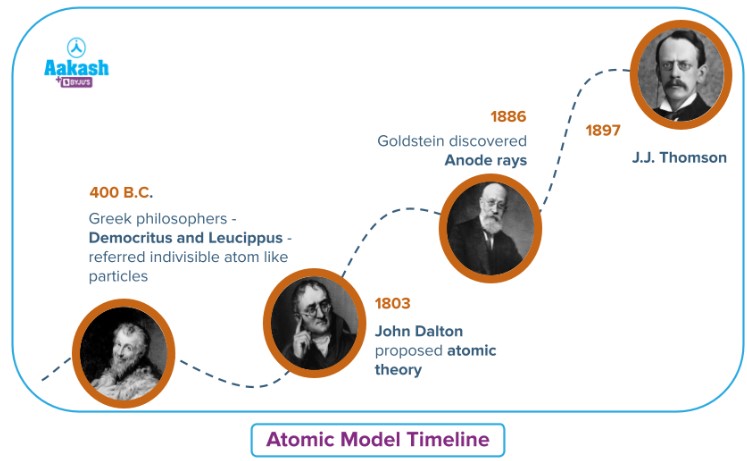
Science did not definitively prove the existence of atoms until the end of the 18th century. The law of conservation of mass, which states that the mass of a reaction's products and reactants are equal, was developed by Antoine Lavoisier in 1789. The law of definite proportions, which states that the masses of elements in a compound always occur in the same proportion, was developed ten years later by Joseph Louis Proust. John Dalton built on these non-atomic theories to create the law of multiple proportions, which states that the ratios of the masses of the constituent elements in a compound are small whole numbers. Experimental data were used to develop Dalton's law of multiple proportions. According to his theory, every chemical element is made up of a single type of atom that cannot be destroyed chemically. The atomic theory was first introduced by him in his oral presentation (1803) and publication (1805).
In this concept page, we will explore the postulates, limitations and merits of John Dalton’s atomic theory.
TABLE OF CONTENTS
- Dalton’s Theory – Postulates
- Dalton’s Theory – Limitations
- Dalton’s Theory – Merits
- Practice Problems
- Frequently Asked Questions – FAQ
Dalton’s Theory – Postulates
- Atoms make up all matter. Atoms are unbreakable and undividable.
Dalton proposed that the concept of atoms could be used to explain the laws of definite proportions and conservation of mass. He proposed that atoms, which he described as hard, solid, impenetrable, massy, and movable particles, are the indivisible, smallest units of matter. It is crucial to remember that Dalton had no knowledge of whether individual atoms might have an internal structure because he lacked the tools necessary to observe or perform other experiments on them. Dalton's atom could be pictured as a component of a molecular modelling set, where spheres of various sizes represent the various elements. Although this is a practical model for some uses, we now understand that atoms are not solid spheres.
- The mass and characteristics of every atom in a given element are the same.
According to Dalton, each and every atom of an element, such as silver, is identical to every other atom of the same element. The atoms of one element are distinct from the atoms of all other elements, he added. We still believe that this is mostly accurate today. An atom of magnesium differs from an atom of calcium. Although some of the boiling points, melting points, and electronegativities of different elements may be similar, no two elements have exactly the same set of properties.
- Two or more different types of atoms combine to create compounds.
Dalton proposed that compounds are combinations of two or more different types of atoms in the third section of his atomic theory. Table salt is one example of such a compound. Two distinct elements with distinct physical and chemical properties are combined to form table salt. The first is sodium, a metal that is very reactive. Chlorine, the second, is a poisonous gas. We can sprinkle white crystals of NaCl on our food because the atoms combine in a 1:1 ratio during their reaction. Atoms will always combine in simple whole-number ratios because they are indivisible. Consequently, it would be unnecessary to write a formula like Na0.50Cl0.50. You can not have half of an atom.
- Atoms can never be created or destroyed but rearranged during a chemical reaction.
Dalton proposed that chemical reactions do not create or destroy atoms in the fourth and final section of his atomic theory. The atoms were simply rearranged. Let's use salt as an example. When sodium and chlorine combine to form common salt, they rearrange themselves to create NaCl, and none of them loses their existence.
Dalton’s Theory – Limitations
- Dalton's atomic theory claimed that atoms were indestructible. So, it does not take into account subatomic particles. This hypothesis was refuted by the discovery of subatomic particles like protons, electrons, and neutrons.
- Isotopes are not taken into account by the atomic model of Dalton. According to Dalton's atomic theory, the masses and densities of every atom in an element are the same. However, the atomic masses of various element isotopes vary (Example: Hydrogen, deuterium, and tritium).
- This theory asserts that the masses of the atoms of two different elements must differ, but it does not take into account isobars. Two different elements could, however, have the same mass number. These atoms are known as isobars (Example: 40Ar and 40Ca).
- Compounds can be formed by the combination of elements in complex, whole-number ratios. There are some complex organic compounds that do not have straightforward atom-to-atom ratios.
- Allotropes are not taken into account by the theory. Dalton's atomic theory is unable to account for the differences between the properties of diamond and graphite, both of which are made up entirely of carbon.
Dalton’s Theory – Merits
- Dalton's atomic theory does not contravene the laws of multiple proportions, conservation of mass, or constant proportions.
- The theory offers a foundation for distinguishing between elements and compounds.
Recommended Video
Structure of Atom Class 11 Chemistry (Ch-2) | JEE Main Important Topics | JEE 2022 Exam Preparations
Practice Problems
1. Which of the following is the building block of a matter, according to John Dalton?
a. Atoms
b. Molecules
c. Ions
d. None of the above
Answer: A
Solution: Dalton, in his model of the atom, proposed that atoms, which he described as hard, solid, impenetrable, massy, and movable particles, are the indivisible, smallest units of matter.
So, option A is the correct answer.
2. What could not be explained by Dalton's Theory?
a. Law of conservation of mass
b. Law of multiple proportions of compounds
c. Law of definite proportions
d. Gaseous volumes
Answer: D
Solution: John Dalton was not able to find the distinction between the smallest particle of compound and element. He gave a broad definition considering everything as matter. Hence, from his theory, it was not clear how gaseous substances combine in terms of their volume. On the other hand, Dalton's atomic theory does not contravene the laws of multiple proportions, conservation of mass, or constant proportions.
So, option D is the correct answer.
3. Which of the following laws formed the basis of Dalton’s atomic theory?
a. Law of definite proportions.
b. Law of conservation of mass.
c. Both A and B
d. None of the above
Answer: C
Solution: The laws of mass conservation and constant composition served as the foundation for Dalton's theory. According to the law of conservation of mass, in a closed system, matter cannot be created or destroyed. According to the law of constant composition, a pure compound will always contain the same number of the same elements in a given ratio.
So, option C is the correct answer.
4. Who proposed the law of conservation of mass?
a. Joseph Louis Proust
b. Antoine Lavoisier
c. John Dalton
d. None of the above
Answer: B
Solution: The law of conservation of mass, which states that the mass of a reaction's products and reactants are equal, was developed by Antoine Lavoisier in 1789.
So, option B is the correct answer.
Frequently Asked Questions – FAQ
1. What atomic model is in use right now?
Answer: The most complex and widely accepted atom model at the moment is the electron cloud model. The idea of the nucleus from the models of Bohr and Rutherford is retained, but a new definition of the motion of electrons around the nucleus is introduced.
2. Why are atoms invisible to the unaided eye?
Answer: Because atoms are so tiny and are measured in nanometers, they cannot be seen with the human eye. Aside from the atoms of noble gases, they cannot exist on their own.
3. How is the atomic theory of Dalton used to distinguish between elements and compounds?
Answer: According to this theory, elements combine to form compounds in predetermined whole-number ratios. As a result, it implies that molecules containing two or more atoms of various elements are the building blocks of compounds.
4. How is the law of conservation of mass explained by Dalton's atomic theory?
Answer: Dalton's theory postulates that the net mass of the participating species in a chemical reaction is conserved because it asserts that atoms cannot be created or destroyed. As a result, this postulate explains how the law of conservation of mass works.

 Call Now
 Let's Chat
 Share
Share