-
Call Now
1800-102-2727


Uses of Aldehydes and Ketones: Aldehydes & Ketones, Uses, Practice Problems & Frequently Asked Questions

Everyone enjoys biryani, not only for its taste but also for the fragrance around it. Do you know what ingredients are used to make it?
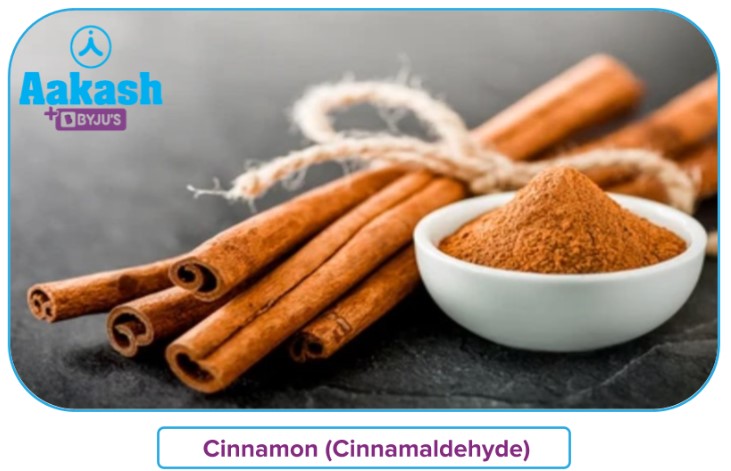
Cinnamon, which has a distinctive aroma and contains cinnamaldehyde, is one of the ingredients used in biryani to make it taste even better.
Methyl isobutyl ketone(MIBK), also known as 4-Methyl-2-Pentanone, is used for a variety of purposes, including as an alcohol denaturant as a chemical intermediate.
MIBK is used as a flavouring agent for foods and medications as well as in addition to synthetic flavourings to help increase their power. Indirect additives for glues, paper and paperboard, and polymers used in food packaging applications include MIBK, which has FDA approval.
There are many such aldehydes and ketones which are used extensively. Come let us know about them.
Table of Contents:
- Introduction of Aldehydes and Ketones
- Uses of Aldehydes
- Uses of Ketones
- Practice Problems
- Frequently Asked Questions(FAQs)
Introduction of Aldehydes and Ketones:
Aldehydes and ketones are compounds having a carbonyl group. In aldehydes, the carbonyl group carbon is attached to one hydrogen and one carbon atom, while in ketone the carbonyl carbon is attached to two carbon atoms.
Aldehydes have the structural formula of R-CHO, while ketones have the structural formula R (C=O) R'. While the aldehydic group is always at the end of a chain, ketones are a part of the hydrocarbon chain.
Uses of Aldehydes:
Aldehydes like glutaraldehyde serve as antibacterial agents, fumigants, and insecticides. By damaging their cell walls and membranes, it prevents fungi and bacteria from growing and reproducing.
Acrolein is employed to create acrylic acid, which is utilised to make paints, adhesives, floor polish, and polymers. Streams are regularly blocked by hyacinths and other vegetation, making navigation difficult. Acrolein is used to clean the water and prevent the growth of certain plants.
Acetaldehyde acts as a precursor for the preparation of derivatives like acetic acid, ethyl acetate, peracetic acid, pyridine ring derivatives, dyes, polymers, and artificial flavourings.
Certain aldehydes in spices, like coriander, have a characteristic aroma. About 40 different chemical constituents make up coriander, with 82% of these being aldehydes with 9–10 carbon atoms, which are primarily responsible for the flavour and aroma of coriander leaves.
Numerous industrial processes, such as the production of glue, tanning leather, and the development of polymeric products, all need the usage of aldehydes.
Retinal, an aldehyde that transforms into rhodopsin, is the primary substance involved in the vision process when it combines with a protein (or opsin) in the retina of the eye. When exposed to light, rhodopsin undergoes cis-trans isomerization in the retina. The brain may detect the nerve impulse and understand it as a visual signal due to a nerve impulse that is generated as a result of the altered molecule structure.
Aldehydes play a significant part in the caramelization of sugars. During slow cooking, the amino acids convert the aldehyde group of the sugar into an unsaturated aldehyde. This gives sugar its unique caramel-brown colour.
Cinnamon has antibacterial and antifungal properties, which is why it is frequently included in oral hygiene products and is offered for sale as a supplement. Additionally, it is an excellent source of antioxidants, which prevent the damaging effects of free radicals (reactive atoms that can damage cells). Cinnamon is being studied for its ability to prevent Alzheimer's disease and lessen the signs of irritable bowel syndrome, colon cancer, and other conditions because of its anti-inflammatory properties.
It is believed that cinnamon is especially beneficial for patients with type 2 diabetes. It makes the body more responsive to the hormone insulin, which is in charge of delivering sugar from the bloodstream to the cells, where it is transformed into energy. As a result, the insulin may transfer sugar across the body more effectively, decreasing blood sugar and assisting in the maintenance of a healthy metabolism. Numerous research on humans have investigated the anti-diabetic properties of cinnamon, and the findings point to the possibility that a daily dose of 0.5 to 2 tablespoons of the spice will reduce rising blood sugar levels by 10-29%.
Uses of Ketones:
Acetone:
Apart from being a necessary component of nail paint remover, acetone is also used in the production of many other cosmetics. In the cosmetics industry, it is commonly used as a denaturant and solvent. Wet wipes and hair dyes, among other goods, are produced using acetone, a common chemical.
Wood varnish must almost definitely be used on all woodwork. By adding a resinous compound that acts as a protective coating, this standard procedure provides the furniture with a shining finish. On the other side, the paint ages over time and appears dirty and corroded. Normal furniture hasn't been harmed by this problem in a while, but it can diminish the appeal of oil paintings. Acetone is a substance frequently used to remove bad paint. Use a soft, fine steel wool pad that has been dipped in acetone to clean the wood of the furniture.
Methyl ethyl ketone:
Methyl ethyl ketone (MEK), commonly known as 2-butanone, is a liquid solvent used in lubricating oil dewaxing, printing inks, chemical intermediaries, magnetic tapes, and surface coatings. Butanone, commonly known as methyl ethyl ketone, is one of the primary solvents used in paraffin wax, plastics, textiles, coatings, paint thinners, etc.
Another typical solvent that is available in its entire strength or as a component of other goods is methyl ethyl ketone (MEK). As a solvent for surface coatings, it is very effective and adaptable. Methyl ethyl ketone (MEK) is a potent solvent that can be particularly useful in creating high solids coatings that lower emissions from coating techniques.
When extracting fats, oils, waxes, and resins from food and food products, methyl ethyl ketone (MEK) is employed as the extraction solvent. It can be used to decaffeinate coffee and tea, as an extraction solvent for manufacturing foods and food products, such as when fractionating fats and oils, and as an artificial flavouring agent for various foods and medications. Pharmaceuticals and other items are also made using it as a chemical intermediate.
One essential component in the production of nylon is the cyclic ketone cyclohexanone.
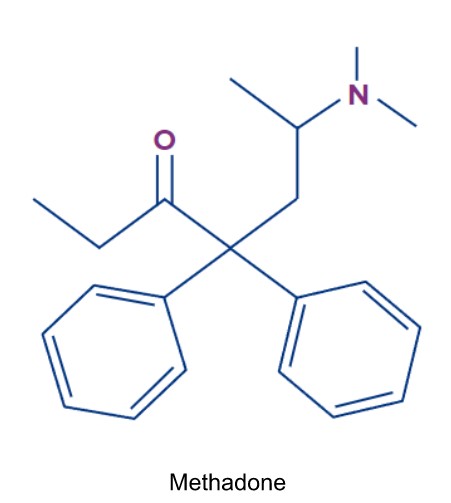
Ketones methadone is applied in the treatment of opiate addiction. Opiates abundantly produce the hormone dopamine. Because of its capacity to bind to the brain's dopamine receptor, methadone is able to stop a user's physical reliance on opiates.
Numerous ketone bodies perform essential tasks in humans and other living things. The steroid hormones progesterone, aldosterone, cortisone and testosterone all generate ketones.
Practice Problems:
Q1. What is the hybridization of carbon in formaldehyde or methanal?
(A) sp2
(B) sp3
(C) sp
(D) dsp2
Answer: (A)
Solution: The simplest aldehyde is formaldehyde, which has one carbon. The aldehyde functional group contains the only sp2 hybridised carbon atom in the formula.
The sp2 hybridised carbon produces three sigma bonds. Formaldehyde has a basic trigonal planar geometry with bond angles of 120o when three sigma bonds are formed. One p orbital is left unhybridized because only two of the three carbon p orbitals participate in hybridization. This unhybridized p orbital joins with the unhybridized p orbital of the oxygen atom to form a pi bond.
Q2. Ethanal reacts with
(A) Electrophiles
(B) Nucleophiles
(C) Both Electrophiles and Nucleophiles
(D) Free radicals
Answer: (B)
Solution: Acetaldehyde only interacts with nucleophiles. Carbonyl carbon is electron-deficient and carbonyl oxygen is electron-rich because the mobile n-electrons of the carbon-oxygen double bond are aggressively pushed towards oxygen. As a result, the electron-deficient carbonyl carbon is most vulnerable to attack by an electron-rich nucleophilic reagent, such as a base.
Q3. What is the common name of propanal?
(A) Acetaldehyde
(B) Formaldehyde
(C) Propionaldehyde
(D) Butyraldehyde
Answer: (C)
Solution: The formula of propanal is CH3CH2CHO and its IUPAC name is propanal and its common name is propionaldehyde.
Q4. The general formula for aldehyde and ketone is
(A) CnH2nO
(B) CnH2n+2O
(C) CnH2n+1O
(D) CnH2nO2
Answer: (A)
Solution: Organic compounds with the C=O carbonyl functional group includes aldehydes and ketones. Two more bonds are available for hydrogen, alkyl, or aryl substituents to occupy on the carbon atom of this group. Chemicals with at least one hydrogen substituent are referred to as aldehydes. If neither hydrogen is present in the chemical, it is a ketone. Both ketones and aldehydes have the general formula CnH2nO.
Frequently Asked Questions(FAQs):
Q1. What is the purpose of using formalin to preserve biological specimens?
Answer: Preservatives are chemicals used to protect food and biological samples from decay. One of the preservatives used to keep biological specimens safe is formalin. Formalin is composed of 30-40 % water in formaldehyde or methanol.
In biological specimens, fundamental amino acids in protein chains contain nitrogen atoms that make bonds with formaldehyde to generate -CH2 bonds.
Q2. What are formaldehyde's hazardous effects?
Answer: In addition to being widely used, formaldehyde poses serious risks to human health. The vapour and solutions of formaldehyde are known to irritate human skin and eyes and have a strong odour that can be detected at small concentrations. Typical symptoms of formaldehyde exposure include a variety of eye and upper respiratory tract symptoms brought on by mucosal irritation.
Q3. Why are aldehydes and ketones functional group isomers?
Answer: Ketones and aldehydes are functional group isomers. Ketones and aldehydes both have a carbonyl group >C=O. The functional group is connected to one or two hydrogen atoms in the situation of aldehydes and to two carbon atoms in the situation of ketones. For instance, propanal and propanone are functional isomers of C3H6O because they have the same chemical formula (C3H6O), but distinct functional groups -CHO and -C=O, respectively.
Q4. Give examples of some natural ketones and aldehydes.
Answer: Ketone is spread throughout the environment when combined with additional aldehydes of the active group. Cinnamaldehyde (cinnamon bark), vanillin (vanilla bean), camphor (camphor trees), Citra (lemongrass), helminthosporium (fungal toxin) and carvone (spearmint and caraway) are all present mostly in microbes or plants.

 Call Now
 Let's Chat
 Share
Share