-
Call Now
1800-102-2727


Aldehydes: Nomenclature, Preparations, Physical and Chemical Properties, Uses, Practice problems and Frequently Asked Questions

Do you know what chemical is used in the embalming process to preserve dead bodies in morgues?
The chemical used is formaldehyde, which falls under the category of aldehydes.
Formaldehyde is commonly used as an industrial disinfectant as well as a preservative in funeral homes and medical laboratories. Formaldehyde changes the tissue at the molecular level, preventing bacteria from feeding on it. It rips your tissue's constructs apart.
Likewise, aldehydes are also involved in some major physiological processes of our body. Examples are retinal (vitamin A aldehyde), which is significant in human vision. Glucose and other so-called reducing sugars are also basically aldehydes. Also important vitamins like vitamin B6 contain a pyridoxal phosphate, an aldehyde.
In aldehydes, the carbonyl group has one hydrogen atom attached to it together with either a 2nd hydrogen atom or may be an alkyl group or one benzene ring.
Table of content
- Nomenclature of aldehydes
- Aldehyde Structure and Formula
- Preparations of aldehydes
- Physical properties of aldehydes
- Chemical properties of aldehydes
- Uses of aldehydes
- Practice problems
- Summary Table: Aldehydes at a Glance
- Frequently asked questions
Nomenclature of aldehydes
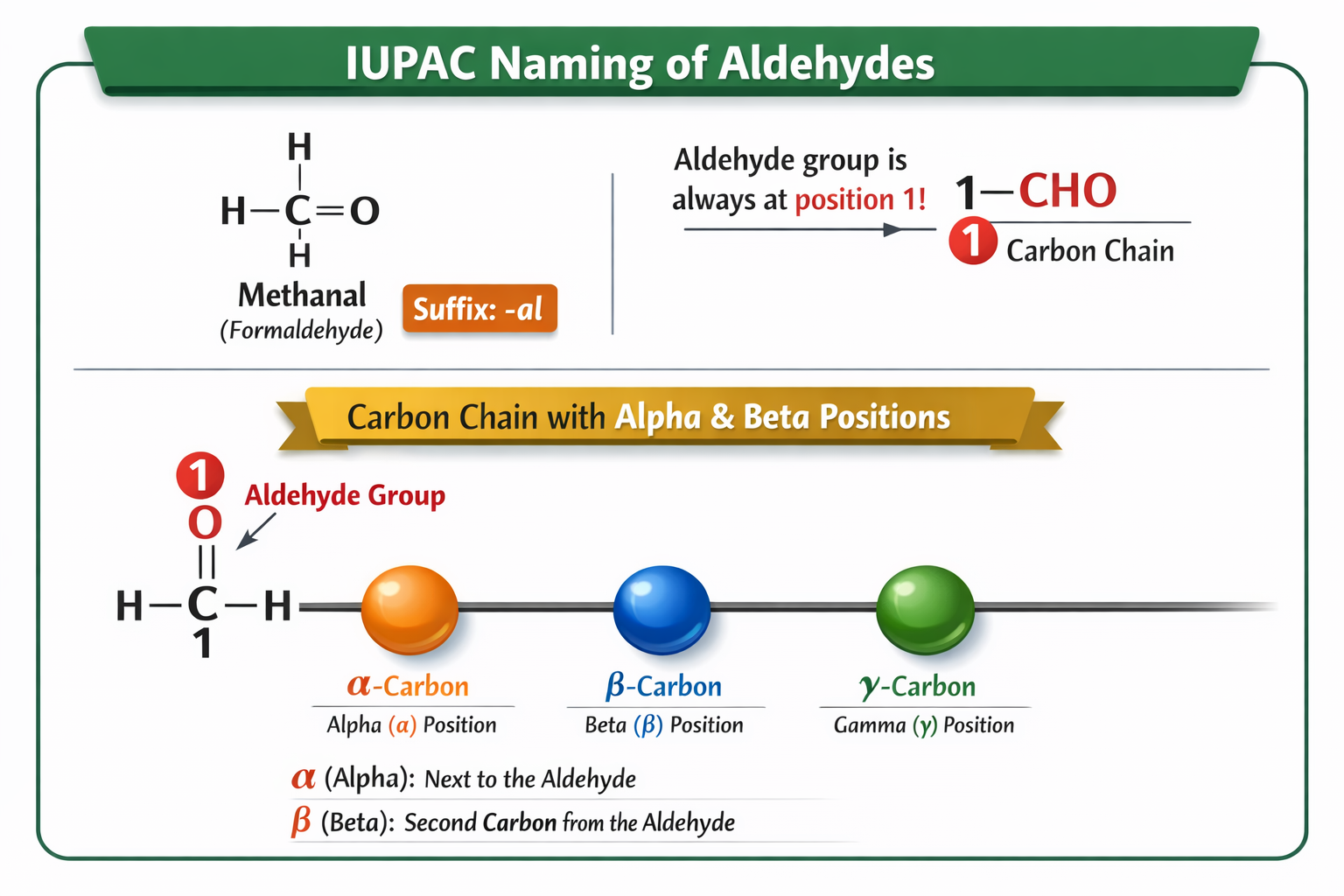
- According to the IUPAC nomenclature, “-al” is attached as a suffix to the parent chain to name the aldehyde.
- For example, CH2=O is named according to the IUPAC system as methanal, commonly known as formaldehyde.
- The aldehyde group is always attached to the end of the main carbon chain, and therefore the number 1 position is always assigned to it.
- For aldehydes and ketones, the names are reflected in Greek and Latin terms. Greek letters like α, β, etc. used to determine the position of substituents in the carbon chain.
- The α-carbon is attached directly to the aldehyde group, the β-carbon is attached to the carbon adjacent to the aldehyde group or α-carbon, and so on.
|
Formula |
Common name |
IUPAC name |
|
HCHO |
Formaldehyde |
Methanal |
|
CH3CHO |
Acetaldehyde |
Ethanal |
|
CH3CH2CHO |
Propionaldehyde |
Propanal |
|
CH3CH2CH2CHO |
Butyraldehyde |
Butanal |
Aldehyde Structure and Formula
The general formula of aldehydes is: R–CHO
Where:
-
R = hydrogen atom or hydrocarbon group
-
–CHO = aldehyde (formyl) functional group
Key Structural Feature
The carbonyl carbon (C=O) in aldehydes is bonded to at least one hydrogen atom, which makes aldehydes more reactive than ketones, where the carbonyl carbon is bonded to two carbon atoms.
Important Formulas to Remember
-
General Formula (aliphatic aldehydes):
CₙH₂ₙO -
Functional Group:
–CHO -
Simplest Aldehyde:
Formaldehyde (HCHO)
Preparations of aldehydes
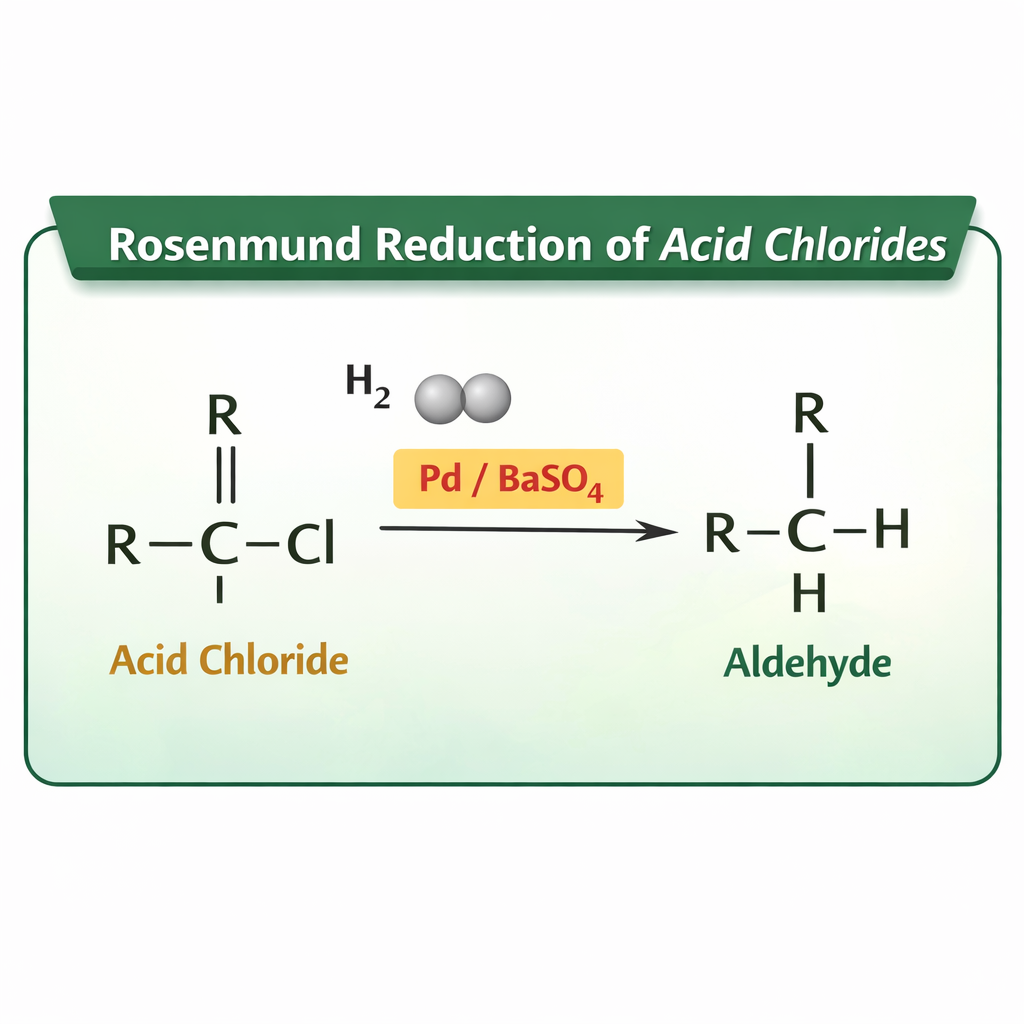
1. Rosenmund reaction:
Acid chlorides on hydrogenation in the presence of catalyst palladium and barium sulfate gives aldehydes. This reaction is known as the Rosenmund reaction.
2. From Nitriles
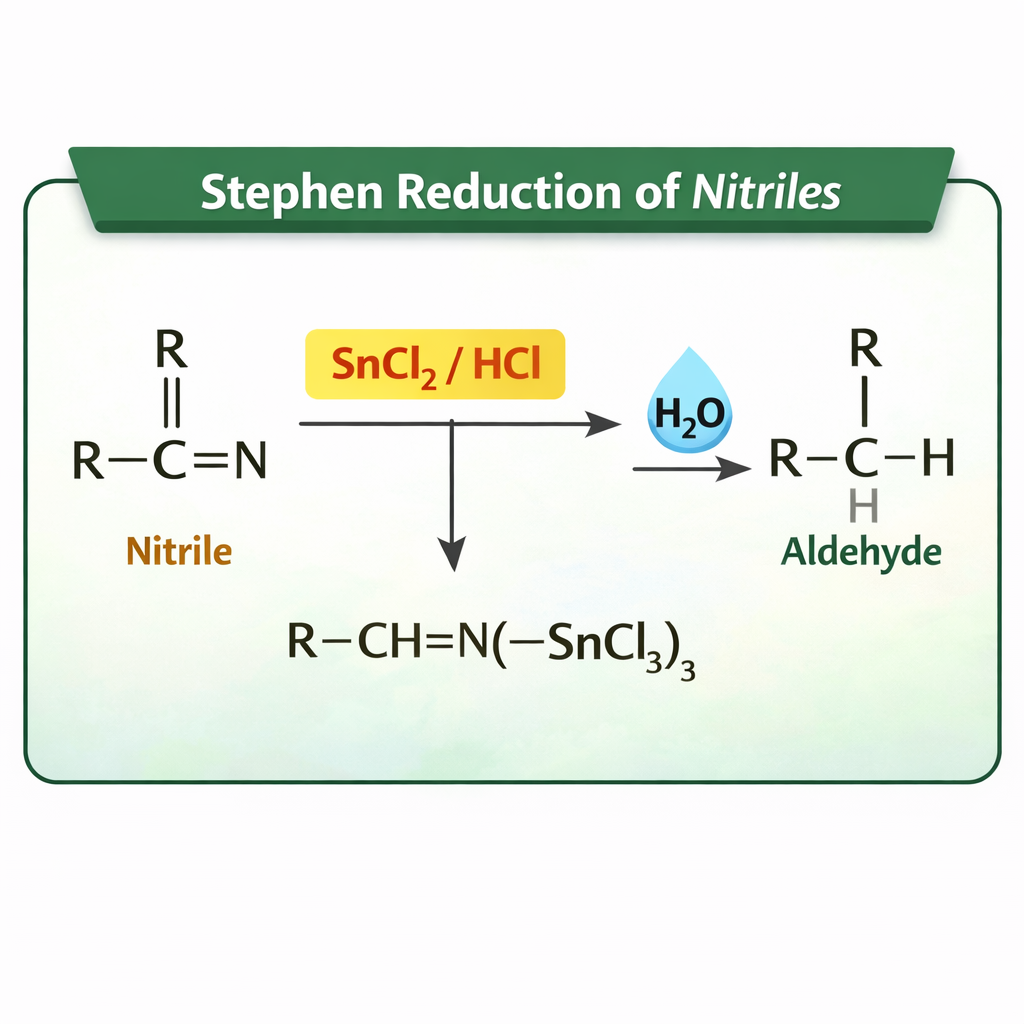
Stephen reaction:
We get aldehydes when nitriles are reduced in the presence of stannous chloride and hydrochloric acid and then the resulting mixture is hydrolysed. This reaction is known as Stephen reaction.
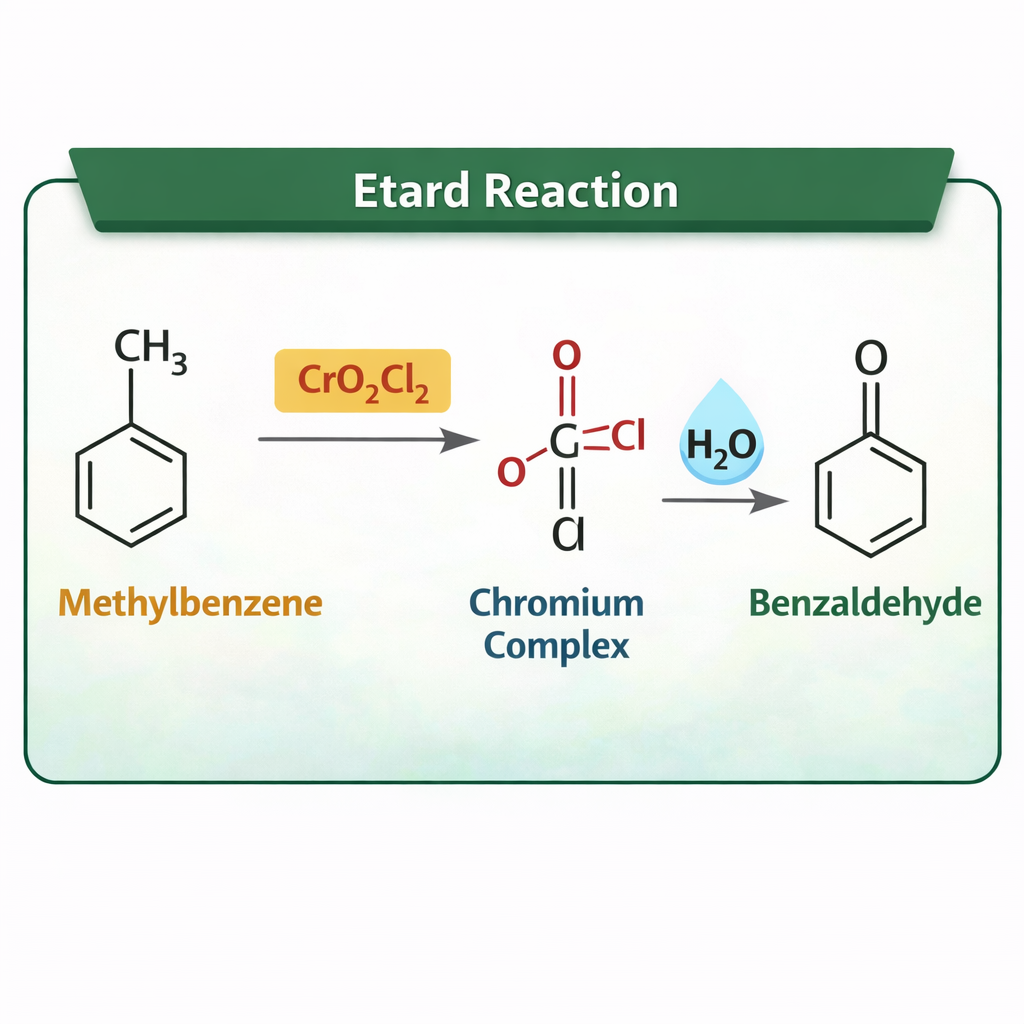
3. Etard reaction:
We get a chromium complex when chromyl chloride oxidizes the methyl group, on further hydrolysis benzaldehyde is obtained. This reaction is known as the Etard reaction.
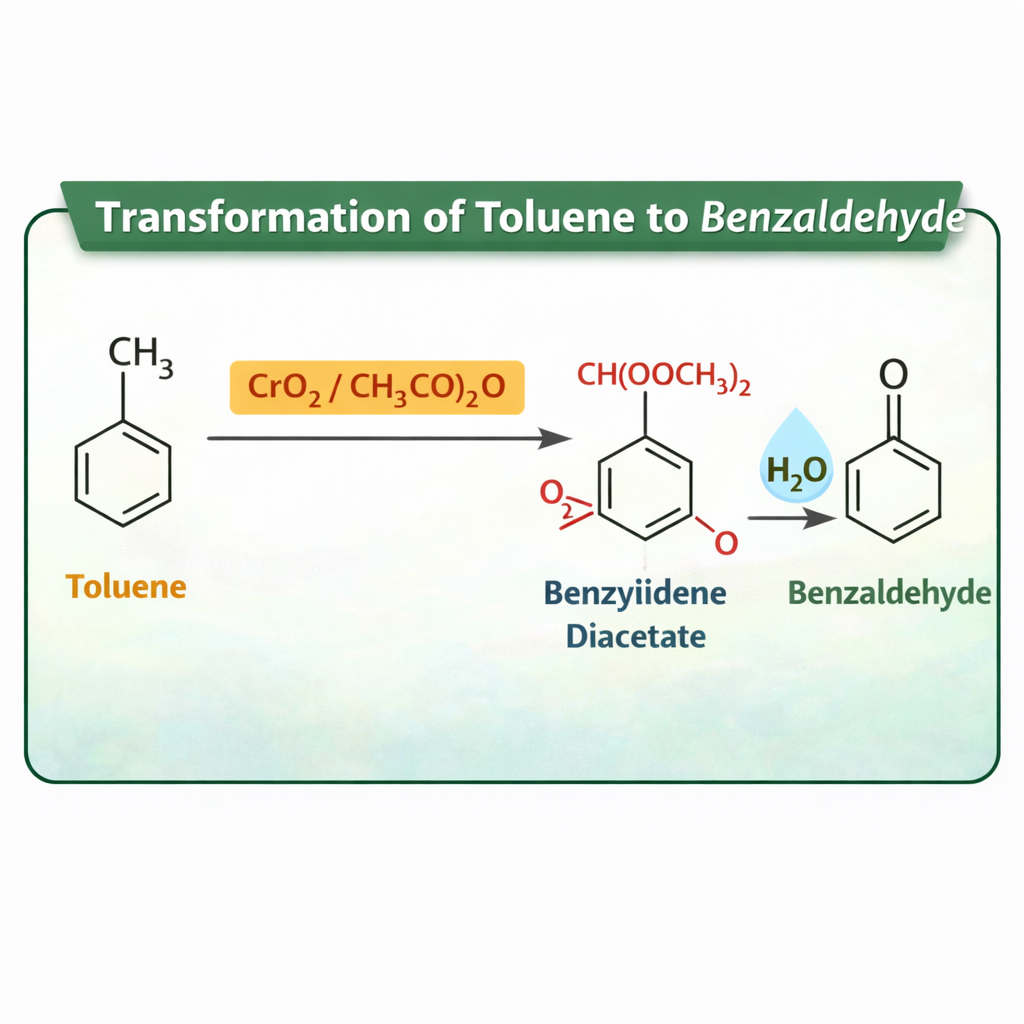
4. By using chromium oxide:
Toluene is transformed to benzylidene diacetate when treated with chromium trioxide and acetic anhydride. And when benzylidene diacetate is hydrolyzed, it produces benzaldehyde.
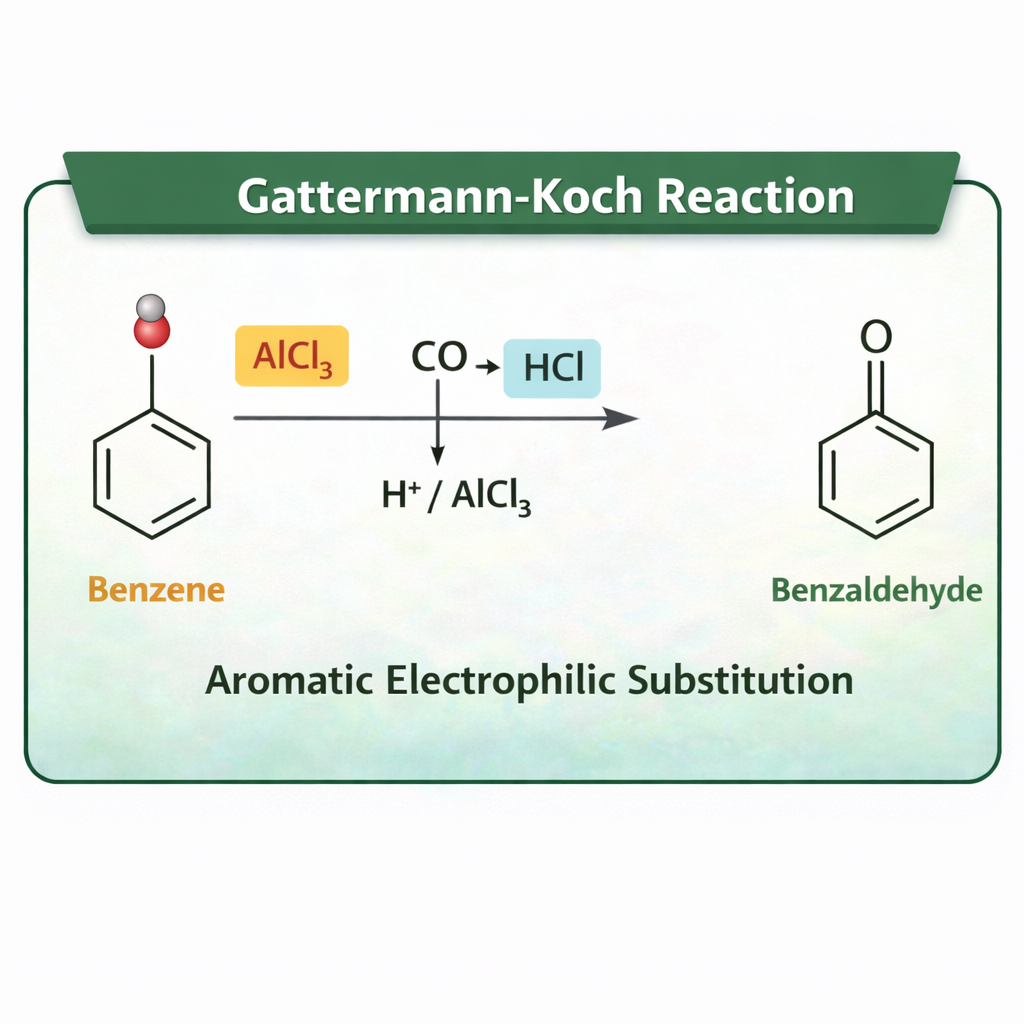
5. Gattermann-Koch reaction:
The Gattermann-Koch reaction produces benzaldehyde by reacting benzene with carbon monoxide in an acidic solution in the presence of anhydrous aluminum chloride. Aluminum chloride serves as a catalyst in this process. The reaction is an aromatic electrophilic substitution reaction.
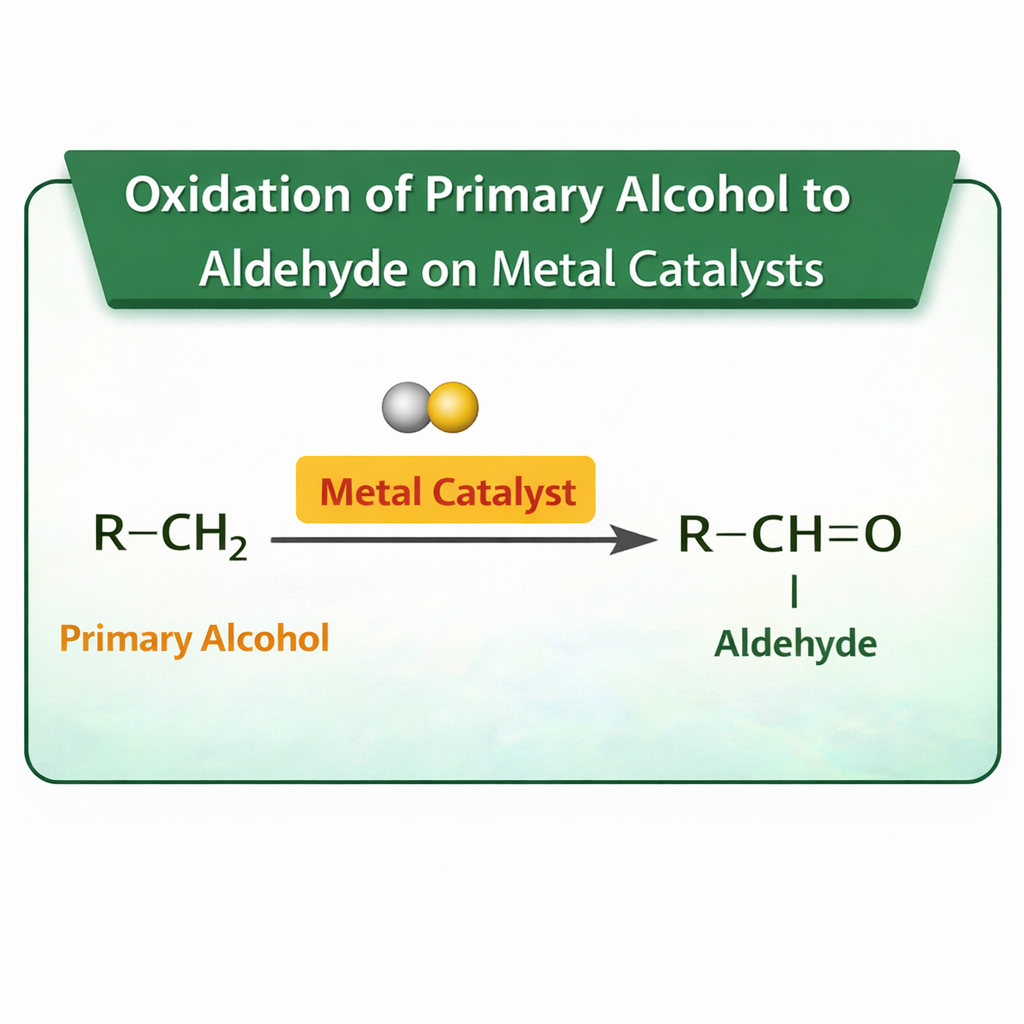
6. Dehydrogenation of Alcohols:
This is commonly used in industries. Primary alcohol is passed over metal catalysts in this technique, yielding an aldehyde as a result. For the conversion of volatile alcohols to aldehydes, this approach is favored.
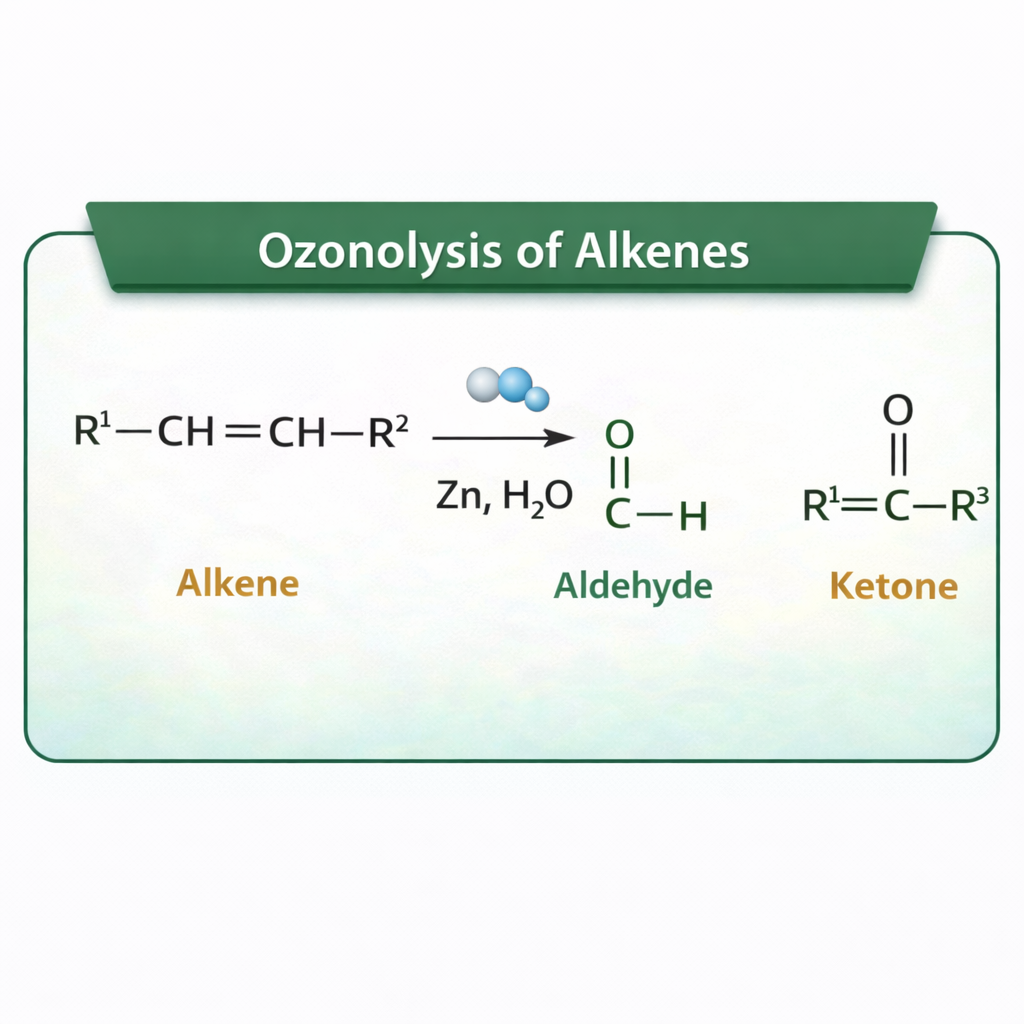
7. Ozonolysis:
Aldehydes are obtained by the ozonolysis of alkenes followed by reacting the ozonolysis products with zinc dust and water. A mixture of aldehydes and ketones is obtained depending upon the structure of the hydrocarbon (alkene).
Physical Properties of aldehydes
Physical state:
The most common aldehydes and ketones are liquids at normal temperature, with the exception of formaldehyde, which is a gas at room temperature. The odor of lower molecular weight aldehydes is strong and unpleasant, whereas the odor of higher molecular weight aldehydes and ketones is pleasant. Several ketones are used in perfumery, and some aromatic aldehydes derived from natural sources have a very pleasant aroma.
Boiling point: In general, the boiling points of aldehydes and ketones increases with increasing molecular weight. The boiling point depends on the strength of the intramolecular force.
- Van der Waals dispersion Forces: As the length of a molecule and the number of carbon atoms increases, so the forces of attraction between them also increases. For both aldehydes and ketones, the boiling point rises as the number of carbon atoms increases.
- Van der Waals Dipole Dipole attractions: Due to the presence of carbon-oxygen double bonds, both aldehydes and ketones are inherently polar. There is an attractive force between a permanent dipole and a molecule close to it. That is why aldehydes and ketones have higher boiling points than hydrocarbons of similar size.
Solubility:
Lower aldehydes and ketones, such as methanal, propanone, and ethanal, can form hydrogen bonds with water and are miscible with water in any proportion.
Due to the long length of the non-polar alkyl chain, the water solubility drops sharply as the molar mass increases. However, all aldehydes and ketones are soluble in organic solvents such as benzene, ethers.
Chemical Properties of aldehydes
1. Reaction with grignard reagent:
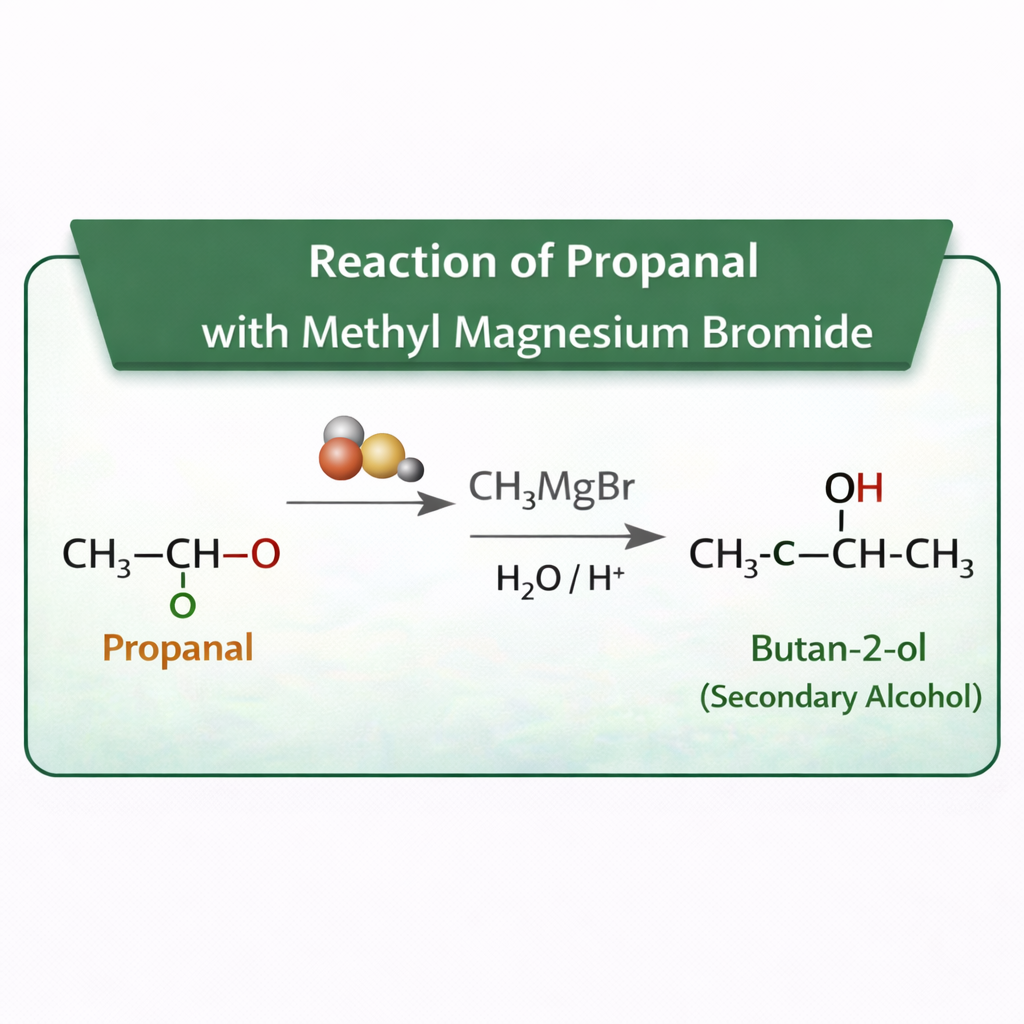
Aldehydes on reaction with grignard reagent followed by hydrolysis gives secondary alcohol except formaldehyde, it will give primary alcohol
For example propanal on reaction with methyl magnesium bromide followed by hydrolysis gives butan-2-ol (secondary alcohol)
2. Tollens test:
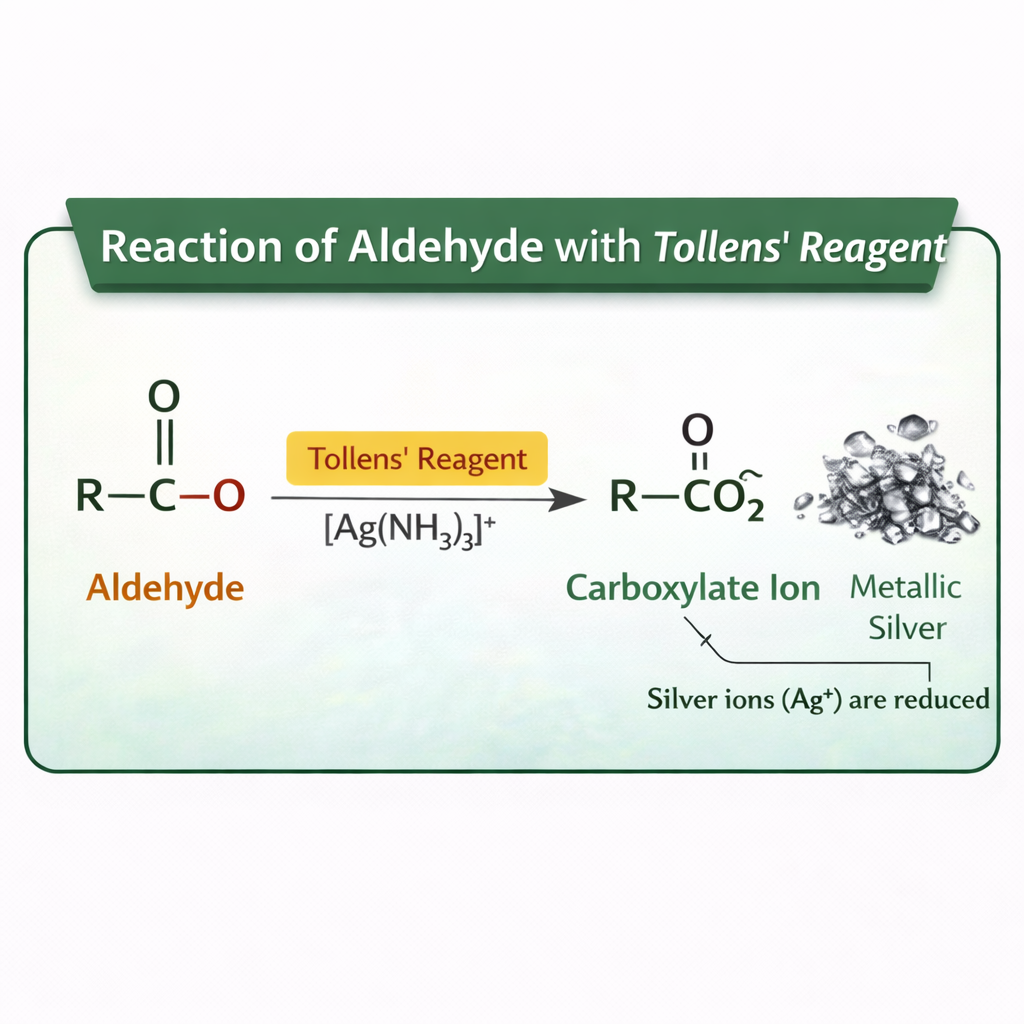
When an aldehyde is introduced to the Tollens’ reagent, two things occur:
The aldehyde is oxidized by the Tollens reagent and forms a carboxylate ion.
The silver ions present in the Tollens reagent are reduced into metallic silver.
This reaction can be written as follows:
3. Fehling’s test:
Fehling’s test consists of a solution that is usually prepared fresh in laboratories.Initially, the solution exists in the form of two distinct solutions, Fehling's A and Fehling's B. Fehling’s A is a solution containing copper(II) sulfate pentahydrate. Fehling’s B is a clear liquid consisting of potassium sodium tartrate (Rochelle’s salt) and a strong alkali, usually sodium hydroxide.
The two solutions are later mixed in equal volumes to get the final Fehling solution which is deep blue.
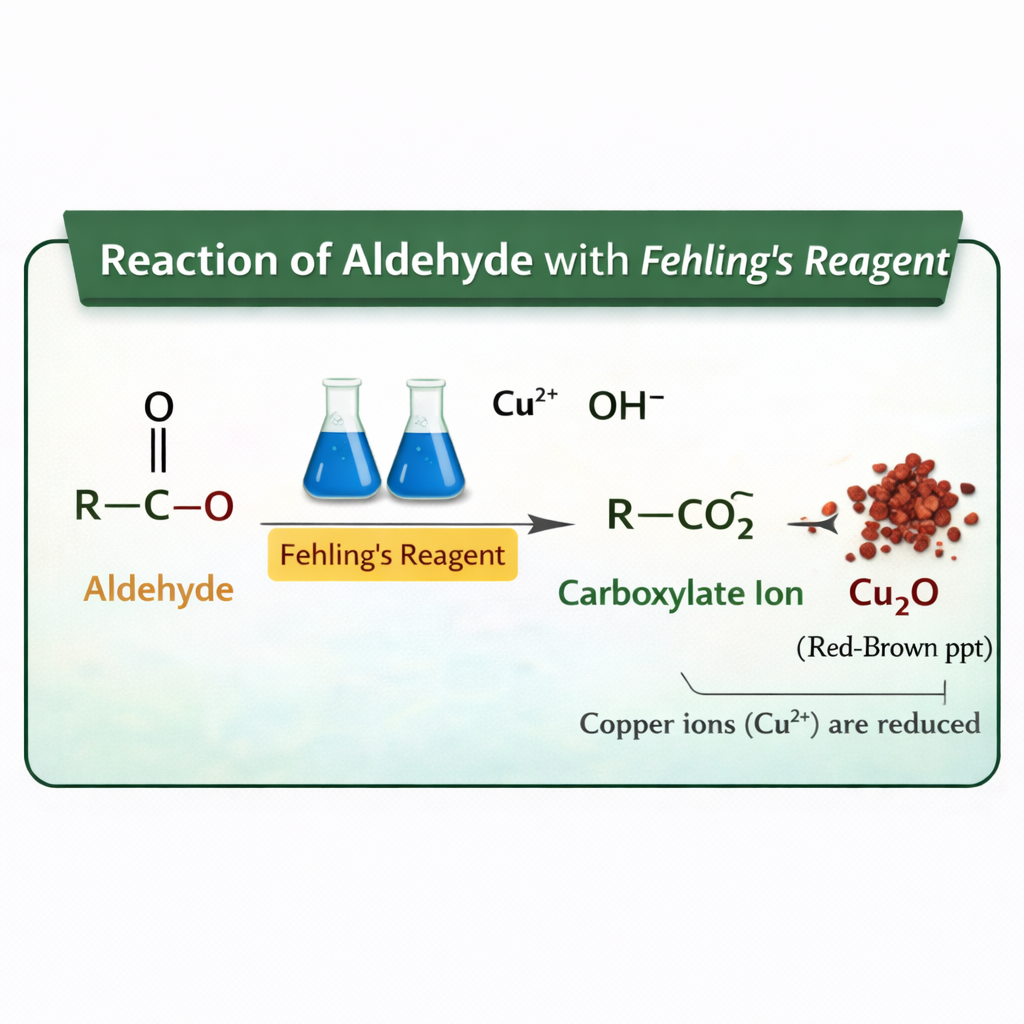
When an aldehyde is introduced to the fehling reagent, two things occur:
The aldehyde is oxidized by the Fehling’s reagent and forms a carboxylate ion.
The Cu+2 ions present in the Fehling’s reagent are reduced into Cu2O (red-brown ppt).
This reaction can be written as follows:
4. Benedict's test:
Benedict’s test consists of a solution that is usually prepared fresh in laboratories. Initially, the solution exists in the form of two separate solutions which are labeled as Benedict A and Benedict B. Benedict A is a solution containing copper(II) sulfate pentahydrate. Benedict B is a liquid consisting of sodium citrate and sodium carbonate.
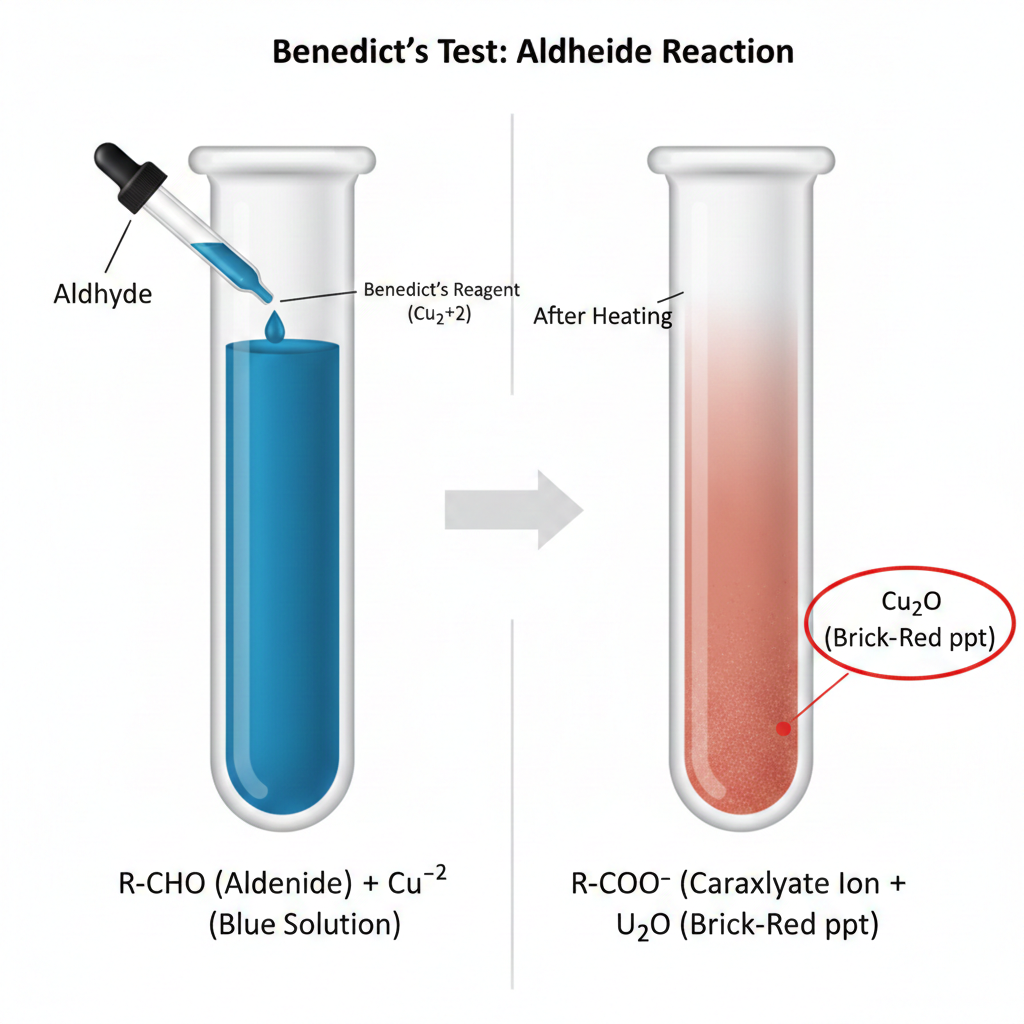
When an aldehyde is introduced to the final Benedict’s solution, two things occur:
The aldehyde is oxidized by the Benedict reagent and forms a carboxylate ion.
The Cu+2 ions present in the Benedict reagent are reduced into Cu2O (brick red ppt).
This reaction can be written as follows:
Uses of aldehydes:
Aldehydes are important intermediates for the production of plastics, plasticizers, solvents and dyes. They are used in the textile, food, rubber, plastic, leather, chemical and healthcare industries. Aromatic aldehydes and higher aliphatic aldehydes are used in the manufacture of perfumes and essences.
The aldehyde is mainly used to make acetic acid, but is also used in the manufacture of ethyl acetate, peracetic acid, pyridine derivatives, perfumery, dyes, plastics, and synthetic flavoring agents. Formaldehyde has many uses related to both its solvent and bactericidal properties. It is used in the manufacture of plastics.
Formaldehyde is a powerful disinfectant, germicide, fungicide, and preservative used to disinfect in animate objects. Benzaldehyde is used in organic synthesis, mainly in the manufacture of rubber promoters and as a synthetic flavoring agent in foods. It is used in the synthesis of amino acids and in the manufacture of perfumes, flavorings, plasticizers and gasoline additives.
Practice problems
Q 1. Acetaldehyde on reaction with methyl magnesium bromide followed by hydrolysis will give
(A) Primary alcohol
(B) Secondary alcohol
(C) Tertiary alcohol
(D) Quaternary alcohol
Answer: (B)
Acetaldehyde on reaction with methyl magnesium bromide followed by hydrolysis gives secondary alcohol. The reaction is as follows
CH3CHO+ CH3MgBr+H2O → (CH3)2CHOH +Mg(OH)Br
Q 2. What is the common name of 2-methylpropanal?
(A) Formaldehyde
(B) Isobutyraldehyde
(C) Acetaldehyde
(D) Carbaldehyde
Answer: (B)
Isobutyraldehyde is the chemical compound with formula (CH3)2CHCHO.
Q 3. What is the IUPAC name of acrolein?
(A) pent-2 enal
(B) but-1-enal
(C) prop-2-enal
(D) but-2-enal
Answer: (C)
The chemical formula of acrolein is CH2=CH-CHO. So its IUPAC name is prop-2-enal.
Q 4. Propanone and propanal are examples of which type of isomerism?
(A) Functional isomers
(B) Chain isomers
(C) Tautomers
(D) Position isomers
Answer: (A)
Propanone and propanal are examples of functional isomers. Functional isomerism is a type of structural isomerism that occurs when substances have the same molecular formula and different functional groups. Aldehydes and ketones are examples of functional isomers.
Summary Table: Aldehydes at a Glance
| Feature | Description |
|---|---|
| Functional Group | –CHO (Formyl group) |
| General Formula | R–CHO |
| IUPAC Suffix | –al |
| Identification Test | Tollens’ Test |
| Major Uses | Plastics, perfumes, flavouring agents |
Frequently asked questions
Q 1. Why only aldehydes react with Tollen’s reagents?
Answer: The reaction between aldehyde and Tollen’s reagent is an oxidation reaction. Aldehydes are easily oxidized, but ketones are not. Because aldehydes have the aldehydic-H which can be oxidized under mild oxidizing agents like tollens’ reagent but ketones do not have the aldehydic-H. Tollen's reagent is an ammoniacal solution of silver nitrate.
Q 2. Benzaldehyde reduces Tollen's reagent but not the Fehling's or Benedict’s solution. Give the reason?
Answer: Due to the +R effect of the benzene ring, the electron density in the carbonyl group of benzaldehyde increases. This in turn increases the electron density in the C-H bond of the aldehyde group. As a result, the C-H bond becomes stronger and is therefore a comparatively strong oxidizing agent like Tollens’; can oxidize C-H to C-OH to form a carboxylic acid, but a comparatively weaker oxidizing agents such as Fehling's solution or Benedict's solution cannot oxidize benzaldehyde to benzoic acid.
Q 3. Why is formaldehyde more reactive than acetaldehyde with nucleophilic addition reactions?
Answer: The CH3 group in the acetaldehyde reduces the positive charge on the carbonyl carbon by the +I effect to some extent, which is not so in the case of formaldehyde, since the nucleophilic attack is more favorable with the positive charge and less hindered carbonyl carbon, so we conclude that formaldehyde is more reactive in nucleophilic addition reactions compared to acetaldehyde.
Q 4. Why is the boiling point of ketones higher than that of aldehydes?
Answer: The presence of two electron-donating groups in ketones makes them more polar than the aldehyde. The dipole moments arising from this polarity accounts for the higher boiling points of ketones.
Related Topics
|
Methanol |
Lucas Test |
|
Aldol condensation |
Tollens’ test |
|
Acetone |
Ketone |

 Call Now
 Let's Chat
 Share
Share