-
Call Now
1800-102-2727


Vitamins: Roles, Types, Dietary Sources, Functions, Deficiency Disorders, Symptoms, Practice Problems and FAQs

We all follow a sleep-wake cycle and we know that for maintaining proper health at least 7 hours of daily sleep is necessary. But have you ever wondered why on some days you feel tired just after waking up from a good sleep? Well if you are not stressed or sick and even then feel tired, it may be because of deficiency of vitamins. Can you recall how many times your mom tried to make you eat fruits and vegetables? It is because of the fact that fruits and vegetables are a rich source of vitamins.
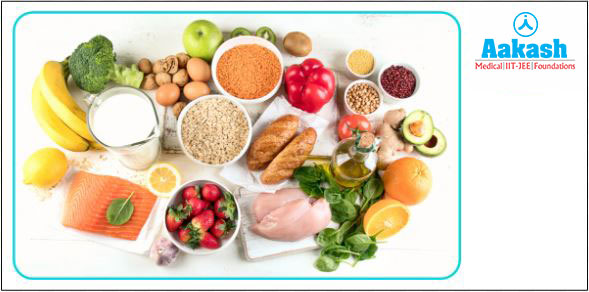
Fig: Balanced diet
You have also heard that a balanced diet is good for our health. Why is it so? A balanced diet contains all the essential elements that the human body needs. It includes carbohydrates, fats, proteins, vitamins, minerals and water. The carbohydrates, proteins and fats are essential because they provide energy and help in growth and development. These are macronutrients and are required in large amounts. Water is essential, because it is involved in metabolic reactions of the cell. Vitamins and minerals, on the other hand, are micronutrients. They are required in less amounts. They do not provide energy but their deficiency can cause disorders. In this article let’s take a deep dive into details of the structures, functions and disorders of vitamins.
Table of contents
- Vitamins
- Role of vitamins
- Types of essential vitamins
- Functions of essential vitamins
- Vitamin deficiency disorders and common symptoms
- Practice Problems
- FAQs
Vitamins
Vitamins are organic compounds that perform specific biological functions essential for normal growth and functioning of the organism. These are considered as accessory food factors. Casimir Funk in 1912 coined the term ‘vitamine’. All the 13 vitamins essential for us are generally available in our diet. Fresh fruits and vegetables are a rich source of vitamins. These molecules do not provide us energy, but are required as their deficiency leads to disorders.
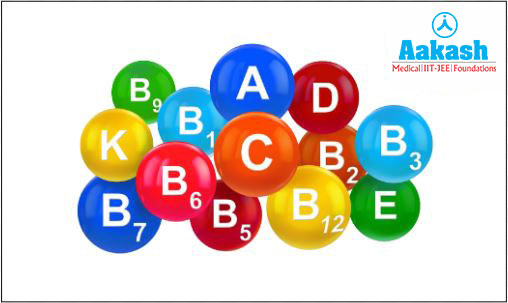
Fig: Essential vitamins
Roles of vitamins
Every vitamin plays a significant role in our body. The overall roles of the essential vitamins in our body are as follows:
- They boost the immune system.
- Some vitamins are antioxidants and delay ageing.
- They prevent or delay certain types of cancers.
- They keep the nervous system healthy.
- They aid in calcium absorption and thereby strengthening bones and teeth.
Types of essential vitamins
Based on the solubility in water or oil, vitamins are classified into two categories as follows:
- Water soluble vitamins
- Fat soluble vitamins
Water soluble vitamins
These are soluble in water but not in fats and oils. They can be found in a wide range of foods, especially green vegetables and fresh fruits.
Structures and scientific names of water soluble vitamins
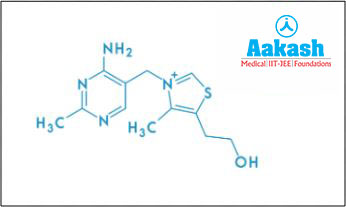
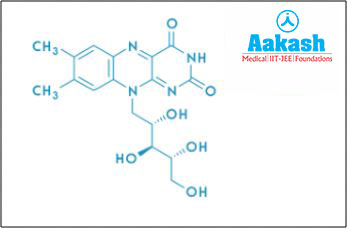
The following table contains the structure and scientific names of water soluble vitamins:
|
Names of vitamins |
Structures of vitamins |
|
Vitamin B1 or thiamine |
Fig: Thiamine |
|
Vitamin B2 or riboflavin |
Fig: Riboflavin |
|
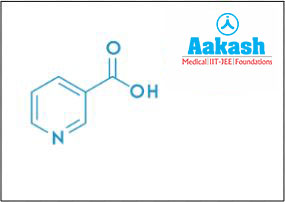
Vitamin B3 , niacin or nicotinic acid |
Fig: Niacin or nicotinic acid |
|
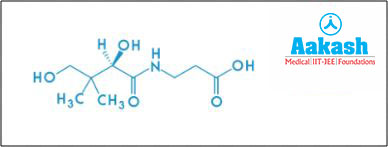
Vitamin B5 or pantothenic acid |
Fig: Pantothenic acid |
|
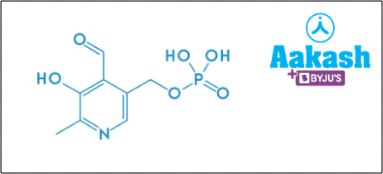
Vitamin B6 or pyridoxine |
Fig: Pyridoxine |
|
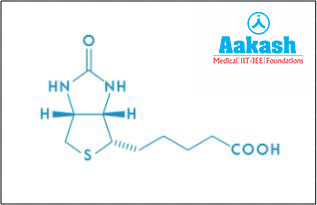
Vitamin B7 or biotin |
Fig: Biotin |
|
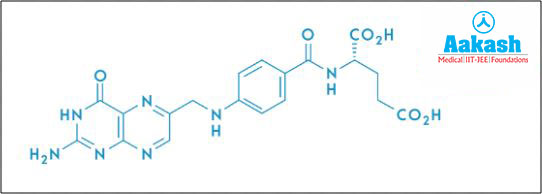
Vitamin B9, folacin or folic acid |
Fig: Folacin or folic acid |
|
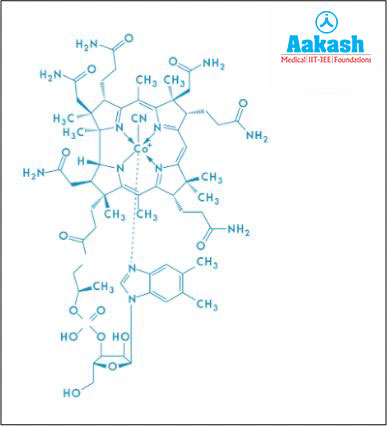
Vitamin B12 or cyanocobalamin |
Fig: Cyanocobalamin |
|
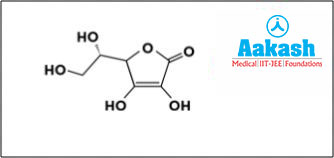
Vitamin C or ascorbic acid |
Fig: Ascorbic acid |
Dietary sources of water soluble vitamins
The following table contains the dietary sources of water soluble vitamins:
|
Names of vitamins |
Dietary sources of vitamins |
|
Vitamin B1 |
Pulses, meats, yeasts, cereals, and sprouted beans |
|
Vitamin B2 |
Yoghourts, Pulses, green vegetables, milks and yeasts |
|
Vitamin B3 |
Fishes, meats, cereals, grains, pulses, yeasts and livers |
|
Vitamin B5 |
Eggs, yeasts and most of the foods |
|
Vitamin B6 |
All plant and animal tissues |
|
Vitamin B7 |
Yeasts, livers and kidneys |
|
Vitamin B9 |
Fishes, livers and vegetables. It is also produced by bacteria in colon |
|
Vitamin B12 |
Milks, kidneys, meats, eggs and fishes. Bacteria in the colon of humans and in the digestive tract of cattle also produce this vitamin |
|
Vitamin C |
Green vegetables, Citrus fruits like oranges and lemons |
Fat soluble vitamins
These vitamins are soluble in fats and oils. They are absorbed and stored in the same way as fats are absorbed and stored in the body's fatty tissues and liver. They are present in a wide range of plant and animal foods and dietary supplements.
Structures and scientific names of fat soluble vitamins
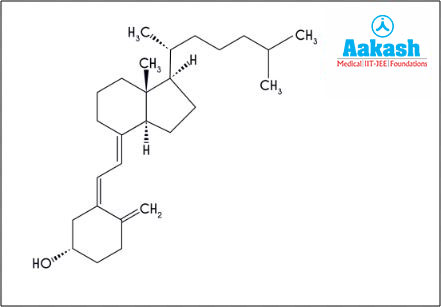
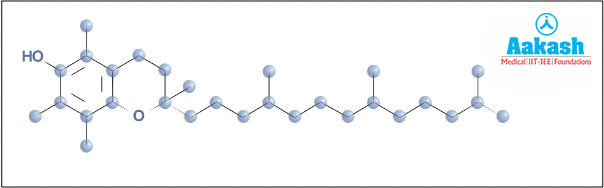
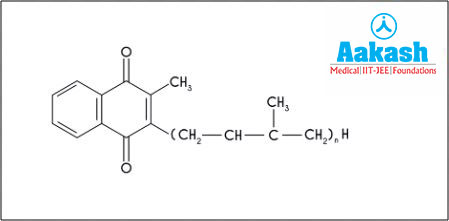
The following table contains the structures and scientific names of fat soluble vitamins:
|
Names of vitamins |
Structures of vitamins |
|
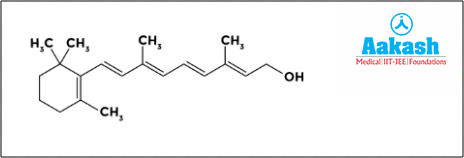
Vitamin A or retinol |
Fig: Retinol |
|
Vitamin D or calciferol |
Fig: Calciferol |
|
Vitamin E or tocopherol |
Fig: Tocopherol |
|
Vitamin K or phylloquinone |
Fig: Phylloquinone |
Dietary sources of fat soluble vitamins
The following table contains dietary sources of fat soluble vitamins:
|
Names of vitamins |
Dietary sources of vitamins |
|
Vitamin A |
Cod liver oils, carrots, maizes, spinaches, butters, and milks |
|
Vitamin D |
Cod liver oils, by the action of sunlight on the skin, shark liver oils and eggs |
|
Vitamin E |
Brown flours, vegetable oils, green vegetables, germinated wheats and seeds |
|
Vitamin K |
Wheat germs, cabbages and corianders. It is also synthesised by the bacteria of the large intestine |
Functions of essential vitamins
The following table contains the major functions of vitamins:
Vitamins |
Functions of vitamins |
|
Vitamin A |
|
|
Vitamin B1 |
|
|
Vitamin B2 |
|
|
Vitamin B3 |
|
|
Vitamin B5 |
|
|
Vitamin B6 |
|
|
Vitamin B7 |
|
|
Vitamin B9 |
|
|
Vitamin B12 |
|
|
Vitamin C |
|
|
Vitamin D |
|
|
Vitamin E |
|
|
Vitamin K |
|
Vitamin deficiency disorders and common symptoms
The following table contains the major vitamin deficiency disorders and common symptoms:
Vitamins |
Deficiency disorders |
Common symptoms |
|
Vitamin A |
Xerophthalmia (a dry cornea with no tear secretion). |
|
|
Night blindness - If not treated, xerophthalmia leads this disorder |
|
|
|
Vitamin B1 |
Beriberi |
|
|
Vitamin B2 |
Cheilosis (An inflammatory condition that causes cracking, crusting, and scaling of the mouth corners) and skin disorder. |
|
|
Vitamin B3 |
Pellagra |
|
|
Vitamin B5 |
Metabolic perturbation and neurodegeneration |
|
|
Vitamin B6 |
Microcytic anaemia - Presence of smaller sized red blood cells. |
|
|
Vitamin B7 |
Dermatitis and skin problems |
|
|
Vitamin B9 |
Megaloblastic anaemia (abnormally large red blood cells) |
|
|
Vitamin B12 |
Pernicious anaemia/ Addison’s anaemia (type of megaloblastic anaemia, due to decreased absorption of B12) |
|
|
Vitamin C |
Scurvy |
|
|
Vitamin D |
Rickets in children |
|
|
Osteomalacia in adults |
|
|
|
Vitamin E |
Reproductive failure |
|
|
Muscular dystrophy (nutritional) |
|
|
|
Vitamin K |
Bleeding disorder |
|
Practice Problems
Q1. Fatigue, weakness, loss of stamina, and small sized RBCs are common symptoms of deficiency of which vitamin?
a. Vitamin C
b. Vitamin B6
c. Vitamin B9
d. Vitamin B12
Solution: Vitamin C deficiency causes scurvy, that is characterised by swollen and bleeding gums. Vitamin B6 deficiency causes microcytic anaemia (small sized RBCs) and the person feels tired, weak, and fatigued. Vitamin B9 deficiency causes megaloblastic anaemia where the size of the RBCs are abnormally large. Deficiency of vitamin B12 causes pernicious anaemia. It is a type of megaloblastic anaemia. Hence, the correct option is b.
Q2. If a person is suffering from pellagra, which of the following diets will help?
a. Diet rich on eggs, carrots and spinach
b. Diet rich in yoghurts, pulses, green vegetables and milks
c. Diet rich in green vegetables and fruits like oranges and lemons
d. Diet rich in fishes, meats, grains, yeasts and livers
Solution: The symptoms given in question are related to the deficiency disorder called Pellagra. It is caused by vitamin B3 deficiency. Food items like fishes, meats, cereal grains, livers and yeasts are a rich source of vitamin B3. So the person suffering from pellagra can include the mentioned food items in the diet. Hence, the correct option is d.
Q3. Which of them is a water soluble vitamin?
a. Vitamin A
b. Vitamin D
c. Vitamin E
d. Vitamin B
Solution: Vitamins A, D, E and K are fat soluble vitamins. Vitamin B complex and vitamin C are all water soluble vitamins. Hence, the correct option is d.
Q4. Which of the following is also called the clotting vitamin?
a. Vitamin K
b. Vitamin A
c. Vitamin C
d. Vitamin D
Solution: Deficiency of vitamin K (phylloquinone) causes excessive bleeding from injuries. This vitamin helps in activation of certain clotting proteins for blood clotting. Therefore, it is called the clotting vitamin. Hence, the correct option is a.
FAQs
Q1: How can I fulfil my vitamin requirements if my diet is not sufficient?
Answer: As you can understand now, although vitamins are micronutrients, they are of great significance to our body. Therefore, it is important to maintain adequate levels of vitamins in our body. Sometimes, when our diet is not sufficient in providing all the vitamins, we might have to switch to their supplements. But the vitamin supplements must be taken under supervision and in recommended doses by a doctor.
Q2: What will happen if someone consumes too much vitamins?
Answer: Multivitamin overdose can cause various complications like cloudy urine, frequent urination, dry cracking lips, increased sensitivity to light, irregular heartbeats, bone and joint pains, muscle pain, weakness, fatigue, irritability, appetite loss, stomach pain, etc.
Q3: What are the differences between minerals and vitamins?
Answer: Vitamins are organic molecules that occur naturally in the food we eat. Examples include vitamin A, D, E, K, B, and C. These help in enhancing immunity and are required for normal growth and development of the body. Their deficiency leads to various disorders. Minerals are inorganic chemicals that are required for bone and muscle health, and proper functioning of the body. Some minerals may also help in proper enzyme functioning. Examples include calcium, iron, sodium, potassium, etc.
Q4: What are antioxidants?
Answer: The chemicals or compounds that prevent oxidation are called antioxidants in general terms. In physiology these are chemicals that remove potentially damaging oxidising agents in a living organism. In our body, antioxidants neutralise the free radicals that can cause harm. If left unchecked the levels of free radicals will increase and can lead to illnesses like heart attack and cancer. Our body generates its own free radicals, but they are also found in plant and animal products. Vitamin C and vitamin E are some very common and easily available antioxidants.

 Call Now
 Let's Chat
 Share
Share