-
Call Now
1800-102-2727


Vagina: Structure, Functions, Practice Problems and FAQs

Motherhood is an amazing part of a woman's life. Some prefer it, some don't. But in normal conditions only females can give birth to young ones in the case of mammals including human beings. Becoming pregnant and taking care of the young ones through breastfeeding are a part of motherhood and it is beautiful.
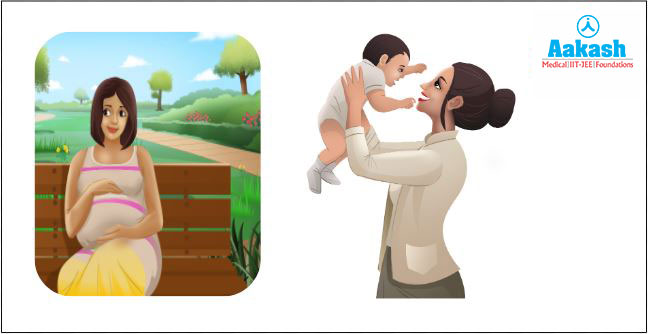
Fig: Motherhood
So how does a female get pregnant? A female gets pregnant when her secondary oocyte receives sperm and fertilisation between these gametes leads to the formation of a zygote. The cleavage in zygote then results in the formation of blastocyst which gets implanted on the uterine wall. Now the next question in your mind may be how the sperm from the male transfers inside the female. right? The external genital structure of male called the penis helps in the transfer of sperm into the female reproductive system. Among the different structures of the female reproductive system, there is a tube like structure that can receive the penis during sexual intercourse and it is called the vagina. Hence vagina is an important part of the female reproductive system. Do you know the structure and functions of a vagina? Let’s discuss more about the structure and functions of vagina in this article.
Table of contents
- Female reproductive system
- Vagina
- Structure of vagina
- Functions of vagina
- Practice Problems
- FAQs
Female reproductive system
The female reproductive system helps in the production of eggs or ova and also protects and nourishes the foetus. The female reproductive system in humans is composed of the following parts:
Primary sex organs
It include a pair of ovaries which helps in the production of sex hormones and gametes.
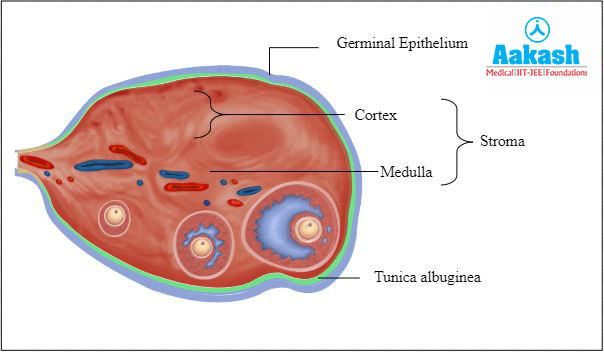
Fig: Structure of ovary
Accessory ducts
It includes a pair of oviducts or fallopian tubes, uterus, and vagina.
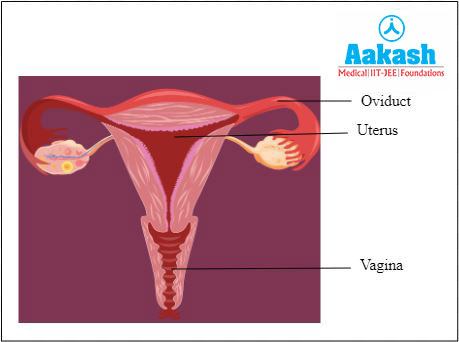
Fig: Accessory ducts
Accessory genital glands
It includes greater vestibular glands (Bartholin’s glands) and lesser vestibular glands (Glands of Skene). The secretions of these glands help in lubrication during copulation.
External genitalia or vulva
It includes mons pubis, labia majora, labia minora, and clitoris.
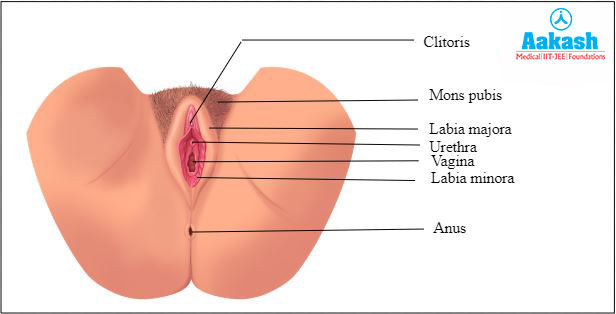
Fig: External genitalia
Mammary glands
A pair of modified sweat glands present in the chest region are called mammary glands. These help in the production of milk which is required for nourishing the baby.
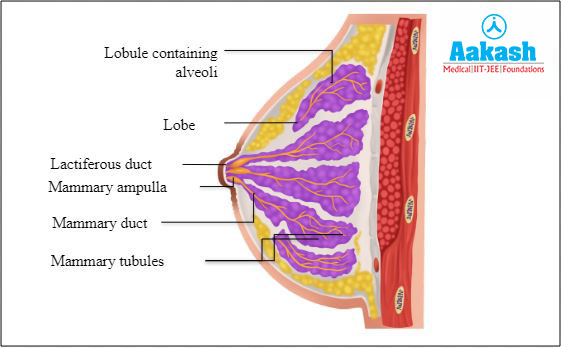
Fig: Internal structure of breast
Major processes in the female reproductive system
All the above parts of the female reproductive system are associated structurally and functionally to support the following processes:
- Ovulation - It is the process of releasing a secondary oocyte from the ovary.
- Fertilisation - It is the process of fusion of sperm and egg.
- Pregnancy or gestation - It is the time from conception to birth.
- Childbirth or parturition - It is the process of giving birth to a baby.
- Child care - It is the taking care and nourishing of the baby which is also called parenting.
Vagina
A fibro muscular tube extending from the cervix of the uterus to the vestibule on the outer side is called vagina. It is a stretchable structure which measures 7.5 to 10 cm length. The stretchability of vagina is useful during the sexual intercourse and child birth.
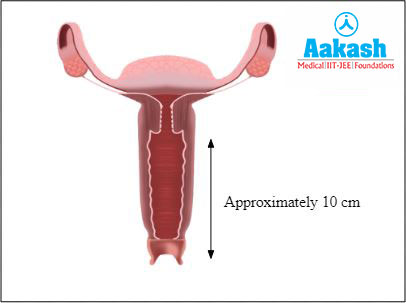
Fig: Vagina
Structure of vagina
Vagina opens to an external aperture called vaginal orifice. The opening is partially covered by a thin ring of membrane called the hymen. Hymen is perforated, so that it can allow the flow of menstrual blood. It can come in different shapes. It can be ruptured due to many factors like, vigorous physical activities, first intercourse or sports like horse riding, cycling etc. In some women, hymen persists after intercourse too. Hymens are therefore not a reliable predictor of virginity, whether they are present or absent.
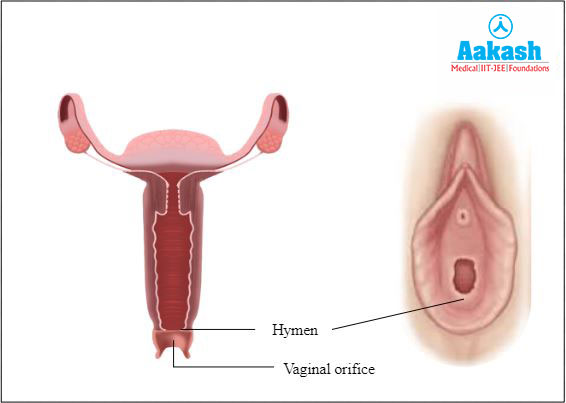
Fig: Hymen and vaginal orifice
Layers of vagina
Vagina consists of three layers as follows:
- Mucosa
- Muscularis
- Adventitia
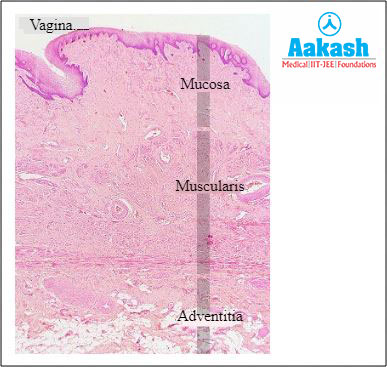
Fig: Layers of vagina
Mucosa
Mucosa of the uterus continues with the mucosa of the vagina. Mucosa lies in a series of transverse folds called rugae. It stimulates glans penis during copulation and helps in inducing ejaculation.
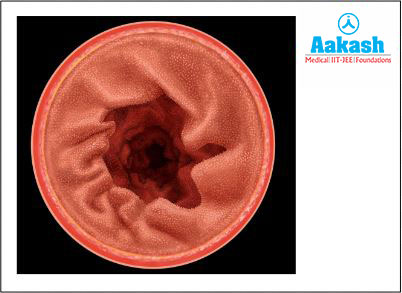
Fig: Mucosa
Tissues of mucosa
Mucosa consists of the following two types of tissues:
- Non-keratinised stratified squamous epithelium - The superficial layers of this tissue are made up of living squamous cells and deeper layers are formed of interlinked polygonal cells. It does not possess keratin.
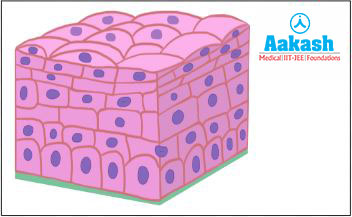
Fig: Non-keratinised stratified squamous epithelium
- Areolar connective tissue - This tissue has cells and fibres loosely arranged in a semifluid ground substance.
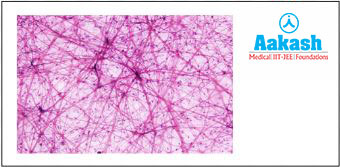
Fig: Areolar tissue
Significances of mucosa
Antigen presenting cells called dendritic cells are present in the mucosa layers. It is capable of transmitting virus such as HIV (Human Immunodeficiency Virus), the causative agent of AIDS during sexual intercourse.
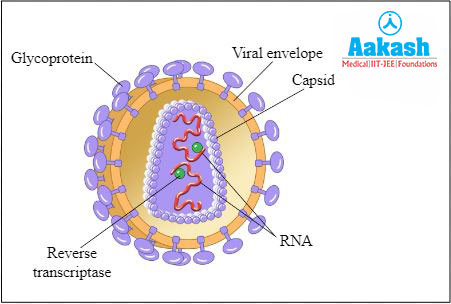
Fig: HIV
Mucosa contains large stores of glycogen, which is decomposed by bacteria such as Lactobacillus to produce organic acids; the resulting acidic environment retards microbial growth, but it is harmful to sperm.
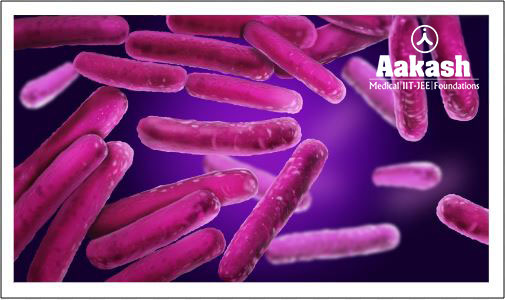
Fig: Lactobacillus
Muscularis
Muscularis of vagina is composed of an outer longitudinal layer and an inner circular layer of smooth muscles. It can stretch considerably to accommodate the penis during sexual intercourse and a child during birth.
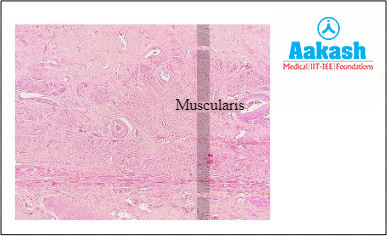
Fig: Muscularis
Adventitia
Adventia is a fibrous layer which helps to provide additional support and strength to the vagina. It binds with the surrounding structures. It is an elastic layer which is rich in collagen.
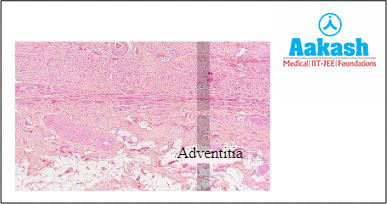
Fig: Adventitia
Functions of vagina
The three major functions of vagina are as follows:
- Sexual intercourse
- Childbirth
- Menstruation
Sexual intercourse
Vagina receives the penis during sexual intercourse for ejaculation and assists the sperms to uterus.
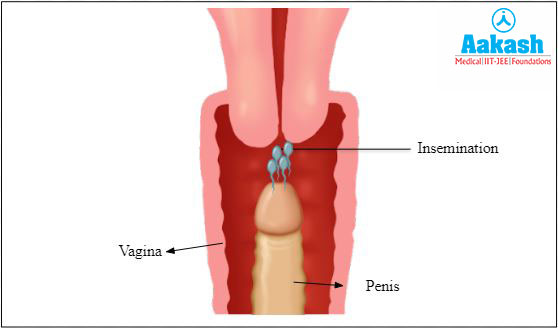
Fig: Sexual intercourse
Childbirth
During childbirth or parturition the vaginal layers expand to provide a channel for the newborn to come out from the uterus.
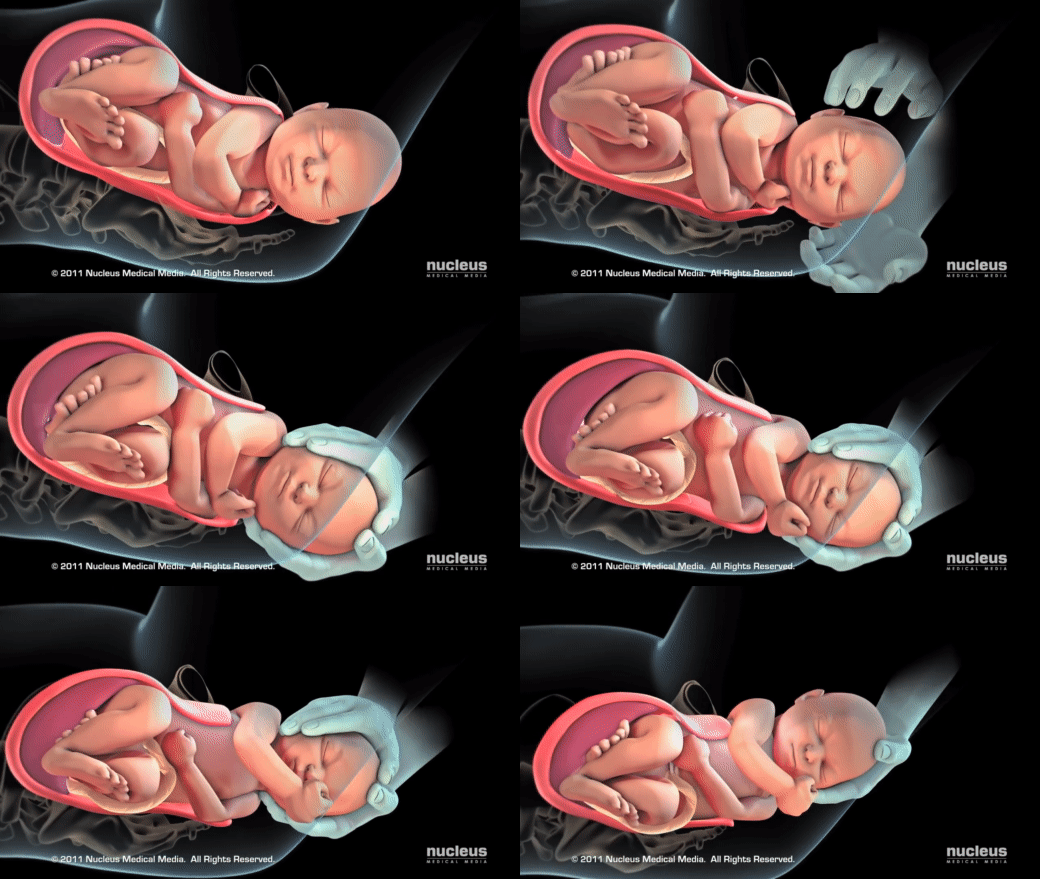
GIF: Childbirth
Menstruation
Menstrual fluid and tissues leave the body through vagina, since it serves as a canal from the uterus to outside the body.
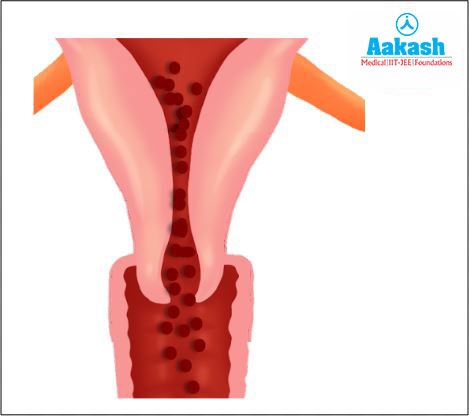
Fig: Menstruation
Practice Problems
1. Find the correct option that matches the A and B in the given figure.
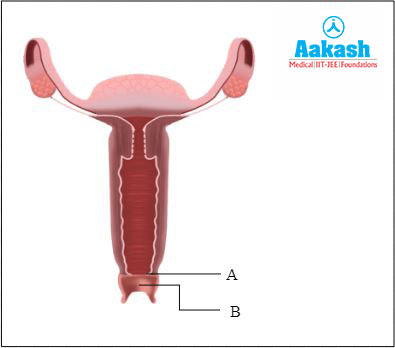
a. A - Mucosa, B - Muscularis
b. A - Vaginal orifice, B - Hymen
c. A - Mucosa, B - Adventitia
d. A - Hymen, B - Vaginal orifice
Solution: A fibro muscular tube extending from the cervix of the uterus to the vestibule on the outer side is called vagina. It is a stretchable structure which measures 7.5 to 10 cm length. The stretchability of vagina is useful for the sexual intercourse and child birth. Vagina opens to an external aperture called vaginal orifice. The opening is partially covered by a thin ring of membrane called the hymen. Hymen is perforated to allow the flow of menstrual blood. It can come in different shapes. Hence the correct option is b.
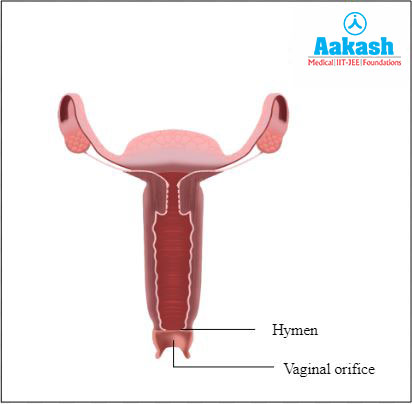
Fig: Hymen and vaginal orifice
2. Which of the following are the reasons for the rupturing of hymen?
a. Vigorous physical activities
b. First intercourse
c. Horse riding
d. All the above
Solution: Vagina opens to an external aperture called vaginal orifice. The opening is partially covered by a thin ring of membrane called the hymen. Hymen is perforated, so that it can allow the flow of menstrual blood. It can come in different shapes. It can be ruptured due to many factors like, vigorous physical activities, first intercourse or sports like horse riding or cycling. In some women, hymen persists after intercourse too. Hymens are therefore not a reliable predictor of virginity, whether they are present or absent. Hence the correct option is d.
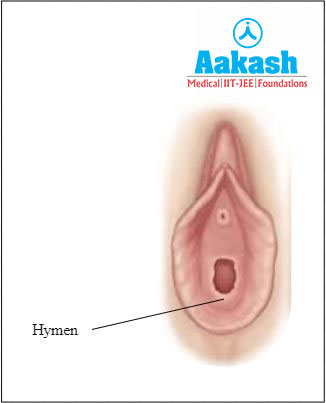
Fig: Hymen
3. Which layer of the vagina is capable of transmitting virus such as HIV during sexual intercourse?
a. Mucosa
b. Muscularis
c. Adventitia
d. Clitoris
Solution: Vagina consists of three layers and they are mucosa, muscularis and adventitia. Mucosa of vagina continues with that of the mucosa of the uterus. It consists of two tissues and they are non-keratinised stratified squamous epithelium and areolar connective tissue. Ruga is a series of transverse folds where the mucosa lies. It stimulates glans penis during copulation and helps in inducing ejaculation. Antigen presenting cells called dendritic cells are present in the mucosa layers. It is capable of transmitting virus such as HIV (Human Immunodeficiency Virus), the causative agent of AIDS during sexual intercourse. Hence the correct option is a.
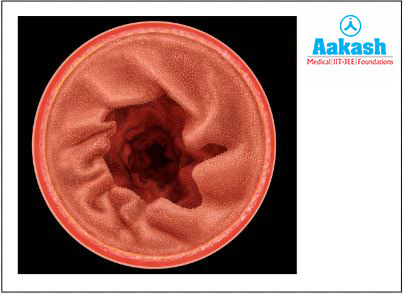
Fig: Mucosa
4. Which of the following is not a function of vagina?
a. Sexual intercourse
b. Childbirth
c. Fertilisation
d. Menstruation
Solution: The three major functions of vagina are sexual intercourse, childbirth and menstruation. Vagina receives the penis during sexual intercourse for ejaculation and assists the sperms to uterus. During childbirth the vaginal layers expand to provide a channel for the newborn to come out from the uterus. Menstrual fluid and tissues leave the body through vagina, since it serves as a canal from the uterus to outside the body. Fertilisation occurs in the fallopian tube. Hence the correct option is c.

GIF: Sperms approaching egg for fertilisation in the fallopian tube
FAQs
1. What is hymenoplasty?
Answer: Hymen, sometimes, completely covers the orifice and leads to a condition called imperforate hymen. Surgery may be needed to open the orifice and permit the discharge of menstrual flow in this case. The surgery to reconstruct ruptured hymen is called hymenoplasty.
2. What is posterior fornix?
Answer: Posterior fornix is a structure present in vagina which is a natural reservoir of semen after intravaginal ejaculation. Within the 20 to 30 minutes of ejaculation, the semen retained in the fornix liquefies and allows the sperms to move easily through the cervical canal.
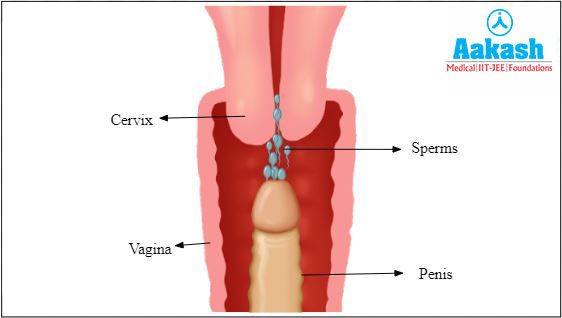
Fig: Sperms moving from vagina to cervix
3. What is female genital mutilation?
Answer: Just like circumcision is the removal of the foreskin from the human penis, female genital mutilation (FGM) is a ritual procedure performed on a woman or girl to cut her genitalia for non-medical reasons. It involves the removal of external genitalia, partially or fully. There are no health benefits for FGM. It will also lead to long-term physical and psychological consequences. Women cannot experience sexual pleasure due to removal or damage of the genitals. This in turn affects their reproductive and sexual health. FGM can cause severe pains, prolonged bleedings, infections, infertility and even death. More than 200 million women have undergone FGM as per reported cases. It is practised in some countries like Africa, Asia and Middle East.
4. What is vaginitis?
Answer: A vaginal infection that causes the inflammation of vagina is called vaginitis. This occurs due to the imbalance in the count of yeast and bacteria that usually lives in vagina. The infection results in an odour that is different than usual.

 Call Now
 Let's Chat
 Share
Share