-
Call Now
1800-102-2727


Symbiosis: Types, Nitrogen Fixation, Ecological Importance, Practice Problems and FAQs

Friendships make our life more beautiful. Do you think so? We make friends with those people who have the same vibe, right? There will be many differences between the people in a gang of friends. But if anyone needs some kind of support, friends will be there to help at any cost. Getting such kinds of friends are precious. So there should be a mutual give and take for a perfect friendship to happen.
There are some friendships like this we can observe in nature. Can you remember any? Have you ever seen an egret sitting over cattles? What is the secret behind this friendship? It is actually a symbiotic relationship between the cattle and egret. As the cattle move and graze, they flush out insects from the vegetation otherwise it will be difficult for the egrets to find and catch the insects. Such a cute friendship!!, right?
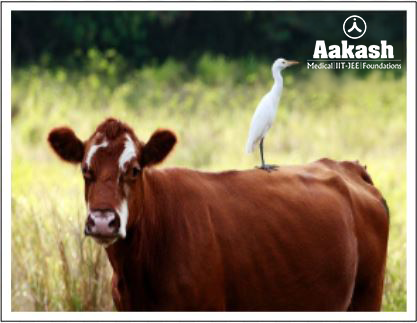
Fig: Egret and cattle
What are the other symbiotic relationships like this can you observe in nature? It should not be mutually beneficial. So can parasites which have the ability to kill or harm the host organism have a symbiotic relationship? The answer is yes!! The parasites inside and outside our body are also in a negative relationship with us. Can you think of any? One example is the human pinworm (Enterobius vermicularis) inside our intestine which causes enterobiasis.
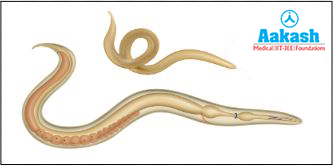
Fig: Pinworm
So some relationships can be toxic too. We will discuss more about such types of relationships under symbiosis in this article.
Table of contents
- Symbiosis
- Types of symbiosis
- Symbiotic nitrogen fixation
- Ecological importance of symbiosis
- Practice Problems
- FAQs
Symbiosis
Symbiosis is considered as any type of intimate and long term interaction between different organisms. Both positive and negative associations of organisms can be included under symbiosis. There is no restriction like both the organisms should benefit in the association as in mutualism. If the association is harmful to any organism as in parasitism or if the association is neither harmful nor beneficial to any organism as in commensalism, both are considered as symbiosis or symbiotic relationships.
The organisms included in the symbiosis are called symbionts. The symbionts should be of different species normally. For example, the symbiotic relationship between barnacles and whales. In this relationship barnacles get free food, transportation and living space from whales. Whales are neither benefited nor harmed.
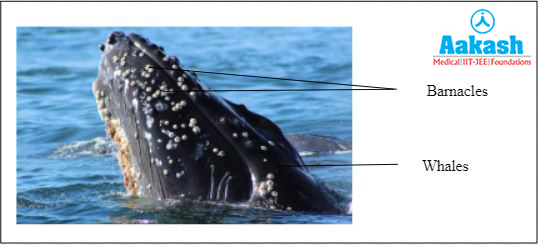
Fig: Symbiosis between barnacles and whale
Types of symbiosis
Symbiosis can be classified into different types on the basis of the dependency of the organism, physical attachment and effect of relationship.
Dependency of the organism
Symbionts can live together either by depending on each other or independently. On the basis of this, symbiosis can be classified into two types as follows:
- Obligatory symbiosis
- Facultative symbiosis
Obligatory symbiosis
The symbiotic association in which one or more symbionts depend on each other for their survival is called obligatory symbiosis. An example is lichens, where the fungal and algal partners can not live without each other. Fungal partner is called mycobiont and the algal partner is called phycobiont. Mycobiont provides water, mineral nutrients and shelter to the algae and the phycobiont prepares the food through photosynthesis.
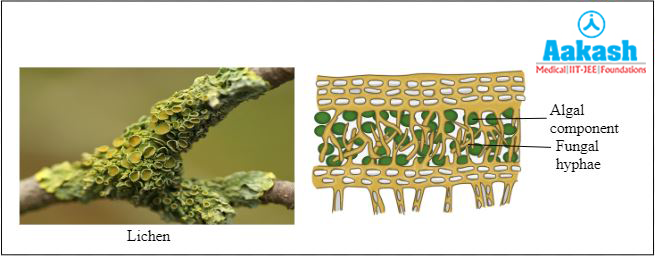
Fig: Lichen
Facultative symbiosis
The symbiotic association in which symbionts live independently is called facultative symbiosis. They do not need a partner organism for their survival or reproduction. An example is the cholera pathogens or Vibrio cholerae that infects the human intestine and causes widespread epidemics. They have the capacity to reproduce independently.
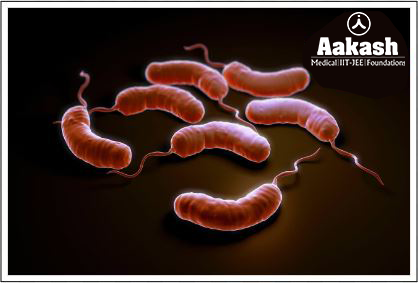
Fig: Vibrio cholerae
Physical attachment
On the basis of the physical attachment between the different organisms in the symbiotic relationship, the symbiosis can be classified into two types as follows:
- Conjunctive symbiosis
- Disjunctive symbiosis
Conjunctive symbiosis
The symbiotic relationship between two organisms by which both the organisms form a single body is called conjunctive symbiosis. The union of algae and fungi to form lichen is an example of conjunctive symbiosis.
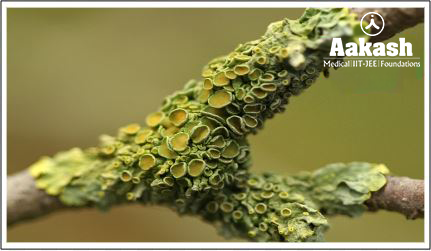
Fig: Lichen
Disjunctive symbiosis
If the symbionts are not forming a single organism during the symbiosis, and exist as two individuals benefiting or not benefiting from each other, then it is called disjunctive symbiosis. There are two types of disjunctive symbiosis as follows:
- Ectosymbiosis
- Endosymbiosis
Ectosymbiosis
The type of symbiosis where one organism lives on the surface of another is called ectosymbiosis. An example is the head lice on humans and ticks that live on pets like dogs and cats.
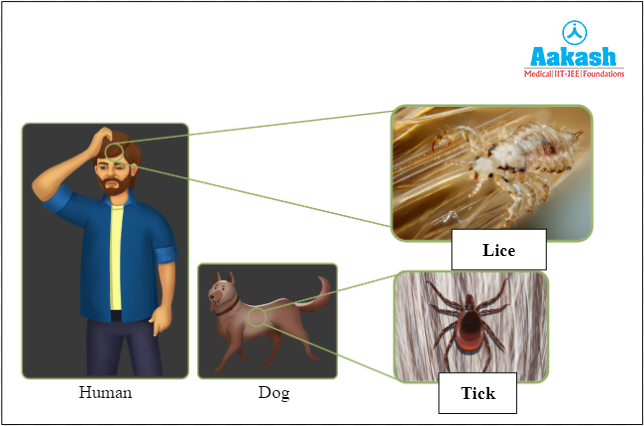
Fig: Ectosymbiosis
Endosymbiosis
The type of symbiosis where one organism lives inside another organism is called endosymbiosis. An example is the relationship between the bacterium Rhizobium that lives inside the roots of leguminous plants.
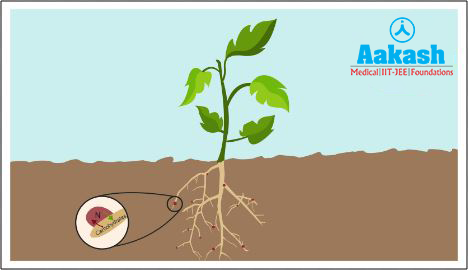
Fig: Endosymbiosis
Effect of relationships
On the basis of the effect of relationships between the organisms in the symbiosis, there are four types of symbiotic relationships as follows:
- Mutualism
- Commensalism
- Parasitism
- Competition
Mutualism
The close association between two species in which both species are benefited is called mutualism. A classic example of mutualism is the relationship between the sea anemone (Heteractis magnifica) and a clownfish (Amphiron ocellaris). The sea anemone provides protection and shelter for the clownfish. The clownfish in return provides nutrients in the form of waste to the sea anemone and also scare off the predator fish of the anemone.
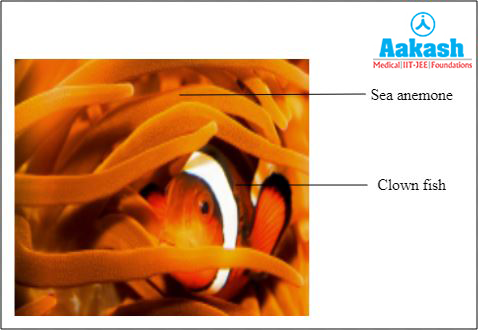
Fig: Mutualism
Commensalism
The symbiotic association between two species, where one species benefits from the association and the other species is unaffected is called commensalism. These associations are always facultative. Both species can live even if there is no commensalism. An example is the relationship between the cattle egret (Bubulcus ibis) and grazing cattle. As the cattle move and graze, they flush out insects from the vegetation otherwise it will be difficult for the egrets to find and catch insects. This is only beneficial for the birds and neither beneficial nor harmful for the cattle.
Fig: Commensalism
Parasitism
The relationship between two organisms where one lives and derives nutrition from another is called parasitism. The organism that derives nutrition is called the parasite and the organism that provides it is called the host. On the basis of location there are two types of parasites as follows:
- Endoparasites
- Ectoparasites
Endoparasites
The parasites that live inside the body of the host are called endoparasites. An example is the liver fluke (Fasciola hepatica) that infects the human liver and causes fascioliasis.
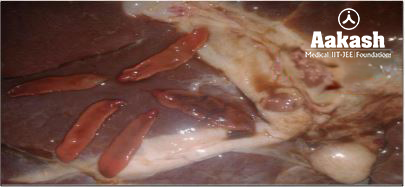
Fig: Endoparasite
Ectoparasites
The parasites that live outside the body of the host are called ectoparasites. An example is the Cuscuta plant that derives nutrition from the host plant with the help of haustoria (sucking roots).
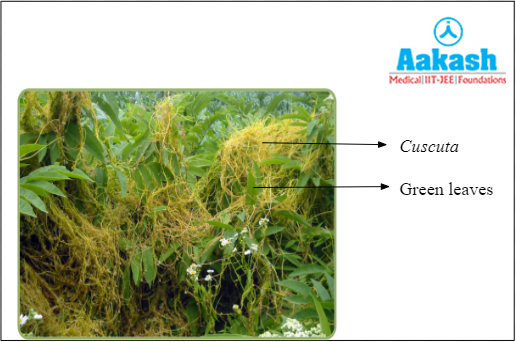
Fig: Ectoparasites
Competition
The type of interaction between two or more organisms for obtaining the same resources (water, nutrients, space, sunlight, food, mating etc.) is called competition. On the basis of the type of species involved in the competition there are three types of competition as follows:
- Intraspecific competition
- Interspecific competition
- Interference competition
Intraspecific competition
The competition between individuals of a single species is called intraspecific competition. An example is the dominant or alpha male of a silver gorilla (Gorilla beringei) fighting with other male members who want to mate with the same female.
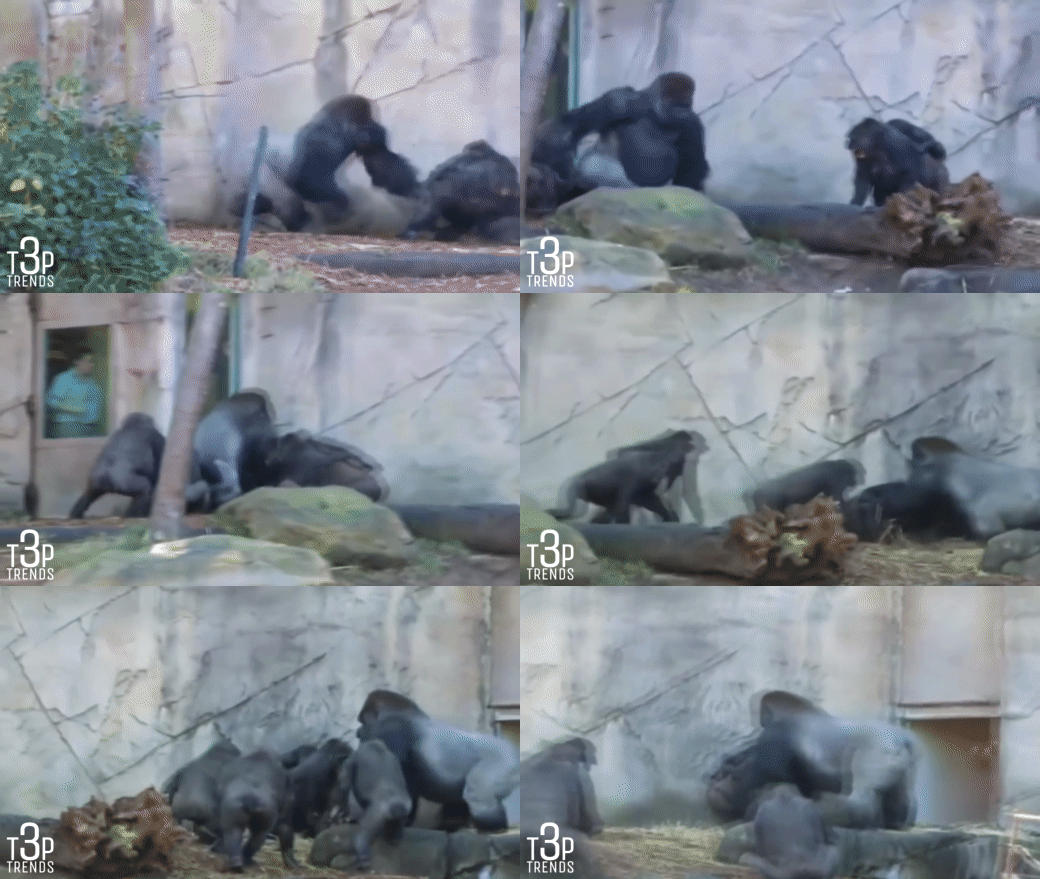
GIF: Intraspecific competition
Interspecific competition
The competition for a shared resource between members of various species is called interspecific competition. An example is the competition between the local fish and the visiting flamingos (Phoenicopterus ruber) in the lakes of South America for the same food source, which is the zooplankton.
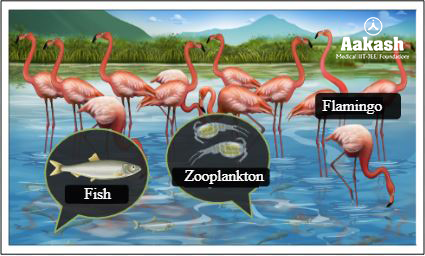
Fig: Interspecific competition
Interference competition
If the presence of one species may interfere with the ability of another species to feed effectively, then the competition is called interference competition. An example is the extinction of the Abingdon tortoise in the Galapagos Islands, because of the introduction of goats to the island. The presence of the goats interfered and inhibited the ability of the Abingdon tortoise (Chelonoidis nigra abingdonii) from efficient foraging here.
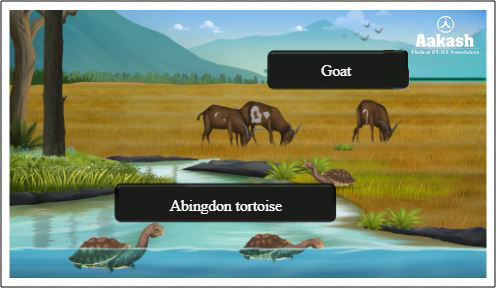
Fig: Interference competition
Nitrogen fixation
The phenomenon of reductive conversion of atmospheric nitrogen to a nitrogenous compound is called the nitrogen fixation. 95% of nitrogen is fixed through the physical methods like cosmic radiations, lightning, thunder storms etc. and it is called non-biological nitrogen fixation. Rest of the 5% of atmospheric nitrogen is fixed through natural fixation by biological methods.
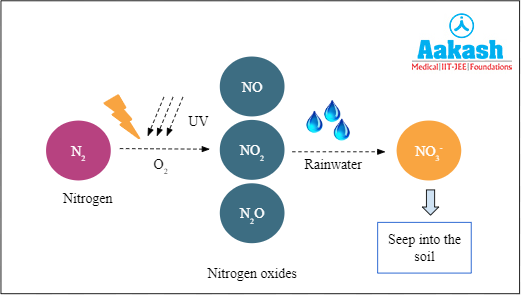
Fig: Nitrogen conversion
The fixation of atmospheric nitrogen through the living organisms in the soil is called biological nitrogen fixation. The organisms that help in the nitrogen fixation are called nitrogen fixers. They include organisms like bacteria, cyanobacteria, fungi and lichens. They fall under two main groups as follows:
- Free living or non symbiotic nitrogen fixers
- Symbiotic nitrogen fixers
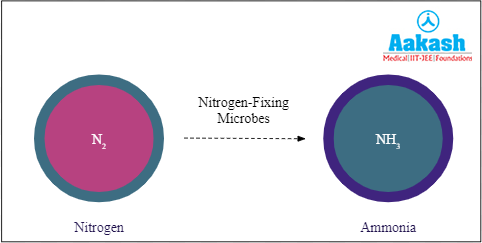
Fig: Biological nitrogen fixation
Free living or non-symbiotic nitrogen fixers
The free living nitrogen fixers include cyanobacteria like Anabaena, Nostoc, Calothrix etc. and also a wide variety of bacteria. These bacteria are found in freshwater sediments, marine sediments, soils, leaf and bark surfaces. These bacteria can be aerobic or anaerobic.
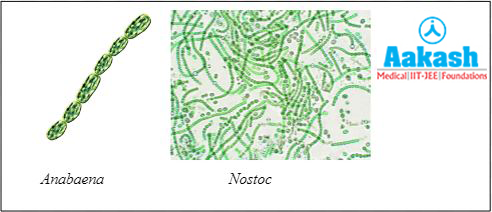
Fig: Free living nitrogen fixers
Symbiotic nitrogen fixers
Symbiotic nitrogen fixers include bacteria, cyanobacteria, lichens etc.
Symbiotic nitrogen fixing bacteria
The symbiotic nitrogen fixing bacteria include the members of Rhizobium, Azorhizobium and Bradyrhizobium. They are together called rhizobia. They are in symbiotic relationship with the root nodules of legumes.
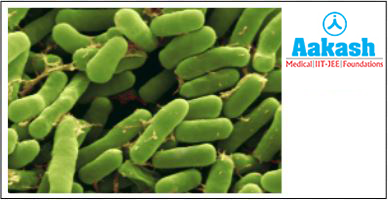
Fig: Rhizobium
Frankia
It is another nitrogen fixing bacteria that lives in the root nodules of non-legumes such as Casuarina, Alnus etc.
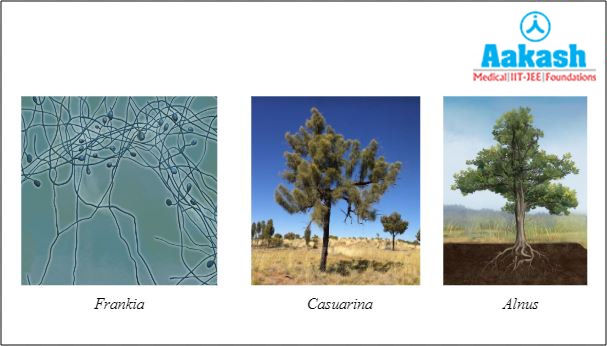
Fig: Frankia and the non- legumes
Symbiotic nitrogen fixing cyanobacteria
Anabaena is an example of symbiotic cyanobacteria that live in the root nodules of Azolla or water fern.
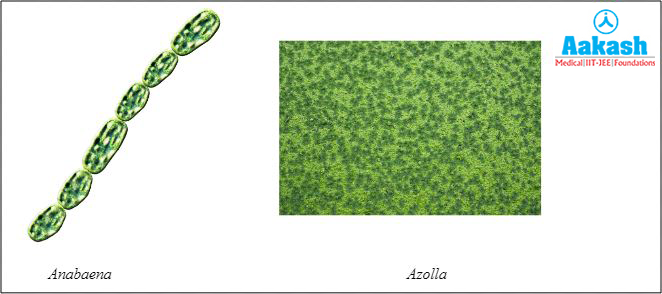
Fig: Symbiotic cyanobacteria and host
Coralloid roots
Cyanobacteria like Nostoc and Anabaena can be seen in symbiotic association with the specialised coralloid roots of Cycas (a gymnosperm).
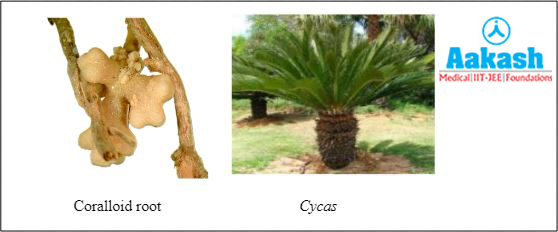
Fig: Coralloid root of Cycas
Symbiotic nitrogen fixing lichens
Some forms of lichens like cyanolichens can fix atmospheric nitrogen. Cyanolichens have cyanobacteria as the phycobiont or the photosynthesising component and they are called cyanobionts. Cyanolichens can be found in the thallus of Anthoceros, in the fronds of Azolla, coralloid roots of Cycas etc. and they are responsible for the nitrogen fixation.
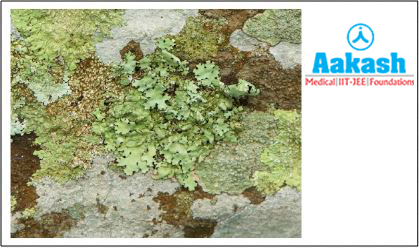
Fig: Cyanolichens on Anthoceros
Symbiotic nitrogen fixation
The nitrogen fixation carried out by the symbiotic nitrogen fixers is called symbiotic nitrogen fixation. From the above examples, it is obvious that mostly bacteria is responsible for the fixation of the atomic nitrogen into nitrogen compounds. But the process of nitrogen fixation is different in various symbiotic relationships. Usually endosymbiosis is happening in the process of symbiotic nitrogen fixation.
Mechanism of symbiotic nitrogen fixation in legumes or non-legumes
The nitrogen fixation happens in legumes or non-legumes when the symbiotic nitrogen fixers invade the root hairs of host plants and form the root nodules.
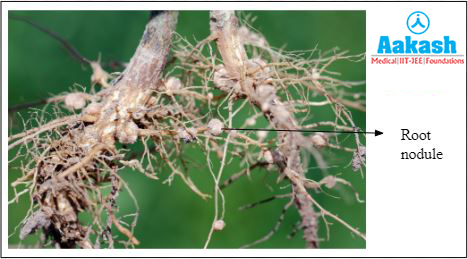
Fig: Root nodules
The root nodule formation happens along with the multiplication of bacteria. Bacteria convert the free nitrogen to ammonia inside the root nodules. This ammonia is utilised by the host plant for its development.
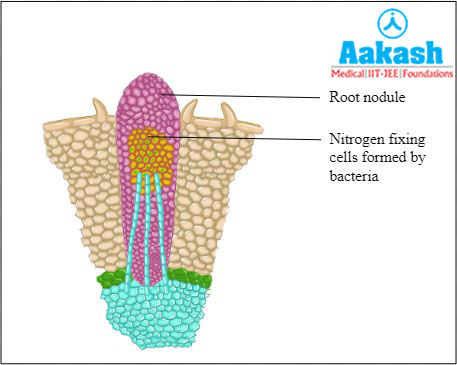
Fig: Root nodule formation
Mechanism of symbiotic nitrogen fixation in coralloid roots
In coralloid roots nitrogen fixation is done by cyanobacteria like Nostoc and Anabaena. They fix the nitrogen using the structure called heterocysts. The specialised cells formed during the nitrogen starvation in cyanobacteria are called heterocysts.
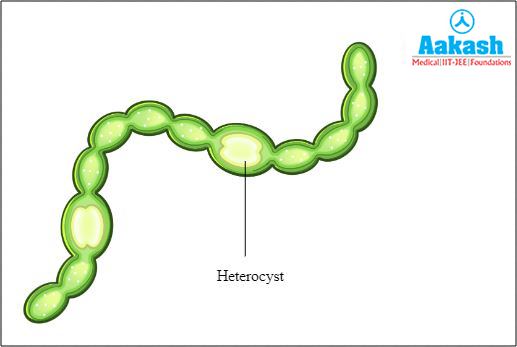
Fig: Heterocyst
In order to fix nitrogen, the heterocysts abandon the oxygen producing photosynthesis, because the nitrogen fixation is done by the oxygen-sensitive nitrogenase enzyme. Hence heterocysts create a micro anaerobic environment, to activate the nitrogenase that can be inactivated by the presence of oxygen.
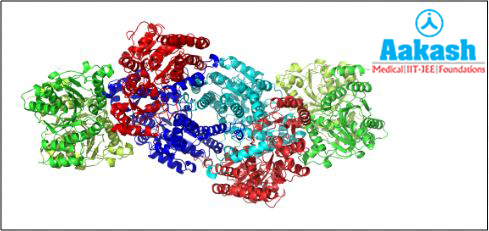
Fig: Nitrogenase enzyme
The cyanobacteria component of a cyanolichen also follows the same process of forming heterocyst for the nitrogen fixation.
Ecological importance of symbiosis
The following are the major ecological importance of symbiosis:
- Symbiotic relationships control the stability of an ecosystem.
- If one of the organisms in an obligate symbiosis becomes extinct, then it will affect the other organisms in the relationship negatively.
- Human interactions can damage symbiotic associations and it can lead to the instability of the ecosystem.
- Relationships like competition makes sure that the transfer of genes from the successful individuals occurs to the next generation. This maintains the quality of the race.
- Relationships make a check on the number of individuals.
- It maintains food chains and food webs.
Example for the ecological impact of symbiosis
The climate change or increased temperature in the ocean damaged the large tracts of coral reefs. This expelled the algae Zooxanthellae that lives symbiotically with the coral reefs. Coral provides a protected environment and compounds needed for photosynthesis to the algae. In return the algae produces oxygen needed for the coral and helps them to remove wastes. The absence of algae turned the coral white in colour and they eventually died.
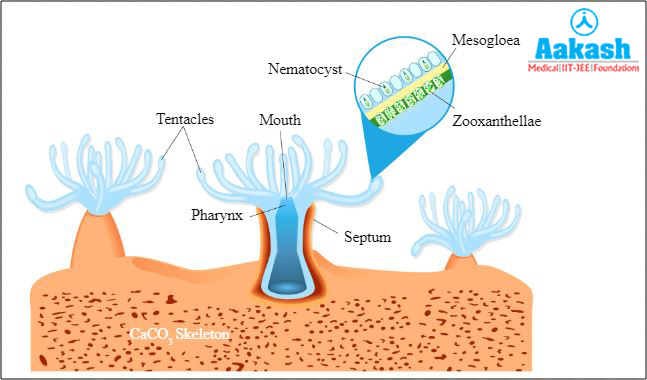
Fig: Symbiotic association between Zooxanthellae and coral reefs
Practice Problems
1. Which of the following is incorrect about the symbiotic relationship between organisms?
a. Symbiosis is any type of intimate and long term interaction between different organisms
b. Only positive associations of organisms can be included under symbiosis
c. Mutualism, commensalism, parasitism and competition are considered as symbiosis
d. The organisms included in the symbiosis are called symbionts
Solution: Symbiosis is considered as any type of intimate and long term interaction between different organisms. Both positive and negative associations of organisms can be included under symbiosis. There is no restriction like both the organisms should benefit in the association as in mutualism. If the association is harmful to any organism as in parasitism or if the association is neither harmful nor beneficial to any organism as in commensalism, both are considered as symbiosis or symbiotic relationships. The organisms included in the symbiosis are called symbionts. The symbionts should normally be of different species. Hence the correct option is b. An example is the relationship between the cattle egret (Bubulcus ibis) and grazing cattle. As the cattle move and graze, they flush out insects from the vegetation otherwise it will be difficult for the egrets to find and catch insects. This is only beneficial for the birds and neither beneficial nor harmful for the cattle.
Fig: Egret and cattle
2. Find the type of symbiotic association seen in lichens?
a. Obligatory symbiosis
b. Conjunctive symbiosis
c. Mutualism
d. All the above
Solution: The symbiotic association in which one or more symbionts depend on each other for their survival is called obligatory symbiosis. An example is lichen, where the fungal and algal partners can not live without each other. Fungal partner is called mycobiont and the algal partner is called phycobiont. Mycobiont provides water, mineral nutrients and shelter for the algae and the phycobiont in return prepares food through photosynthesis for fungi. The symbiotic relationship between two organisms by which both the organisms form a single body is called conjunctive symbiosis. The union of algae and fungi to form lichen is an example of conjunctive symbiosis. The close association between two species in which both species are benefited is called mutualism. So lichens show mutualism, conjunctive symbiosis and obligatory symbiosis. Hence the correct option is d.
Fig: Lichen
3. Assertion: Cyanolichens can fix nitrogen.
Reason: Lichen components of cyanolichens are fixing the nitrogen.
Which of the following statements is correct about the above assertion and reason?
a. Both the assertion and the reason are true, and the reason is the correct explanation of the assertion
b. Both the assertion and the reason are true, but the reason is not the correct explanation of the assertion
c. Assertion is true, but the reason is false
d. Both the assertion and the reason are false
Solution: Some forms of lichens like cyanolichens can fix atmospheric nitrogen. Cyanolichens have cyanobacteria as the phycobiont or the photosynthesising component and they are called cyanobionts. Cyanolichens can be found in the thallus of Anthoceros, in the fronds of Azolla, coralloid roots of Cycas etc. and they are responsible for the nitrogen fixation. In order to fix nitrogen, the heterocysts abandon the oxygen producing photosynthesis, because the nitrogen fixation is done by the oxygen-sensitive nitrogenase enzyme. Hence heterocysts create a micro anaerobic environment, to activate the nitrogenase that can be inactivated by presence of oxygen. The cyanobacteria component of a cyanolichen follows this process of forming heterocyst for the nitrogen fixation. Hence the correct option is c.
Fig: Cyanolichens on Anthoceros
4. Through which of the following the symbiotic nitrogen fixation happens in legumes and non legumes?
a. Root nodule formation
b. Heterocyst formation
c. Coralloid root formation
d. All the above
Solution: The nitrogen fixation happens in legumes or non-legumes when the symbiotic nitrogen fixers invade the root hairs of host plants and form the root nodules. The root nodule formation happens along with the multiplication of bacteria. Bacteria convert the free nitrogen to ammonia inside the root nodules. This ammonia is utilised by the host plant for its development. Hence the correct option is a.
Fig: Root nodules
FAQs
1. What is endosymbiotic theory?
Answer: The endosymbiotic theory states that the organelles like mitochondria and chloroplasts of eukaryotic cells are the descendents of independent bacteria that came to live symbiotically within the cells. Lynn Margulis proposed the endosymbiotic theory.
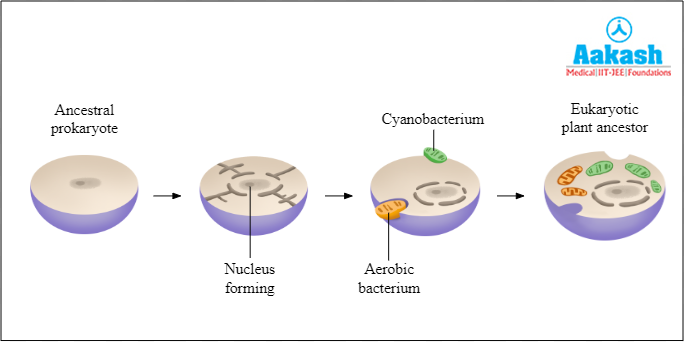
Fig: Endosymbiotic theory
2. What is phoresy?
Answer: The symbiotic association between the organisms, where usually the smaller organism uses the larger one as a transport host, without being a parasite is called phoresy. An example is the marine fish called remora (Echeneidae) which uses the shark, whales or sea turtles for their transportation. Remora has sucking disks which helps them to attach on the body of the larger organism.
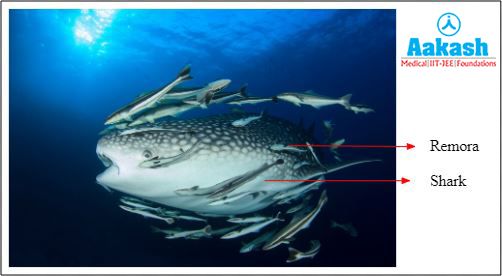
Fig: Phoresy
3. What is tripartite?
Answer: There are some lichens which contain both green algae and cyanobacteria as the phycobiont along with the fungal component. Such lichens are called tripartite.
4. What is cleaning symbiosis?
Answer: The symbiotic association between two species where one species cleans or removes the parasites and other materials from the body of another organism is called cleaning symbiosis. It is well known among marine fishes. Small species of marine fishes (cleaner fish) cleans the body of larger fishes and other marine animals.
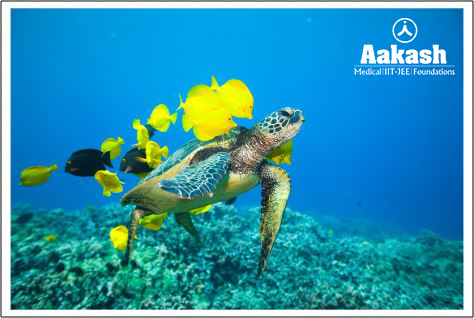
Fig: Cleaning symbiosis by marine fishes on turtle

NEET Related Links
JEE MAIN Related Links
JEE Advanced Related Links
JEE Advanced Eligibility Criteria
JEE Advanced Chemistry Syllabus
JEE Advanced Registration Dates
CUET Related Links
Important Topics
Anemometer : Measurement of Wind Speed
Angular Acceleration Atomic Theory Audible and Inaudible Sound Average Speed and Average Velocity Average Velocity Avogadros Number Avogadros Hypothesis Azimuthal Quantum Number Balanced Force Bar Magnet Biconvex Lens Boyles Law Buoyancy Calorimeter Carnot Engine Celestial Bodies Centripetal And Centrifugal Force Concave and Convex Lenses Concave Convex Mirrors Contact and Non Contact Force Controlled Thermonuclear Fusion Convection Currents Convex Lens Convex Mirror Destructive Interference Difference Between Conduction Convection and Radiation Difference Between Electric Field and Magnetic Field Difference Between Heat And Temperature Difference Between Series And Parallel Circuits Differences Between Acceleration And Velocity Distance and Displacement Distance Time Graph Electrical Force : Electric Forces and Their Types Electromagnetic Waves : Definition, Equation and Properties of Electromagnetic Waves Electromagnetism Electron Spin Fluid Flow : Bernoullis Equation Derivation and Fluid Mechanics Fluid Friction : Types and Factors of Fluid Friction Frames of Reference : Inertial and Non- Inertial Frame of Reference Frequency and Wavelength Frictional Force Importance of Hydrosphere Instantaneous Speed and Velocity Introduction to Motion Kinetic and Potential Energy Difference Law Of Conservation of Energy Layers of the Earth Light Energy Light Sources List of physics scientists and Their inventionsLoudness of Sound
Magnetic Dipole Moment Magnetic Field Non - Contact Force Non - Renewable Energy Ohms Law Optics P Wave Physics Symbols Plane Mirrors Poissons Ratio Projectile Motion Properties of Water : Anomalous Expansion of Water Radius of Gyration Reflection of Light Reflection of Waves Relative Density Resonance Reverberation Rolling Friction Rotation and Revolution Screw Gauge Semiconductors and Insulators Sliding Friction Speed Time Graphs Static Friction Stefan Boltzmann Law Stress Tension Tension Force Thermometer: Clinical Laboratory Thermometer Types of Rocks Types of Waves Uniform Motion and Non Uniform Motion Unit of Voltage Uses of Convex Lens Uses Of Convex Mirror Uses of Electromagnet Uses of Optical Fibre Wave Wavelength of Light What is Scattering of Light Working of Electric Bell Conventional and Non-conventional Sources of Energy Buoyant Force Bulk Modulus of Elasticity Bernoulli’s Principle Angular Momentum Difference Between Speed And Velocity ForceUnit of Heat
Difference between Distance and Displacement Simple Microscope Derivation Of Equation Of Motion Thermometer: Clinical & Laboratory Thermometer Difference between Concave and Convex LensDerivation Of Lens Maker Formula
Unit Of Pressure Velocity Uses of Plane Mirror
Wave Theory of Light
Unit of Density Unit of Light Unit of Force Unit of Magnetic Field Unit of wavelength Unit of Viscosity Uses of Electroplating Young's Modulus
What is the Scattering of Light
Lenz Law Space Wave Propagation Schrodinger Wave Equation Relation between Fahrenheit and Celsius Refractive Index Potentiometer Working Pascal Law Oscillatory Motion Optical Instruments Newton's Laws of Motion - First Law Modulation and Demodulation Magnetic Flux Lens Formula and Magnification Kaleidoscope Faradays Law Epsilon Naught Value Energy Bands Electrostatics Electroscope AC Generator Unit of Current Lithosphere Bending Equation Derivation Difference Between Pound and Kilogram Semiconductor Devices OTEC - Ocean Thermal Energy Conversion Hall Effect Rectilinear Propagation of Light Difference Between Ammeter and Voltmeter Coefficient of Linear Expansion Ampere’s Law Cyclone and Thunderstorm Save The Environment From Pollution Particle Nature of Light Types of DC Motor Uses Of Transistor Derivation of Phase Rule Unit of Humidity

 Call Now
 Let's Chat
 Share
Share