-
Call Now
1800-102-2727


Solid wastes, Practice Problems and FAQs

Sometimes travelling through the beautiful city will make our day more beautiful. What makes a city beautiful? Definitely the cleanliness and the pollution free environment. So, you are aware that some kind of treatment is done by the government to make the city clean. The removal of solid waste is one of the factors that makes this process effective. So what are these solid wastes?
A typical household garbage bag comprises wastes ranging from milk cartons, leftovers, waste plastic bottles and utensils. Imagine the amount of waste generated in your house on a daily basis. Waste is everything that goes into the trash. Those solid materials which are discarded or leftover are called solid wastes. Our household waste is also solid waste. Just like from our home, wastes are also collected from our neighbourhood, schools, offices, hospitals, etc. right?
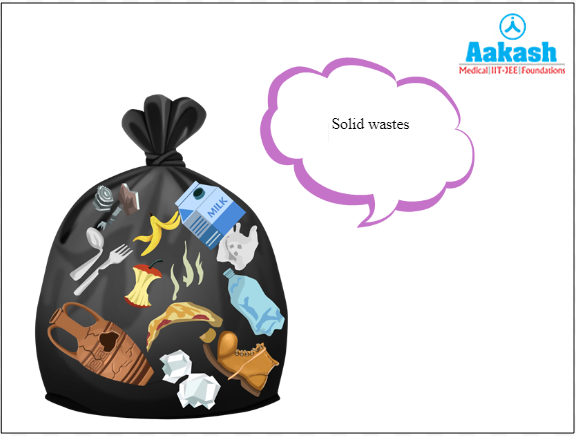
Fig: Solid wastes
But the disposal of these wastes should be taken care of since it can cause harm to the environment and the living organisms. It is the responsibility of all citizens. The right way to use and treat the solid waste should be a priority not only in cities but in all areas. So let us understand more about solid wastes in this article.
Table of contents
- Types of solid wastes
- Sources of solid wastes
- Impacts of solid waste accumulation
- Disposal of solid wastes
- Three Rs
- Plastic waste
- Practice Problems
- FAQs
Types of solid wastes
All the solid wastes are not alike. If we know the difference between them, then it will be easy for us to dispose of them too. So there are three types of solid wastes according to their mode of degradation. They are enlisted below:
- Biodegradable wastes
- Recyclable wastes
- Non biodegradable wastes
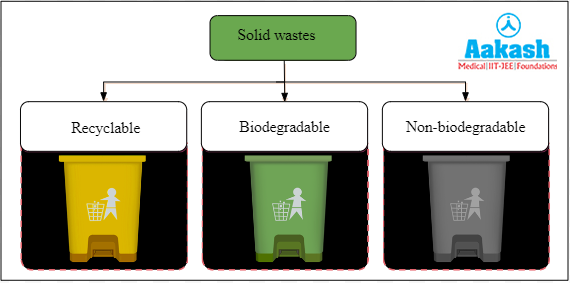
Fig: Types of solid wastes
Biodegradable wastes
Biodegradable waste is a type of trash that can be degraded by other living organisms. It mainly comes from plant or animal sources. Green garbage, food wastes, paper wastes, and biodegradable plastics are some common examples of biodegradable wastes that can be found in municipal solid wastes. Human wastes, manures, sewages, slaughterhouse wastes, industrial wastes, agricultural wastes, hazardous wastes, vegetable peels, used tea leaves, egg shells, crop and farm animal residues and discarded foods are some examples of biodegradable wastes.

Fig: Biodegradable wastes
Recyclable wastes
The process of transforming waste resources into new materials and items is known as recycling. Wastes that can be transformed into usable items or reused are referred to as recyclable wastes. Glasses, papers, cardboards, metals, plastics, tyres, textiles, batteries, and electronics are all recyclable materials. Composting and reuse of other biodegradable wastes, such as food and garden wastes, are additional examples of recycling.
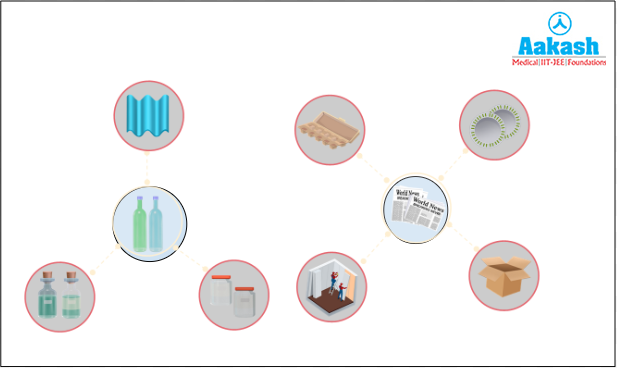
Fig: Recyclable wastes
Non biodegradable wastes
Wastes that cannot be destroyed or degraded by natural processes are classified as non-biodegradable. They last for thousands of years on Earth without deterioration or breakdown. As a result, the threat they pose is much more dangerous. Plastics, metals, aluminium cans, tyres, aches, hazardous chemicals, toxic chemicals, polystyrenes, and other non-biodegradable garbage are some examples for non biodegradable wastes.
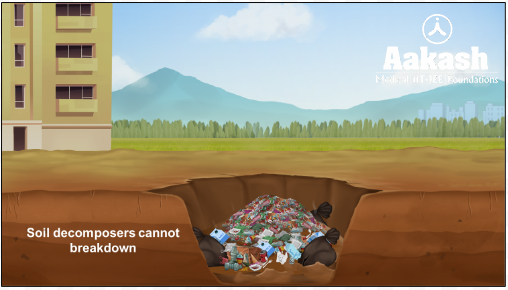
Fig: Non biodegradable wastes
Now we have an awareness of the different types of solid wastes. But do you know how and from where these wastes are generated? So next we will discuss the sources of solid wastes.
Sources of solid wastes
We are going to classify the sources of solid wastes into five. They are as follows:
- Municipal wastes
- Industrial wastes
- Mining wastes
- Defunct ships
- Electronic wastes or E - wastes.
Let’s discuss more about this.
Municipal wastes
Municipal wastes, often known as municipal solid wastes (MSW), is a type of waste collected and handled by or for municipalities. They are also known as trash or rubbish, and they are made up of ordinary goods like product packagings, grass clippings, furniture, clothings, bottles, food scraps, newspapers, appliances, paints, and batteries that we use and then toss away. This is found in our homes, schools, hospitals, and workplaces. Coordination of the house-to-house collection of municipal solid waste is held by using any method, such as community bin collection (central bin), house-to-house collection, collection on regular pre-informed timings, and scheduling with the vehicle's musical bell.
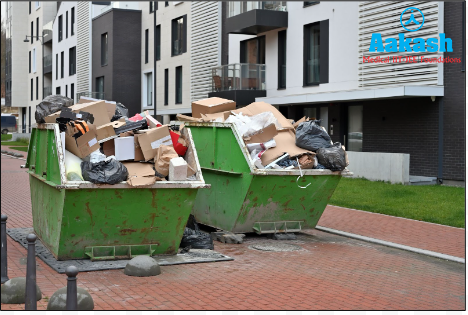
Fig: Municipal wastes
Industrial wastes
Manufacturing waste from a variety of processes, such as sludges, product leftovers, kiln dusts, slags, and ashes, is referred to as industrial wastes. The three categories of industries that generate the most industrial waste are metallurgy, non-metallurgy, and food processing. The waste generated varies in every industry, depending on the raw materials utilised, manufacturing methods, and product outputs. But these wastes can be divided into three types: solids, liquids, and gases.
Cafeteria wastes, dirts, gravels, masonry, concrete, scrap metals, trash, oils, solvents, chemicals, weed grasses, trees, timbers and scrap lumber are examples of industrial wastes.
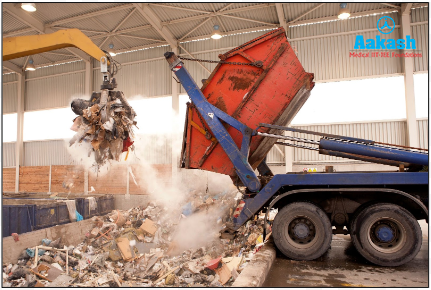
Fig: Industrial wastes
Fly ash
It is a byproduct of coal combustion that is one of the most harmful industrial wastes. It spews out of thermal power plants, where it combines with smoke and disperses into the atmosphere. Particles of fly ash can get buried in the deepest portion of your lungs, triggering asthma, inflammation, and immune reactions.
Mining wastes
Mining waste is created as a result of the extraction and processing of mineral resources. It includes topsoil overburden which is removed to obtain access to mineral deposits, waste rocks, and tailings. Mineral processing trash accounts for roughly half of all solid waste produced in the United States each year. Mine dust, rock tailings, slack, and slag are examples of mining wastes.
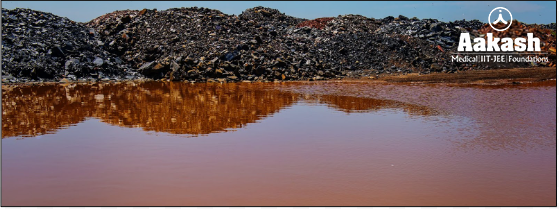
Fig: Mining wastes
Mine explorations, buildings, operations, and maintenance may result in land-use changes, as well as negative environmental effects such as deforestation, erosion, soil contamination, alteration, contamination of surrounding streams and wetlands. It also increases noise, dust, and other factors.
Defunct ships
Defunct ships are ships that are no longer operational. In countries like India and Pakistan, such ships are dismantled for scrap metal. Asbestos, lead, mercury, and other toxicants like tributyltin and polychlorinated biphenyls are present on these ships. The locations around the coast where these ships are breaking will be heavily contaminated.
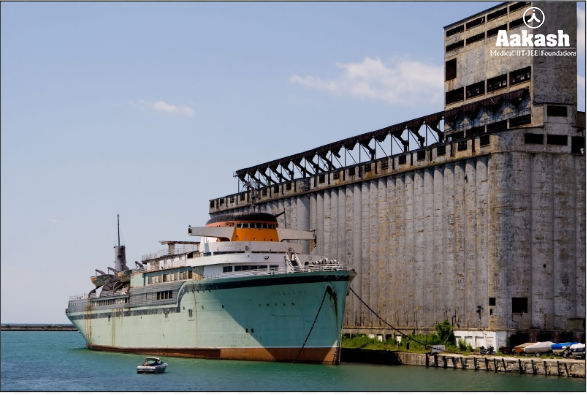
Fig: Defunct ship
Electronic wastes or E- wastes
Electronic items nearing the end of their ‘useful life’ are referred to as ‘e-wastes.’ Electronic products include computers, televisions, VCRs, stereos, copiers, and fax machines. Many of these items can be repaired, recycled, or reused. The rapid advancement of technology, combined with our consumer-driven society, has resulted in a massive volume of e-wastes. Toxic chemicals like mercury and lead can leak into soil and water. This happens when broken or unneeded electronics are discarded in landfills. Gold, silver, copper, platinum, aluminium, and cobalt are among the non-renewable materials found in electronics. So all these sources of solid wastes we have discussed are making the environment polluted.
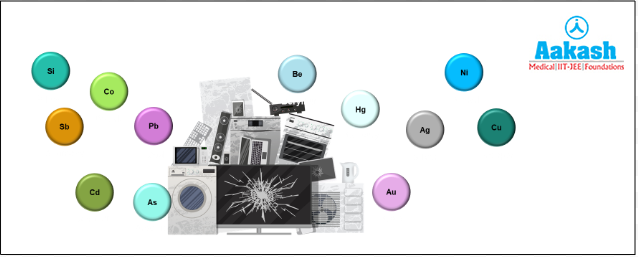
Fig: E wastes
Developed countries are equipped with specific recycling facilities to handle and manage E-wastes. However, developed countries, such as India and other developing countries cannot afford such facilities. E-waste is manually handled and processed here. To add to it, in many places small children are burdened with this task. This exposes them to the toxic substances present in the e-waste thereby putting their health to risk. Recycling is the only solution for the treatment of e-waste and this recycling should be carried out in an environment-friendly manner.
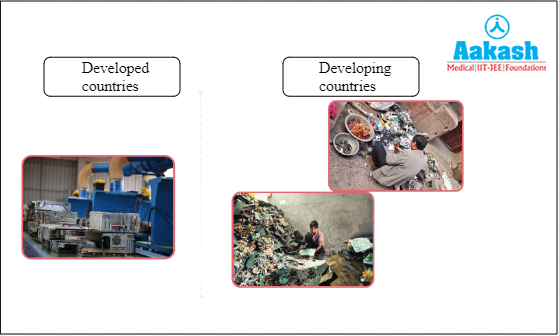
Fig: E-waste management in developed and developing countries
Their accumulation in the different natural resources directly or indirectly affects all living organisms. Now let’s discuss the various impacts of the accumulation of solid wastes.
Impacts of solid waste accumulation
The accumulation of solid wastes affects both humans and plants. No one likes accumulated solid waste. It looks ugly and smells foul. It also attracts insects, rats, scavengers and other animals that spread diseases. This adversely affects humans by creating an unpleasant environment and other health issues due to lack of hygiene. It affects plants by leaf injuries, premature leaf fall, decrease in transpiration, etc. Some of the major impacts of solid wastes we are going to discuss now. They are enlisted below:
- Spoilage of landscape
- Pollution
- Health hazards
- Effect on soil
- Effect on terrestrial life
- Effect on aquatic life.
Let’s discuss the impacts in more detail.
Spoilage of landscape
Landscape spoiling is the degradation of soil quality as a result of human or natural activity, resulting in numerous consequences such as loss of production, soil erosion, and so on. Deforestation, urbanisation, industrialisation, population growth, trash dumping on the land, and excessive use of fertilisers are some factors that contribute to the degradation of the landscape.
Pollution
Strong chemical reactions occur in solid wastes, releasing a large amount of harmful gases into the environment. Groundwater and other aquatic bodies are at risk when waste is dumped on the ground. Toxic compounds in rubbish may seep into the groundwater, contaminating it. Fly ashes from factories have the potential to pollute the air as well.
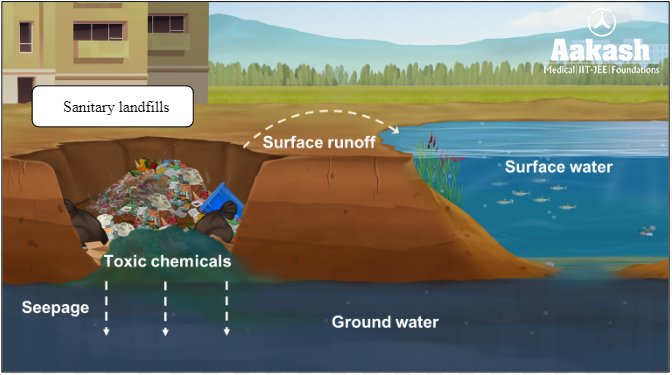
Fig: Pollution in water
Health hazards
Improper disposal can have negative health consequences, such as contamination of water, soil, and air. Hazardous waste or improper waste treatment, such as open burning, can cause direct injury to anyone participating in waste burning, and the surrounding community. Certain chemicals, such as cyanides, mercury, and polychlorinated biphenyls, are very poisonous. If they are released untreated, then the exposure can result in disease or death. Residents exposed to hazardous trash have been found to have an increased risk of cancer in several studies.
Cholera, gastroenteritis, malaria, dengue fever, etc., are caused by solid waste accumulation. Organic waste decomposition emits a terrible odour and provides a breeding ground for a variety of insects and pathogens. Rats grow in these wastes, reproduce quickly, posing a threat to residents by destroying various items in their homes and spreading diseases.
Effects on soil
The organic fractions of the solid wastes of a dumpsite are highest in quantities. Leachate migrates pollutants into the soil and affects soil stability and strength as it percolates into the soil. So the fertility of the soil changes and adversely affects the productivity of the agricultural field. Even the life of microorganisms will be in threat due to the change in the physical, chemical and biological composition of the soil.
Effect of terrestrial life and aquatic life
As we discussed before, the accumulation of solid waste affects the terrestrial organisms in the form of various diseases. Several diseases are caused to both plants and animals. Sometimes it may lead to their death. Solid wastes dumped on the ground also threaten the life of aquatic organisms as the pollutants dissolve in the groundwater and reach other aquatic bodies. As a result chemicals will enter into the food chain and will affect the life of both aquatic and terrestrial organisms.
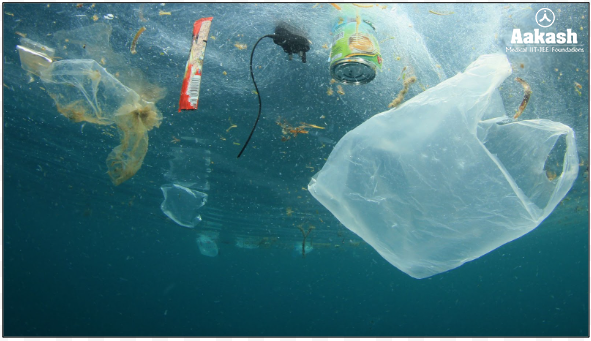
Fig: Solid wastes inside the aquatic body
Disposal of solid wastes
There are several methods for the disposal of solid wastes. Some of them are enlisted below:
- Composting
- Vermiculture
- Recycling
- Landfilling
- Incineration
Composting
It is a type of aerobic decomposition of organic solid wastes. This method can be utilised to recycle organic wastes. In this method the decomposition of organic debris is carried out and converted into a humus-like material known as compost. This is a good plant fertiliser. The urban organic waste is disposed of through anaerobic digestion process. This is done under the principles of biotechnology. As a result of this process, a feasible amount of organic manure and methane are obtained. Methane can be used as fuel.
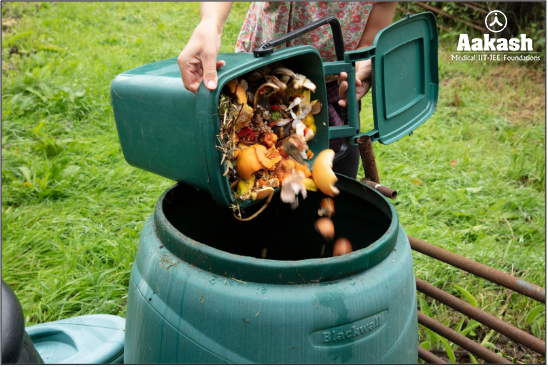
Fig: Composting
Vermiculture
The technique of utilising earthworms to convert organic food waste into a nutrient-rich substance capable of providing important nutrients and maintaining plant growth is known as vermiculture. To ensure a long-term crop, the goal is to maintain the growing number of worms. Sewage sludge and domestic wastes are disposed of through this process. Since it is done with the help of earthworms, it is also called earthworm farming.
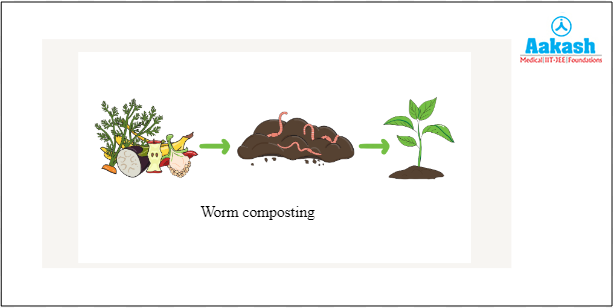
Fig: Vermiculture
Recycling
The process of transforming waste resources into new materials and products is known as recycling. This process includes the recovery of energy from waste materials also. It is an environmentally friendly method without a doubt. Separating, collecting, processing, marketing, and finally utilising the material that could have been thrown away are processes in the recycling process.
For example, a piece of paper can thus be recycled into various paper products, cans, bottles, and pouches by this procedure.
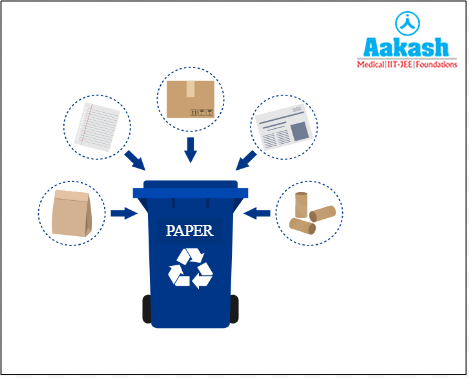
Fig: Recycling of paper
Benefits of recycling
The following are some of the benefits of recycling:
- No undesirable byproducts.
- Environmental protection.
- Natural resource conservation (reduces the need for fresh raw materials).
- Reduced reliance on landfills and incinerators.
Landfilling
A landfill is considered as a man-made trench in which solid garbage is stacked, compacted, and covered before being disposed of. It has a bottom that is normally coated to avoid groundwater pollution.
Components of an engineered landfill
A lined bottom, a leachate collection and treatment system, groundwater monitoring, gas extraction (the gas is flared or used for energy production), and a cap system are all part of an engineered landfill.
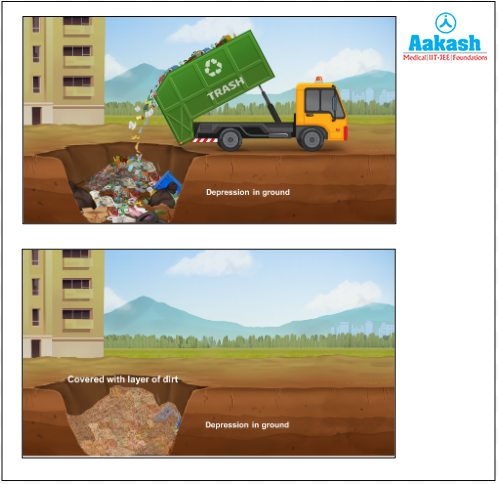
Fig: Landfilling
If constructed as a bioreactor dump, it will produce energy and degrade quickly. However, it will come at a steep price for high-tech landfills. If the liner system is damaged or not properly sealed, there is a risk of groundwater contamination. There is a risk that the landfill will degrade into an open dump if it is not properly managed.
Incineration
It is primarily used to reduce the volume of solid waste by burning it. It is the controlled burning of materials at high temperatures (850°C). However, harmful gases may escape into the atmosphere during the combustion process. More specialised incinerators are available for the disposal of hazardous organic pollutants or hospital wastes.
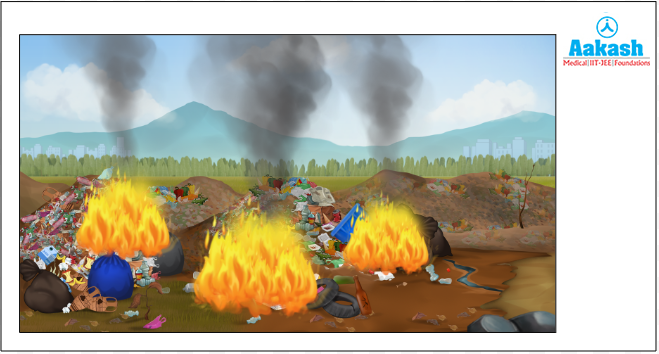
Fig: Incineration
Three Rs
We just studied about the various types of solid wastes, their effects on humans and the environment, and how to dispose of them. However, the majority of disposal methods have some drawbacks. But we can choose effective waste management to avoid the disposal of solid wastes. The most easily communicated method of management of solid wastes can be summarised as the three Rs: Reduce, Reduce, and Recycle. This process can save money, energy, raw material, land space etc. It also reduces pollution. Now we'll learn a little bit more about the three Rs.
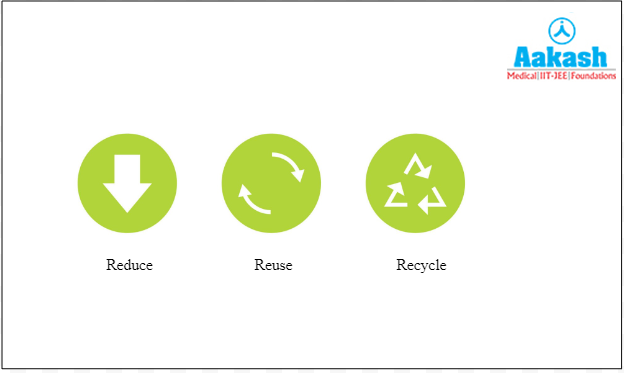
Fig: 3 Rs
Reduce
Reduce your consumption of materials and things. This may imply restricting the number of purchases you make in the first place. For example if we reduce the use of metallic products it will automatically reduce the mining of those metals. This will result in the reduction of waste materials.
Reuse
Reusing is considered as the process of finding a new use for all old items that would otherwise be discarded. Food jars from the grocery store can be used to keep leftovers or to transport lunch to work. Cleaning rags can be made from old clothings.
Recycle
Of the three Rs, this is perhaps the most well-known and well-understood method. You will be familiar with recycling papers, plastics, and metal materials if you have recycling pick-up services. At the centres for recycling, these items are treated with utmost care. The separated and processed elements will be transformed into various products in the future. Another option to engage in this aspect of the 3 Rs is to purchase recycled goods.
Plastic wastes
Plastic garbage is one of the most hazardous solid wastes, capable of causing severe air pollution, water pollution, and soil pollution when burned or disposed of. It has the potential to endanger the lives of all living things. Plastics are affordable and durable, making them ideal for a variety of applications; as a result, producers prefer plastics to other materials.
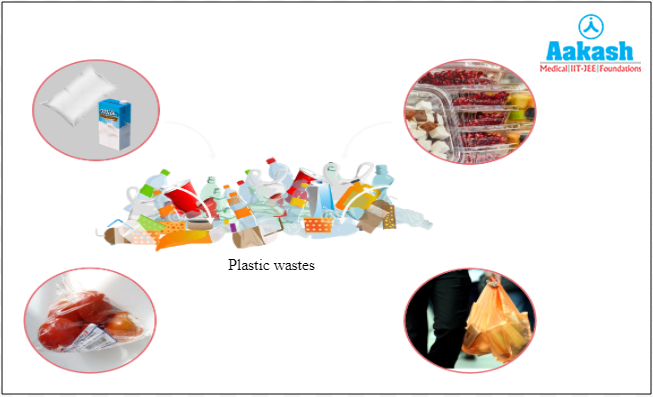
Fig: Plastic wastes
However, the chemical structure of plastic makes them resistant to many natural degradation processes, making them slow to disintegrate. These two characteristics work together to allow vast amounts of plastic to enter the environment as unmanaged garbage and persist in the ecosystem.
Degraded plastic garbage can have a direct impact on humans through direct consumption (For example, they may be present in tap water), indirect consumption (eating animals), and hormone disturbance. Plastic packaging makes up a major amount of post-consumer plastic trash.
Plastic kills millions of creatures every year, including birds, fishes, and other marine critters. Plastics are known to have harmed more than 700 species, including endangered species. Plastic is eaten by nearly every seabird species.
Elephants, hyenas, zebras, tigers, camels, cattle, and other large species have swallowed plastics, which has resulted in death on certain occasions.
Many scientists and conservationists believe the solution is to prevent plastic debris from entering rivers and seas in the first place to rescue aquatic life. Improved waste management and recycling, along with better product design that considers the short life of disposable packaging, and a reduction in the manufacturing of unneeded single-use plastics can only help achieve this goal.
Remedy for plastic wastes
Plastic has become an inextricable part of our existence. Because of its pervasiveness, many people would find it difficult to give it up. Reducing plastic consumption thus necessitates not only a change in habits, but also a shift in mentality.
Plastics can either be burnt or recycled. But burning plastic releases toxic gases like SO2, CO2, polychlorinated biphenyls, nitrogen oxides,etc., and not all types of plastics are recyclable.
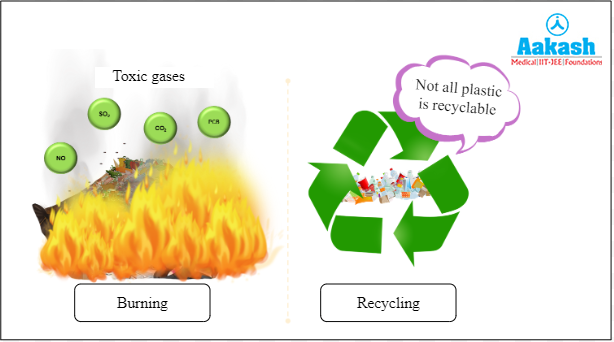
Fig: Effect of burning and recycling plastic
Plastic does not decompose naturally. Every plastic product generated so far has not been decomposed naturally. Environment-friendly alternatives like carrying cloth bags or bags made of any other natural fibres and refusing to accept polythene bags are some steps to be taken. State governments across the country are pushing for reduction in use of plastics and use of eco-friendly natural fibres carry bags. Some People have however come up with unique means to tackle this plastic menace. Plastic garbage recycling and reuse should be promoted more.
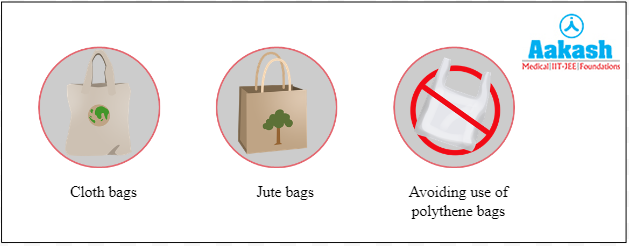
Fig: Plastic waste management
Some novel ideas have emerged, such as the use of plastic garbage in road construction. The discarded plastic is shredded and covered over gravel before being combined with hot bitumen for use in pavement construction. This will not only reinforce but also extend the life of the pavement. Another invention is edible water packing. There are seaweed straws that are compatible and can be eaten after use.
Microplastics
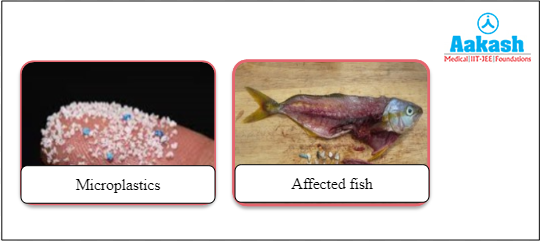
Microplastics are basically fragments of plastic less than 5 mm in length. They are one of the leading pollutants of the ocean. They damage aquatic creatures by blocking digestive tracts and alter feeding behaviour
 .
.
Fig: Microplastics and the fish affected by it
Microplastics come from a variety of sources like synthetic textiles, car tyres, city dust, and plastic pellets. They are also in personal care products like face wash, toothpaste,etc.
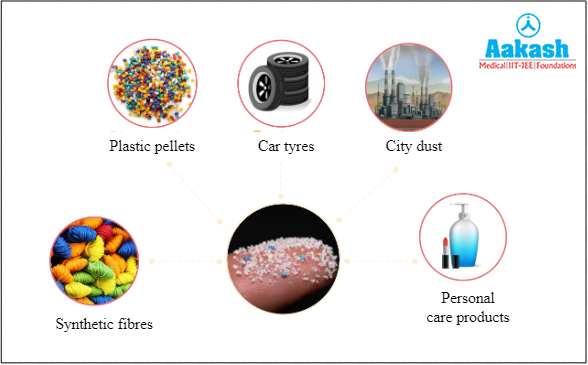
Fig: Sources of microplastics
Practice Problems
1. What should you do to save the environment during a simple act of shopping for groceries?
I. Buy paper bags to carry the items.
II. Make a decision of buying items that use plastic free packaging.
III. Carry cotton cloth bags from home to put all the items in.
IV. Buy polythene bags from the store and put all your items in.
- I and III
- I, II and III
- Only III
- II and III
Solution: Plastic is a non-biodegradable substance that persists in the environment even after being dumped in the ground or buried in landfills. Thus it is clear that the reduction in the use of plastic is the only way to reduce the generation of more plastic wastes as there are not many effective ways to dispose of plastic without harming the environment. Hence, it is better to prefer buying items that use plastic free packaging. Replacing polythene or plastic bags with cotton cloth or paper bags, both of which are biodegradable, for the purpose of shopping or carrying items is another way of reducing the use of plastics. Hence statements I, II and III are correct. So the correct option is b.
2. The e-wastes generated in the developed countries are exported to the developing countries because:
- Developing countries do not have proper recycling facilities
- Developed countries use manual labour to recycle e-wastes
- Developing countries extract expensive metals from the e-wastes and recycle them
- Developed countries do not have proper recycling facilities
Solution: E-wastes refer to ‘electronic wastes’ and include discarded electronic items such as batteries, mobile phones, computers, etc. E-wastes contain toxic chemicals and heavy metals (cadmium, mercury, etc) which are hazardous for human health as well as the environment. The best way to get rid of e-wastes is to recycle the waste items in an eco-friendly way. E-wastes generated by developed nations are mostly exported to developing nations like India, China, etc. These countries extract expensive metals such as gold, nickel, silicon, copper, etc., from the wastes and reuse them, saving money on the procurement of these expensive raw materials. But in developing countries, recycling is mostly done manually by labourers which exposes them to the risk of handling toxic chemicals in the e-wastes. Hence the correct option is c.
3. Raju’s father has a mobile phone whose battery needs to be replaced.What is the most environment friendly and sustainable way of disposing of old batteries?
- to incinerate it
- bury it in landfills
- recycle it
- burn it in an open dump
Solution: Discarded batteries are considered as e-wastes or electronic wastes. These wastes are considered as hazardous as they contain toxic chemicals such as cadmium, mercury, etc. They can be potentially harmful to human health, habitats and the environment. Batteries can be recycled to extract metals or other parts which can be used in the production of new electronic items. This is the most sustainable and environment friendly way of disposing e-wastes. Recycling must be done in proper facilities. This makes sure that the humans do not have any risks of being exposed to the toxic chemicals present in them. Hence the correct option is c.
4. Match the following:
|
Wastes |
Method of disposal |
|
1. Vegetable peels |
A. Buried under rocks in shielded containers |
|
2. Plastic containers |
B. Compost pits |
|
3. Radioactive wastes |
C. Recycling |
- 1 - A, 2 - C, 3 - B
- 1 - C, 2 - B, 3 - A
- 1 - B, 2 - C, 3 - A
- 1 - B, 2 - A, 3 - C
Solution: Vegetable peels are biodegradable in nature and are hence disposed of by putting them in compost pits where the action of decomposing microbes turn the wastes into compost that can be used as organic fertiliser. Plastic containers can be recycled into decorative items, plant holders, etc. Radioactive wastes are generated normally from nuclear power stations. These materials harness the energy of radioactive substances to generate electricity. These wastes are highly dangerous as the radiation released by them can cause cell mutations leading to cancers. These wastes are pre-treated, put into heavily shielded containers and buried deep in the rocks, around 500 m deep beneath the Earth’s crust. This method of radioactive waste disposal has a chance of polluting the soil and is a highly debatable method. Hence the correct option is c.
FAQs
1. What is a polyblend?
Answer: Polyblend is a colloidal mixture of two or more polymers, particularly man-made fibres or modified recycled plastics. Ahmed Khan of Bangalore is a plastic sack manufacturer who realised the potential threat posed by the endless generation of plastic waste in recent times. His company developed a powdered form of recycled and modified plastic, known as polyblend, using plastic film waste as raw material. When mixed with bitumen (a petroleum-based semi-solid substance obtained from distillation of crude oil), polyblend increases the water repellant properties of bitumen. In collaboration with the R.V college of Engineering and the Bangalore city corporation, Khan used a mixture of polyblend and bitumen to lay down roads in Bangalore. This increased the road life by a factor of three.
2. When did the garbage issue begin?
Answer: The earliest was developed in Knossos, Crete, about 3,000 B.C., when humans dug deep trenches to bury trash, which they then covered with dirt. The Greek city of Athens developed one of the first-known trash rules around 500 B.C., prohibiting inhabitants from tossing trash in the street.
3. Who is H. Wayne Huizenga?
Answer: Harry Wayne Huizenga was an entrepreneur and businessman from the United States. AutoNation and Waste Management Inc. were both started by him. Huizenga grew Waste Management Inc. from a single garbage truck in 1968 to a Fortune 500 corporation. He bought independent sanitation engineering firms, and by the time he went public in 1972, he had acquired a total of 133 small-time carriers. Garbage Management had grown to become the largest waste removal company in the United States by 1983. Waste Management, Inc., popularly known as WM, is a North American waste management, comprehensive waste management, and environmental services firm. 346 transfer stations, 293 active garbage disposal sites, 146 recycling plants, 111 beneficial-use landfill gas projects, and six independent power plants make up the company's network. Together, it and its competitor Republic Services, Inc, collect more than half of all trash in the United States.
4. How many years it will take to degrade plastic?
Answer: It takes 450 years for a single plastic bottle to decompose in the ground. Plastic makes about 11% of household waste, with plastic bottles accounting for 40% of that. It can take 50 to 80 years for a plastic cup to disintegrate. Every year, an estimated 13 billion plastic bottles are trashed.
Related Topics
|
Air pollution and its control: Air pollutants, Effects of air pollution, Smog, Acid rain, Bhopal Gas Tragedy, Control of air pollution, Prevention of air pollution, Practice problems and FAQs |
|
What is pollution,Types of pollution, Practice Problems and FAQs |
|
Water pollution and its control: Water pollutants, Effects of water pollution, Practice problems and FAQs |
|
Water pollution: Wastewater treatment, Practice problems and FAQs |

 Call Now
 Let's Chat
 Share
Share