-
Call Now
1800-102-2727


Introduction to Respiration, Respiratory Organs in Animals, Practice Problems and FAQs

You all know about your respiratory organ. Right?
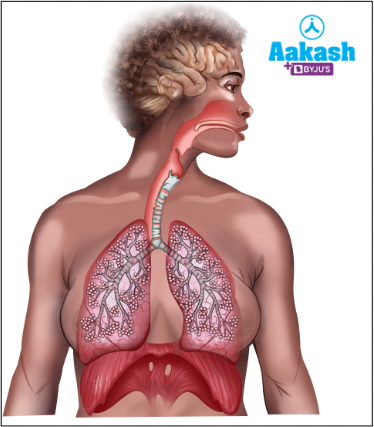
Fig: Lungs
Yes, there are two lungs in the chest area. They are the respiratory organs in human beings. It facilitates breathing. But which lungs structure aids in this respiration?
Alveoli, indeed. They are the sac-like structures present in lungs. You know, each of your lungs has roughly 300 million alveoli, which are balloon-like structures that replace carbon dioxide waste in your blood with oxygen.
Do you think the organs for respiration are the same in all organisms? Do you have any idea about the respiratory organs of butterflies, moths or cockroaches? Let us understand about the different types of respiratory organs in animals in this article.
Table of contents
- Breathing
- Difference between breathing and cellular respiration
- Respiratory organs
- Invertebrates
- Vertebrates
- Practice Problems
- FAQs
Breathing
Breathing helps you to take in the oxygen your cells require while also allowing you to eliminate carbon dioxide as waste. When we exhale, we also exhale a lot of water which is also a byproduct of cellular respiration.
Breathing is considered as the process of exchanging oxygen from the atmosphere with carbon dioxide produced by the cells through cellular respiration. Inhalation (to breathe in) and expiration (to breathe out) are two aspects of breathing (exhale or to breathe out). The process during which food is broken down with the help of oxygen to give energy is called cellular respiration.
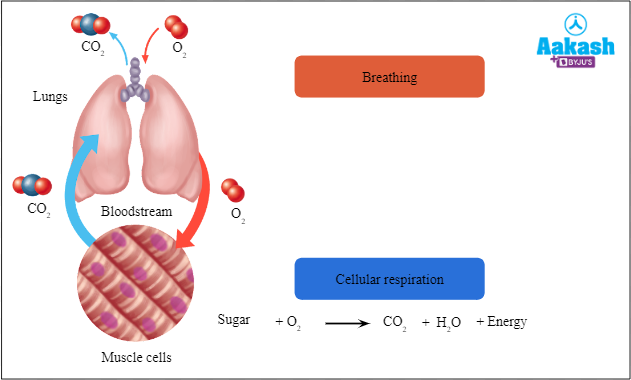
Fig: Respiration
Difference between breathing and cellular respiration
Breathing |
Cellular respiration |
|
Oxygen is inhaled and carbon dioxide is exhaled out of the lungs |
Breakdown of food using oxygen to produce energy which is used by cells to carry out cellular function |
|
No energy is produced during the process |
Energy is released in the form of ATP |
|
Takes place in respiratory organs |
Takes place in cells |
|
Physical process |
Biochemical process |
Respiratory Organs
Organs used in the process of respiration are known as respiratory organs. Different animals have different organs depending upon their two main features as follows:
Habitat
It is the place where an animal lives. For example, reptiles live on land, respire through lungs, while fishes live in water, have gills to respire.
Level of organisation
Breathing mechanisms vary according to the level of organisation. For example, poriferans have cellular level of respiration.
Types of respiratory organs
In Invertebrates
Porifera - Sponges
In sponges the exchange of gases occurs by simple diffusion through the body surface. It occurs across cell membranes as they are unicellular organisms. Sponges are dependent on the dissolved oxygen in the water passing through the spongocoel. Oxygen-containing water enters the body of the sponge through small pores, called ostia. Water is circulated throughout its body by the action of cells called choanocytes. The choanocyte cells have flagella that move around and push water through the sponge. Water goes out through the opening called the osculum.
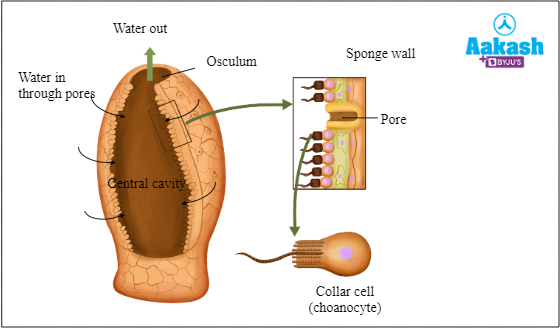
Fig: Respiration in sponges
In other invertebrates
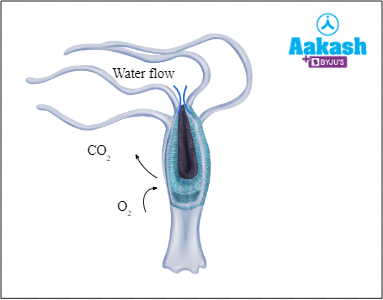
Cnidarians - Hydra |
Diffusion occurs through their body surface |
Fig: Hydra |
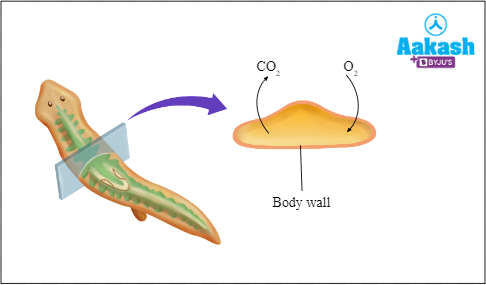
Platyhelminthes - Flatworms |
Diffusion occurs through their body surface |
Fig: Flatworms |
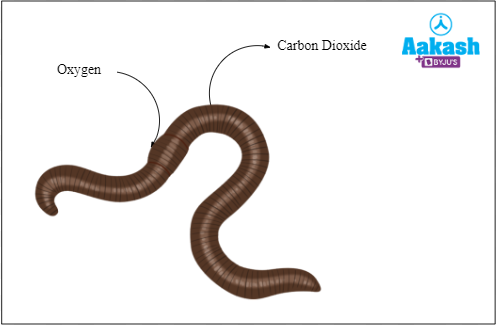
Annelida - Earthworms |
Diffusion occurs through their body surface |
Fig: Earthworms |
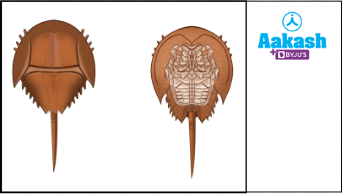
Aquatic arthropods - Horseshoe crab |
Gaseous exchange occurs through book gills |
Fig: Horseshoe crab |
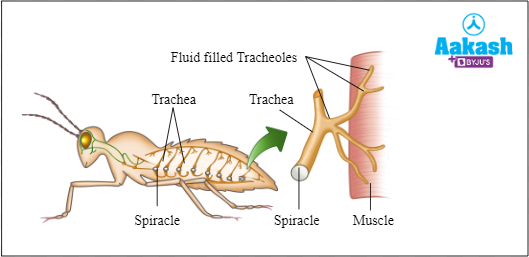
Arthropods - Terrestrial |
Gas exchange occurs through tracheal tubes |
Fig: Insects |
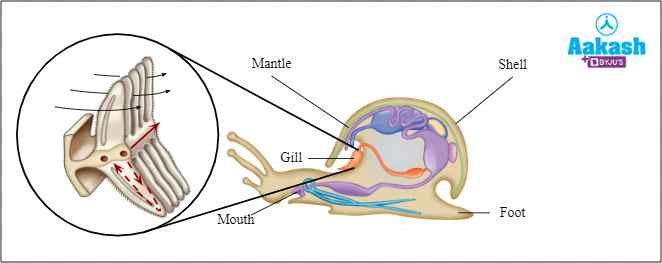
Mollusca - Snail |
Gas exchange occurs through feather-like gills inside the mantle cavity |
Fig: Snail |
In vertebrates
Fishes
In these organisms the gaseous exchange occurs through gill slits.
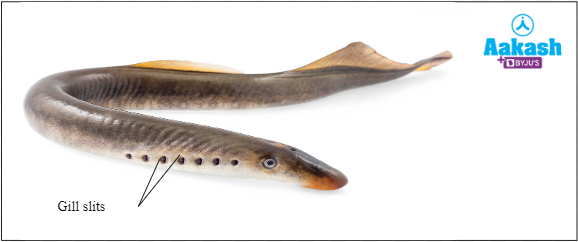
Fig: Eel
In reptiles, amphibians, mammals and birds
In these organisms the gaseous exchange takes place through lungs.
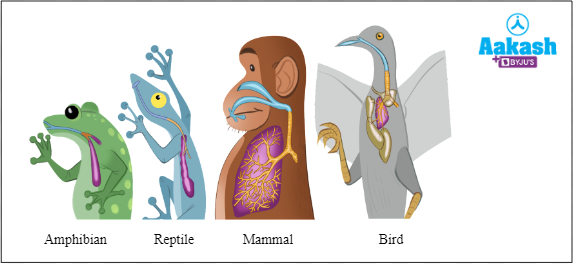
Fig: Major respiratory organs higher classes of vertebrates
Practice Problems
Q1. Branchial respiration is seen in __________________________.
- Fishes
- Aquatic arthropods
- Molluscs
- All the above
Solution: Branchial respiration is the respiration through gills. It is observed in fishes, aquatic arthropods like horseshoe crabs, molluscs like snails etc.
Q2. In chordates, which group has multiple organs for respiration?
- Amphibians
- Mammals
- Urochordates
- Cyclostomates
Solution: In chordates, amphibians can respire through skin, lungs and buccopharyngeal cavity.
Q3. Frogs respire through which organ, when they are submerged in water?
- Nostrils
- Lungs
- Skin
- Buccal cavity
Solution: When frogs are submerged in water, they use only their skin for breathing. On land, the buccal cavity and the two lungs are used for breathing.
Q4. Select the incorrect statement from the given below:
- Amoeba gets oxygen mainly by simple diffusion through their cell membrane from the surrounding water
- Elephants snorkel when under water
- The principle of countercurrent flow facilitates efficient respiration in gills of fishes
- Whales and dolphins do not have lungs
Solution: Whales and dolphins are mammals and they have lungs as their respiratory organs, just like human beings. They need to rise to the surface of the water to inhale and exhale oxygen through their blowholes. Blow holes are normally surrounded by muscles which keep the hole closed when the whale or dolphin is under water. It opens it when the animal is reaching near the surface for breathing.
FAQs
Q1. Which are the respiratory processes in adult frogs?
Answer: Adult frogs have three different types of gaseous exchange mechanisms as follows:
- Cutaneous respiration - Frog do cutaneous respiration during hibernation and aestivation.
- Buccopharyngeal respiration - It happens with the help of the buccopharyngeal cavity via the nasal chamber and external nares when the frog is on land or partially immersed in water.
- Pulmonary respiration - It happens with the help of the lungs.
- Identify the respiratory organs in the following organisms.
- Tadpole
- Scorpion
- Spider
- Mollusc
Answer: Book lungs are present in terrestrial arthropods such as scorpions and spiders. Gills are present in aquatic arthropods, molluscs and fishes. Internal gills are found in the tadpole larvae of the frog.
Q3. Do human beings show cutaneous respiration?
Answer: Cutaneous respiration is the respiration that happens through the skin. Some annelids like earthworm, leeches and amphibians like frogs can respire through skin. Frogs show this method mainly during hibernation and aestivation. They can respire through lungs and the buccopharyngeal cavity also. Lungs are the respiratory organs in human beings. We can perspire (sweating) through lungs.
Q4. What do you know about the countercurrent mechanisms in fish?
Answer: Countercurrent means a current flowing in a direction opposite to another. The flow of blood and water in opposite directions make respiration in fishes efficient. When the water enters through the mouth, it is highly oxygenated. Let us assume it has 100 ppm of oxygen in it. The time it reaches the other end of the body through the gills, it would have given up most of its oxygen to the blood. This results in a drop in the level of blood. For example, we can assume it as 20 ppm. Hence the blood, which flows in the opposite direction has 20 ppm of oxygen, and as it flows through the blood vessels, it once again gains oxygen, and by the time it reaches the opening of the operculum where water enters, it would have gone up to 80 ppm. Thus, in this countercurrent mechanism, there is a constant gradient that is created which helps oxygen diffusion to happen more effectively in fishes. Here if the blood and water flow in the same direction in fishes then both blood and water would have the same concentration of oxygen, which means that there won't be any gradient created for diffusion to take place.

 Call Now
 Let's Chat
 Share
Share