-
Call Now
1800-102-2727


Plasma: Characteristics, Composition, Functions, Practice Problems, and FAQs

We take a variety of food items to obtain energy and nutrients. This is required to sustain life and perform various activities. The fluid connective tissue called blood, is responsible for the transportation of all nutrients obtained from the food throughout the body. But how are the nutrients that are derived from food transported to all the parts of the body? In fact, how are any of the substances (hormones, gases, excretory wastes, etc) in our body transported from one place to another?
If you recall, blood is made up of two components such as 45% formed elements (RBCs, WBCs, and platelets) and 55% fluid matrix (plasma). RBCs or red blood cells help in carrying respiratory gases throughout the body. WBCs or leucocytes are the soldiers of our body and provide immunity by fighting against the disease causing organisms. Platelets are crucial for blood clotting.
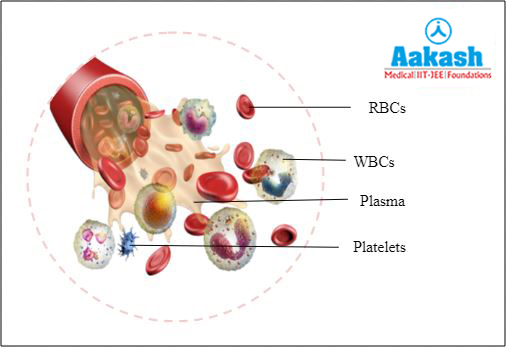
Fig: Components of blood
But you know the plasma is actually responsible for transport of substances in the body. So let’s dive deep and understand more about plasma in this article.
Table of contents
- Plasma
- Characteristics of plasma
- Composition of plasma
- Functions of plasma
- Practice Problems
- FAQs
Plasma
Plasma is the fluid matrix of blood. It is the medium of transport of substances all throughout the body.
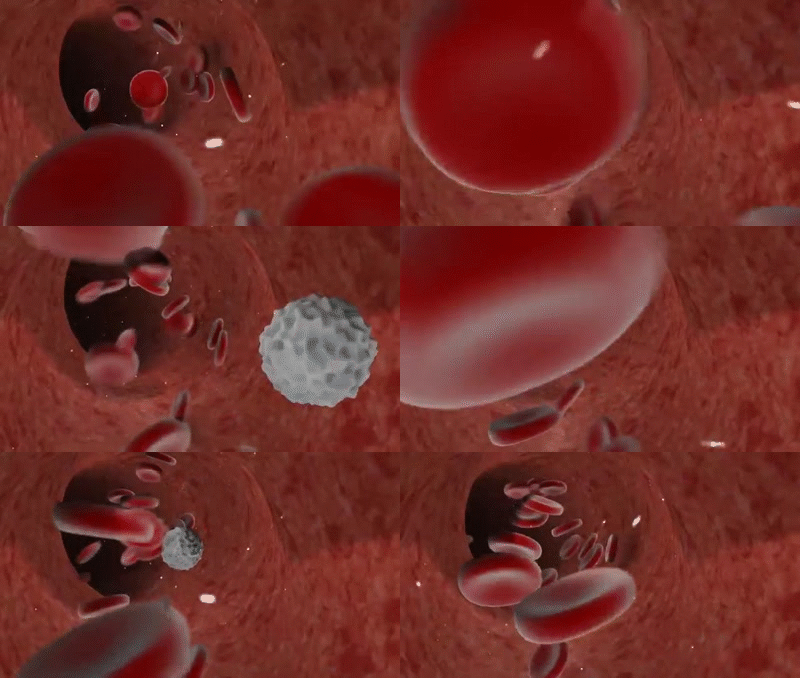
GIF: Transport of substances in the blood vessel
Characteristics of plasma
Plasma is a straw coloured or pale yellow viscous fluid. It is alkaline in nature.
Composition of plasma
It consists of 90 - 92% water and 8% solids. The solids include plasma proteins, nutrients (glucose, amino acids, fatty acids, phospholipids, cholesterol, nucleosides, fats and mineral salts), dissolved gases (oxygen, and carbon dioxide), waste products (urea, uric acid and creatinine), etc. Let’s discuss these components one by one.
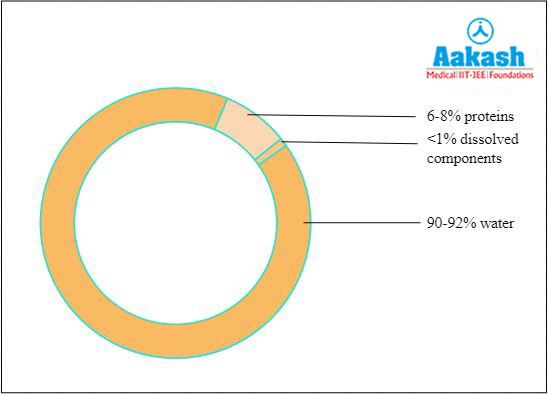
Fig: Composition of plasma
Plasma proteins
These are the second largest constituents of plasma. The major proteins in the plasma are as follows:
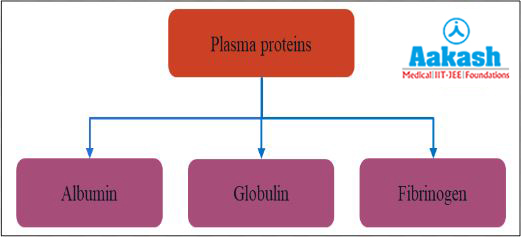
Fig: Types of plasma proteins
Fibrinogen
It is an inactive, soluble form of clotting protein. Upon activation, it converts into fibrin and forms a blood clot.
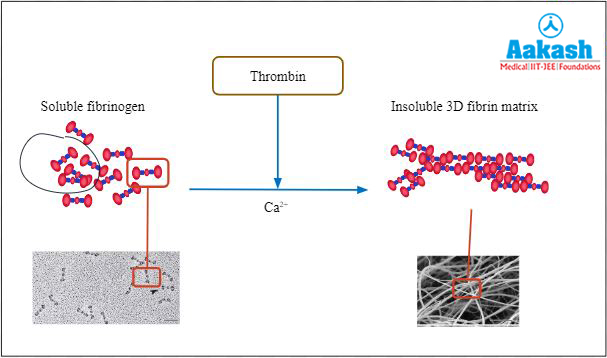
Fig: Fibrinogen and fibrin
Albumin
It is the most abundant protein in plasma and helps in maintaining osmotic balance.
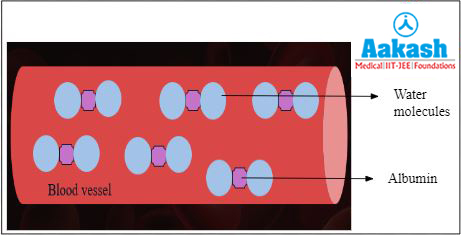
Fig: Albumin
Globulins
These proteins are involved in the defence mechanism and immunity of our body. All antibodies are immunoglobulins. It also helps in retaining water in the plasma.
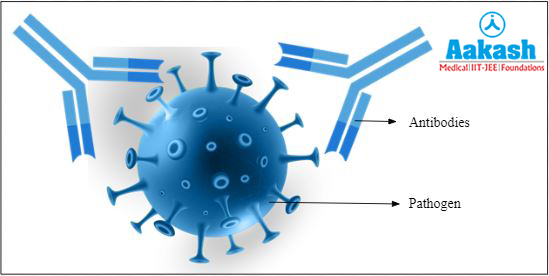
Fig: Immunoglobulins
Inorganic salts
These are present in plasma in the form of ions. Sodium and chloride ions are the main cations and anions respectively. Calcium, manganese, magnesium, phosphates, and bicarbonates are some other inorganic salts present in the plasma in the form of ions.
Clotting factors
These are proteins that are responsible for preventing excessive blood loss in cases of injury by forming a blood clot. They are present in the plasma in their inactive form. Upon injury they are activated. Examples include clotting factors XII, IX, XI and VIII.
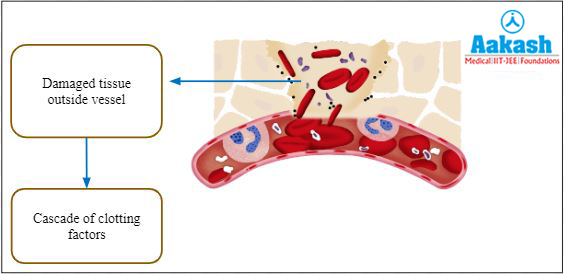
Fig: Clotting factors
Waste products
Metabolic waste products like CO2 are carried from the tissues to the lungs through plasma (7% as dissolved form and 70% as bicarbonate ions). Nitrogenous waste products like urea are carried from the liver (site of synthesis) to the kidneys via the plasma. In the kidneys, blood plasma is filtered and urea is eliminated through urine.
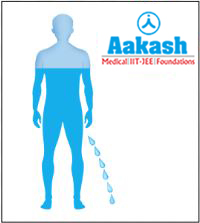
Fig: Urination
Dissolved gases
Plasma carries respiratory gases. For example, 7% CO2 from tissues to lungs 3% O2 from lungs to tissues in dissolved form.
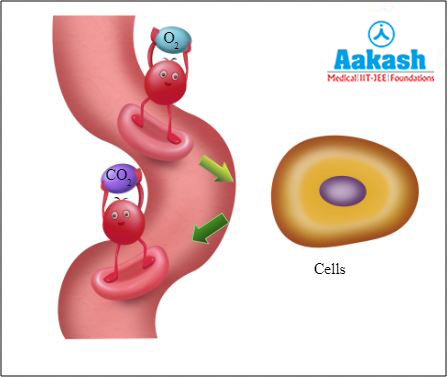
Fig: Transport of gases
Blood sugar
Plasma contains 80 - 100 mg of glucose per 100 ml of blood in a normal healthy individual 12 hours after a meal. But its concentration increases soon after a carbohydrate rich diet.
Blood cholesterol
It is the main lipid component in plasma. The normal levels are 80 - 180 mg per 100 ml of blood. It is used in the synthesis of biomembranes, bile salts, vitamin D and steroid hormones. Increased blood cholesterol may lead to its deposition in the internal wall of the blood vessels which causes high blood pressure and heart problems.
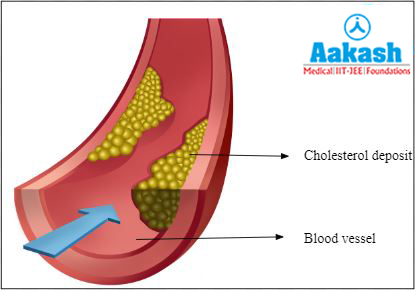
Fig: Blood cholesterol
Functions of plasma
The blood plasma performs the following functions:
- It helps in the transport of nutrients such as glucose, amino acids, lipids, vitamins and minerals throughout the body.
- It helps in the removal of waste materials like carbon dioxide and urea.
- It helps in immunity as it possesses antibodies.
- It helps in the maintenance of blood pH.
- It helps in the uniform distribution of heat throughout the body.
- It helps in the retention of fluid in the blood.
- It helps in blood clotting because of the presence of clotting factors.
- It helps in the transport of hormones from the different endocrine glands to the target organs.
Practice Problems
Q1: What is the pH of blood?
a. 6.8
b. 7.4
c. 1.8
d. 7.8
Solution: The blood is slightly alkaline with a pH of around 7.4. pH of saliva in mouth is 6.8. pH in the stomach in the presence of HCl is 1.8. pH in the small intestine in the presence of pancreatic juice, bile juice and intestinal juice is 7.8. Hence, the correct option is b.
Q2: When a person gets injured, which of the following proteins gets activated?
a. Albumin
b. Fibrin
c. Globulin
d. Fibrinogen
Solution: There are many clotting factors present in the blood plasma, these are present in the inactive form. These proteins get activated only upon injury. Fibrinogen is a globular and soluble protein that gets activated and is converted to thread-like, insoluble active fibrin. Fibrin forms a mesh-like network at the site of injury and prevents any further blood loss. Hence, the correct option is d.
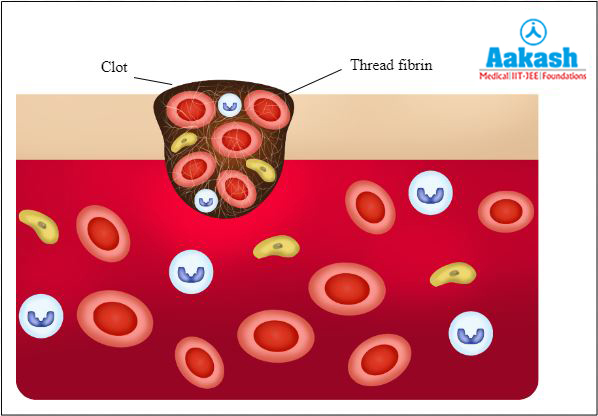
Fig: Blood clot
Q3: Which of the following options best describes the composition of plasma?
a. Water, proteins, lipids and blood cells
b. Proteins, glucose, lipids and water
c. Lymphocytes, erythrocytes, proteins and lipids
d. Water, dissolved gases, blood cells and sodium ions
Solution: Plasma contains 90 - 92% water, 6 - 8% dissolved proteins and <1% dissolved components (salts, sugars, amino acids, lipids etc.). Blood contains the formed elements like blood cells and plasma. Hence, the correct option is b.

Fig: Composition of plasma
FAQs
Q1. Where in the blood are blood cells present?
Answer: Blood is the fluid connective tissue. It consists of the fluid matrix, plasma and formed elements like blood cells. All the cellular components, the erythrocytes or red blood cells, leukocytes or white blood cells and thrombocytes or platelets, are suspended in this fluid matrix called plasma.
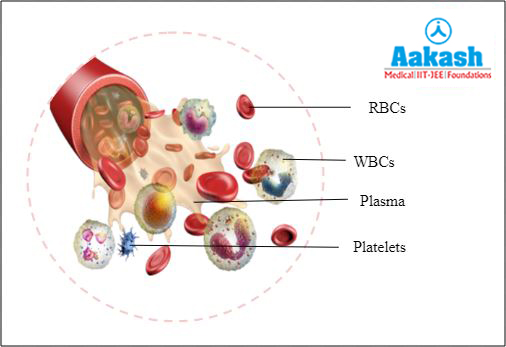
Fig: Components of blood
Q2. How is blood different from other connective tissues?
Answer: Any connective tissue has three components such as matrix, cells and fibres. Examples include areolar tissue. Blood and lymph are the only connective tissue that lacks any fibres. It is the fibre-less connective tissue.
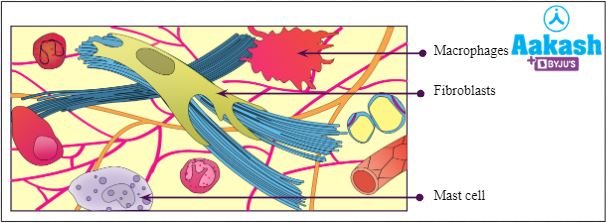
Fig: Areolar tissue
Q3- What is the difference between blood, plasma, lymph and serum?
Answer: Blood consists of plasma and blood cells. As the blood passes through the capillaries around the tissues, a part of the water and water soluble substances along with lymphocytes pass from capillaries into the interstitial spaces between the cells of the tissues. This fluid is called tissue fluid or interstitial fluid. Large proteins and most of the formed elements (RBCs) remain inside the capillaries. This fluid helps in the exchange of substances between blood and cells of the tissues. The remaining fluid is then collected in vessels called lymph vessels. Now, the fluid is called lymph. Lymph is the colourless fluid which is then drained by lymphatic vessels into the subclavian veins. Lymph is called the middle man of the body. Plasma is the fluid matrix of blood. It can clot as it contains clotting proteins. Serum is plasma devoid of any clotting factors. It does not clot.
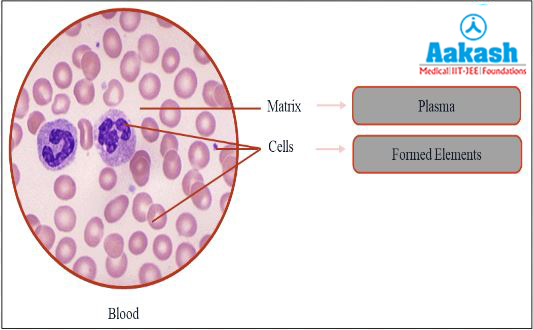
Fig: Blood
Q4. How do doctors prevent the clotting of blood after it is taken out of the body for any blood tests?
Answer: The small tubes in which blood is kept after it is taken out contains anticoagulants like EDTA or ethylene diamine tetra acetic acid. These agents interact with Ca2+ ions in the blood. Since Ca2+ is required for blood clotting, which has been made unavailable now, thus clotting does not happen.
Q5. Why does blood not clot inside the body?
Answer: Blood consists of heparin. It is a natural anticoagulant and prevents clotting inside the blood vessels. Upon injury, when blood clotting is required, heparin is inactivated at that site for clotting by serum C.F.

 Call Now
 Let's Chat
 Share
Share