-
Call Now
1800-102-2727


Nucleic Acids: Structure (nucleoside, nucleotides), Difference Between Nucleotide and Nucleoside, Practice problems and FAQs

You must have seen in cinemas that whenever there is a murder or crime, DNA test is done with the suspects. This involves matching the DNA present in the biological samples such as blood, skin tissue, ash, etc found in the crime scene with the DNA of the suspect. Similar tests can also be used to establish the identity of the father of a child, which is also known as paternity testing. So what is this DNA and how does this test give correct information about the criminal?
DNA is that part of your cell which carries and determines all the genetic information regarding you. Starting from how you look, how tall you are, how early your hair will start graying to what diseases you are prone to, what proteins are there in your body, how similar you are to your parents or relatives, etc., everything is determined by your DNA. Specific regions of the DNA, known as genes, are responsible for specific characteristics that we possess.
DNA forms the genetic material for most living organisms, except for a few viruses. It not only regulates all our attributes, it also helps us to transfer our genetic information to our offspring. But DNA does not work alone. In order to express the genetic information carried by the DNA, it has to be translated into specific proteins corresponding to specific genes. Another molecule, somewhat similar to that of DNA, helps the DNA to achieve this. Do you know what it is? It is the RNA. RNA is like a photocopy of DNA having all the information that your DNA carries.
DNA and RNA both are called nucleic acids.
So let's plunge into the structure and function of these beautiful macromolecules.
Table of contents
- Constituent unit of nucleic acids
- Difference between purines and pyrimidines
- Differences between nucleotide and nucleoside
- Practice problems
- FAQs
Constituent unit of nucleic acids
Nucleic acids are macromolecules consisting of carbon, oxygen, hydrogen, nitrogen, and phosphorus. These compounds are present in the acid-insoluble pool of a living tissue. Their molecular weight is more than 1000 Da. Nucleic acids help in carrying the genetic information of living organisms. The two nucleic acids found in living organisms are deoxyribonucleic acid (DNA) and ribonucleic acid (RNA).
DNA is a double helical structure made up of two antiparallel polynucleotide chains wound in a helical fashion whereas RNA is a single stranded molecule. Each polynucleotide strand is formed by the polymerisation of repeating units of nucleotides joined together by phosphodiester bonds.
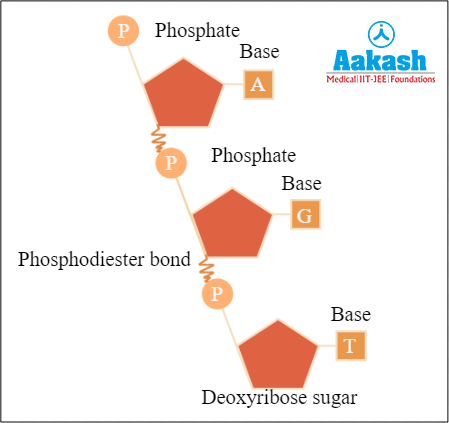
Fig: Nucleic acid (DNA)
Nucleotide
Nucleotides are the monomers of nucleic acids. They consist of mainly 3 components:
- Nitrogenous base
- Pentose sugar
- Phosphate group
They are acidic at physiological pH due to the presence of a phosphate group (PO43-).
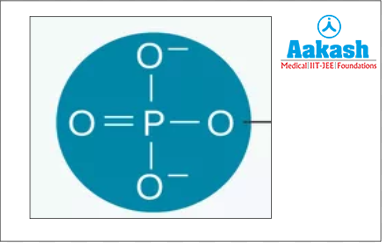
Fig: Phosphate group
Phosphate group is attached to the hydroxyl (-OH) group of the 5’ carbon of pentose sugar by a phosophoester bond. The nitrogenous base is attached to the 1’ carbon of the pentose sugar with the help of an N-glycosidic linkage.
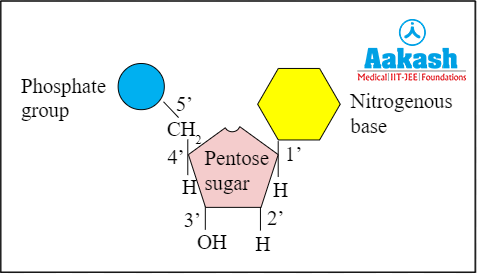
Fig: Structure of a nucleotide
Pentose sugar
It is a monosaccharide consisting of 5 carbon atoms. It is the central molecule in a nucleotide. In (Ribonucleic acid) RNA the sugar is ribose (2’hydroxyl group (-OH) is present). In (Deoxyribonucleic acid) DNA the sugar is deoxyribose (oxygen is missing at the 2’ carbon position and only 2’ hydrogen (H) is present).
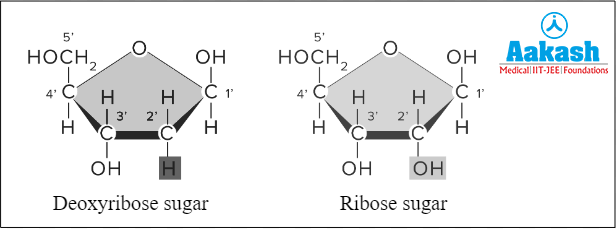
Fig: Examples of pentose sugar found in nucleic acids
Nitrogenous bases
Nitrogenous bases are nitrogen containing biomicromolecules with a heterocyclic ring structure. There are five nitrogenous bases found in nucleic acids:
- Adenine
- Guanine
- Thymine
- Uracil
- Cytosine
Adenine, Guanine and Cytosine are found in both DNA and RNA. Thymine is found only in DNA whereas RNA contains uracil in place of thymine.
Types of nitrogen bases
On the basis of heterocyclic rings present, nitrogenous bases are classified as follows:
- Purines
- Pyrimidines
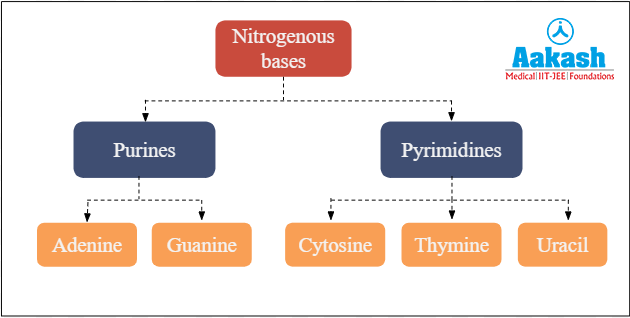
Fig: Different types of nitrogenous bases
Difference between purines and pyrimidines
|
Purines |
Pyrimidines |
|
They are larger than pyrimidines |
They are smaller than purines |
|
They have double ring structure consisting of -
|
They have a single hexagonal purine ring. |
|
Purines have nine atoms at the vertices of the rings. |
The rings have six atoms at their vertices. |
|
They have four nitrogen atoms present in 1st, 3rd, 7th and 9th positions in the ring. |
They have two nitrogen atoms present in 1st and 3rd positions in the ring. |
|
Examples include Adenine (A) and Guanine (G) |
Examples include Thymine (T), Cytosine (C), and Uracil (U) |
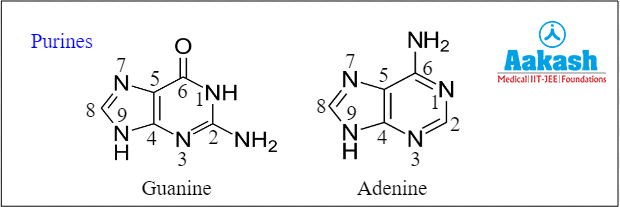
Fig: Nitrogenous bases - Purines
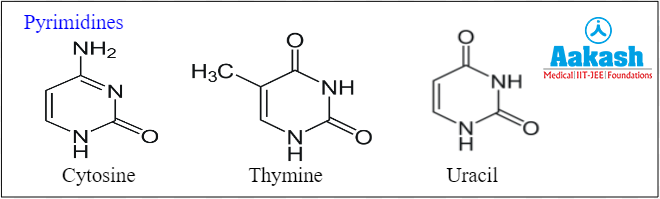
Fig: Nitrogenous bases - Pyrimidines
In DNA the two polynucleotide chains of the double helix are held together by hydrogen bonds between complementary nitrogenous bases of the two strands that lie opposite to each other. Adenine pairs with thymine with the help of two hydrogen bonds whereas cytosine pairs with guanine with the help of three hydrogen bonds. This base pairing is specific.
Nucleoside
Pentose sugar attached to the nitrogenous base forms a nucleoside, i.e, nucleotide minus the phosphate group is known as a nucleoside. Pentose sugar is attached to the nitrogen at the 1st position of the pyrimidine and 9th position of the purine with the help of an N-glycosidic bond.
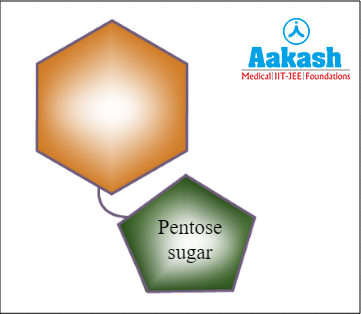
Fig: Nucleoside
Phosphodiester Bond
Phosphodiester bond is the ester bond that connects the phosphate group linked to the 5’ carbon of the pentose sugar of one nucleotide with the hydroxyl group linked to the 3’ carbon of the pentose sugar of the adjacent nucleotide in a polynucleotide chain.
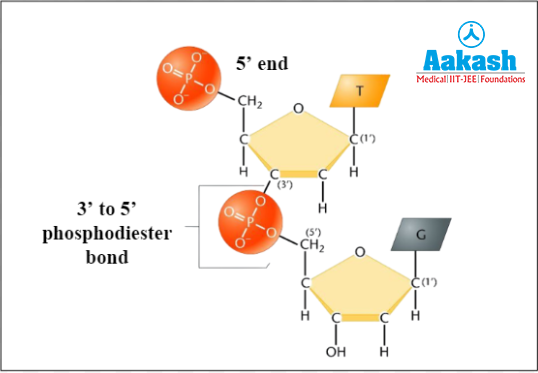
Fig: Phosphodiester bond
Differences between Nucleoside and nucleotide
|
Nucleotide |
Nucleoside |
|
The chemical composition of nucleotides consists of a phosphate group, a sugar and a nitrogenous base. |
A nucleoside has a chemical composition that consists of a sugar and a base without the phosphate group. |
|
They are one of the major causes of cancer-causing agents to this very day. |
They are used as agents in medicine that are primarily used against viruses and cancer-causing agents. |
|
Some of the key examples of nucleotides are adenylic acid, guanylic acid, etc. |
Some of the major examples of nucleosides are adenosine, guanosine etc. |
Practice problems
1. How many nucleotides are present in a DNA segment containing 100 thymine and 100 guanine residues?
(a) 200
(b) 500
(c) 400
(d) 300
Solution: Adenine pairs with thymine and cytosine pairs with Guanine. 100 thymine will pair with 100 adenine and 100 guanines will pair with 100 cytosines. Thus a total of 100+100+100+100 = 400 nucleotides will be present in a DNA segment.
Thus, the correct option is c.
2. A phosphodiester linkage joins
(a) 5’-phosphate of one nucleotide to the 5’-hydroxyl of the next nucleotide
(b) 3’-hydroxyl of one nucleotide to the 3’-hydroxyl of the next nucleotide
(c) 5’-phosphate of one nucleotide to the 5’-phosphate of the next nucleotide
(d) 5’-phosphate of one nucleotide to the 3’-hydroxyl of the next nucleotide
Solution: Phosphate group is attached to the hydroxyl (-OH) group of the 5’ carbon of pentose sugar by a phosophoester bond. Phosphodiester bond is the ester bond that connects the phosphate group linked to the 5’ carbon of the pentose sugar of one nucleotide with the hydroxyl group linked to the 3’ carbon of the pentose sugar of the adjacent nucleotide in a polynucleotide chain.
Thus, the correct option is d.
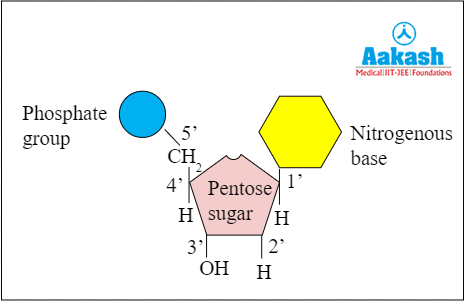
Fig: Structure of a nucleotide
3. Which of the following nitrogenous bases pairs is found only in a ribonucleotide but not a deoxyribonucleotide?
(a) Thymine
(b) Uracil
(c) Thymine
(d) Cytosine
Solution: Uracil is the nitrogenous base which is present only in RNA. It is never present in DNA. In RNA the pentose sugar is ribose sugar. Thus uracil always pairs with ribose sugar not deoxyribose. Thus it is found only in ribonucleotides.
Thus, the correct option is b.
4. Nucleic acids are a polymer of nucleotide monomeric units. Each nucleotide consists of
(a) base-sugar-OH
(b) sugar-phosphate
(c) base-sugar-phosphate
(d) (base-sugar-phosphate)x
Solution: Nucleic acids are formed by the polymerisation of repeating units of nucleotides joined together by phosphodiester bonds.
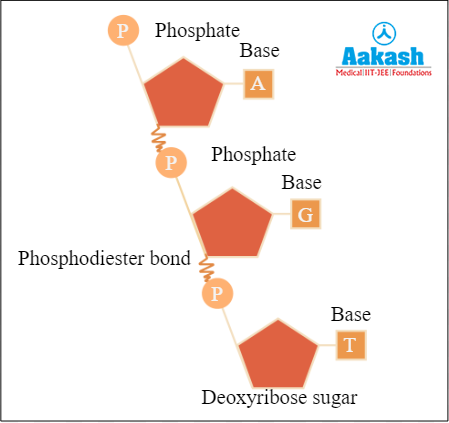
Fig: Nucleic acid (DNA)
Nucleotides are the monomers of nucleic acids. They consist of mainly 3 components:
- Nitrogenous base
- Pentose sugar
- Phosphate group
Thus, the correct option is c.
FAQs
1. What will be the result if DNA gets damaged?
Answer: If DNA of a cell gets irreversibly damaged and destroyed then the cell is likely to die. Alternatively, some damages can induce mutations or changes in the genetic sequence of the DNA which can have unexpected consequences for the cell. Some mutations can be detrimental while some can bring about useful variations in the cell that can render a survival benefit to it.
2. Can we obtain nucleic acid from food?
Answer: As all living and dead organisms contain nucleic acids, most of our foods such as meat, fish, legumes, mushrooms, etc act as a source of nucleic acids in our body.
3. What are the benefits of consuming food rich in nucleic acids?
Answer: Our body pretty much produces all the nucleic acid that we need but in certain conditions such as illness, injury, growth spurt, pregnancy, etc., food rich in nucleic acids can benefit the body as nucleic acids help in improving the immunity of the body, improving digestion, reduce oxidative stress, enhance muscle recovery and increase metabolic rate of the body.
4. Where are nucleic acids found?
Answer: In an eukaryotic cell, DNA is found within the nucleus as long thread like molecules which remain associated with histone proteins to form the chromatin fibres.
RNA in eukaryotes is synthesised within the nucleus and may be transported to the cytoplasm for protein synthesis.
In prokaryotes both DNA and RNA lie naked in the cytoplasm.

 Call Now
 Let's Chat
 Share
Share