-
Call Now
1800-102-2727


Myocardial Infarction: Symptoms, Causes, Underlying Physiology, People at Risk, Diagnosis, Treatments, Practice Problems and FAQs

You might have seen in movies people complaining about a pain in the chest region. In movies you might have also noticed that they will be given medical care immediately once they complain about the chest pain. One of the most probable causes of this pain is some problem associated with the heart. In case you ever find someone with a pain in the chest region, please do not delay. Immediately rush them to the nearby hospital. A few minutes of delay can lead to permanent damage to the heart and can even result in death.
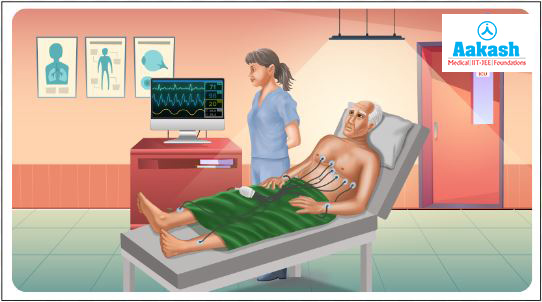
Fig: Person suffering from heart attack at hospital
The underlying cause of this chest pain can be an extremely life-threatening condition, none other than an attack to the heart, also called heart attack. The proper medical terminology of this condition is myocardial infarction. Beware of having too much fatty food and we must have a check in diets. Too much fats can affect the health of our heart. Let us take a deep dive into the details of heart attack in this article and understand the reason why we need to avoid too much fats.
Table of contents
- Myocardial Infarction
- Common symptoms
- Causes of heart attack
- Underlying physiology during attack
- People at risk of myocardial infarction
- Diagnosis
- Treatments
- Practice Problems
- FAQs
Myocardial infarction
It is a condition that results due to lack of proper blood flow to the cardiac musculature. This extremely dangerous condition can be caused due to many factors however is usually the product of blockage in one or multiple arteries supplying blood to the heart. This condition is also known as heart attack.
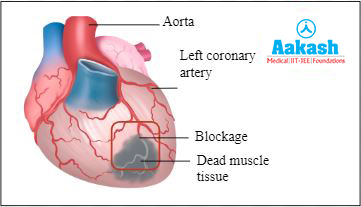
Fig: Myocardial infarction
Common symptoms
People suffering from myocardial infarction exhibit a number of symptoms, whose prevalence differs among individuals. The symptoms are influenced by sex, age, life styles etc. The common symptoms are listed below:
- Chest pain: The severity of chest pain may vary. This may be mild or too heavy. It may spread throughout the chest from a point and may even radiate to the left arm, neck, shoulder, back or jaw.
- Trouble in breathing.
- Palpitations in the heart.
- Excessive perspiration.
- Nausea.
- Stomach upsets.
- Weakness.
- Light-headedness.
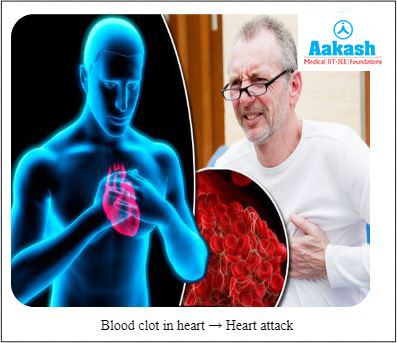
Fig: Common symptoms heart attack
Causes of heart attack
The following are the major causes of heart attack:
Atherosclerosis
The most common cause of heart attack is the blockage in coronary arteries, one of the blood vessels associated with the heart that supplies blood to the same. This usually results because of the build-up of plaque (a sticky substance) inside the lumen of the arteries and the condition is called atherosclerosis. It is normally caused due to the deposition of lipids on the wall lining the lumen of large and medium sized arteries. The rupture of the deposited plaque inside the coronary arteries can lead to a blood clot getting stuck there at the rupture site. If the blood clot gets trapped within the lumen of the artery blocking it, it can cut off the oxygen supply to the heart muscle. This causes a heart attack.

Fig: Atherosclerosis
Arteriosclerosis
The hardening and loss of elasticity of the walls of arteries is called arteriosclerosis. It is caused when calcium salts precipitate with the cholesterol leading to the formation of plaques. This makes the wall of the arteries stiff and rigid which results in the loss of distension property of the blood vessels and the walls of blood vessels may rupture. Now the blood leaked from the ruptured wall may clot and block the pathway of blood flow. This clot formation or thrombosis may also lead to heart attack.
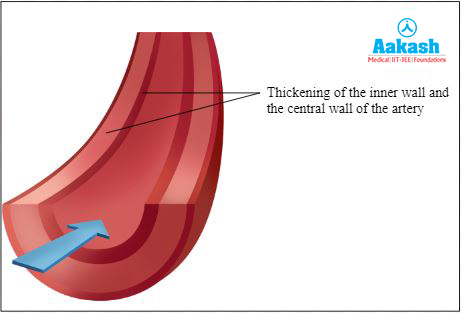
Fig: Arteriosclerosis
High blood pressure
The increase in blood pressure beyond 140 mm Hg (systolic) and 90 mm Hg (diastolic) is referred to as high blood pressure. A continuous or sustained rise in the arterial blood pressure is known as hypertension. Hypertension forces the heart to work harder to pump blood to the rest of the body. This may cause the left ventricle to thicken. A thickened left ventricle increases the risk of heart attack.
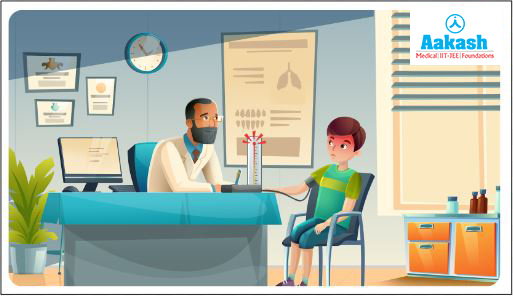
Fig: High blood pressure
Hypotension
A fall in blood pressure is known as low blood pressure or hypotension. It is normally less than 90/60mmHg. This can also lead to heart attacks.
Heart attack due to causes other than blockage
Myocardial infarction in absence of blockage of arteries is quite rare and can be due to the following reasons:
- Trauma: It may be an injury to the body or else an event which causes long-lasting emotional or mental damage.This may rupture the coronary arteries and can lead to heart attack.
- Spasms of coronary arteries: Sudden twitches of the muscles lining the blood vessels can temporarily cut off the blood flow to cardiac musculature of a region whose blood supply is taken care of by those blood vessels. This may also lead to heart attack.
- Obstruction from other sources: An air bubble or blood clot that may get trapped inside a coronary artery can also cause heart attack.
- Electrolyte imbalances: Imbalances in electrolyte concentration like potassium in blood.
Underlying physiology during heart attack
Once the proper blood circulation to the heart does not take place, it leads to a lack of oxygen circulation and its supply to heart muscles. This causes the cardiac muscles of that particular region to die. Thus the affected cardiac musculature loses its properties. This lack of ability of a part of the heart can potentially disrupt the entire pumping sequence of the heart. That may potentially disrupt the blood flow to the parts of the body. Delay in immediate medical intervention can even lead to death.
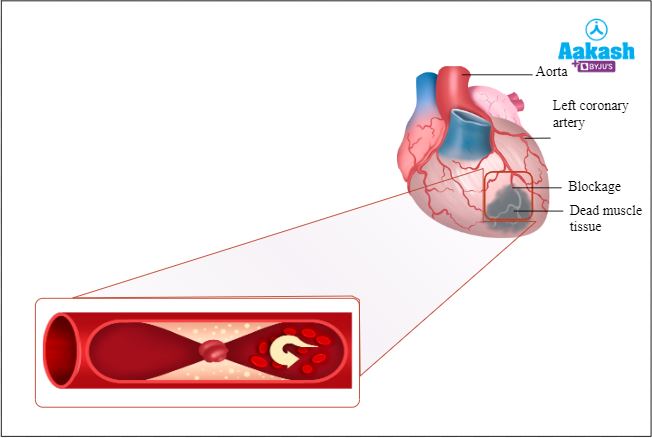
Fig: Underlying physiology during heart attack
People at risk of myocardial infarction
Numerous factors affect the risk of occurrence of heart attack. These factors include age, sex, family history, certain diseases and lifestyle.
Age
The risk of heart attack increases as one gets older.
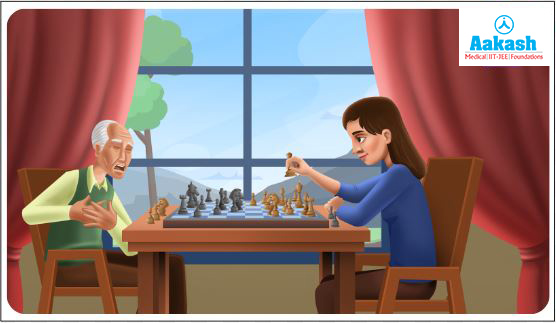
Fig: An aged man suffering from heart attack
Sex
Sex of a person also has a remarkable influence on the chances of heart attack. In men the risk of occurrence of heart attack increases significantly at an age of 45. In women the risk of occurrence of heart attack increases significantly at an age of 50 or post menopause.
Family history
The chances of heart attack increases with occurrence of such incidents in family histories. Parents and siblings having instances of myocardial infarction increase the risk of such incidents in their children and siblings.
Diseases
The diseases like obesity, diabetes, hypertension (high blood pressure) and hyperlipidemia (high cholesterol) increase the risk of myocardial infarction.
Lifestyle
Current day lifestyles are one of the major causes elevating the risk of occurrence of heart attack. Some of the practices include omitting physical activities from everyday routine, consuming a diet having high sugar and fat content, use of tobacco by smoking or chewing, consuming too much of alcohol and drug abuse.
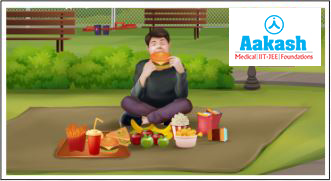
Fig: Lifestyle
Diagnosis
The common diagnostic methods include analysis of the following tests:
Stethoscope
During the initial hours of a heart attack, abnormal heart sounds and heart murmurs can be heard through a stethoscope. Hence a nurse or doctor will listen to the variations in heart sounds or beats using a stethoscope.

Fig: Checking heart beat
Electrocardiogram (ECG)
Electrocardiogram is a graphical representation of the electrical activity of the heart during a cardiac cycle. It is done using the electrocardiograph. The electrodes attached to the body at certain regions like chest, wrist and legs, pick up the electrical activity of the heart. This comes out in the form of a wave in a print out.
Fig: Conduction of ECG
Blood tests
Blood tests involving the detection of chemical markers whose levels get altered after heart attack, are used for detection.
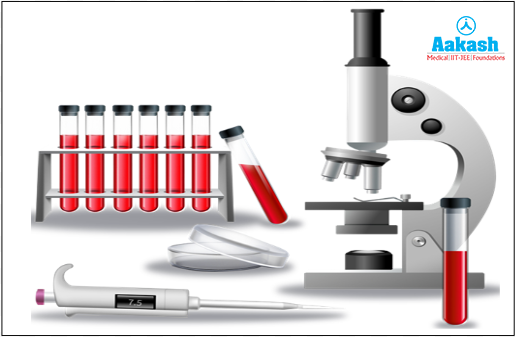
Fig: Blood test
Echocardiogram
High-frequency sound waves (ultrasound) are used and allowed to fall on and bounce off from different parts of the heart at different speeds in this method. From this, an image of the heart is generated for diagnosis.
Angiogram
A dye-like substance detectable by an X-ray is injected into the blood. X-ray is done which helps doctors to find areas with staunced blood flow.
Heart computed tomography (CT) scan
X-rays and computer processing are used to create an extensive scan of the heart in this method.

Fig: CT scan
Heart MRI
Powerful magnetic fields along with computer processing techniques are used to create the image of the heart in this method.
Analysis of family history
It is also done to anticipate the susceptibility of the patient to heart attack who is reporting angina. The chances of heart attack increases with occurrence of such incidents in family histories.

Fig: Analysis of family history
Treatments
Following are the treatment options available to rescue the person suffering from heart attack:
Providing oxygen
Patients having difficulty in breathing or having deficient blood oxygen levels are given supplementary oxygen along with other treatments. This is provided through a tube in the nostrils or via a mask over the face so that abundant oxygen can be breathed in.
Medications
The medicines usually administered include the following:
Anti-clotting medications
It includes medicines like aspirin. These help in thinning and easy circulation of blood.
Thrombolytic agents
These have clot-busting effects and are administered intravenously within the first 12 hours after the occurrence of heart attack. These injections cause the breakdown and dissolution of blood clots.
Nitroglycerin
It is used to get relief from chest pain. Besides, it also mediates vasodilation, thus helping blood vessels to widen thereby permitting easy blood flow.
Antiarrhythmic medications
Arrhythmia is a condition where the heart beats with an abnormal or irregular rhythm.The Antiarrhythmic medicines help to restore the normal beating rhythm or pattern of the heart. These are used to manage heart attacks which can often cause malfunctions in the heart's normal beating rhythm.

Fig: Antiarrhythmic medications
Pain medications
These medicines are given to relieve chest pain which is common during heart attack, sometimes extensively severe. The most common pain medication administered is morphine.

Fig: Medication
Percutaneous coronary intervention
This procedure helps restore the normal blood circulation in the affected areas of the heart. A catheter-based device is inserted into one of the major blood vessels (the one usually located near the upper thigh). It is then threaded up to the blocked artery of the heart. Once the location of the blockage is reached, a small balloon is inflated on the end of the device. This helps widen the blood vessel thus clearing the blockage. Often, stents (metallic mesh) are placed at the sites of the blockage. These stents help to keep the lumen of the arteries wide enough to prevent further blockage in the same spot. Some stents also have a coating of medicines that have anti-clotting properties. These medicines are released slowly so as to prevent further blood clots at that site.
Coronary artery bypass grafting
This is also called open-heart surgery or bypass surgery. This involves procurement of a blood vessel from any other location of the body and use of the same to construct an alternative route for the blood to pass through.

Fig: Coronary artery bypass grafting
Practice Problems
Q1. Which of the following is one of the most common causes of heart attack?
- Arthritis
- Narrowing of lumen of coronary arteries
- Diabetes
- Chest pain
Solution: Narrowing of lumen of coronary arteries is one the most common causes of heart attack. This prevents proper supply of oxygenated blood to the heart muscles thus leading to its damage. This results in heart attack. Hence the correct option is b.
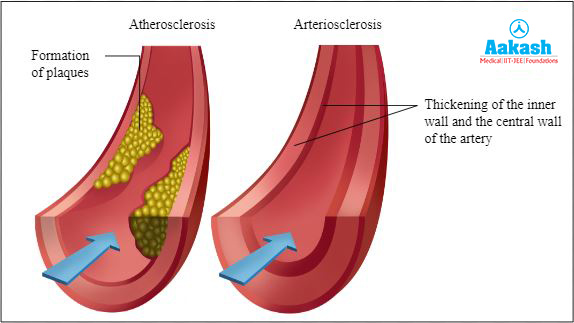
Fig: Narrowing of lumen of coronary arteries
Q2. Which of the following are a pair of risk factors for heart disease that cannot be controlled?
- Age and lifestyle
- Family history and food habits
- Lifestyle and food habits
- Family history and age
Solution: Family history and age are the pair of risk factors influencing cardiovascular diseases that cannot be controlled. Increasing age and having a family history of heart attack increases the vulnerability of people to myocardial infarction. Hence the correct option is d.
Q3. Preetha was returning home from her school with her grandfather. Suddenly she found her grandfather experiencing severe pain in his chest and left arms. How should Preetha manage the situation?
Answer: Preetha should immediately rush her grandfather to the hospital or nearby clinic for medications and inform her parents as the symptoms mentioned in question are indicators of heart attack.
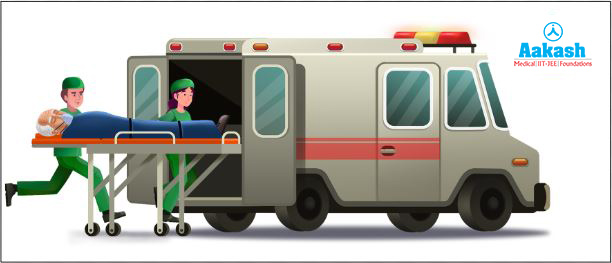
Fig: Grandfather rushed to hospital
Q4. Why is aspirin administered to a person who had a heart attack?
Answer: Aspirin has anti-clotting properties. This prevents unnecessary clot formation in the body, thus preventing subsequent heart attacks.
FAQs
Q1. What is embolism?
Answer: The lodging of an embolus such as an air bubble or a blood clot inside the lumen of blood vessels is called embolism. It results in a blocked artery which hinders blood supply in the body.
Q2. What is preeclampsia?
Answer: Preeclampsia is a serious medical condition which may occur about midway of the pregnancy (usually after 20 weeks), characterised by elevated blood pressure, high protein content in the urine, blurred vision as well as headaches. It usually puts pressure on the heart along with other vital organs. The patient is at increased risk of having a heart attack after delivery of the baby in this case.
Q3. Why are women after menopause at an increased risk of heart attack?
Answer: Menopause is characterised by several hormonal changes that can bring about several changes in the body. It influences the cardiovascular system also. Drop in oestrogen levels has a detrimental effect on the heart functions and other metabolism. Women usually have increased blood pressure and cholesterol levels post menopause. This increases the risk of atherosclerosis and thus heart attack.
Q4. What are the ways by which chances of heart attack can be reduced?
Answer: The following measures can be taken to reduce the chances of heart attack:
- By having a balanced diet.
- By exercising regularly.
- By avoiding smoking.
- By stopping drinking alcohol.
- By maintaining a healthy weight.
- By scheduling regular checkups.

 Call Now
 Let's Chat
 Share
Share