-
Call Now
1800-102-2727



Mode of Nutrition in Amoeba, Practice Problems and FAQs
We all have to take food to build our bodies, to repair damaged parts of the bodies, to grow, and to obtain energy. The energy we obtain from food is used to perform all life activities. Nutrition is considered as the process of taking in food to produce energy for performing various living activities. Every organism needs to take food. But do you think the mode of nutrition is the same in all organisms? No, it depends on the complexity of the body organisation and hence the mode of nutrition differs in unicellular and multicellular organisms. Unicellular organisms also must undertake a variety of living activities, which necessitate the use of energy. Some unicellular organisms are autotrophic like Chlorella and some are heterotrophic like Amoeba. In this article let’s understand the mode of nutrition in Amoeba.
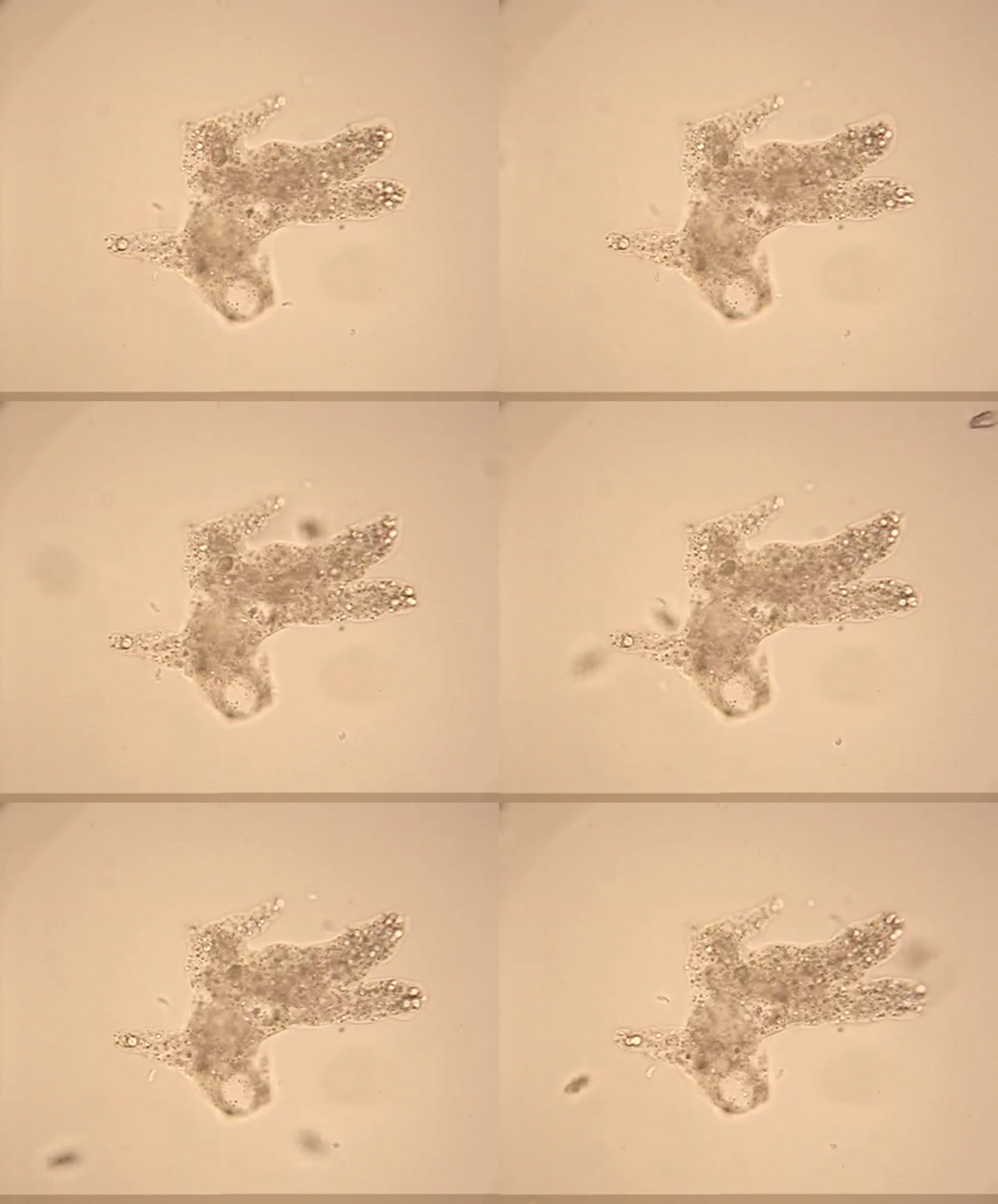
GIF: Amoeba
Table of contents
- Amoeba
- Mode of nutrition in Amoeba
- Steps involved in the mode of nutrition in Amoeba
- Practice Problems
- FAQs
Amoeba
Amoeba are protozoans characterised by the presence of finger-like extensions called pseudopodia or false feet. They belong to the Kingdom Protista and hence are unicellular eukaryotic organisms. They are normally free living and occur at the bottom of ponds or on the surface of submerged objects.
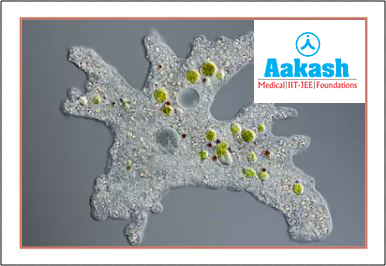
Fig: Amoeba
Mode of nutrition in Amoeba
Nutrition in an Amoeba occurs by a method called phagocytosis. In this process the entire organism engulfs the food materials which it is planning to eat. Amoeba shows a holozoic type of nutrition or ingestive nutrition. In this method the organism consumes a lot of varieties of organic materials. These materials then undergo a series of metabolic steps like digestion, absorption, assimilation and egestion in their body. Here the organism consumes the solid food and is then acted upon by enzymes.
Amoeba feeds on planktons like unicellular algae with the help of pseudopodia, the arm-like appendages that can be formed from any part of the body. When the Amoeba detects food in its environment, it travels towards it by extending the pseudopodia to that location. Its pseudopodia is then used to engulf the food particle. When food enters the body, it develops a food vacuole around it, which contains enzymes that help it digest the food particle. Upon digestion of the food consumed, undesirable waste materials are expelled outside.
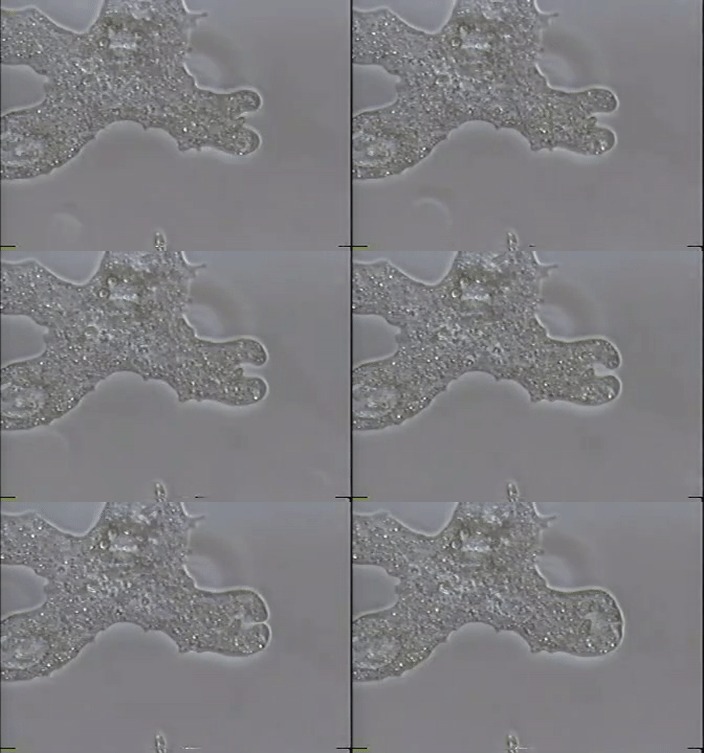
GIF: Mode of nutrition in Amoeba
Steps involved in the mode of nutrition in Amoeba
The following steps are involved in the mode of nutrition in Amoeba:
- Ingestion
- Digestion
- Absorption
- Assimilation
- Egestion
Ingestion
Food intake is called ingestion. Amoeba does not have any specialised entrance for taking food inside. The development of pseudopodia around the food particle helps in engulfing the food particle. A food vacuole is formed when food is absorbed long with a small quantity of water from its surrounding medium. This food vacuole serves as the makeshift stomach of the Amoeba. Feeding in Amoeba is called microphagy because it consumes smaller bits of food particles.
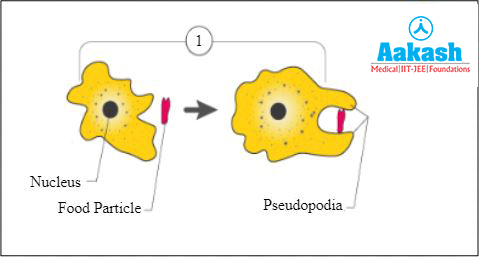
Fig: Ingestion in Amoeba
Digestion
When complex organic food molecules such as carbohydrates and fats are broken down into a simpler form, this process is called digestion. Enzymes speed up this reaction by acting as biological catalysts.
Amoeba is capable of intracellular digestion. This means that digestion takes place within the cell. For the food particles to be easily absorbed by the Amoeba, they need to be broken down into smaller particles. First the cytoplasmic streaming transports the food vacuoles much deeper inside the cells. There these food vacuoles join with lysosomes that contain enzymes to form phagolysosomes. The enzymes enter the food vacuoles and act on the food present there. Proteinase and amylase are the two major enzymes found in Amoeba. Amylase helps in dissolving complex carbohydrates into simple carbohydrates. Proteinase is an enzyme that degrades protein molecules into a simpler form, such as amino acids.
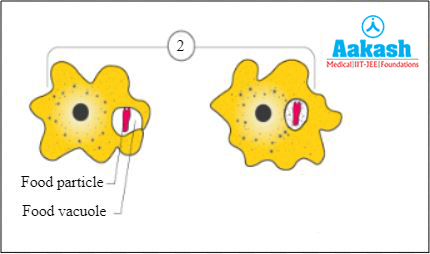
Fig: Digestion in Amoeba
Absorption
After digestion, the next step is absorption. The digested food is first absorbed by the cytoplasm by a process known as diffusion. Once the digested food is absorbed from the vacuole, it rapidly disintegrates and degenerates as it does not have any role now. The excess food is getting stored in the form of lipids and glycogen.
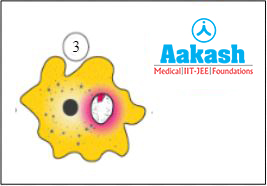
Fig: Absorption in Amoeba
Assimilation
It is a mechanism by which nutrients are absorbed and used to meet the requirements of cells. This is required to perform the various activities to maintain life. During assimilation, the absorbed food particles are transformed into protoplasmic elements in the Amoeba. Glucose is used in respiration to generate energy. Amino acids are used to form new proteins for development and growth. Assimilation helps Amoeba in growing in size and it also helps in reproduction.
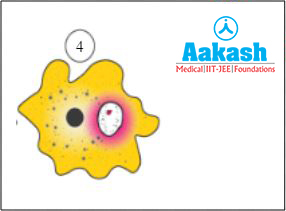
Fig: Assimilation in Amoeba
Egestion
It is the process of removing waste materials or undigested food particles from the body. There is no special opening in the body of the Amoeba for egestion. The food vacuoles with the undigested waste materials reaches the surface of the cell and unites with the cell membrane. The cell membrane ruptures at that particular point where the vacuole attaches, and the undigested food is expelled out. This process is called exocytosis.
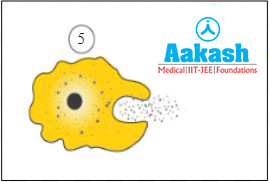
Fig: Egestion in Amoeba
Practice Problems
1. Read the following statements and select the correct option.
(P) Amoeboid protozoans live in freshwater, sea water or moist soil.
(Q) Marine amoeboids have silica shells on their surface.
- Only P is correct
- Only Q is correct
- Both P and Q are correct
- Both P and Q are incorrect
Solution: Amoeba are protozoans characterised by the presence of finger-like extensions called pseudopodia or false feet. They belong to the Kingdom Protista and hence are unicellular eukaryotic organisms. Amoeboid protozoans possess pseudopodia and they do not have definite cell shape. They can be found in seawater (marine), fresh water and damp soil. Radiolarians are marine amoeboids and they have a central perforated capsule and a fine framework made of silica. The silica framework is found inside the organism but not on the surface. The protoplasm outside the capsule is responsible for formation of pseudopodia. Hence, the correct option is (c).
2. Parasitic amoeboid protozoan is ___________.
(a) Amoeba
(b) Trypanosoma
(c) Entamoeba
(d) Paramoecium
Solution: Amoeba is an amoeboid protozoan that has a phagocytic mode of nutrition and is free-living and seen in freshwater. It normally feeds on its prey by moving towards it and surrounding it with the help of pseudopodia or false feet. Entamoeba are amoeboid protozoans that have a parasitic mode of nutrition. They have an amoeboid structure with pseudopodia. These infect humans and reside in their colon and cecum. Entamoeba histolytica causes amoebic dysentery. Hence the correct option is (c).
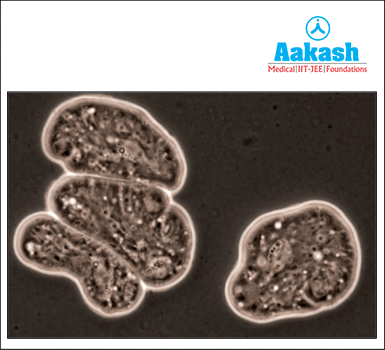
Fig: Entamoeba histolytica
3. The mode of nutrition in Amoeba is ______________.
- Holozoic
- Autotrophic
(c) Photosynthetic
(d) Chemosynthetic
Solution: Nutrition in an Amoeba occurs by a process called phagocytosis. In this process the entire organism engulfs the food it is planning to eat. Amoeba shows a holozoic type of nutrition or ingestive nutrition. In this method an organism consumes a variety of organic material, which then undergoes a series of metabolic processes such as digestion, absorption, assimilation and egestion in their body. Hence the correct option is (a).
GIF: Nutrition in Amoeba

4. Arrange the steps involved in the mode of nutrition in Amoeba in the correct order.
- Ingestion, Digestion, Absorption, Assimilation, and Egestion
- Ingestion, Digestion, Assimilation, Absorption, and Egestion
(c) Ingestion, Digestion, Absorption, Egestion, and Assimilation
(d) Digestion, Ingestion, Absorption, Assimilation, and Egestion
Solution: Amoeba shows a holozoic type of nutrition or ingestive nutrition. In this method an organism consumes a variety of organic material, which then undergoes a series of metabolic processes such as digestion, absorption, assimilation and egestion in their body.
- Ingestion - It is the taking in of the food into the body. This occurs by absorption or swallowing.Amoeba pushes out the false feet or pseudopodia to encircle the food particles and engulfs it. This results in the formation of a food vacuole.
- Digestion - The food vacuoles are transported deeper into the cell first in this step. This food vacuole then joins with the lysosome to form the phagolysosome. With the help of the biological catalysts or digestive enzymes, then the large particles are broken down to the simpler molecules.
- Absorption - In this step the various nutrients present in the digested food particles are absorbed into the cytoplasm by diffusion.
- Assimilation - In this step they obtain energy from the absorbed food molecules. The excess food is getting stored in the form of lipids and glycogen. This energy is required to perform various life processes.
- Egestion - It is the process of removal of undigested waste materials. Hence the correct option is (a).
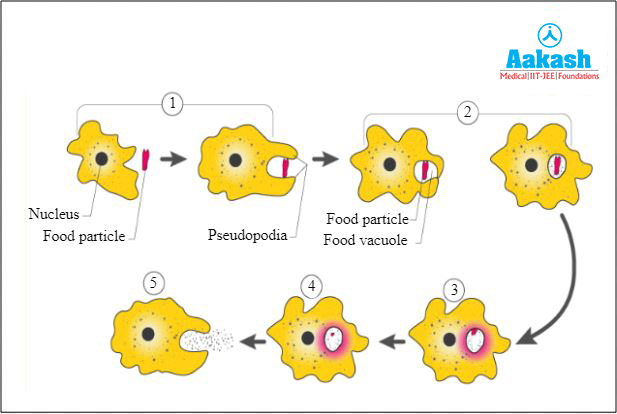
Fig: Steps involved in the mode of nutrition in Amoeba
FAQs
1. What can an Amoeba do to humans?
Answer: Parasitic Amoeba like Entameba histolytica infect humans. The common symptoms of amebiasis include nausea (a feeling of vomiting), weight loss, diarrhoea, stomach tenderness, and fever. But if the parasite invades other parts of the body other than the intestine then it can result in serious infection. Examples include liver abscess (pus formation).
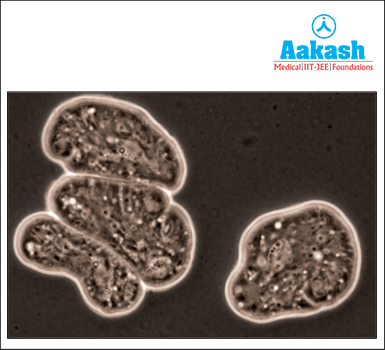
Fig: Entamoeba histolytica
2. What is the normal habitat of Amoeba?
Answer: The Amoeba can be seen in warm freshwater (rivers and lakes), geothermal water (hot springs) and warm water discharges (power plants and industries).
3. What normally do Amoeba eat?
Answer: Amoeba eat bacteria, algae, other small protozoans, and tiny particles of dead animal and plant matter.
4. Which temperatures will be able to kill Amoeba?
Answer: Heating water to 50ºC for 5 minutes will kill Amoeba. But Amoeba and their cysts will be able to tolerate temperatures of 65ºC for 1 - 3 minutes. Temperatures below 20ºC normally inhibit the reproduction in Amoeba and temperatures below 10ºC cause degradation.
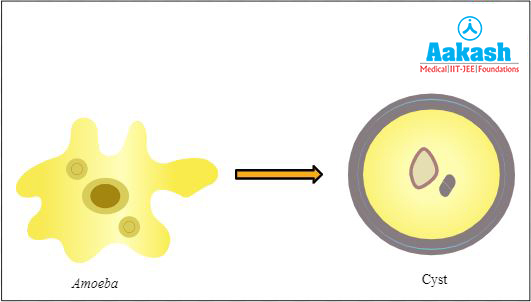
Fig: Amoeba

 Call Now
 Let's Chat
 Share
Share