-
Call Now
1800-102-2727


Means of Transport, Practice Problems and FAQs

You might have seen the military personnel at the entrance of some museums, our borders or at airports, who do not allow everyone to enter inside the premises. Only some specific people with proper documents will be allowed to enter these places.
Fig: Military personnels

Just like that, if we consider a plant body, the materials have to travel from one part to another and the transportation happens through cells. The movement of materials happens inside the cells. Then from one cell to another cell within the tissue, movement of materials occurs. Since different types of molecules are transported through the cells, different types of transportation processes are also present. What are those processes then? Let’s make a detailed discussion on this topic in this article.
List of contents
Means of transport
Essential substances like water, minerals nutrients, organic nutrients and plant growth regulators have to be transported in the plants. It depends on the nature and size of the materials and also on the direction of the transport. Each organ in a plant will take up and give out materials. All these transportation processes in a plant takes place through following methods:
- Diffusion
- Facilitated diffusion
- Active transport
Let's discuss these methods in detail.
Diffusion
The random movement of molecules from the higher concentration to the lower concentration until they attain equilibrium is known as diffusion. It occurs according to the concentration gradient. It is also called simple diffusion.
Fig: Diffusion

Characteristics of diffusion
Diffusion is a slow process. It is independent of the living system. Diffusion is for gases and liquids. Passive movement of molecules takes place here. Diffusion occurs over short distances like cell to cell, one part of the cell to another or across intracellular spaces. Energy is not utilised in this method. In plants, CO2 and O2 are released and absorbed by diffusion.
Factors affecting the rate of diffusion
There are some factors that affect the rate of diffusion. They are the concentration gradient, temperature, pressure, density, surface area of the membrane etc. Let's discuss one by one.
Concentration gradient
Concentration gradient is directly proportional to the rate of diffusion. When the concentration gradient is high across the membranes, the molecules diffuse to neutralise the difference in concentration. After diffusion, equilibrium is achieved.
Fig: Concentration gradient

Temperature
It is directly proportional to the rate of diffusion. The rise in temperature leads to an increase in the kinetic energy of molecules. Then the molecules get agitated and cross the membrane.
Fig: Temperature

Pressure
Pressure is also directly proportional to the rate of diffusion. An increase in pressure increases the kinetic energy of molecules. Hence the rate of diffusion of the molecules across the membranes increases.
Fig: Pressure

Density
It is inversely proportional to the rate of diffusion. According to Graham’s law, the denser the molecule, the lesser the rate of diffusion.
Fig: Density

Surface area of the membrane
Surface area is directly proportional to the rate of diffusion. As the surface area increases, the number of molecules that diffuse also increases.
Fig: Surface area

The security system of the cell’s plasma membrane
We know that the cell membrane is made up of lipid bilayer. Do you think all the molecules are allowed to pass through the membrane? The answer is no. Molecules that are lipid-soluble or lipophilic are allowed to cross the lipid bilayer via diffusion. Molecules that are not lipid-soluble cannot cross the lipid membrane. So there should be a way for all the other molecules that cannot pass through the lipid bilayer. One such process is called facilitated diffusion.
Fig: Transport of lipid soluble and lipid insoluble materials

Facilitated diffusion
Facilitated diffusion is the movement of lipid insoluble molecules through the cell membranes. It occurs with the help of specialised proteins. There will be no expenditure of energy across the concentration gradient. The specialised proteins are highly specific to the molecule that is being transported. Specialised proteins transport only a few molecules across the membrane. Bulk transport of molecules does not occur. They are also sensitive to inhibitors.
GIF: Facilitated diffusion

Proteins involved in facilitated diffusion
The specialised proteins that are involved in facilitated diffusion can be classified into three types. They are as follows:
- Channel proteins
- Gated channel proteins
- Carrier proteins
Now it’s time to discuss more about the specialised proteins.
Fig: Types of specialised proteins

Channel proteins
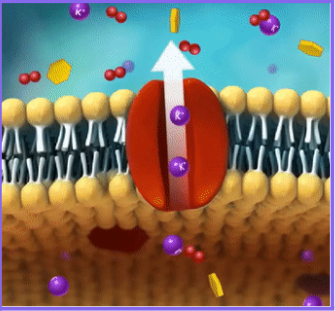
Channel proteins act as pores in the membrane that allow molecules to pass through it. It can be classified into porins and aquaporins,
Porins
Porins are large proteins that are present in the outer membrane of plastid, mitochondria, and bacteria. Small proteins can easily pass through the membrane.
GIF: Porins
Aquaporins
Special channel proteins transport only water molecules called aquaporins. They are made up of eight different types of proteins.
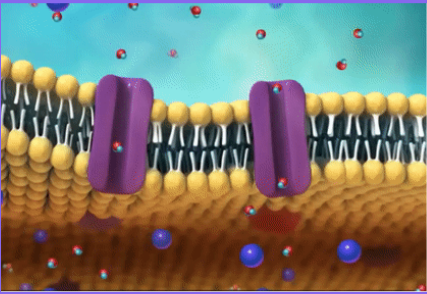
GIF: Aquaporins
Gated channel proteins
Gated channel proteins have a structure with a gate. They have binding sites which are specific to proteins that are being transported. Molecules diffuse across membranes as the gate opens.
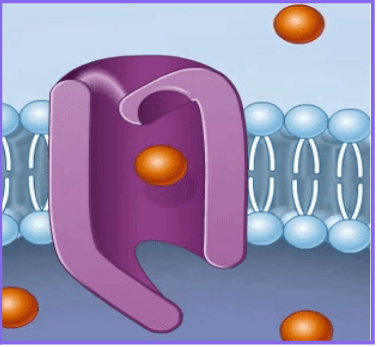
Fig: Gated channel proteins
Example of gated channel proteins is the NMDA receptor. It is a glutamate ion channel that is activated when glycine and glutamate bind to it. Some inducers open gated channel proteins like AMPA receptors (α-amino-3-hydroxy-5-methyl-4-isoxazolepropionic acid receptor). They are stimulated by temperature, chemical stimulus, and electrical signals.
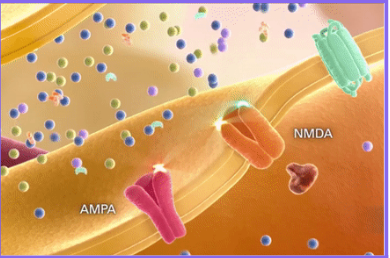
GIF: NMDA receptor
Carrier proteins
Carrier proteins undergo structural configuration changes and transport the molecules.
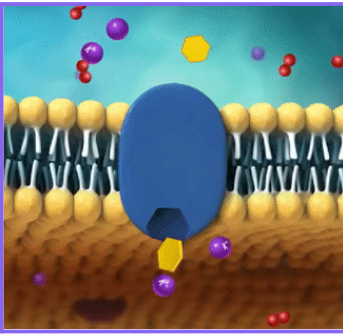
GIF: Carrier proteins
Types of facilitated diffusion
There are different types of facilitated diffusion on the basis of the number of molecules passing through the cell membrane. They are uniport, symport and antiport.
Fig: Types of facilitated diffusion

Uniport
It is the movement of a single type of molecule across the membranes through proteins unidirectionally.
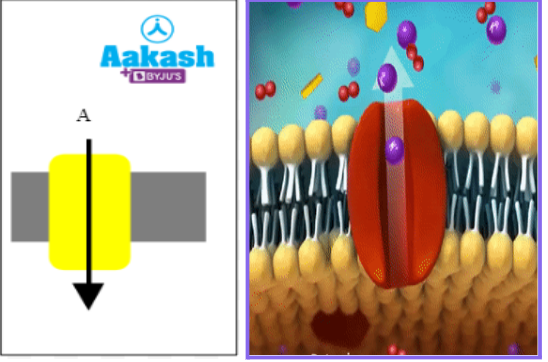
Fig: Uniport GIF: Uniport
Symport
It is the movement of two types of molecules in the same direction. It is a coupled diffusion.
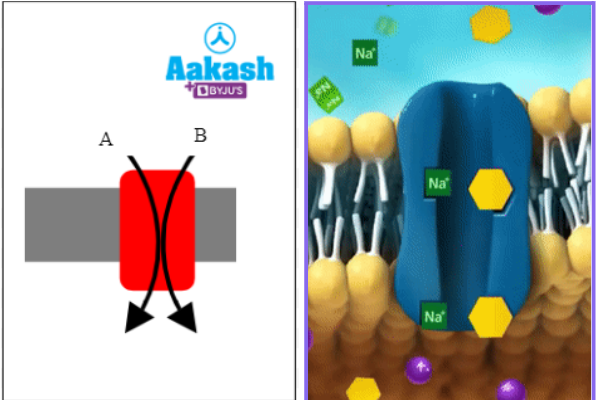
Fig: Symport GIF: Symport
Antiport
It is the movement of two types of molecules in the opposite direction. It is also a coupled diffusion.
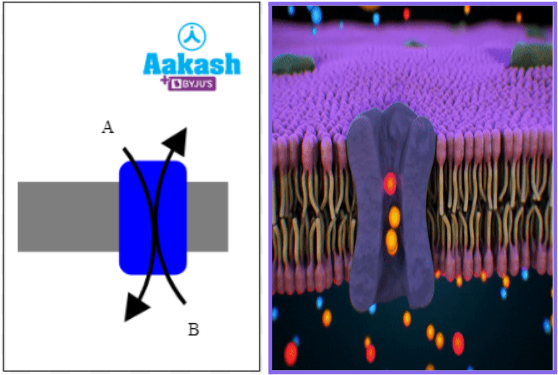
Fig: Antiport GIF: Antiport
Active transport
Transportation against the concentration gradient is called active transport. ATP is required for active transport. It is highly specific and sensitive to inhibition. Active transport requires the presence of specific membrane proteins. It occurs against the concentration gradient.
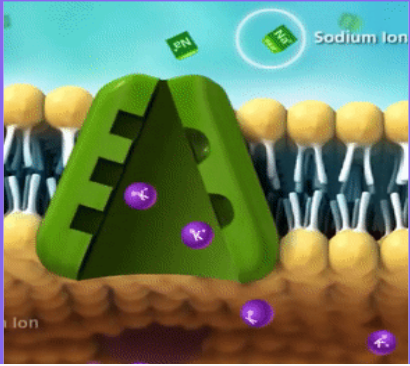
GIF: Active transport
Pumps
Different proteins play an important role in both active and passive transport. They are called pumps. They are the proteins that use energy and transport substances from lower to higher concentration or perform the uphill transport. When all proteins are used, it reaches a saturation and the transport rate reaches maximum.
Comparison of different transport processes
|
Properties |
Simple diffusion |
Facilitated diffusion |
Active transport |
|
Requires special membrane proteins |
❌ |
✅ |
✅ |
|
Highly selective |
❌ |
✅ |
✅ |
|
Transport saturates |
❌ |
✅ |
✅ |
|
Uphill transport |
❌ |
❌ |
✅ |
|
Requires ATP energy |
❌ |
❌ |
✅ |
|
Movement of transport proteins |
❌ |
✅ |
✅ |
|
Response to protein inhibitors |
❌ |
✅ |
✅ |
Practice Problems
Q1. Which among the following statements are incorrect?
A. Transport proteins are needed by both facilitated diffusion and active transport.
B. Porins are carrier proteins
C. The carrier proteins needed by facilitated and active transport are specific.
D. There is no energy requirement to pump molecules against a concentration gradient in the mechanism of active transport.
E. Transport rate will reach a saturation point when all the transport proteins are engaged or used.
a. IV and V
b. I, II and III
c. II and IV
d. I, III and V
Solution: Porins are channel proteins that form pores in the membrane and facilitate the transport of molecules across the membrane. Energy is required for the transport of molecules from a region of lower concentration to higher concentration against a concentration gradient. This type of transport is called active transport. Hence the correct option is c.
Q2. The image shown below is the movement of molecule A across the plasma membrane by facilitated diffusion. The type of facilitated diffusion shown in the image is _______________.

A. Symport
B. Uniport
C. Antiport
D. simple diffusion
Solution: Molecule A is moving across the membrane with the help of a carrier protein. There are mainly three types of facilitated diffusion such as uniport, symport and antiport. In the uniport type of movement, carrier proteins transport a single molecule across the membrane. Hence the correct option is b.
Q3. The common feature shared both by simple diffusion and facilitated diffusion is
A. both require energy for the transport of substances
B. both involve the movement of substances from regions of lower concentration to higher concentration without expenditure of energy
C. both require a special carrier molecule to move substances across the membrane
D. both the processes involve the movement of substances from higher concentration to lower concentration without the expenditure of energy or ATP
Solution: Simple diffusion and facilitated diffusion are means of short-distance transport of molecules or ions. In facilitated diffusion and simple diffusion, the molecules move from higher concentration to lower concentration without the expenditure of energy (ATP), that means along the concentration gradient. Hence the correct option is d.
Q4. Select the correct option for the table given below.
|
Facilitated diffusion |
Active transport |
|
|
Transport saturates |
Yes |
1 |
|
Uphill transport |
2 |
yes |
A. (1) is yes and (2) is no
B. (1) is no and (2) is yes
C. (1) is yes and (2) is yes
D. (1) is no and (2) is no
Solution: Facilitated diffusion and active transport are means of short distance transport in plants. The substances move from higher concentration to lower concentration in facilitated diffusion. Hence this type of transport is commonly called downhill transport. This transport is aided with the help of membrane proteins. In active transport, the substances move from a region of lower concentration to higher concentration and this type of transport is called uphill transport. This is done with the help of specialised proteins called pumps. The number of membrane proteins involved both in facilitated diffusion and active transport is limited and hence they can be saturated if the concentration of molecules to be transported is high. Hence the correct option is a.
Q5. What are the differences between porins and aquaporins?
Answer: Both porins and aquaporins are channel proteins. Channel proteins act as pores in the membrane that allow molecules to pass through it. Porins are large proteins that are present in the outer membrane of plastid, mitochondria, and bacteria. Small proteins can pass through the membrane. Special channel proteins transport only water molecules called aquaporins. They are made up of eight different types of proteins.
Q6. How does facilitated diffusion differ from simple diffusion?
Answer: The random movement of molecules from the higher concentration to the lower concentration until they attain equilibrium is known as simple diffusion. Diffusion uses no energy. Facilitated diffusion is the movement of lipid insoluble molecules through the cell membranes. It occurs with the help of specialised proteins. There will be no expenditure of energy across the concentration gradient. The specialised proteins are highly specific to the molecule that is being transported.
Q7. Explain gated channel proteins with an example?
Answer: Gated channel proteins have binding sites which are specific to proteins that are being transported. Molecules diffuse across membranes as the gate opens. Example of gated channel proteins is the NMDA receptor. It is a glutamate ion channel that is activated when glycine and glutamate bind to it. Some inducers open gated channel proteins like AMPA receptors (α-amino-3-hydroxy-5-methyl-4-isoxazolepropionic acid receptor). They are stimulated by temperature, chemical stimulus, and electrical signals.
Q8. What are pumps?
Answer: Different proteins play an important role in both active and passive transport. They are called pumps. They are the proteins that use energy. They transport substances from lower to higher concentration or the uphill transport. When all proteins are used, it reaches a saturation and the transport rate reaches maximum.
FAQs
Q1. Can sweating be considered as active or passive transport?
Answer: Transport of sodium across the cellular membrane is considered as an active process. Thus sweat secretion or sweating in the clear cells and sodium reabsorption in the duct normally requires ATP.
Q2. What makes channel proteins different from carrier proteins?
Answer: Channel proteins are membrane transport proteins with a hydrophilic channel through which certain molecules or ions can pass. Examples include aquaporins used for water transport. Carrier proteins bind to molecules and alter their form in order to transport them across the membrane. Examples include glucose transporter.
Q3. How are aquaporins in plants classified?
Answer: Plant aquaporins are also critical for mineral nutrition and ion detoxification, both of which are required for boron, silicon, arsenic, and bicarbonate homeostasis. Plant aquaporins are divided into five homologous subfamilies or groups. They are as follows:
- Intrinsic Protein of the Plasma Membrane (PIP)
- Tonoplast Intrinsic Protein (TIP) is a protein found in tonoplasts
- Intrinsic Protein-like Nodulin-26 (NIP)
- Small Basic Intrinsic Protein (SIP) is a small basic intrinsic protein
- X Intrinsic Protein (XIP).
Q4. Is the transport of water through the xylem considered as active or passive?
Answer: The transport of water and dissolved minerals from roots to leaves is considered mostly as a passive process. But here little active transport also occurs. Phloem tissue mainly helps in the transport of dissolved sugars up or down a plant. It uses active transport and osmosis for this purpose.
YOUTUBE LINK: Need to be created
Related Topics
|
Plant water relations: Water potential, solute potential, pressure potential, osmosis, osmotic pressure and osmotic potential |
|
Plant water relations: Plasmolysis and Imbibition, Practice problems and FAQs |
|
Difference between diffusion and osmosis, difference between active and passive transport, difference between endosmosis and exosmosis |

 Call Now
 Let's Chat
 Share
Share