-
Call Now
1800-102-2727



Food Sources: Animal and Plant Products, Practice Problems and FAQs
The priorities of food are different in people. Some like vegetarian foods and some others like non vegetarian foods. But for proper growth and the metabolism of our body we need to have a balanced diet. What do you mean by a balanced diet? It should include all the food items that provide all the nutrients needed for our body. So can you tell me how we get such a diet? What food should we include in such a diet?
A balanced diet should contain fruits, vegetables, eggs, milk, meat etc. All these foods should be included in a proper ratio. But how come this is possible for those who do not eat meat and eggs? They have to compensate for it with some other vegetarian foods for proper nutrition.
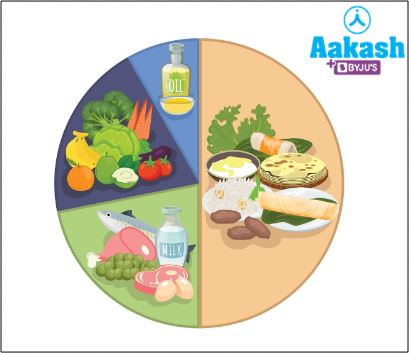
Fig: Balanced diet
Now think about the source of all these food items? Where do we get all this food from? There are mainly two types of sources for food and they are plants and animals. From these two sources we get all the components for a healthy diet directly or indirectly. So in this article we are going to discuss more about our food sources.
Table of contents
- Food and their sources
- Animal products
- Plant products
- Practice Problems
- FAQs
Food and their sources
Any substance that is consumed by an organism for their nutritional support is called food. A food can be a plant, animal, fungus or any of the substances produced by all these. A balanced food should contain carbohydrates, fats, proteins, vitamins, or minerals. The food taken by the organisms convert it into assimilatory form and the waste products get excreted out. Examples include honey, meat, eggs etc.
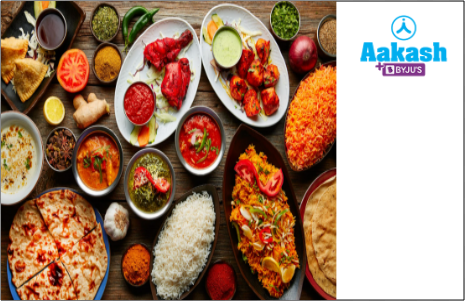
Fig: Different types of food
Classification of animals based on feeding habits
Different organisms have various feeding behaviour and it can be herbivorous, carnivorous, omnivorous etc. They are classified on the basis of the food items they feed. It depends on their unique metabolism, anatomy, environment and niche.
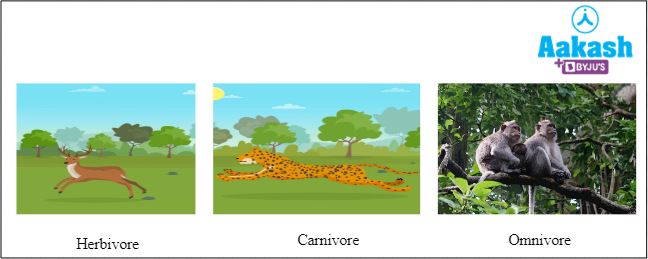
Fig: Types of animals on the basis of their feeding habits
Food habit of human beings
Human beings are omnivores which can feed on both animals and plants. The food materials of humans range from small algae, small insects to large creatures like sharks. We also prefer eating vegetables, fruits, milk, honey etc. which are the products obtained from plants and animals. Humans eat both raw and cooked foods.
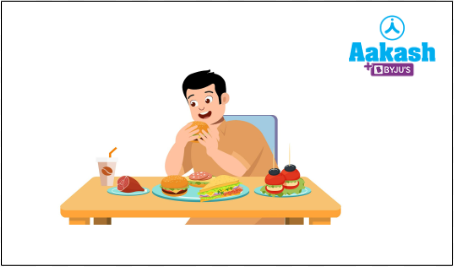
Fig: Food habit of human beings
Animal products
Animals are consumed directly or indirectly by humans. Most of the animal products are the important source of proteins and essential amino acids. The major animal products consumed by humans are as follows:
- Meat
- Egg
- Dairy products
- Honey
Meat
The animal flesh which is eaten as food is called meat. Animals were hunted by the man during early periods using their hand made tools. Now we have butcher houses for selling the meat and we still have the custom of killing animals at home for meat. Meat is rich with proteins, phosphorus, vitamins, iron, and zinc.
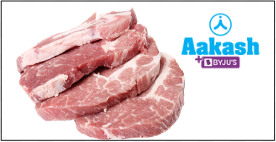
Fig: Meat
Animals used for meat
The common animals used for the meat production are as follows:
- Chicken
- Goat
- Fish
- Buffalo
- Pig
- Cow
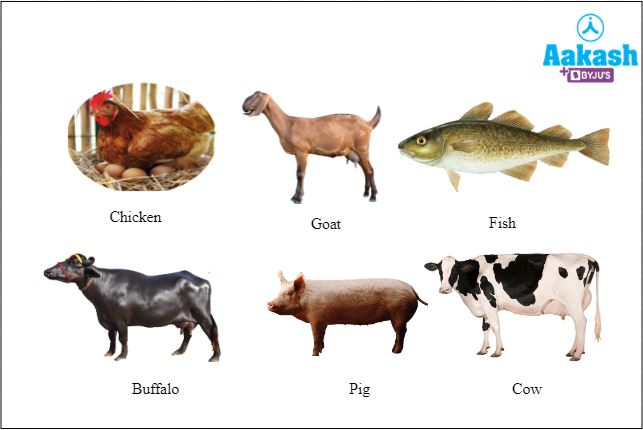
Fig: Animals used for meat production
People from different parts of the world eat various types of meat. It depends on the culture and availability of the animals in that region.
Types of meat
On the basis of the concentration of myoglobin in the muscle fire, the meat can be classified into two as follows:
- Red meat
- White meat
Red meat
The myoglobin rich meat is called red meat and it will be in red colour. Redness can also depend on the type of species, age of the animal and the fibre type. Red meat has high fat content. It is obtained from animals like cows, goats, pigs and sheeps.
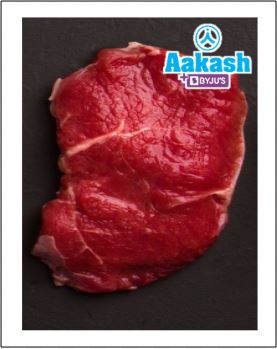
Fig: Red meat
White meat
The myoglobin less meat appears as white and called as white meat. White meat from chicken and fish has less fat content. It is healthier and easily digestible than red meat. It is obtained mainly from chicken, fish and turkey (wing and breast).
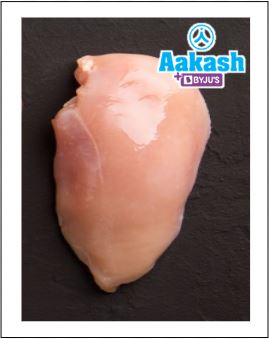
Fig: White meat
Eggs
Bird eggs were consumed by humans for thousands of years. Eggs are highly rich in proteins. It also contains vitamins, calcium, phosphorus, and iron. Eggs are consumed both raw and boiled.
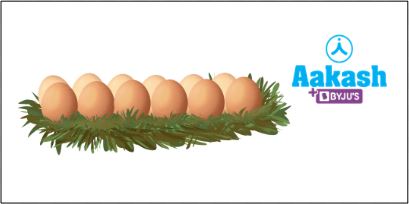
Fig: Eggs
Common poultry birds
Eggs of the birds like chickens, quails, ducks, and geese are commonly consumed. They are called poultry birds.
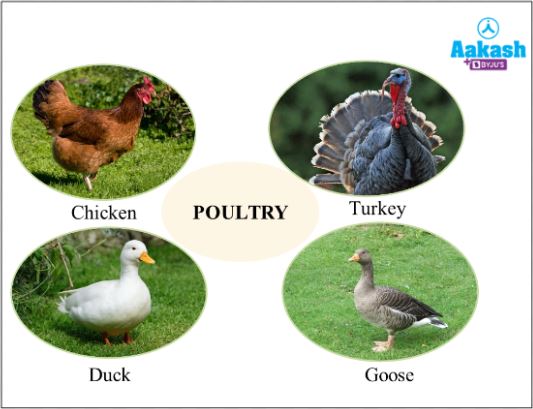
Fig: Common poultry birds
Roe and caviar
Eggs of other animals in the group of reptiles, amphibians and fishes are also consumed by humans. Fish eggs are called roe. The eggs of fishes from the sturgeon family Acipenseridae are called caviar.
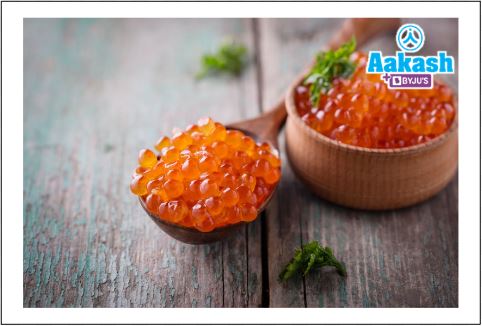
Fig: Roe
Milk
The white liquid food produced by the mammary glands of mammals is called milk. It is the primary source of nutrition for the young mammals. But as an agricultural product milk is collected from animals like cows, buffalos, goats, ewes etc. Milk is rich in protein (casein), lipids, salts, minerals and vitamins.

Fig: Milk
Dairy products
The food products that contain milk or made from milk are called dairy products. They are also known as lacticinia. The major dairy products are cheese, butter, yoghurt etc. The amount of lactose differs in various types of dairy products.
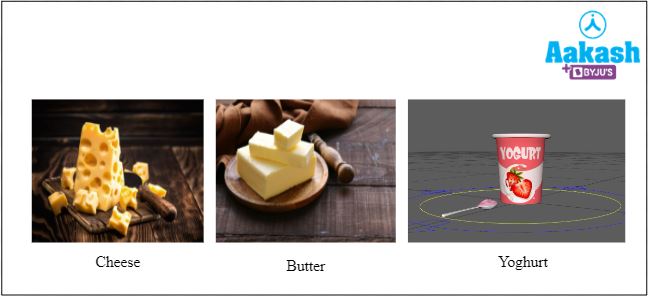
Fig: Dairy products
Honey
The sweet and viscous substance made by the bees (Apis) is called honey. Honey is formed in the beehives or colonies to nourish the bees.
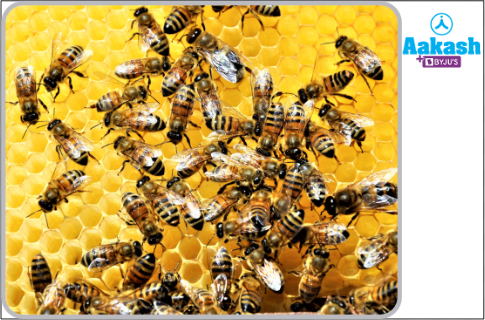
Fig: Honey Bee hive
Honey is collected from the beehives for human consumption and it is also collected artificially through apiaries.
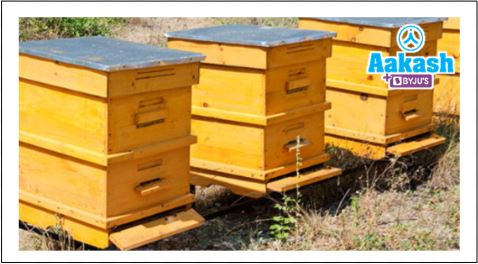
Fig: Apiaries
Honey contains many organic acids and amino acids. It also contains carbohydrates, proteins, fats and dietary fibres. It is made by bees from sugary plant secretions called nectar. Beeswax is considered as a naturally occurring wax secreted by honey bees for constructing honey combs mainly. It has a significant commercial value also. It is used in cosmetics and medicine.
Plant products
A wide variety of nutrients needed for the human body can be obtained through the plants. Most parts of plants are used as food by humans and they receive nourishment directly or indirectly from plants.
Edible parts of plants
Each part of a plant has a different chemical composition. The major parts of a plant that are edible are as follows:
- Fruits
- Seeds
- Leaves
- Flowers
- Roots
- Stem
Fruits
A sweet fleshy matured ovary of a plant is called fruits. Seeds of fruits can be inside (apple) or outside (cashew apple). They are mostly rich in fibres, vitamins and water. There are different types of fruits and some of them are as follows:
- Simple fruits – Mango, tomato etc.
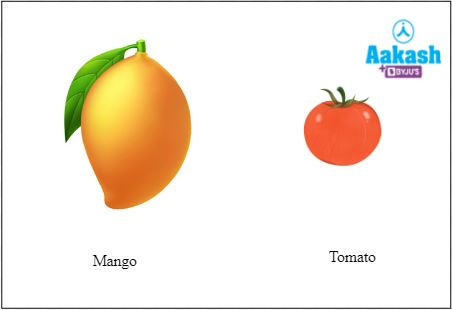
Fig: Simple fruits
- Aggregate fruits – Blackberry, strawberry etc.
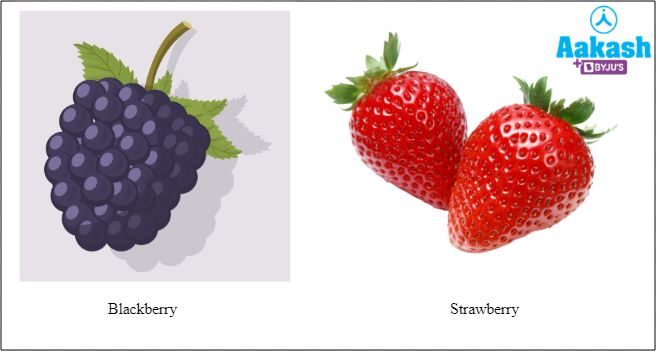
Fig: Aggregate fruits
- Multiple fruits – Orange, pineapple etc.
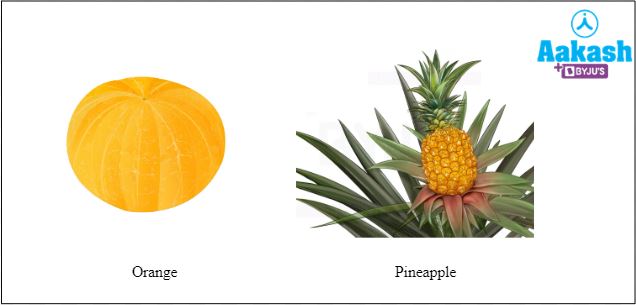
Fig: Multiple fruits
Seeds
A matured ovule with an embryonic plant enclosed in a protective outer covering is called a seed. It is composed of a food reserve and is nutrient rich. Many seeds are edible so that humans can derive nutrients from them. The seeds can be classified as follows:
- Cereals – Wheat (Triticum), Maize (Zea mays), Rice (Oryza sativa)etc.
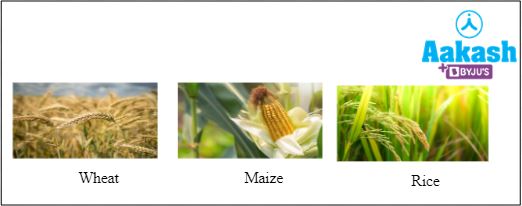
Fig: Cereals
- Legumes – Lentils, chickpeas, kidney beans etc.
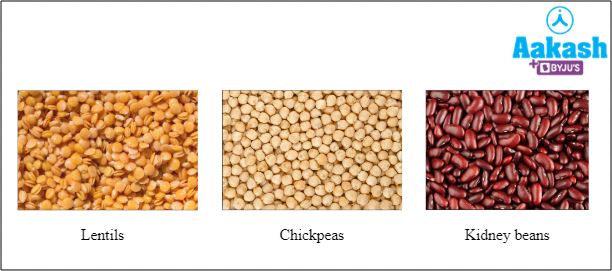
Fig: Legumes
- Nuts – Almonds, pistachios, walnuts etc.
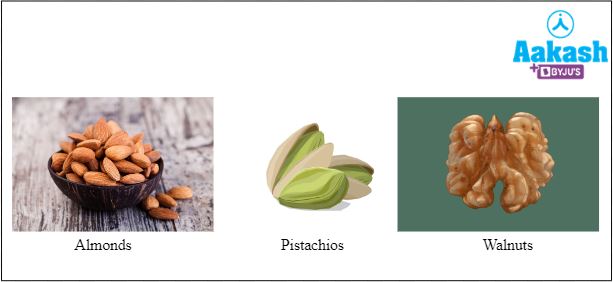
Fig: Nuts
Products from seeds
Products like cooking oils, beverages (coffee), spices (pepper, mustard) and other food additives can be obtained from the seeds.
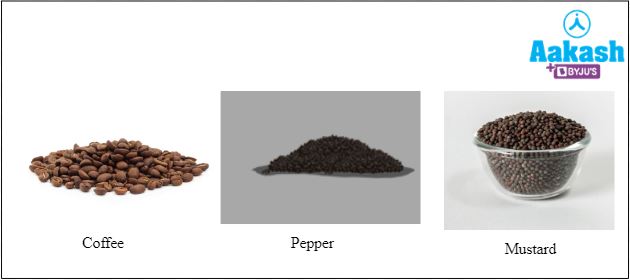
Fig: Edible products from seeds
Leaves
Leaves are the flattened, lateral outgrowths which are borne on the nodes of the stem. There are leafy vegetables and edible leaves.
Leafy vegetables
In some plants leaves are directly harvested as vegetables. Lettuce, spinach and silverbeet are the common leafy vegetables.
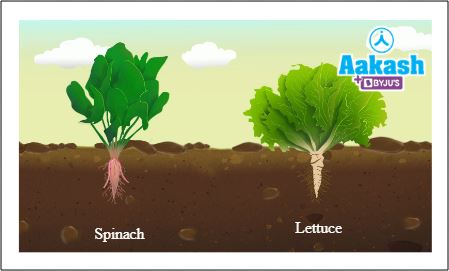
Fig: Leafy vegetables
Edible leaves
Apart from the leafy vegetables, there are some other leaves which are edible indirectly. Some of the examples are as follows:
- Tea leaves
- Basil leaves
- Mint leaves
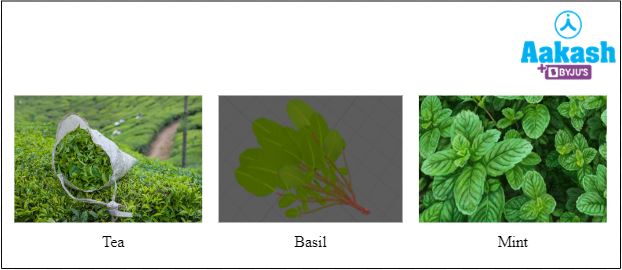
Fig: Edible leaves
Flowers
The flower is a modified shoots bearing condensed nodes. It is the reproductive part of the plant.
Edible flowers
Broccoli and cauliflower are two flowers, which are considered as a vegetable and eaten.
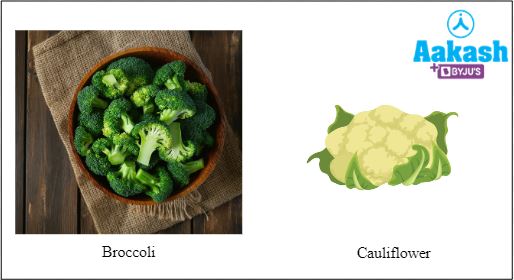
Fig: Flowery vegetables
Other edible flowers are marigold, chamomile etc.
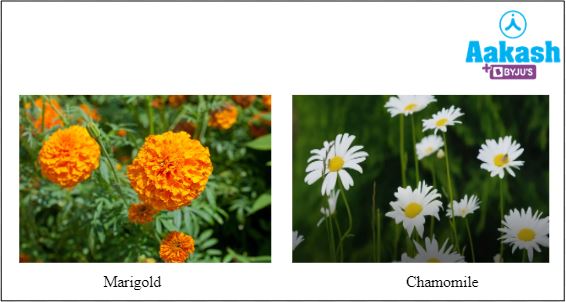
Fig: Edible flowers
Flower bud
It is a small terminal or lateral protuberance on the stem of a plant that will develop into a flower. Clove is an unopened, dried flower bud of Syzygium aromaticum which is used as a spice.
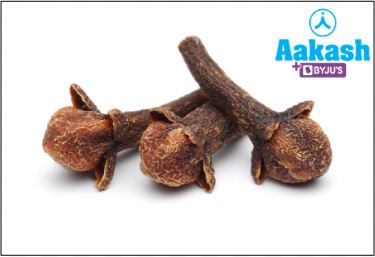
Fig: Clove
Roots
The root is a non-green, cylindrical descending part of the plant that normally grows into the soil. Adventitious roots and tap roots can store food in them and they are edible. Examples include the following:
- Sweet potato
- Taro
- Onion
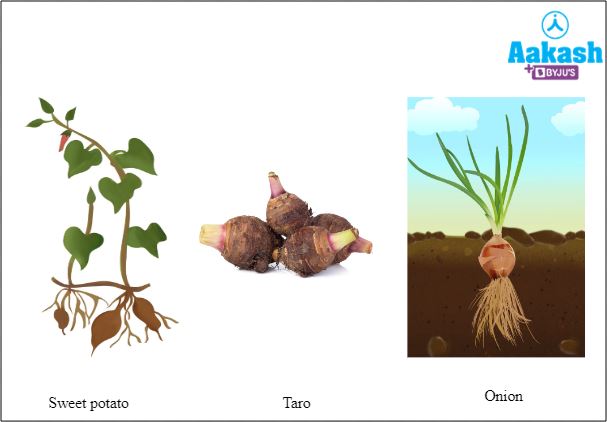
Fig: Edible roots
Stem
It is the main body or stalk of the plant that normally rises above the ground. Some of the stems are edible as such and some indirectly through the production of essential oils. Potato and ginger are examples of stems which are edible.
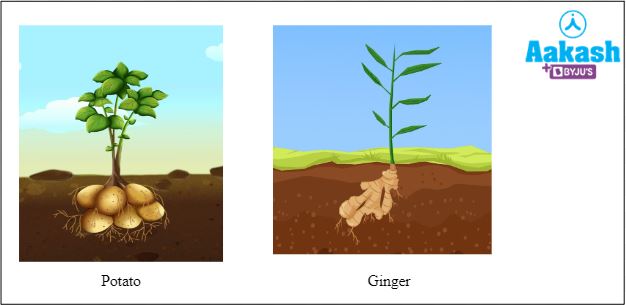
Fig: Edible stems
Practice Problems
1. Which of the following is not an example of an animal product?
- Meat
- Egg
- Clove
- Honey
Solution: Animals are consumed directly or indirectly by humans. Most of the animal products are the important source of proteins and essential amino acids. The major animal products consumed by humans are meat, egg, dairy products and honey. Clove is an unopened, dried flower bud of Syzygium aromaticum which is used as a spice. Hence the correct option is c.
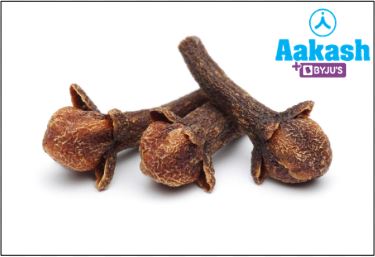
Fig: Clove
2. Which of the following is wrong about red meat?
i) The myoglobin rich meat is called red meat
ii) Red meat has high fat content
iii) Red meat is healthier and more digestible
iv) Red meat is obtained from chicken, fish and turkey
- i and ii
- i and iii
- ii and iv
- iii and iv
Solution: On the basis of the concentration of myoglobin in the muscle fire, the meat can be classified into two and they are red meat and white meat. The myoglobin rich meat is called red meat and it will be in red colour. Redness can also depend on the type of species, age of the animal and the fibre type. Red meat has high fat content. It is obtained from animals like cows, goats, pigs and sheeps. If myoglobin is less, then the meat appears as white and called as white meat. White meat from chicken and fish has less fat content. White meat is healthier and digestible than red meat. It is obtained mainly from chicken, fish and turkey (wings and breast). Hence the correct option is d.
3. Find the odd group of products from the following?
- Potato, yam, onion
- Tea leaves, basil leaves, mint leaves
- Melons, tomatoes, avocados
- Almonds, pistachios, walnuts
Solution: Tap roots and adventitious roots can store food in them and they are edible. The common examples are sweet potato, yam and onion. Some of the stems are edible as such and some indirectly through the production of essential oils. Potato and ginger are examples of stems which are edible. Hence the correct option is a.
4. Which is the protein present in the milk?
- Collagen
- Casein
- Myosin
- Albumin
Solution: The white liquid food produced by the mammary glands of mammals is called milk. It is the primary source of nutrition for the young mammals. But as an agricultural product milk is collected from animals like cows, buffalos, goats, ewes etc. Milk is rich in protein (casein), lipids, salts, minerals and vitamins. Hence the correct option is b.
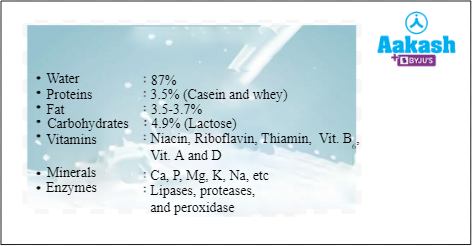
Fig: Composition of milk
FAQs
1. What is lactose intolerance?
Answer: The condition in which the digestion of sugar (lactose) in the milk is not possible by the digestive system is called lactose intolerance. This causes diarrhoea, bloating and gas formation after drinking milk or dairy products.
2. Who are vegans?
Answer: Those people who do not consume food containing any ingredients from an animal source are called vegans.
3. Which food can last over 100 years?
Answer: Honey is the only food which can last forever. The reason is that the bacteria can not affect the honey, because of the presence of sugar in them.
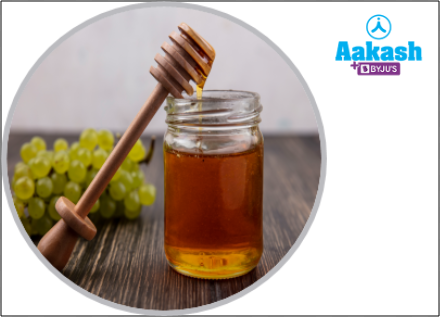
Fig: Honey
4. What are glow foods?
Answer: Those foods which help to make our immune system strong are called glow foods. All the vegetables and fruits are included under the glow foods.

 Call Now
 Let's Chat
 Share
Share