-
Call Now
1800-102-2727


Floral Formula of Hibiscus

Rosa sinensis, hibiscus, china rose, or shoe flower is a flowering plant or angiosperm belonging to the family Malvaceae. The genus Hibiscus is well-adapted to the environmental conditions of tropical and subtropical regions with warm temperature features.
Table of Contents:
- Floral Formula of Hibiscus
- Components of Floral Formula of Hibiscus
- Characteristic Features of the Malvaceae Family
- Importance of Hibiscus
Floral Formula of Hibiscus
The floral formula combines symbols, characters and numbers representing the arrangement of flower components. The floral formula of hibiscus is given in the image below.
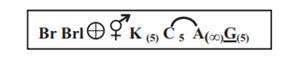
Image: Floral formula of rosa sinensis (Hibiscus)
Components of Floral Formula of Hibiscus
Each of the stated symbols is represented as follows:
- Br refers to a bracteate flower.
- Brl symbolises bracteolate condition.
- ⊕ is interpreted as an actinomorphic flower comprising radial symmetry.
- ⚥ is indicative of the bisexual nature of the flower, thus comprising both androecium and gynoecium.
- K(5) indicates the presence of five sepals in gamosepalous condition, evident by brackets.
- C5 is indicative of a similar condition for petals. However, the absence of a bracket represents a free (or apopetalous) condition.
- A(∞) represents an indefinite number of stamens in the androecium.
- A curved attaching line from C5 to A(∞) indicates the epipetalous feature, where the stamens are attached to the corolla (petals).
 represents the superior ovary composed of five fused carpels.
Characteristic Features of the Malvaceae Family
The flowers in the Malvaceae family have the following characteristics:
- Flowers: Either bracteoles or epicalyx. Actinomorphic, bracteate, dichlamydeous, showy, pentamerous, hypogynous, heterochlamydeous bisexual, complete, pedicellate and mucilage in floral structures. Brightly coloured with extrafloral nectaries.
- Androecium: Contains numerous stamens fused together to form a tubular structure. They are monadelphous.
- Anthers: Uniform, monothecous, spiny, monotonous and extrorse dehiscing longitudinally or transversely. Pollen grains are spherically shaped and larger sized.
- Gynoecium: It is syncarpous, multi carpellary and multilocular while being attached to the superior ovary and axile placentation
- Inflorescence: Cymose, solitary cymes in the raceme or leaf axil.
- Calyx: Green with five sepals. Valvate aestivation with odd sepals placed posteriorly.
- Corolla: Five petals in polypetalous condition with different colours. It has twisted aestivation and is basal adnate with the staminal column.
- Fruit: Mostly aborted. Most members exhibit loculicidal capsule production.
- Seeds: Maybe one or more seeds produced per locule, exalbuminous with a curved embryo.
- Root: Tap root system with profuse branching.
- Stem: Herbaceous, branched, erect, woody, aerial, cylindrical with the presence of satellite hairs or trichomes in young portions. The stem is fibrous with mucilaginous sap.
- Leaves: Simply, palmately lobed, stipulate, petiolate, alternate and ovate or cordate. The margins are serrate or entire with unicostate or multicostate venation and pinnate reticulate. Covered by stellate hair while displaying mucilaginous ducts.
Importance of Hibiscus
The hibiscus is used as ornamental, traditionally and religiously. Its different uses are as follows:
- As herbal tea
- Medicines for treating infections, increasing breast milk production, and treating high cholesterol and blood pressure.
- To control hair loss due to its high composition of vitamin C and amino acids
- As a diuretic and mild laxative
- Treats cancer, nerve and cardiac diseases
- As an ornamental plant in houses, parks and gardens
- Cut flower arrangements
- Source of natural dye
Practice Problems
Q1. Which of these plants belong to the Malvaceae family?
a. Cotton
b. Mallow
c. Lady's finger
d. All of the above
Ans. d. All of the above
All of the given options, including Hibiscus, belong to the Malvaceae family.
Q2. What pollination is seen in the Malvaceae family?
a. Wind
b. Air
c. Water
d. Entomophilous
Ans. d. Entomophilous
The insects are attracted by the bright colours of the flowers.
Q3. Which type of fruit is seen in the Malvaceae family?
a. Schizocarp
b. Capsule
c. Non-capsulated
d. Both a and b
Ans. d. Both a and b
The fruits of the family are typically schizocarp or capsule.
Frequently Asked Questions
Q1. Why is hibiscus considered a complete flower?
Answer: Hibiscus is considered a complete flower due to the presence of four whorls in it. The four whorls refer to calyx, corolla, androecium and gynoecium.
Q2. Why does Hibiscus have different colours?
Answer: The colour of the flower is dictated by the presence of pigment responsible for it. The varying concentration of carotenoid pigment in flowers imparts different colours.
Q3. Do you get stains from hibiscus?
Answer: Yes. Hibiscus flower leaves stains on clothes, countertops and containers.

 Call Now
 Let's Chat
 Share
Share