-
Call Now
1800-102-2727


Tap Root and Fibrous Root: Definition and Differences

Plants possess intriguing root systems essential for holding themselves to the ground, absorbing minerals and water and storing food. Taproot and fibrous root are two main kinds of plant root systems, each holding specific functions required for the plant growth and development.
Table of Contents
- What is Tap Root?
- Examples of Tap Root
- What is Fibrous Root
- Examples of Fibrous Root
- Similarities between Tap Root and Fibrous Root
- Difference Between Tap Root and Fibrous Root
- Practice Problems
- Frequently Asked Questions
What is Tap Root?
A tap root refers to a single root that penetrates the ground deeply. Taproot frequently grows straight with few lateral roots or outgrowth if the surface is favourable. It is merely the primary root of the dicot, which has differentiated when the seedling is in the growing stage. Tap rot is unique yet shares characteristics particular to the dicotyledons.
Plants utilise tap roots as containers for storing food. They also aid in anchoring the plants. Dicotyledonous flowering plants, including sunflowers, roses, dandelions and marigolds, are quite challenging due to the structure of their roots.
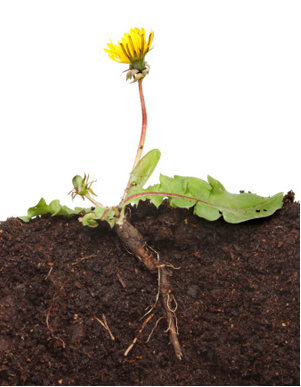
Image: Dandelions
In the picture, you can see the flower possesses a single root which has penetrated deep down in the ground for a long way. Though thick with minimal outgrowth, the root efficiently absorbs an effective amount of nutrients. They also benefit from withstanding longer periods of drought or very low rainfall.
Examples of Tap Root
There are numerous examples of Taproot. They include carrots, parsnips, dandelions, roses, beetroot, parsley, radish, sweet potatoes, burdock, cannabis, turnips etc.
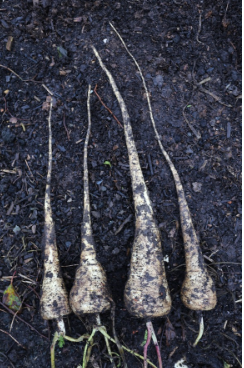
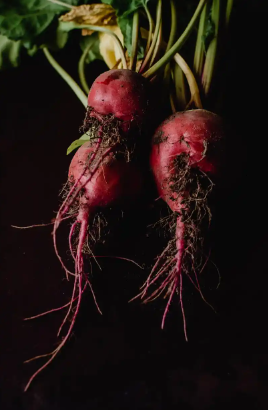
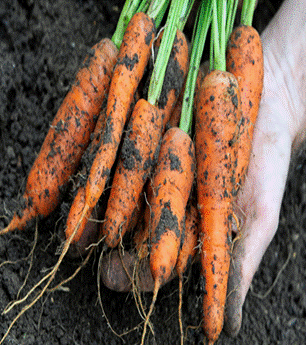
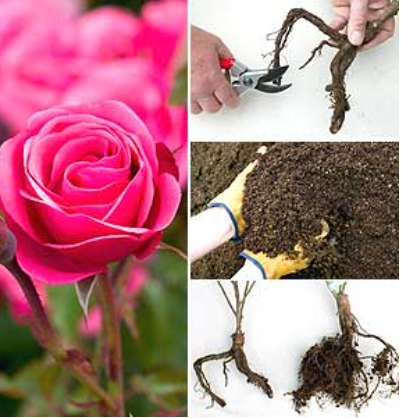
Image Taproot Plants: Parsnips, Beetroot, Carrots and Rose Plant
What is Fibrous Root
Monocots exhibit a fibrous or adventitious structure of roots, which means there is no single or central structure at the base of the plant. However, they represent a web of thin uniform hair-like structure roots. Fibrous roots do not go deep down in the ground and can be grown underground or on the ground's surface. In the latter instance, they are also called Aerial Fibrous roots. In certain circumstances, fibrous roots can spread out in all directions over the plant. Fibrous roots are popular for preventing soil erosion. As they are larger, they have the potential to absorb enough nutrients from in and above the ground. They require a high amount of water for proper development.
Examples of Fibrous Roots
There are numerous examples of fibrous plants. Most of the flowering plants have fibrous roots. They include orange lilies, wheat, clover, onion, millets, maize, banana, grass, bamboo etc.
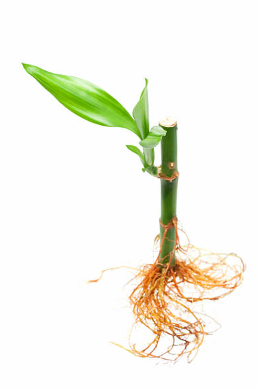
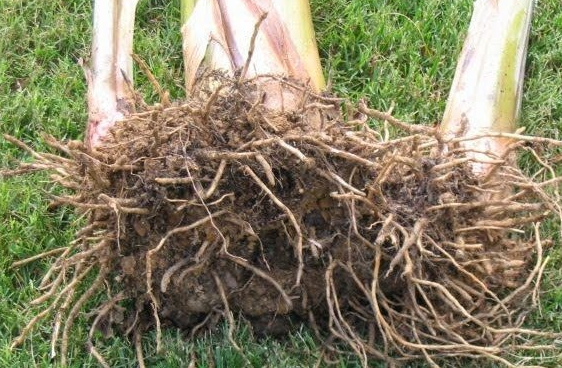
Image: Fibrous Roots of Bamboo and Banana Tree
Similarities between Tap Root and Fibrous Root
There are certain similarities between taproots and fibrous roots. They are as follows.
- They both aim to absorb water and crucial elements and nutrients from the soil.
- Both usually grow underground, but certain exceptions are involved in fibrous roots.
- Both the root types offer anchorage to their mother plant.
- Both root variants are common in higher plants, i.e., vascular plants.
Difference Between Tap Root and Fibrous Root
There are major differences between the two root system variants. They are discussed in the table.
|
Characteristics |
Tap Root |
Fibrous Root |
|
Origin |
Taproot starts growing from the seed's radicle. |
They start developing from the stem tissues. |
|
Thickness |
The primary root is thick in comparison to the tertiary outgrowth. |
All roots are universally equal. |
|
Occurrence |
Occurs in dicotyledons. |
Exist in monocotyledons. |
|
Anchorages |
The primary root is thick and straight. But the secondary and tertiary roots aid in support of the primary root. |
The main roots are numerous, which further branch out. |
|
Growth Nature |
Underground deep growth takes place. |
Surrounds the plant and grows in every direction under or above the ground. |
|
Absorption of Water |
It can absorb underground water. |
They require consistent irrigation. |
|
Strength and Care Requirement |
They are hardy and resilient. |
They need the care to survive. |
|
Storage |
Store food at a certain time. |
Often unable to store food for its mother plant. |
|
Lifespans |
Longer lives |
Shorter life compared to taproot plants. |
Practice Problems
Q1. Which variant of the root system possesses a longer lifespan?
A. Fibrous roots
B. Tap roots
C. All of the above
D. None of the above
Answer : B Taproots
As they absorb water and nutrients from underground and possess stability in storing food, they are hardy and resilient. Thus, possess a longer lifespan.
Q2. Plants having _____ roots need consistent irrigation.
A. Taproots
B. Fibrous roots
C. All of the above
D. None of the above
Answer : B. Fibrous roots
Plants having fibrous roots require consistent irrigation for water supply.
Q3. Which roots aid in the growth in and on the ground.
A. Tap roots
B. Fibrous roots
C. Adventitious roots
D. All of the above
Answer : B. Fibrous roots
Fibrous roots grow underground. However, certain fibrous plants also grow on the surface of the ground. Roots surround the plant growing in every direction. They possess true adventitious roots and reticulate venation.
Frequently Asked Questions
Q1. What type of roots does a money plant have?
Answer : Money plants possess aerial roots. They do not have deep roots system and have multiple dense roots
Q2. How are shoots different from roots?
Answer : Shoots grow above the ground. It is important for transporting water and nutrients from roots to leaves and other plant parts. Additionally, it aids in photosynthesis and food production.
Q3. What makes a mesquite plant special?
Answer : A mesquite plant possesses a taproot that grows underground at a depth of around 150 feet long. They play potential roles in desert ecology. For example, velvet mesquite.

 Call Now
 Let's Chat
 Share
Share