-
Call Now
1800-102-2727


Cockroaches: Classification, Common Examples, Morphology, Habitat, Feeding habits, Behaviour, Economic importances, Control, Practice Problems and FAQs

Mid night cravings are a common habit among many people. Now think, have you ever had such cravings in the night? If yes, you might have got up by midnight, because you were hungry and might have gone to the kitchen. When you reached the kitchen at that time, and switched on the lights, then you might have seen some creatures running into our cupboards to hide. Do you remember who they were? Yes, the cockroaches!!. They are the creatures who live relentlessly in our kitchen and eat a part of our food.

Fig: Cockroaches inside the kitchen
Why do we hardly see them during day time? The reason is that they are nocturnal insects who get out during the night to eat. They are adapted to forage for food in low light environments which helps them to avoid predators.
Apart from your home, have you ever observed them anywhere else? You might have seen them among the dead leaves in forests or in some waste dumping areas. So what is so special about these creatures?! Do you want to know more about cockroaches? Let’s discuss them in this article.
Table of contents
- Cockroach
- Classification of cockroaches
- Common examples of cockroaches
- Morphology of cockroaches
- Habitat of cockroaches
- Feeding habits of cockroaches
- Behaviour of cockroaches
- Common household cockroaches
- Economic importance of cockroaches
- Cockroach control
- Practice Problems
- FAQs
Cockroach
Cockroaches are the paraphyletic group of insects. Their ancestor is known as ‘roachoids’ and they originated during the Carboniferous period, around 320 million years ago. The major difference between the cockroaches and their ancestors is that the ancestors lacked the internal ovipositors.
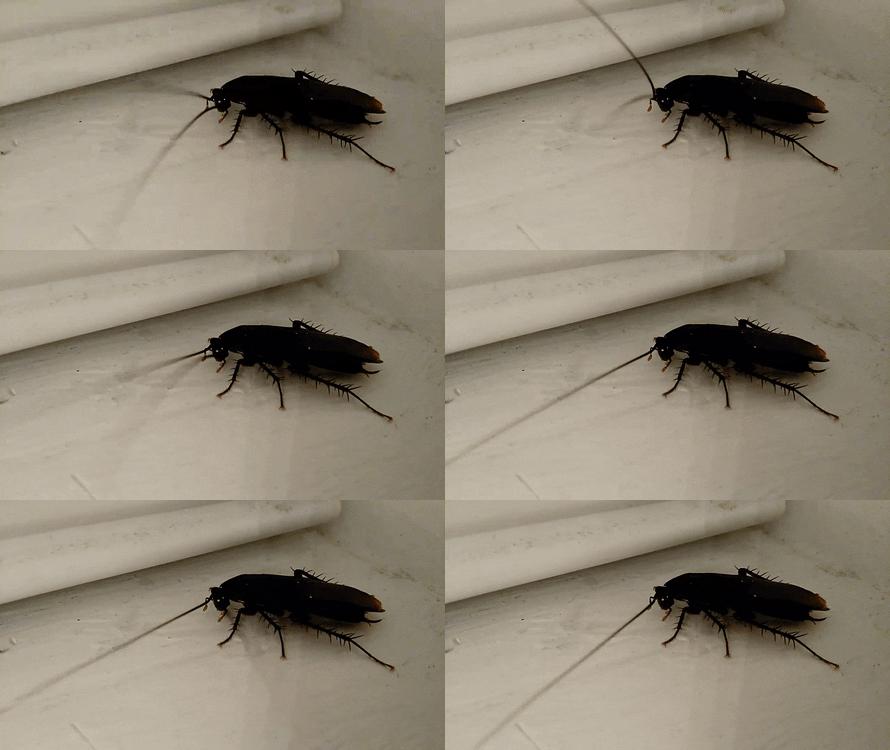
GIF: Cockroach
Cockroaches are common insects that can tolerate a wide range of climates. Hence they can be seen everywhere from Arctic cold to tropical heat environments. But the size of the cockroaches varies. Temperate species are smaller than the tropical cockroaches.
Sexual dimorphism
Cockroaches are unisexual, which means the morphology of male and female can be distinguished. Anal style is present only in males and it is absent in females.
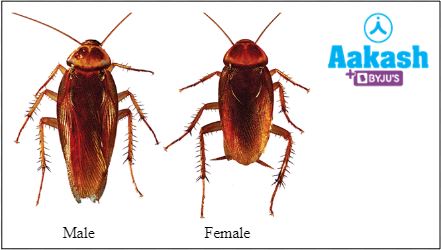
Fig: Male and female cockroaches
Speciation in cockroaches
The total number of species of cockroaches found till now is 4600. Among these 30 cockroach species are associated with human habitats. Some species of cockroaches are well known as pests.
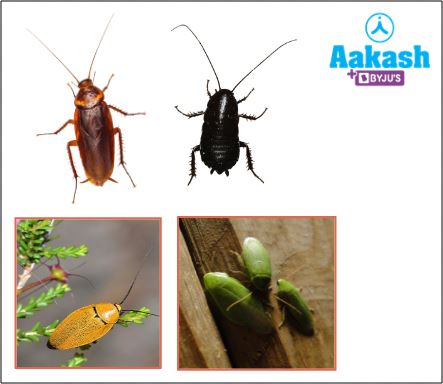
Fig: Different species of cockroaches
Classification of cockroach
The scientific classification of cockroaches are as follows:
- Kingdom: Animalia
- Phylum: Arthropoda (Jointed legs)
- Subphylum: Hexapoda (Six legged)
- Class: Insecta
- Superorder: Dictyoptera
- Order: Blattodea
- Families: Anaplectidae, Blaberidae, Blattidae, Corydiidae, Cryptoceridae, Ectobiidae, Lamproblattidae, Nocticolidae and Tryonicidae.
Common examples of cockroaches
Common examples of some cockroach species are as follows:
- Shelfordella lateralis
- Therea petiyeriana
- Periplaneta americana
- Periplaneta fuliginosa
- Periplaneta japonica
- Panesthia lata
- Nicoticola gerlachi
- Simanoda conserfariam
Morphology of cockroaches
Cockroaches are reddish - brown or dark brown coloured insects with relatively small heads, a broad, and flattened body. The body of cockroaches has a tough exoskeleton made up of calcium carbonate and is coated with wax which is impermeable to water. The body of a cockroach can be divided into three parts as follows:
- Head
- Thorax (Three segmented)
- Abdomen (Ten segmented)
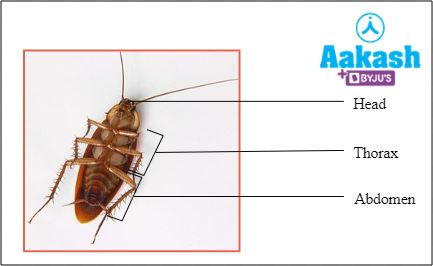
Fig: Body of cockroach
Head
Head of the cockroaches are composed of large compound eyes, two ocelli and a pair of antennae which are long and flexible. The mouth parts can be seen on the underside of the head and it possess mandibles (for chewing), maxillae, labium, labrum, hypopharynx and salivary glands. There are many touch and taste receptors also.
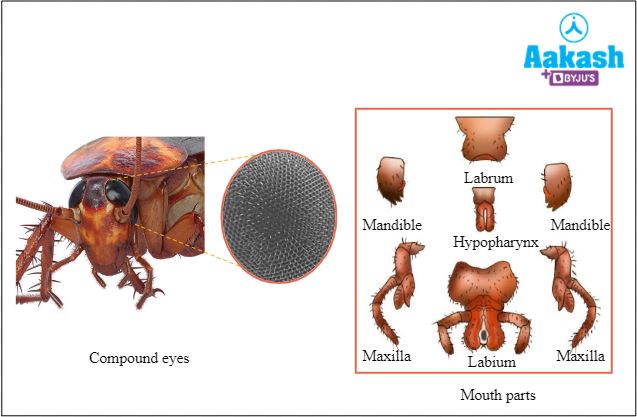
Fig: Compound eyes and mouth parts of cockroach
Thorax
Thorax is made of 3 segments, prothorax, mesothorax and metathorax. Cockroaches have two pairs of wings that are attached to the second (elytra or tegmina) and third thoracic (metathoracic) segments.
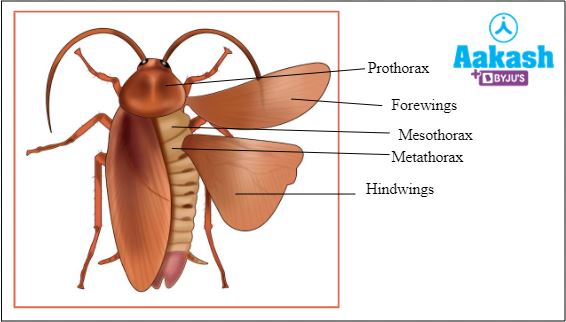
Fig: Thorax and wings of cockroach
Legs of cockroaches
They have three pairs or six legs. One pair attached to each of the three thoracic segments. Hence they are classified under subphylum Hexapoda. The legs can be classified into prothoracic, mesothoracic and metathoracic legs. The front legs are short and hind legs are long.
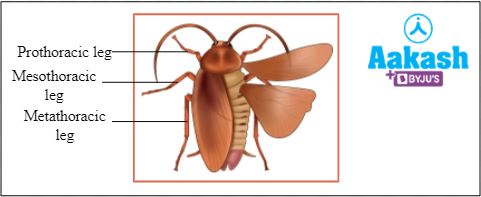
Fig: Legs of cockroach
They have spines on the legs, which helps them to move in difficult terrain.
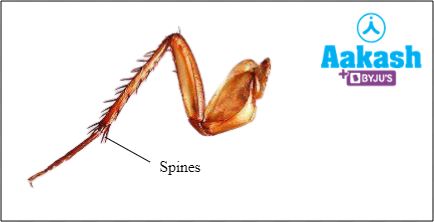
Fig: Single leg of a cockroach with spines
Abdomen
Each segment of the abdomen has a pair of spiracles which helps in respiration. In the final segment of abdomen it has pair of cerci, a pair of anal styles and the external genitalia.
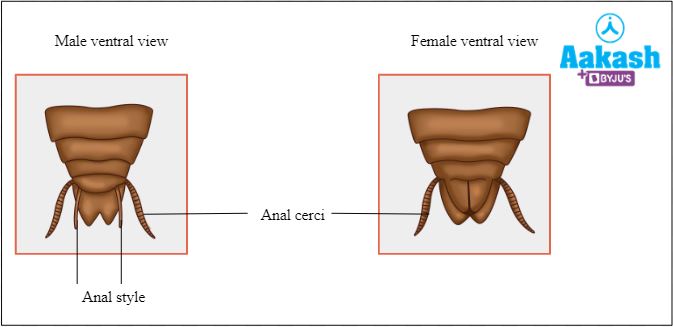
Fig: Abdomen of cockroach
Habitat of cockroaches
Cockroaches have a wide range of habitats. They usually opt for damp and dark places to live. Following are the major habitats of cockroaches:
- Leaf litter
- Rotting woods
- Holes in stumps
- Cavities under bark
- Under log piles
- Among debris
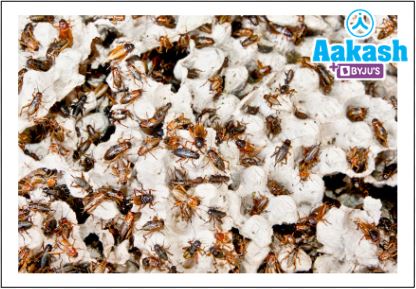
Fig: Cockroaches living in litter
They can live in extreme cold and hot climates. They can even live without access to water. Those that live in the forest canopy hide in the crevices or in between dead leaves during day time and come out during night to feed. Hence cockroaches are nocturnal insects.
Feeding habits of cockroaches
Cockroaches are omnivores. The organisms that feed on both plants and animals are called omnivores. The particular foods that attract cockroaches are sweets, starches, meats and greasy foods. But cockroaches feed on almost everything which was once a part of the living organisms. This includes book bindings, leathers, cardboard boxes, stamps, toothpastes, soaps, faeces etc. They even eat their own cast off skins and other cockroaches.

Fig: Feeding habits of cockroach
Behaviour of cockroaches
Cockroaches are social insects. A large number of cockroaches are gregarious and some also exhibit parental care. The pheromones released by the cuticles of cockroaches are responsible for their aggregation and also helps them to distinguish from the different populations. The German cockroaches leave faeces with odour that helps other cockroaches to follow the sources of food, water and hidings. Cockroaches run away from exposed lights and an exception to this is the Asian cockroaches. They fly at night and are attracted to bright colours and brightly lit surfaces.
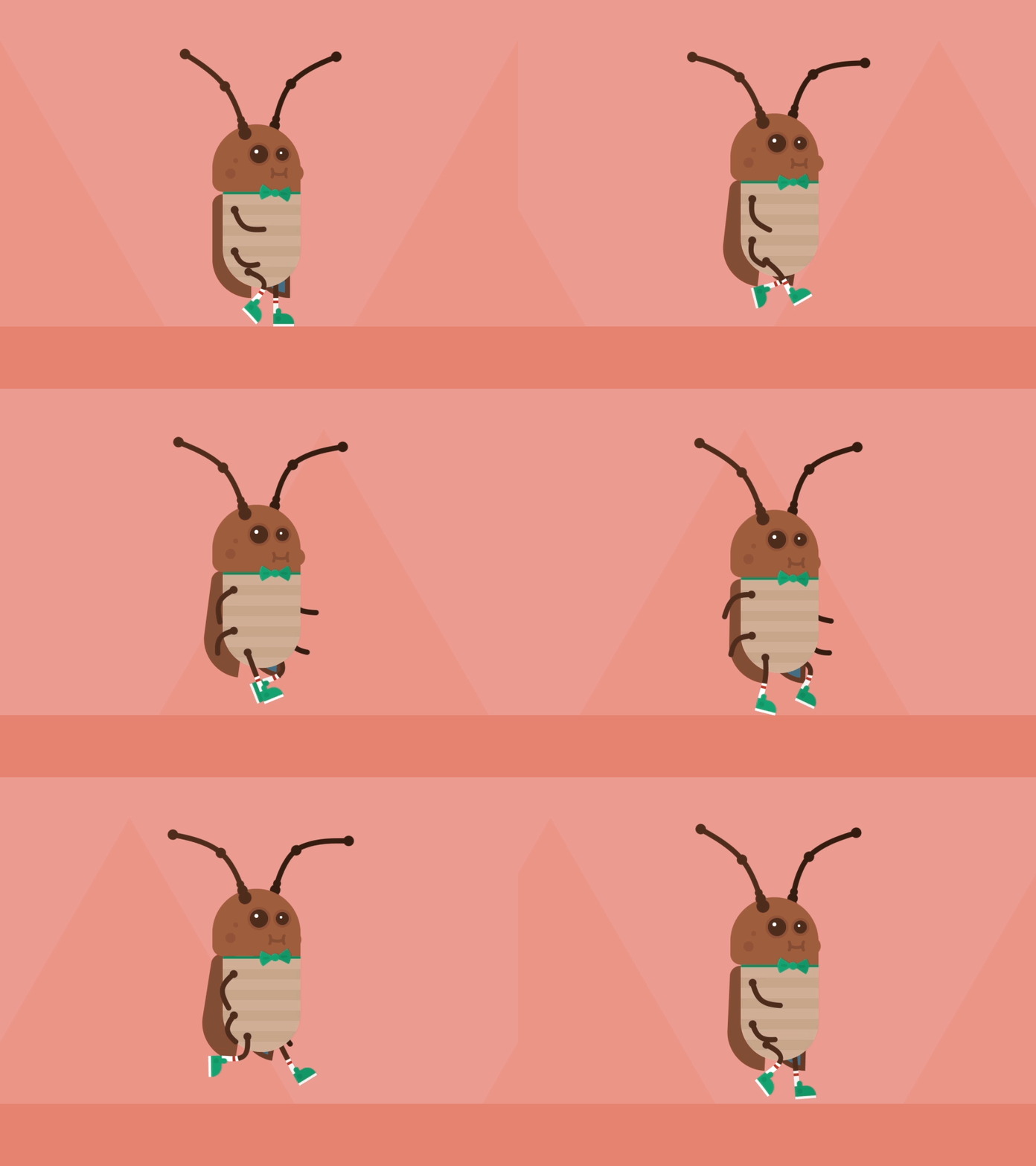
GIF: Cockroach runner
Common household cockroaches
The common household species of cockroaches are as follows:
- German cockroach
- American cockroach
- Australian cockroach
- Oriental cockroach
German cockroach
The scientific name of the German cockroach is Blattella germanica. It is commonly called the croton bug. It is a small cockroach which has a colour variation from tan to almost black. Even though they have wings, they glide when disturbed. They can barely fly. They are closely related to Asian cockroaches and they are sometimes mistaken for each other. But Asian cockroaches are attracted to light and can fly. It is a domestic pest which is mostly troublesome.
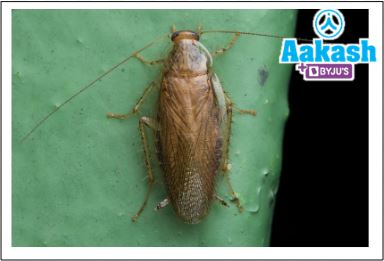
Fig: Blattella germanica
American cockroach
The scientific name of the American cockroach is Periplaneta americana. It is commonly called the water bug, but it is not aquatic. It is the largest species of common cockroach that you see in your surroundings.
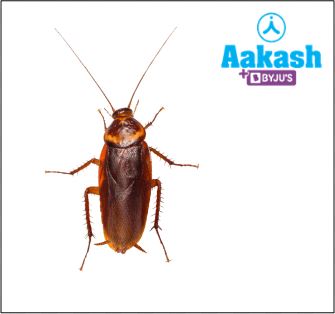
Fig: Periplaneta americana
‘Periplaneta’ means found all over the planet and ‘americana’ indicates American species. But this name is misleading. They actually belong to Africa and not to America. They made their way to America by infesting boats in the 16th century. It has been spreading all over the world ever since. Now they are native to Africa and the Middle East.
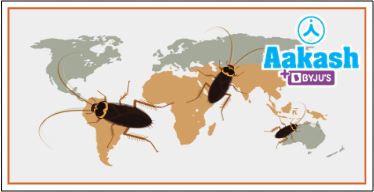
Fig: Periplaneta americana spreading all over the world
Australian cockroach
The scientific name of the Australian cockroach is Periplaneta australasiae. It is a common species of tropical cockroach and is a brown cockroach with a pale or yellow margin on the head shield. It shows a similar appearance with an American cockroach, but the Australian cockroach is slightly smaller.
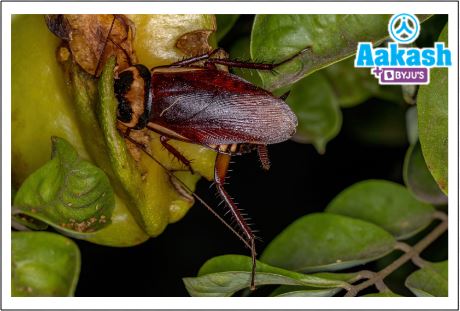
Fig: Periplaneta australasiae
Oriental cockroach
The scientific name of the Oriental cockroach is Blatta orientalis. It is also commonly called the water bug. It is black or dark in colour and called as black cockroaches. It is a large species and has a glossy body. The female black cockroaches are different from males. Females have a wider body and they have non functional wings. Males have a narrower body and long wings. But both of them are flightless. The female black cockroaches are misidentified as Floridean wood cockroaches. Oriental cockroaches are endemic to Crimean Peninsula, Black sea regions and Caspian sea regions. But now it is widely distributed.
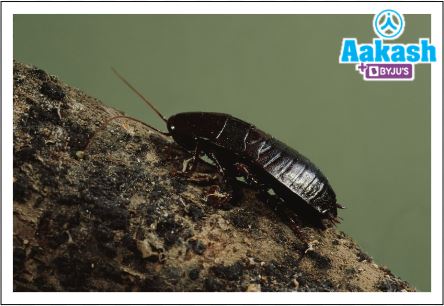
Fig: Blatta orientalis
Economic importance of cockroach
Cockroaches have positive and negative impacts on the environment and human lives. We will discuss some of them.
Positive impacts
The major positive impacts of cockroaches are as follows:
- Used as an insect model in the laboratory
- Used as food
- Used as medicines
- Used for space tests
- Used as bait
Cockroaches as insect models
In the laboratory cockroaches are used as an insect model. It is convenient to study, because it is large among the insects and also easy to raise. Hence it is used as a study model mainly in the fields of reproductive physiology, neurobiology and social behaviour.
Cockroaches as food
Cockroaches are used as food in many places around the world. Those cockroaches that are bred under laboratory conditions are used as food since the household cockroaches carry many viruses and bacteria. American cockroaches are commonly consumed by humans. The Argentinian wood roach or Blaptica dubia is used as a food for insectivorous pets.
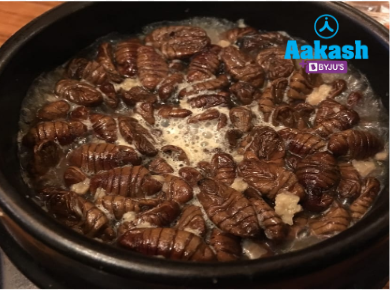
Fig: Cockroaches as food
Cockroaches as medicines
Cockroaches are used as medicine in China and they have over 100 cockroach farms that raise cockroaches for medicinal purposes. The fried and grounded cockroaches are sold as pills which can cure heart, stomach and liver diseases. Periplaneta americana is used as a traditional chinese medicine (TCM) drug.
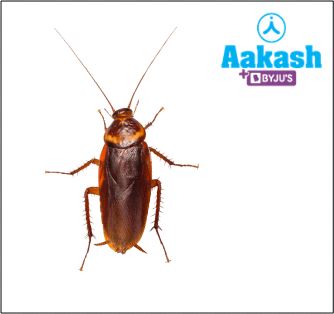
Fig: Periplaneta americana
Cockroaches in space tests
Nadezhda was a cockroach which was sent into space by the Russian scientists. This was as a part of the Foton-M mission. It was the first terrestrial animal that had been conceived in space and produced offspring.
Cockroaches as bait
Cockroaches from cockroach farms are used for fishing. It is specifically used for catching fishes like pike (Esox lucius) and zander (Sander lucioperca).
Negative impacts
The major negative impacts of cockroaches are as follows:
- Offensive odour
- Act as a mechanical vector
- Allergies
- Polluting food
- Damages of articles
Offensive odour
Cockroaches feed on the food and leave an offensive odour. Their faeces inside the closed cupboards and spaces causes intense bad odour and it can suffocate the humans.

Fig: Cockroaches in cupboards
Mechanical vector
Cockroaches act as mechanical vectors. Microbes will be present on the body of cockroaches and they passively transport the microbes to humans and cause diseases like cholera, diarrhoea etc. It normally happens in hospitals.
Allergies
Cockroaches can also cause allergic reactions in humans. The shredded body parts, saliva or faeces of cockroaches are causing allergy or asthma. Coughing, skin rashes, nasal congestion etc., are some of the common symptoms.
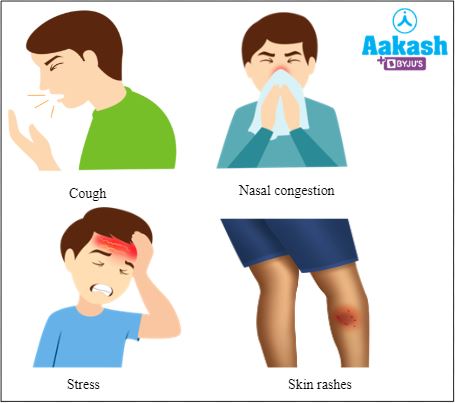
Fig: Allergies
Polluting food
Cockroaches pollute the food and also create stress and anxiety in humans.
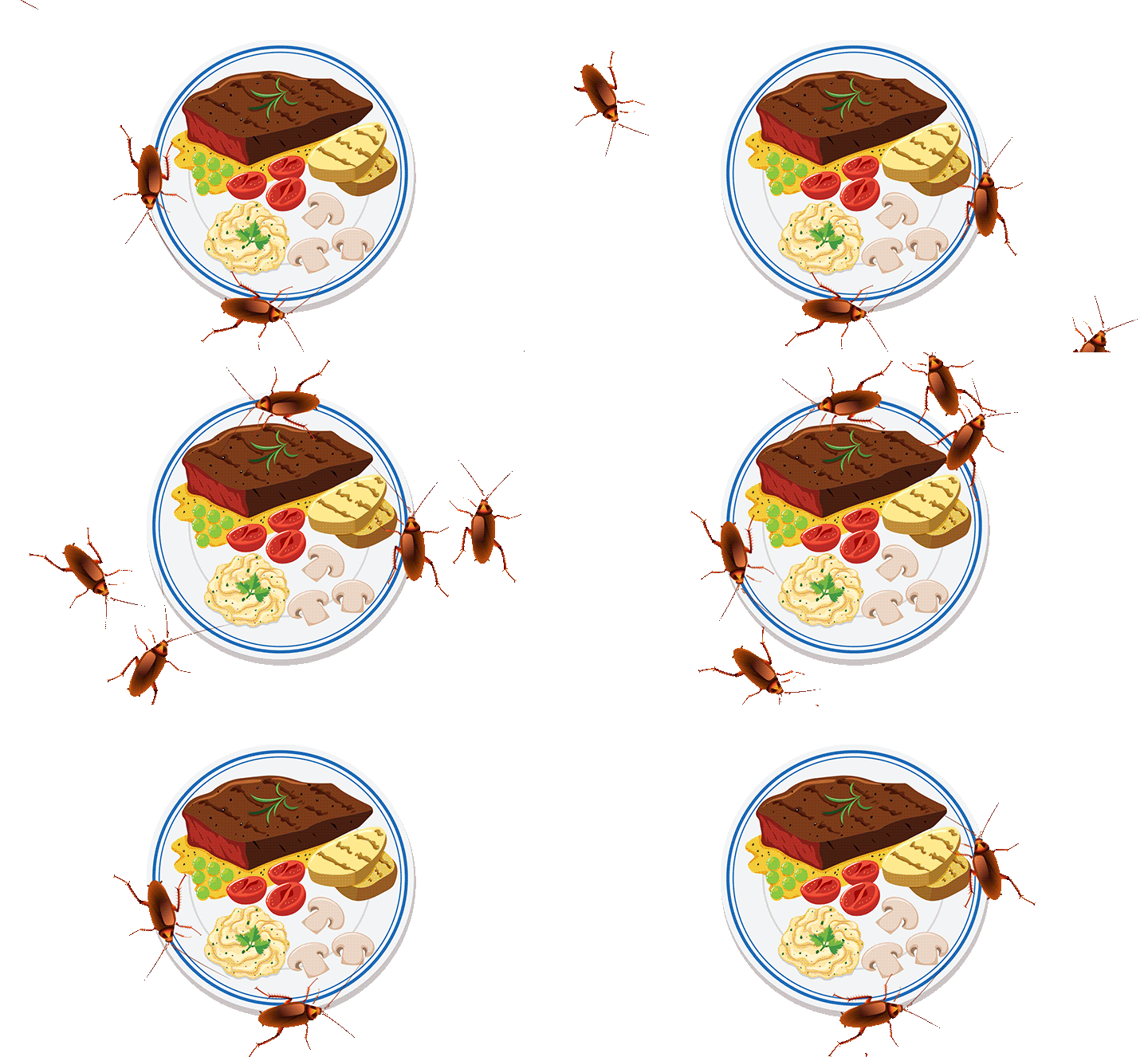
GIF: Cockroaches infecting the food
Damages of articles
Cockroaches eat almost all the things that were once a part of the living organisms. They feed on papers, clothes, cardboard boxes etc. and cause damage to the important assets of humans.
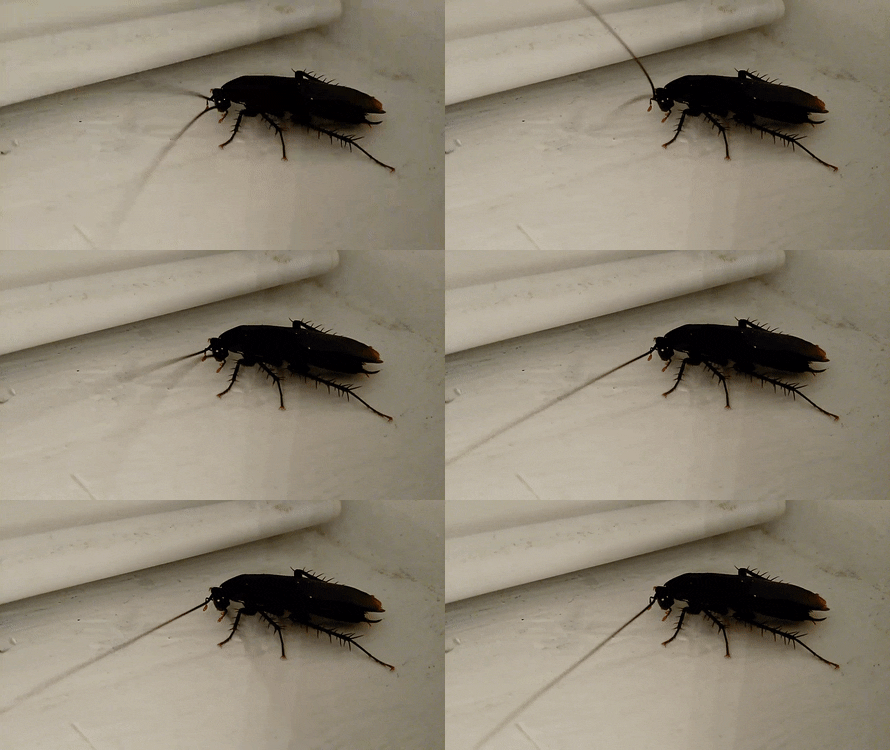
GIF: Cockroach damaging paper
Cockroach control
Cockroaches are one of the major pest species in our home. They are resilient and fast breeding. They can live without their head even after a week.
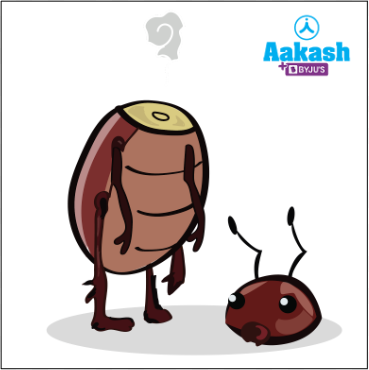
Fig: Headless cockroach
The reason for this is that they have an open circulatory system and blood does not flow through the vessels. The tiny holes that are present on their body segments are responsible for respiration. Hence they do not depend on their mouth or head for breathing. So we have to choose good and powerful remedies to control the cockroaches. Some of them are as follows:
- Herbs like mints, cucumbers, garlics etc., are used as repellents.
- Baking soda or sodium bicarbonate is also used to kill cockroaches.
- Poisoned bait containing boric acid powder and fipronil is used to kill adult cockroaches.
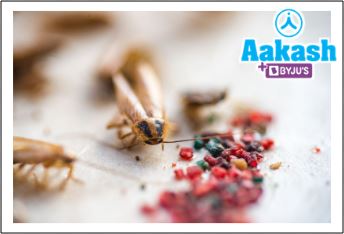
Fig: Poisoned bait to kill cockroaches
- Insecticides containing pyrethrin are also effective.
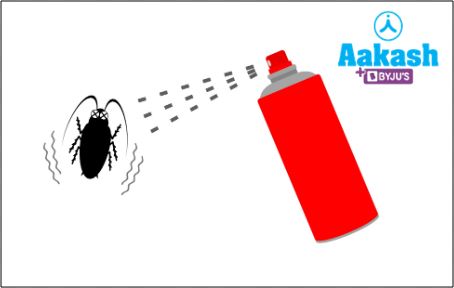
Fig: Insecticides to kill cockroaches
- Using biological control such as parasitoidal wasps is also effective against cockroaches, because the wasp causes temporary paralysis to the cockroaches.
- If the cockroaches are trapped inside an airtight container using baited food, it will eventually die.
- An alternative for pesticides is the power laser that can kill cockroaches.
Practice Problems
1. Which of the following statements is wrong about the cockroaches?
a. Cockroaches are reddish - brown or dark brown coloured insects
b. Cockroaches have relatively small heads, a broad and flattened body
c. The body of cockroaches has a tough exoskeleton made up of calcium carbonate
d. Cockroaches have two pairs of wings that are attached to the abdomen
Solution: Cockroaches are reddish - brown or dark brown coloured insects with relatively small heads, a broad and flattened body. The body of cockroaches has a tough exoskeleton made up of calcium carbonate and is coated with wax. The body can be divided into three parts such as head, thorax (three segmented) and abdomen (ten segmented). Cockroaches have two pairs of wings that are attached to the second and third thoracic segments. They have three pairs of legs. One pair attached to each of the three thoracic segments. Each segment of the abdomen has a pair of spiracles which helps in respiration. Hence the correct option is d.
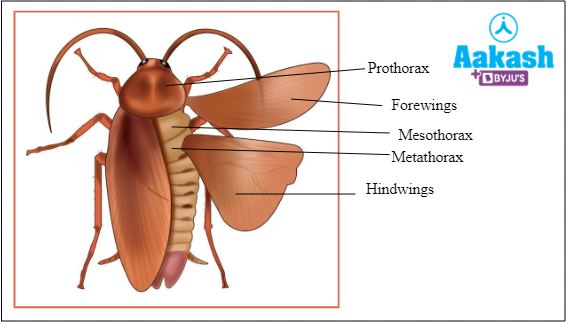
Fig: Thorax and wings of cockroach
2. Assertion: Cockroaches are nocturnal insects.
Reason: Cockroaches hide in the crevices during day time and come out during night to eat.
Which of the following statements is correct about the above assertion and reason?
a. Both the assertion and the reason are true, and the reason is the correct explanation of the assertion
b. Both the assertion and the reason are true, but the reason is not the correct explanation of the assertion
c. Assertion is true, but the reason is false
d. Both the assertion and the reason are false
Solution: Cockroaches have a wide range of habitats. The major habitats of cockroaches are leaf litters, rotting woods, holes in stumps, cavities under bark, log piles, debris etc. They can live in extreme cold and hot climates. They can even live without access to water. Those that live in the forest canopy hide in the crevices or in between dead leaves during day time and come out during night to eat. So the cockroaches are nocturnal insects. Hence the correct option is a.
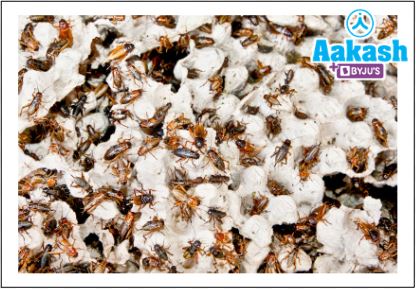
Fig: Cockroaches living in litter
3. Find the species of cockroach from the given clues:
i) It is commonly called the water bug, but it is not aquatic.
ii) It is the largest species of common cockroach that you see in your surroundings.
iii) They actually belong to Africa and not to America.
a. German cockroach
b. American cockroach
c. Australian cockroach
d. Oriental cockroach
Solution: The common household species of cockroaches are the German cockroach, the American cockroach, the Australian cockroach and the Oriental cockroach. The scientific name of the American cockroach is Periplaneta americana. It is commonly called the water bug, but it is not aquatic. It is the largest species of common cockroach that you see in your surroundings. ‘Periplaneta’ means found all over the planet and ‘americana’ indicates American species. But this name is misleading. They actually belong to Africa and not to America. They made their way to America by infesting boats in the 16th century. It has been spreading all over the world ever since. Now they are native to Africa and the Middle East. Hence the correct option is b.
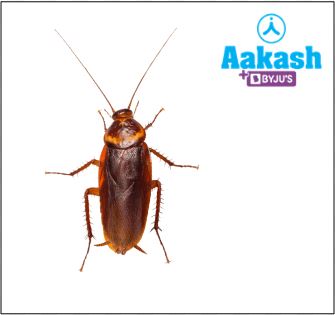
Fig: Periplaneta americana
4. Which of the following species of cockroach is used as a TCM drug?
a. Periplaneta americana
b. Blaptica dubia
c. Periplaneta australasiae
d. Blattella germanica
Solution: Cockroaches are used as medicine in China and they have over 100 cockroach farms that raise cockroaches for medicinal purposes. The fried and grounded cockroaches are sold as pills which can cure heart, stomach and liver diseases. Periplaneta americana is used as a traditional chinese medicine (TCM) drug. Hence the correct option is a.
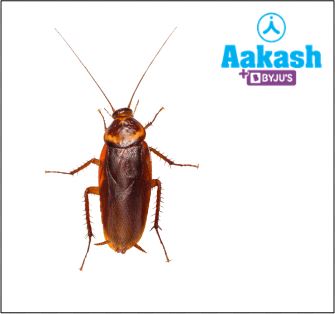
Fig: Periplaneta americana
FAQs
1. How are cockroaches related to termites?
Answer: Cockroaches and termites share a common ancestor. Termites are closely related to one of the families of cockroaches. Based on the evidence from DNA the termites are now classified under the order of cockroaches called Blattodea. Termite family Isoptera and cockroach family Blattidae are considered as sister groups at present.
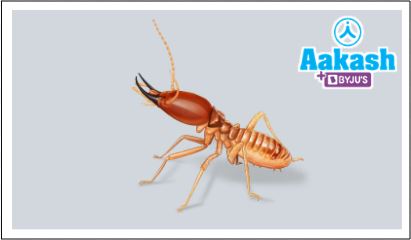
Fig: Termite
2. Which is the world's heaviest cockroach?
Answer: Australian giant burrowing cockroach (Macropanesthia rhinoceros) is the world’s heaviest cockroach. It can reach 8 centimetres in length and weigh up to 35 grams.
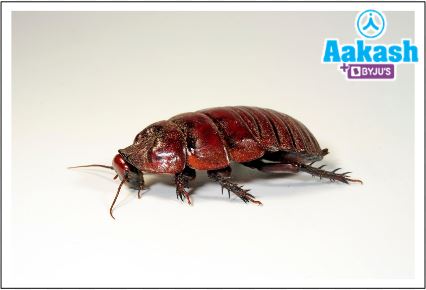
Fig: Macropanesthia rhinoceros
3. Are green cockroaches present?
Answer: Yes, green coloured cockroaches are also present. They are commonly called cuban cockroaches. The scientific name of green cockroaches is Panchlora nivea. It is a fairly small cockroach.
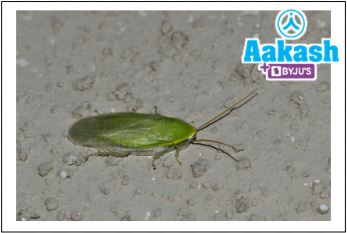
Fig: Panchlora nivea
4. What is the colour of the blood inside cockroaches?
Answer: The cockroach contains white or colourless blood called hemolymph. The blood is colourless due to the absence of respiratory pigment.
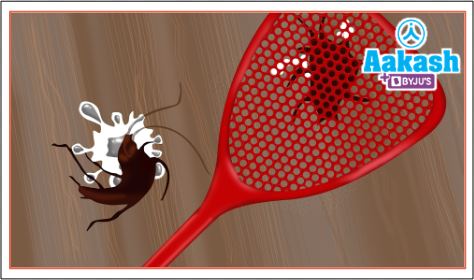
Fig: Blood of cockroach
YOUTUBE LINK: https://www.youtube.com/watch?v=biWZUuVCL68

 Call Now
 Let's Chat
 Share
Share