-
Call Now
1800-102-2727


Cloning vectors, Practice Problems and FAQs

Online shopping is rapidly becoming an increasingly important event in our lives. Most of our clothing, accessories, make up, groceries, food, etc are nowadays purchased online. After purchasing an item we need to wait for the delivery of the same. Do you think the sellers themselves deliver the products at your doorstep? They don’t. Every seller takes the help of a delivery partner who picks up the product from them and delivers it to us. You will be amused to know that something similar happens with DNA during the process of genetic engineering.
The transportation of the gene of interest from one organism to the host organism requires a delivery partner. This delivery partner in the field of biotechnology is named as a cloning vector. In biology, a vector is a biological organism that spreads infectious agents from an affected individual to a healthy individual. But cloning vectors are different. They do not transmit any diseases, but help to transfer the desired foreign genes into a host organism. It is such an interesting topic to discuss. So let’s have a more detailed discussion on cloning vectors.
Table of contents
- Cloning vectors
- Characteristics of an ideal cloning vector
- Cloning vectors vs Expression vectors
- Ti Plasmid
- Practice problems
- FAQs
Cloning vectors
When the Gene Of Interest or GOI is isolated from an organism, it has to be transferred into the host organism. But it cannot be transferred directly. The GOI needs a vehicle to take it into the host cell. Certain DNA segments known as vector DNAs help in this process. They allow the GOI to be inserted within their sequence and act as carriers that carry the GOI into the host cell.
Some vector DNAs not only help in carrying the gene of interest into the host cell but they also replicate autonomously within the host and produce identical copies of the GOI. This process is known as cloning and such vector DNAs are known as cloning vectors. The DNA molecule formed by the insertion of a foreign gene of interest into the cloning vector is known as recombinant DNA or rDNA.
Thus, a cloning vector can be defined as a small piece of DNA that can be kept stable in the body of an organism and into which a foreign DNA fragment can be put for cloning. Even though cloning vectors are DNA sequences, these are taken from different organisms. DNA from a virus, a cell from a higher creature, or a bacterium plasmid can all be used as cloning vectors. Thus there are different types of cloning vectors. Some of the major cloning vectors are plasmids, phages, BAC and YAC.
Types of cloning vectors:-
Plasmids
Plasmids are self replicating extrachromosomal DNA which are present in the cell in addition to the chromosomal DNA. Plasmids are circular DNA molecules which do not carry any vital genes. They are present in bacteria and some yeasts. Their size may vary from 1 X 10⁶ daltons to 200 X 106 daltons. Being capable of replicating autonomously, plasmids can reach high copy numbers, close to 100 copies per cell.
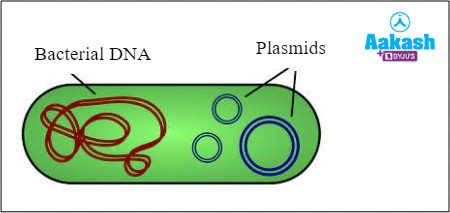
Fig: Plasmids
Phages or bacteriophages
Virus that infects bacteria is called bacteriophage. It consists of linear DNA. Lambda (λ) phages are often used as cloning vectors for transferring genetic material from one bacterium to another. They have linear dsDNA of about 45.9 kb pairs and contain several restriction sites for the insertion of foreign DNA. Phage DNA can integrate itself into the chromosomal DNA of bacteria and hence the GOI can replicate and form copies.
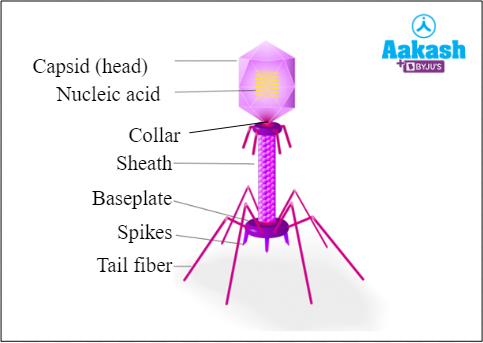
Fig: Bacteriophage
Cosmids
Cosmids are vectors that have been constructed by joining the Cos site of a lambda phage to some plasmid. Cos site provides the cosmid cohesive ends which allows the plasmid to pack itself in the protein coat of the phage. They share properties of both plasmids and lambda phages. Cosmids can transfer large foreign genes which are around 40-45 kb pairs into the bacterial cell. The ColE1 cosmid is one of the most commonly used cosmids. Cosmids are mostly used to construct genomic libraries.
Phagemids
These are plasmids with a fragment of lambda phage DNA along with its attachment site. These carry an origin of replication sequence from the plasmid as well as from the bacteriophage and can replicate on their own. They also have the ability to be packaged within the phage capsid.
BAC
These are the Bacterial Artificial Chromosomes. BACs are derived from naturally occurring bacterial F plasmid DNA. These can accommodate large DNA sequences without any risk and are used to study genetic disorders.
YAC
These are the Yeast Artificial Chromosomes which are formed by joining yeast DNA with a linear plasmid from bacteria. It is a DNA molecule that's been human-engineered and utilised to clone DNA sequences in yeast cells. In the mapping and sequencing of genomes, YACs are frequently used. YACs can hold segments of an organism's DNA that are up to one million base pairs long.
Apart from these vectors, there are some other vectors like Retroviral Vectors and Human Artificial Chromosomes that are also used in transferring the GOI.
Characteristics of an ideal cloning vector
Any random DNA sequence cannot be used as a cloning vector. An ideal cloning vector should possess some of the following characteristics to be able to serve the purpose of transferring the GOI into the host cell.
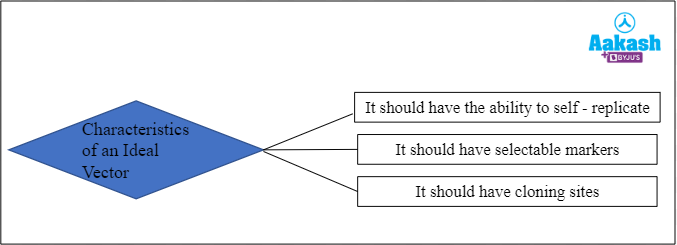
Fig: Characteristics of an ideal cloning vector
Let us discuss these characteristics using the pBR322 vector as an example. pBR322 is a plasmid cloning vector derived from E. Coli. It is the first genetically engineered artificial cloning vector.
In pBR 322, P stands for plasmid, B and R are the names of the scientists Bolivar and Rodriguez. 322 is a number assigned to distinguish it from other pBR vectors. It was designed with all the necessary characteristics that an ideal vector is expected to have.
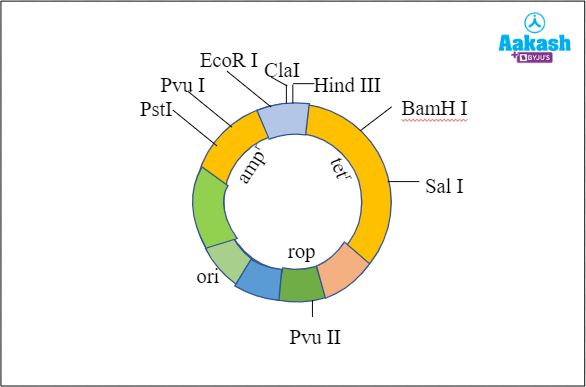
Fig: pBR322
Origin of replication
It should have the ability to self - replicate. Ori or Origin of Replication is a sequence that initiates DNA replication. It is the site of attachment of helicases which unwind the DNA to initiate replication. Hence, an ideal vector should have an ori site. This property allows the vector to autonomously replicate and multiply within the host. The given diagram shows the ori site in the plasmid vector pBR322.
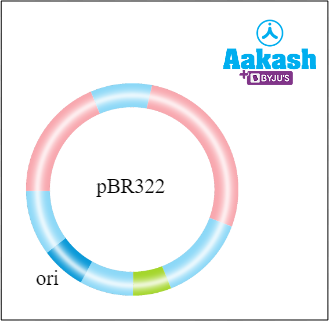
Fig: ori site of pBR322
In addition to the ori site, the pBR322 vector also has a rop gene. rop stands for repressor of primers and it codes for Rop proteins which helps to control the copy number of the vector.
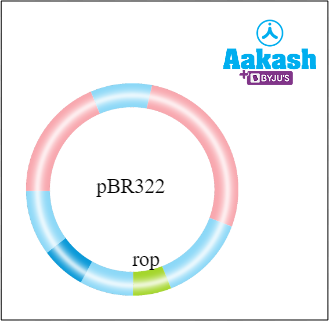
Fig: rop gene of pBR322
Selectable markers
It should have selectable markers to help in the detection of the transformed cells which have successfully taken up the recombinant DNA and elimination of the non-transformed cells. This helps in isolating the transformed cells and culturing them.
Selection by antibiotic resistance
Generally antibiotic resistance genes serve as selectable markers. Normal E. coli cells are not resistant to antibiotics such as ampicillin, tetracycline, etc and are unable to grow in growth media containing antibiotics. If they are successfully transformed with a recombinant DNA composed of the GOI and the cloning vector, then the antibiotic resistance genes of the vector DNA confer antibiotic resistance in them which allow them to grow on antibiotic containing growth media. Thus, this sets them apart from the non-transformed cells and they can easily be selected and isolated when grown on antibiotic-rich media.
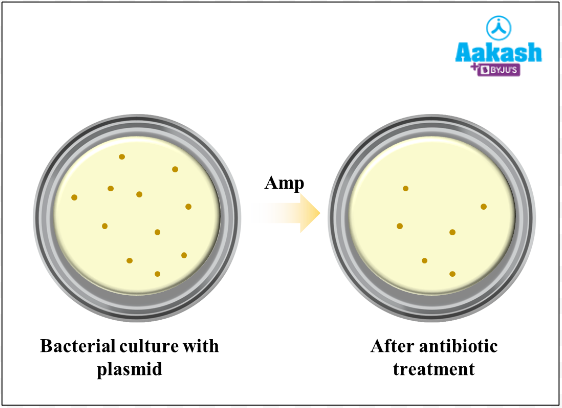
Fig: Bacterial colonies transformed with pBR322 plasmid vector survive in presence of antibiotic ampicillin
The given diagram shows the antibiotic resistance genes ampr (confers resistance against ampicillin) and tetr (confers resistance against tetracycline) in the plasmid vector pBR322.

Fig: Selectable markers of pBR322
Selection by insertional inactivation
Another common selectable marker gene is the lacZ gene which codes for the β galactosidase enzyme which converts a chromogenic substance, X-Gal, into galactose and a blue coloured byproduct. Thus, the cells which have a functional lacZ gene, produce blue coloured colonies when the growth medium contains X-Gal.
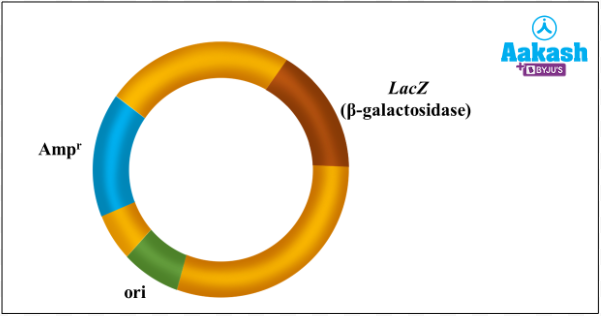
Fig: Bacterial plasmid with functional LacZ gene
In vectors carrying the lacZ gene, the foreign gene of interest is inserted into the coding sequence of the lacZ gene such that it can no longer code for β galactosidase. This is known as insertional inactivation.
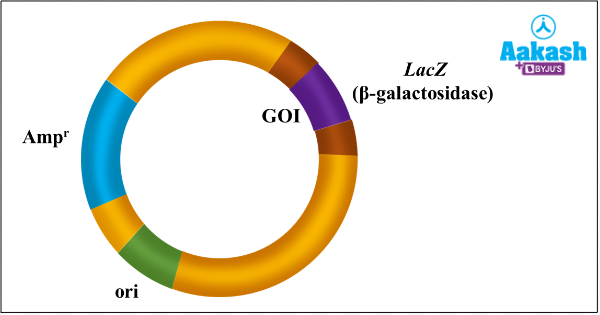
Fig: GOI inserted in the LacZ gene
Host cells transformed with the vector carrying the GOI (recombinant DNA) will hence produce white coloured colonies in a medium containing X gal because these cells will not be producing the β galactosidase enzymes. However, cells which have not taken up the recombinant DNA will continue to produce blue coloured colonies. Thus recombinant cells can be easily distinguished from the non-recombinants and can therefore be selected and isolated to be cultured separately.
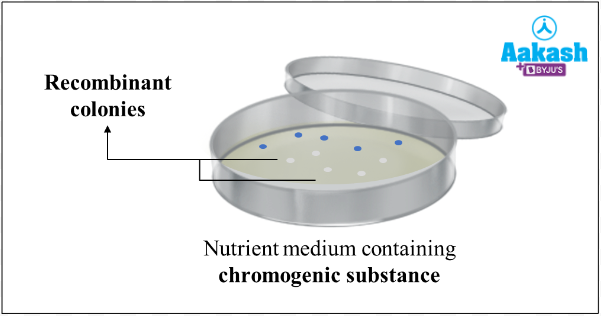
Fig: Recombinant colonies show white colonies while non-recombinants show blue.
Cloning sites
The cloning site is the target site for the insertion of the GOI. The cloning sites are the restriction enzyme recognition sites which have specific palindromic sequences that are recognised by specific restriction enzymes. A restriction enzyme cuts the vector DNA at the specific recognition site. A foreign gene of interest cut using the same restriction enzyme can then be inserted into the cut made in the vector DNA. The gaps between the GOI and vector DNA can then be sealed with the help of DNA ligase enzymes to form a recombinant DNA. Every cloning vector should have at least one cloning site.
The given figure shows the restriction sites or cloning sites for the restriction enzymes HindIII, BamHI, SalI, PstI, PvuI, ClaI and EcoRI.
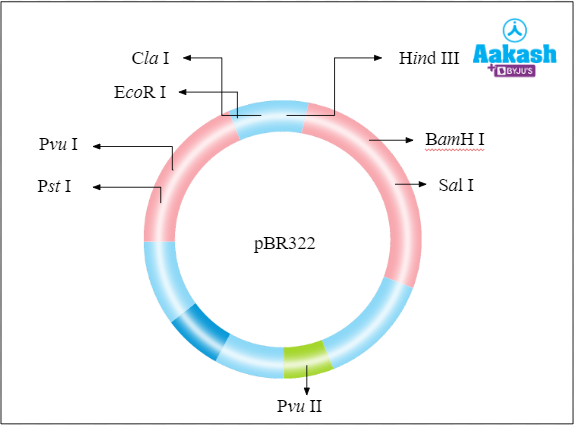
Fig: Cloning sites of pBR322
Small size
The vector should ideally be less than 10 kb in size as larger molecules tend to disintegrate during isolation and purification. Also, larger vectors will not be able to carry larger DNA sequences into the host. The pBR322 vector is roughly 4.3 kb in size.
Cloning vectors vs Expression vectors
Cloning vectors are used just for the purpose of multiplication and cloning of the gene of interest within the host cell. Thus, they have relaxed replication control so that they can replicate to produce multiple copies of the GOI.
In an expression vector, the GOI expresses itself by producing specific proteins. Such vectors have regulatory sequences such as promoter site, operator site and ribosomal binding sites that are needed for transcription and translation of the GOI.
Ti Plasmid vector for cloning genes into plant cells
Agrobacterium tumefaciens is a bacterial pathogen which infects plants and causes the crown gall disease. It carries the Ti (tumour inducing) plasmid which has a T-DNA segment that integrates itself into the plant cell’s genome and induces tumour formation which leads to the crown gall disease. This characteristic of the Ti plasmid is manipulated to use it as a vector for cloning genes in plant cells.
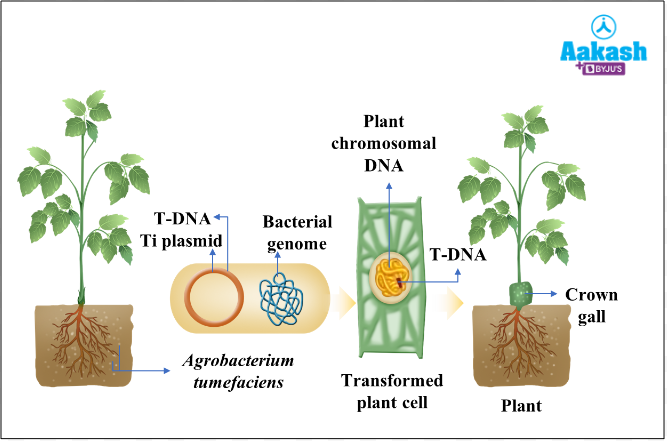
Fig: Agrobacterium tumefaciens causing the crown gall disease
A restriction enzyme is used to cut the T- DNA segment at a specific site and insert the GOI into it using a ligase enzyme. Once the T-DNA is modified, the Ti plasmid can no longer induce tumours but Agrobacterium tumefaciens is still capable of infecting the plant cells and transferring the Ti plasmid into them.
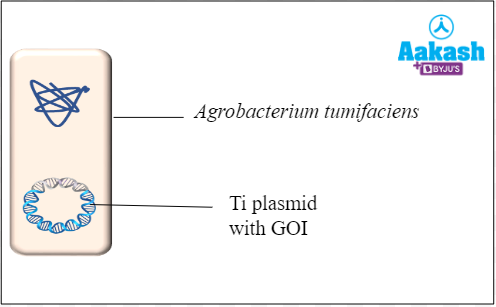
Fig: Agrobacterium with GOI
So, once the GOI is inserted into the T-DNA segment of the Ti plasmid and recombinant Ti plasmid is introduced into Agrobacterium, the pathogen can enter the plant cell and transfer the GOI inside. The GOI being inserted into the T-DNA segment can integrate into the plant cell’s genome, thus genetically modifying it.
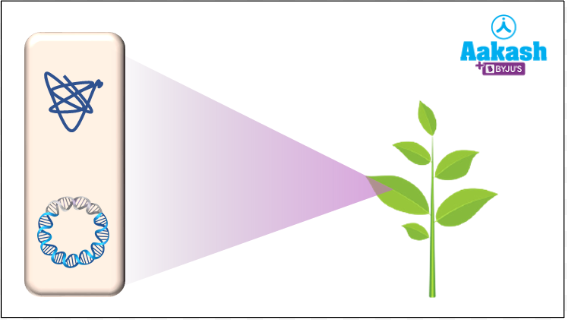
Fig: Agrobacterium with GOI inside infected host plant cell
Practice Problems
Q1. Given below are some of the characters of an ideal cloning vector. Find out the correct statements from the following.
I) A cloning vector must have a origin of replication in order to self-replicate inside the host cell.
II) It should have a restriction site where the target DNA can be inserted.
III) It should feature a selectable marker with an antibiotic resistance gene.
IV) It should not have several cloning locations.
V) It should be able to work in both bacterial and eukaryotic environments.
a. I,II,III
b. I,II,III,IV,V
c. I,II,III,IV
d. I,II,III,V
Solution: A cloning vector must have a origin of replication in order to self-replicate inside the host cell. It should have a restriction site where the target DNA can be inserted. It should feature a selectable marker with an antibiotic resistance gene to make recombinant organism screening easier. It should be tiny enough to fit into the host cell without difficulty. It should be able to insert a substantial amount of DNA. It should have several cloning locations. It should be able to work in both bacterial and eukaryotic environments.
Hence the correct option is d.
Q2. Match the following.
|
i) Plasmids |
|
|
ii) Phages |
|
|
iii) BAC |
|
|
iv) YAC |
|
A. i- A, ii-B, iii-C, iv-D
B. i- B, ii-A, iii-C, iv-D
C. i- B, ii-C, iii-D, iv-A
D. i- D, ii-B, iii-A, iv-B
Solution: Plasmids are extrachromosomal DNA. Which means an extra DNA present in a cell other than genetic material. Phage is also known as bacteriophage. Virus that infects bacteria is called bacteriophage. It consists of linear DNA. Bacterial Artificial Chromosomes are derived from bacteria. It is obtained from naturally occurring F' plasmids. Yeast Artificial Chromosomes are DNA molecules that's been human-engineered and utilised to clone DNA sequences in yeast cells. In the mapping and sequencing of genomes, YACs are frequently used.
Hence the correct option is c.
Q3. What are selectable markers?
Answer: Selectable markers are genes that help in identifying if r-DNA is successfully inserted into the host or not. There are two types of selectable markers. They are the Antibiotic resistance gene and Lac Z gene. In pBR322, the antibiotic resistance gene is the selectable marker. Ampicillin resistance and tetracycline resistance genes are the two antibiotic resistance genes that are present.
Q4. How Ti plasmid is used as a cloning vector?
Answer: Agrobacterium tumefaciens is a bacteria that infects several dicot plants. The Ti plasmid of this bacteria has a sequence called T DNA. When the T-DNA enters into the plant cell, it integrates into the genome of the plant cell and induces tumour formation. The T-DNA segment can be manipulated to insert the GOI in between. This renders the T-DNA segment ineffective in inducing tumours but it can still transfer the GOI into the plant cell and incorporate it into the plant genome.
FAQs
Question 1. Who was the first to discover cloning vectors?
Answer: Herbert Boyer and Stanley Norman Cohen utilised pSC101 as the first cloning vector in 1973. They proved that a frog gene could be introduced into bacterial cells and then expressed by the bacterial cells using this plasmid. The plasmid is a Salmonella typhimurium which is a natural plasmid.
Question 2. What is a screening marker?
Answer: Screening markers are test markers that are used to detect diseases like cancer at an early stage, before they become symptomatic.
The term "cancer screening markers" refers to tests that are used to detect cancer. When applied to populations in a systematic way, they can identify asymptomatic people who are at a high enough risk of cancer to warrant the adoption of additional markers or therapeutic intervention.
Question 3. What makes a selectable marker different from a reporter gene?
Answer: Selectable markers are DNA sequences that can be utilised to tell the difference between transformed and non-transformed genes. By offering resistance to hazardous agents, they serve as markers for altered genes. Reporter genes are test sequences with quantifiable expression. To assess a gene's transformation, the amount of protein produced by a reporter gene can be measured.
Question 4. What is the role of Ti plasmid in the development of Bt crops?
Answer: A gene of interest, such as the Bt endotoxin gene, is cloned into the Ti plasmid's T-DNA. T-DNA containing the Bt gene is introduced into the plant genome after inoculation of cultivated corn cells. Then the Bt endotoxin is expressed by the regenerated corn plant (Bt corn).
YOUTUBE VIDEO:
Related Topics
|
Principles of biotechnology |
|
Transformation |

NEET Related Links
JEE MAIN Related Links
JEE Advanced Related Links
JEE Advanced Eligibility Criteria
JEE Advanced Chemistry Syllabus
JEE Advanced Registration Dates
CUET Related Links
Important Topics
Anemometer : Measurement of Wind Speed
Angular Acceleration Atomic Theory Audible and Inaudible Sound Average Speed and Average Velocity Average Velocity Avogadros Number Avogadros Hypothesis Azimuthal Quantum Number Balanced Force Bar Magnet Biconvex Lens Boyles Law Buoyancy Calorimeter Carnot Engine Celestial Bodies Centripetal And Centrifugal Force Concave and Convex Lenses Concave Convex Mirrors Contact and Non Contact Force Controlled Thermonuclear Fusion Convection Currents Convex Lens Convex Mirror Destructive Interference Difference Between Conduction Convection and Radiation Difference Between Electric Field and Magnetic Field Difference Between Heat And Temperature Difference Between Series And Parallel Circuits Differences Between Acceleration And Velocity Distance and Displacement Distance Time Graph Electrical Force : Electric Forces and Their Types Electromagnetic Waves : Definition, Equation and Properties of Electromagnetic Waves Electromagnetism Electron Spin Fluid Flow : Bernoullis Equation Derivation and Fluid Mechanics Fluid Friction : Types and Factors of Fluid Friction Frames of Reference : Inertial and Non- Inertial Frame of Reference Frequency and Wavelength Frictional Force Importance of Hydrosphere Instantaneous Speed and Velocity Introduction to Motion Kinetic and Potential Energy Difference Law Of Conservation of Energy Layers of the Earth Light Energy Light Sources List of physics scientists and Their inventionsLoudness of Sound
Magnetic Dipole Moment Magnetic Field Non - Contact Force Non - Renewable Energy Ohms Law Optics P Wave Physics Symbols Plane Mirrors Poissons Ratio Projectile Motion Properties of Water : Anomalous Expansion of Water Radius of Gyration Reflection of Light Reflection of Waves Relative Density Resonance Reverberation Rolling Friction Rotation and Revolution Screw Gauge Semiconductors and Insulators Sliding Friction Speed Time Graphs Static Friction Stefan Boltzmann Law Stress Tension Tension Force Thermometer: Clinical Laboratory Thermometer Types of Rocks Types of Waves Uniform Motion and Non Uniform Motion Unit of Voltage Uses of Convex Lens Uses Of Convex Mirror Uses of Electromagnet Uses of Optical Fibre Wave Wavelength of Light What is Scattering of Light Working of Electric Bell Conventional and Non-conventional Sources of Energy Buoyant Force Bulk Modulus of Elasticity Bernoulli’s Principle Angular Momentum Difference Between Speed And Velocity ForceUnit of Heat
Difference between Distance and Displacement Simple Microscope Derivation Of Equation Of Motion Thermometer: Clinical & Laboratory Thermometer Difference between Concave and Convex LensDerivation Of Lens Maker Formula
Unit Of Pressure Velocity Uses of Plane Mirror
Wave Theory of Light
Unit of Density Unit of Light Unit of Force Unit of Magnetic Field Unit of wavelength Unit of Viscosity Uses of Electroplating Young's Modulus
What is the Scattering of Light
Lenz Law Space Wave Propagation Schrodinger Wave Equation Relation between Fahrenheit and Celsius Refractive Index Potentiometer Working Pascal Law Oscillatory Motion Optical Instruments Newton's Laws of Motion - First Law Modulation and Demodulation Magnetic Flux Lens Formula and Magnification Kaleidoscope Faradays Law Epsilon Naught Value Energy Bands Electrostatics Electroscope AC Generator Unit of Current Lithosphere Bending Equation Derivation Difference Between Pound and Kilogram Semiconductor Devices OTEC - Ocean Thermal Energy Conversion Hall Effect Rectilinear Propagation of Light Difference Between Ammeter and Voltmeter Coefficient of Linear Expansion Ampere’s Law Cyclone and Thunderstorm Save The Environment From Pollution Particle Nature of Light Types of DC Motor Uses Of Transistor Derivation of Phase Rule Unit of Humidity

 Call Now
 Let's Chat
 Share
Share