-
Call Now
1800-102-2727


Cliona

There is a hidden, enigmatic world beneath the ocean. Among the fascinating, diverse species living underwater, cliona is a type of sponge renowned for its unique capacity to bore through solid surfaces. Genus cliona falls under the phylum Porifera.
Table of Contents:
- What is Cliona?
- Classification of Cliona
- Forms of Cliona
- Reproduction in Cliona
- Characteristics of Cliona
- Significance of Cliona
- Practice Problems
- Frequently Asked Questions
What is Cliona?
Cliona is popularly witnessed as an abundant species present in the water. They are commonly found inside the oyster. They bore holes through the calcareous shells of molluscs, rocks and limestones. This unique ability leads to the loss of the pearl industries due to shell surface depletion causing an interruption in pearl formation.
Classification of Cliona
Cliona is classified as the following
|
Genus |
Cliona |
|
Phylum |
Porifera |
|
Class |
Demospongiae |
|
Family |
Clinaidae |
|
Order |
Clionaida |
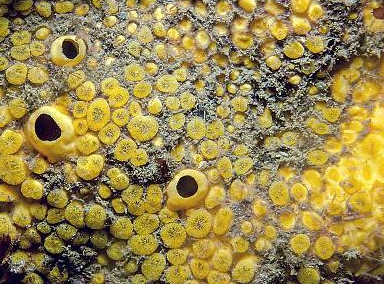
Image: Cliona Celata
Forms of Cliona
Cliona is commonly categorised into two distinct forms. Both forms are visible from the eyes and are generally large in size. They are as follows:
1. Boring Form
The distinctive stage of the cliona provides the reason for the colloquial moniker ‘boring sponges’. The particular stage represents the growth and development stage of the cliona. The cliona can be identified easily as per their appearances, like rounded protuberance, known as papillae, that protrude the limestone or other calcareous surfaces. Thus, commonly seen under oyster shells and mussel beds. The cliona celata organism resembles the lobes of a yellow lemon in appearance.
2. Massive Form
Among other cliona species, cliona celata tends to have a massive form called Raphyrus. They possess characteristics like flattened papillae and are well-shaped in appearance. They also have round ridges of about 40 cm long, where on the top large oscules are present with raised rims. On the edges, massive forms also show thick plate-like structures.
Large individuals can be grown up to 50 cm long with a width of 100 cm. Cliona celata becomes vibrant yellow around its ocular surface at its massive form, with a smooth surface. The surface is coated with tuberculate inhalant papillae, and the sponge is rigid with hard consistency at the massive form of their survival period.
Reproduction in Cliona
The species cliona celata can reproduce both asexually and sexually. They can either produce sperm, assuming they encounter any female egg around or possess simple mitotic division. Also, cliona’s large larva attaches with molluscs, causing the host's death with time. The growth and development take place further with the formation of colonies.
Characteristics of Cliona
Cliona is found in different forms. Each form possesses a wide range of distinct properties defining internal and external qualities. They are as follows:
- They possess evenly distributed inhalant sieve-like openings.
- Have a compact and tough outer layer.
- Internal structures are made up of Sharm ponty spicules. Spicules can be observed under microscopy. The two types are megascleres and microscleres.
- Apertures are present at the tips during the Boeing stage of the cliona. In massive form, apertures become oscules.
- Cliona does not show any literal structure.
- Outer surfaces are mosaic-like and smooth.
- Cliona, in both forms, is found in reefs and lagoons.
- They can be green, orange and mostly yellow colours.
- It shrinks when isolated from water and becomes quite invisible.
- Oscules are open underwater, but when isolated, they do appear.
Significance of Cliona
Cliona plays an important role in the marine ecosystem. Their significance is as follows.
- Being destructive for limestone and other calcareous surfaces, they contribute to coral reefs' complete health and diversity.
- It offers shelter and habitats to a distinct wide variety of organisms present under the ocean.
- Some invertebrates find safety in tunnels and chambers like structures of cliona and live as refugees.
- Cliona lives as an ecosystem engineer by dissolving calcium carbonate and other trapped minerals and nutrients into the water, which other marine organisms can utilise.
- After the destruction of reefs, the cliona helps in maintenance. The cliona's actions result in productivity and new growth of the entire marine ecosystem.
- They act as protectors of small marine organisms from their predators. Predators would be unable to reach small organisms in the holes of cliona.
Practice Problems
Q1. Cliona can reproduce
A. Asexually
B. Sexually
C. All of the above
D. None of the above
Ans. C. All of the above
Cliona can reproduce both sexually and asexually.
Q2. Cliona shrinks when
A. Taken out from the water
B. Present in water
C. Placed in a container
D. None of the above
Ans. A. Taken out from the water
Cliona shrinks when taken out from the water.
Q3. Cliona can be of colour
A. Yellow
B. Green
C. Orange
D. All of the above
Ans. D. All of the above
Cliona species can be present in green, orange and mostly yellow colours.
Frequently Asked Questions
Q1. Can I see cliona with my naked eyes?
Answer: we can see most of the cliona species with our naked eyes.
Q2. Is cliona edible?
Answer: No, cliona are the sponges that we do not eat.
Q3. Is cliona dangerous for human beings?
Answer: Many cliona species present in water are toxic to human health. On the other hand, some are not but possess some qualities that may harm our industries, like pearls.

 Call Now
 Let's Chat
 Share
Share