-
Call Now
1800-102-2727


Botanical Gardens, Practice Problems and FAQs

You all may have a garden at home and most of you will be knowing the names of the plants present in your garden. All of us like to spend time in gardens and enjoying the beauty of nature. It gives some kind of relaxation to our mind. But have you heard about botanical gardens? What are they?
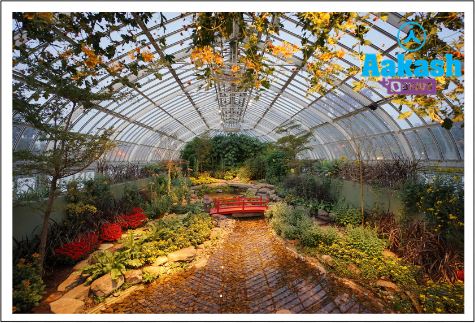
Fig: Botanical Garden
Yes, botanical gardens are specialised gardens assigned for the collection, cultivation, preservation, and display of varieties of plants labelled with their scientific names. It is not merely a place for growing flowers. It is an educational institution for botanists, scientists, students and the general public. Let’s understand more about botanical gardens in this article.
Table of contents
- Botanical gardens
- Constituents of modern day botanical gardens
- Plant varieties in a botanical gardens
- Examples of botanical gardens
- Role of botanical gardens
- Practice Problems
- FAQs
Botanical gardens
It is a place where different species of plants are grown for identification, research and educational purposes. It is considered as a natural and economical reference system. Theophrastus developed the first real botanical garden.

Fig: Theophrastus
Constituents of modern day botanical gardens
The following are present in a modern day botanical garden:
Outdoor plants
The plants that are grown on the ground outside in a garden are called outdoor plants. Examples include coconut trees, banyan trees, Pinus, Cycas etc.
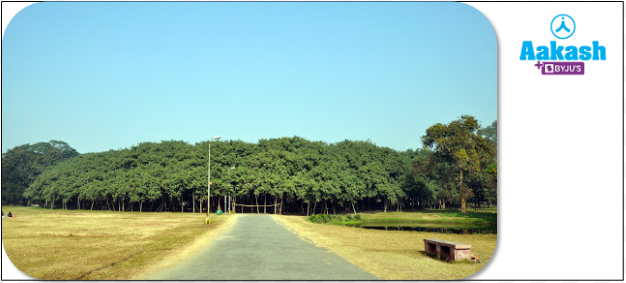
Fig: Banyan tree
Herbarium
It is a place with a collection of dried, pressed and preserved plant species which are mounted on sheets. The herbarium sheets will have information about date and place of collection, English, local and botanical names, family, and collector's name.
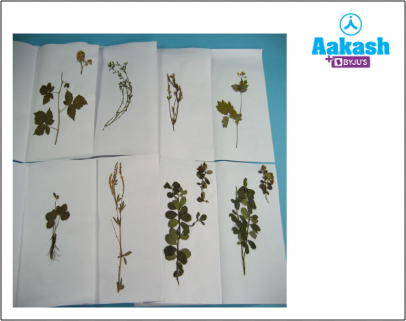
Fig: Specimens preserved in herbarium sheets
Green houses
It is a building made up of glass walls and a glass roof. These are used for growing plants like tropical flowering plants and tomatoes. It stays warm inside during winters too. During daytime, sunlight enters inside the greenhouse and makes the environment warm inside.
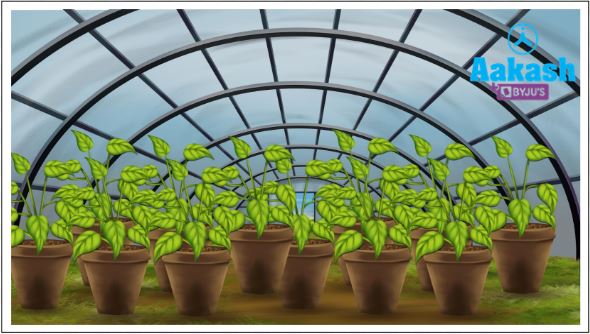
Fig: Green house
Research laboratory
The various resources available in the botanical gardens are used for studies, conservation and making the knowledge available to the public. The scientific activities conducted at botanical gardens include propagation, conservation, horticulture, taxonomy, seed science, systematics, biotechnology, genetics, education, public education, restoration ecology etc. Hence these are well equipped with research laboratories.

Fig: Research laboratory
Museum
It is a place with a collection of preserved specimens of plants which are used for study and reference. It is generally set up and found at educational institutions. It preserves specimens and records information for taxonomic purposes.
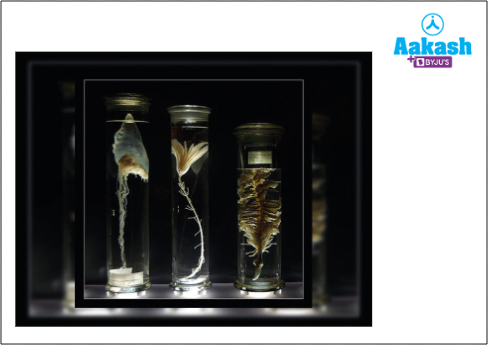
Fig: Museum
Library
It is a building with collections of periodicals, books and films related to plants. This makes the knowledge available for use by the public, students or researchers.

Fig: Library
Plant varieties in a botanical garden
A modern botanical garden displays normally the following varieties of plants:
- Different varieties of cultivated plants.
- Medicinal plants.
- Plants with economical importance.
- Plants from different geographical regions.
- Plants mentioned in literature.
- Plants of religious importance.
- Cactus.
- Bonsai plants.
Examples of botanical gardens
The following are some of the important botanical gardens:
Royal Botanical Gardens
It is the most famous and largest botanical garden in the world and is located at Kew (London), England. It was founded in 1759 by William AIton and it spread around 500 acres of land. It has a vast variety of plants and is equipped with modern laboratories for research purposes. It has several greenhouses for different varieties of plants. It maintains a large herbarium also.
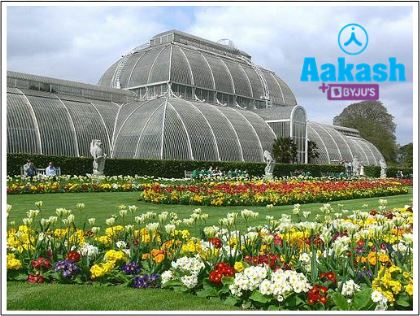
Fig: Royal Botanical Gardens, Kew (London), England
Indian Botanical Garden, Kolkata
It is the most famous and largest botanical garden of India and is located at Howrah (Shivpur), Kolkata. It was established in 1787 by the East India Company. This garden has a collection of orchids, palm, lilies etc. It has the great Banyan tree (Ficus benghalensis) that spans around 3.5 acres and is over 80 feet tall. This banyan tree is around 250 years old.

Fig: A view from the Indian Botanical Garden
National Botanical Research Institute, Lucknow
It is famous as Sikandar Bagh. This covers around 65 acres of land. It is located on the bank of Gomti river. This garden has fern houses, palm houses, cactus houses, herbarium etc. It possesses a vast variety of medicinal plants also.
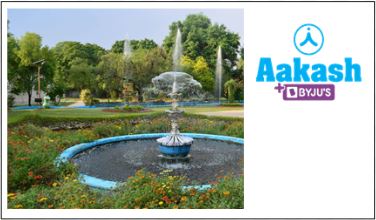
Fig: National Botanical Research Institute, Lucknow
Lalbagh Botanical Garden, Karnataka
This garden was commissioned by Haider Ali of Mysore in 1760. But it was completed by Tipu Sultan, the son of Haider Ali. It is situated in around 240 acres of land at the heart of the city of Bangalore, Karnataka. This botanical garden possesses the largest collection of subtropical and tropical plants. This garden has several centuries old trees. This garden has a lake, a topiary park, and a glasshouse. Topiary is the art of cutting, training, and trimming shrubs or trees into ornamental shapes.
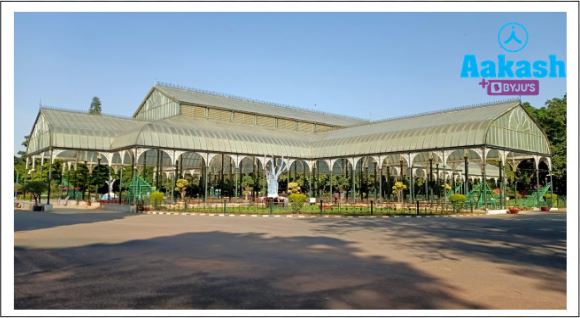
Fig: Green house of Lalbagh Botanical Garden
International Association of Botanic Gardens
It is an organisation which coordinates with the exchange and research of plant specimens. This organisation was formally constituted at the 8th International Botanical Congress in 1954 held at Paris. It is considered as the official umbrella organisation for arboreta and botanical gardens all over the world. It is a member of the IUBS or International Union of Biological Sciences.

Fig: International Association of Botanic Gardens
Role of botanical gardens
The following are the major roles of botanical gardens:
- It provides plant specimens for comparative taxonomic studies.
- It provides material for botanical research.
- It acts as an acclimatisation centre for exotic plants which are economically important.
- Ex-situ conservation of rare and endangered plant species is done here.
- It acts as a habitat for various animals.
- It purifies air and provides greenery.
- It improves the environment.
- It gives on-site teaching opportunities related to plants, their collection and classification.
Practice Problems
1. Which one of the given statements is incorrect?
- A museum possesses a collection of photographs of animals and plants
- Herbarium has dried, pressed and preserved plant specimens
- Key is a taxonomic aid used for the identification of specimens
- Botanical gardens possess a collection of living plants for reference
Solution: Museum has a collection of both plant and animal species. Specimens are preserved in jars or as dry specimens here. Insects are kept in special insect boxes. Large animals are stuffed and preserved in museums. Hence statement A is incorrect.
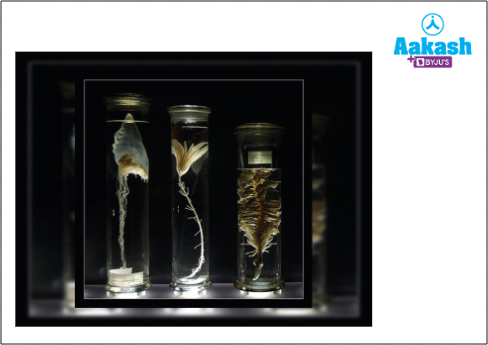
Fig: Museum
2. Herbarium sheets have information about ___________________.
- Date, time and place of collection, English, local and botanical names, family, collector's name
- Date and time of collection, English, local and botanical names, class, collector's name
- Time and place of collection, English, local and botanical names, phylum, collector's name
- Date and place of collection, English, local and botanical names, order, collector's name
Solution: Herbarium is a collection of preserved plant specimens. The specimens are dried and mounted on paper with all the data required for scientific study. The herbarium sheets will have information about date and place of collection, English, local and botanical names, family, and collector's name. Hence the correct option is D.
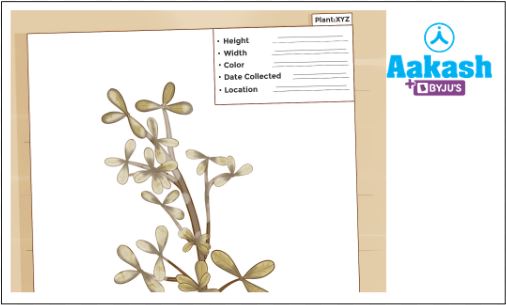
Fig: Herbarium sheet
3. ICBN stands for _____________________.
- Indian Council of British Nature
- International Code for Botanical Nomenclature
- Indian Code for Botanical Nomenclature
- International Code for Biological Nomenclature
Solution: International Code for Botanical Nomenclature or ICBN provides the principles and criteria for naming plants. Hence the correct option is B.
4. The National Botanical Research Institute or NBRI is situated in ________________.
- Lucknow
- England (Kew)
- Kolkata
- Howrah
Solution: Botanical gardens have collections of live plants which are labelled by their binomial names and used for reference purposes. NBRI or National Botanical Research Institute is a famous botanical garden situated in Lucknow, India. It is famous as Sikandar Bagh. This covers around 65 acres of land. It is located on the bank of Gomti river, a tributary of Ganges. This garden has fern houses, palm houses, cactus houses, herbarium etc. It possesses a vast variety of medicinal plants also.
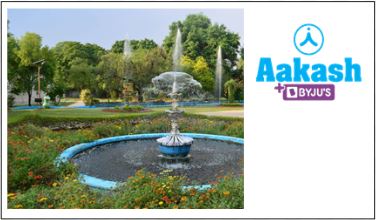
Fig: National Botanical Research Institute, Lucknow
FAQs
1. Which is considered as the largest herbarium of the world?
Answer: Botanical gardens have collections of plants which are labelled by their binomial names and used for reference purposes. The herbarium contains a collection of dried and pressed plant specimens. They are labelled along with descriptions in herbarium sheets. The Royal Botanical Garden situated in Kew, England has the largest herbarium in the world. This herbarium has nearly seven million dried plant specimens.
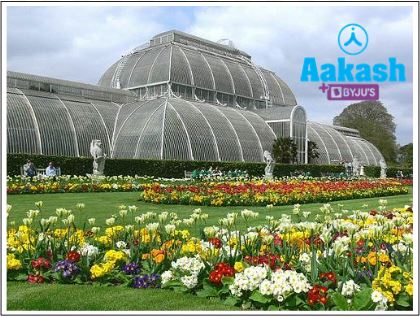
Fig: Royal Botanical Gardens, Kew (London), England
2. What are the defining characteristics of a botanic garden?
Answer: The following are the main characteristics of a botanic garden:
- Collection of specimens must be done on a scientific basis.
- The proper monitoring of the collections made.
- Perfect documentation of the collections including the required details like origin, scientific names etc.
- Proper labelling of the plants.
- Communication of information to institutions, other gardens, scientists and the public.
- It must be open to the public.
- Exchange of materials and specimens with arboreta, other botanic gardens and research institutions.
- Maintenance of research programs.
- Undertaking the technical or scientific research on plants collected.
- How botanical gardens help in conservation programs?
Answer: Botanical gardens help in exchanging pollen grains, seeds, and other genetic information with research institutes and other botanical gardens. It also helps to preserve rare and endangered species. For example, a number of plants which are extinct in the wild are kept alive in botanical gardens.
4. What are the main objectives of botanical gardens?
Answer: The main objectives of the botanical gardens are education, conservation, research, recreation and display.

 Call Now
 Let's Chat
 Share
Share