-
Call Now
1800-102-2727


Time period, Frequency, Time period of some standard systems, Practice problems, FAQs

Have you swung in a ferris wheel? You sit in one of the buckets of the wheel and it starts rotation. During the rotation you may observe that your bucket is passing from the same position where you have sat, after a fixed time interval. Means your motion is repeating. This kind of motion is termed periodic motion. And the fixed time after which the motion is repeating is called the Time period of the motion. Let's learn more about the time period !
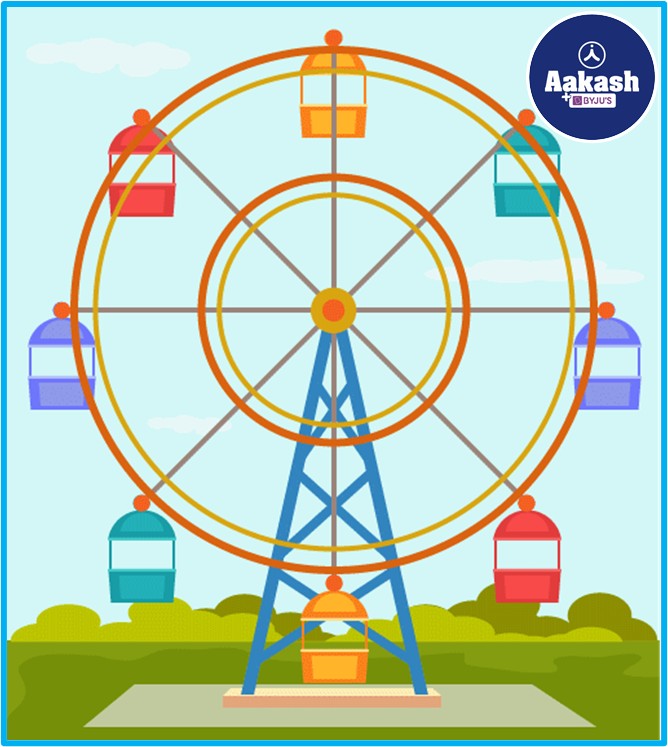
Table of content
- What is periodic motion?
- Time period
- Frequency
- Time period of some standard systems
- Practice problems
- FAQs
What is periodic motion?
Periodic motion is defined as the motion that a particle or body performs periodically along a specific path after a regular interval of time. Periodic motion can have any type of motion such as rectilinear, circular, elliptical, oscillatory. But the key term is it should repeat itself. For example - the motion of the earth around the sun.
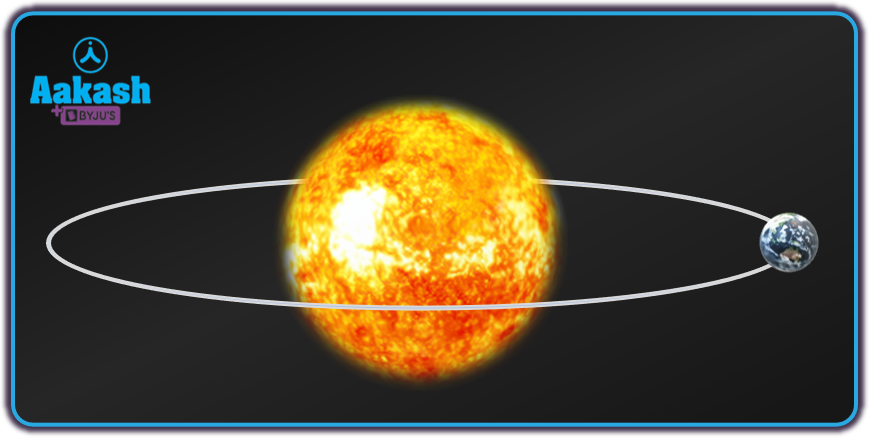
The motion of the spring block system, simple pendulum, motion in a uniform circle, all simple harmonic motion and oscillatory motions are periodic motion. The Term “ Time period” is associated with periodic motion. Let's define it !
Time period
The time period of periodic motion is the fixed amount of time after which the motion repeats itself.
For example A truck delivers the parcel from Delhi to bhopal. If it takes 1 day to reach Bhopal and 1 day to return to Delhi, so the time period of the truck is 2 days. Because after two days it will repeat the same.
The symbol T is typically used to represent the Time period. Time period is measured in seconds.
Frequency
The number of repetitions of a periodic motion in 1 s is known as frequency. It is the reciprocal of the time period. The frequency can be represented by f. The unit of frequency is s-1. It is also known as hertz (Hz). The frequency is given as,
Time period of some standard systems
- Time period of the spring block system in simple harmonic motion -
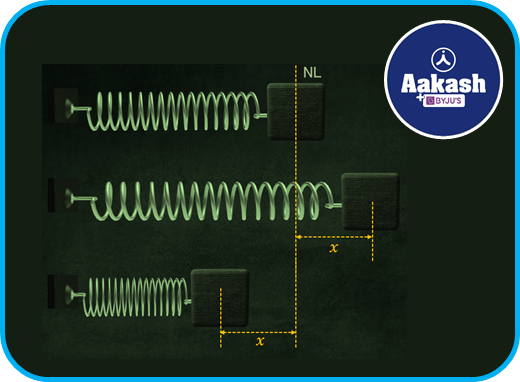
The time period is
Where m= Mass of the block
k= Spring constant
- Time period of the block oscillation in water
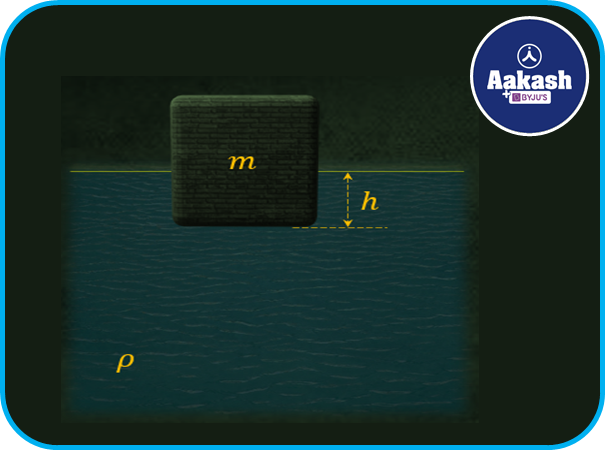
The time period is
Where m= Mass of the block
A= Area of block cross section
= Density of water
- Time period of simple pendulum
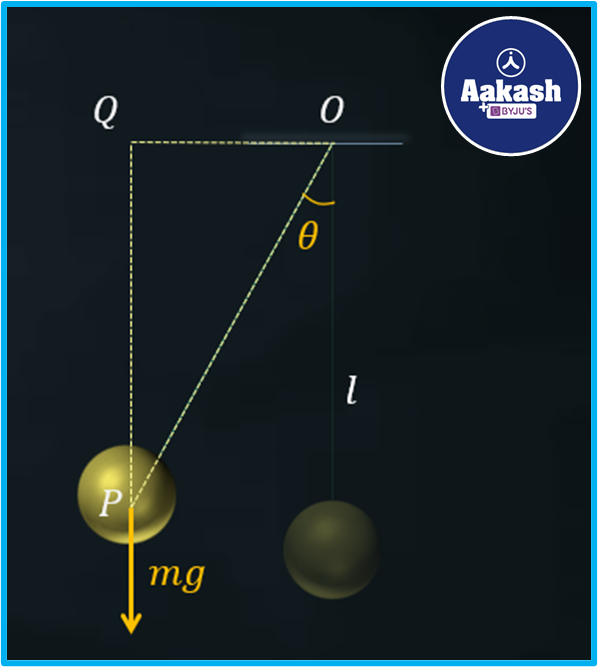
The time period is
Where, l= length of the string
- Time period of compound pendulum
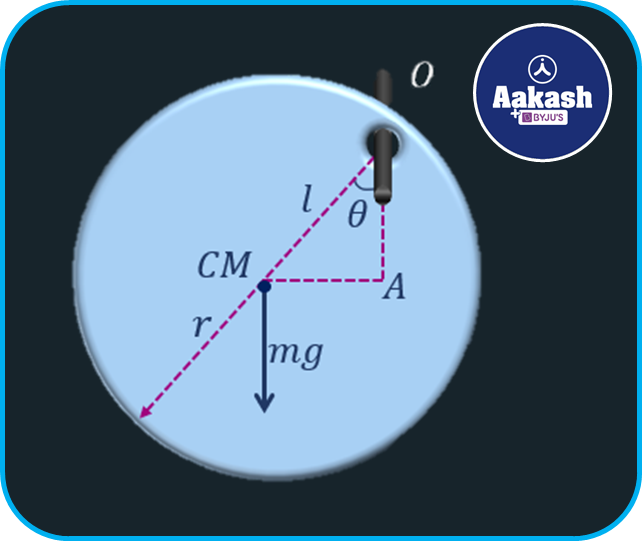
The time period is
Where IHing= Moment of inertia of the of rigid body about hinged point
m= Mass of the body
l= distance between the centre of mass of the body and hinged point
- Time period of torsional pendulum
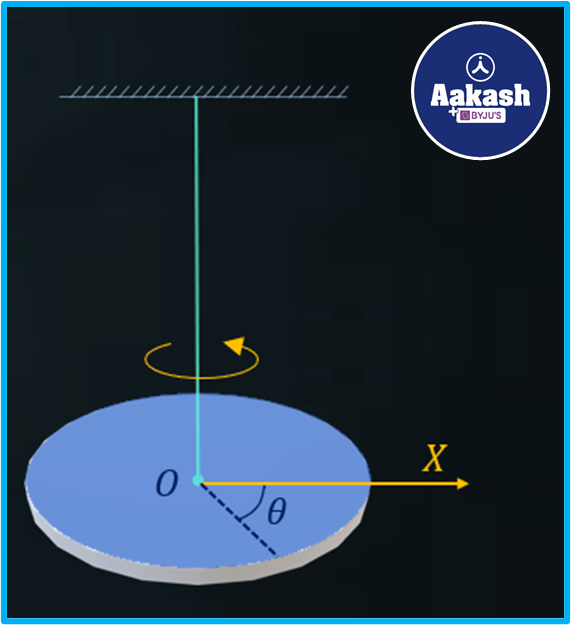
The time period is
Where I= Moment of inertia about rotational axis
C= Torsional coefficient
Practice problems
Q. The frequency of periodic motion is 4 oscillations per sec. What is the time period of the oscillation?
A. f=4 oscillation per second
We know the relation between between the time period and frequency
T=0.25 sec
Hence the time period is 0.25 sec .
Q. The block of mass 100 kg is attached with a spring of force constant 100 N/m and performs simple harmonic motion. Find the time period of the motion.
A. Given m=100 kg
k=100 N/m
The time period of the spring block system in SHM is given be
T=6.28 sec
The time period of the oscillation is 6.28 sec.
Q. A vertical cylinder of mass 500 kg is floating in the water. When it is displaced vertically it starts oscillating. If the cross sectional area of the cylinder is 0.5 m2 then find the time period of the oscillation.
A. Given m=500 kg
A=0.5 m2
The time period is given by,
T=2 sec
The time period of vertical cylinder is 2 sec .
Q. A simple pendulum has the length of the string 0.981 m. What is the time period of the pendulum?
A. Given l=0.981 m
The time period of the simple pendulum is given by,
T=1.98 sec
Hence the time period is 1.98 sec.
FAQs
Q. What is the time period of the earth revolution around the sun?
A. The time period of earth revolves around the sun is 365 days and 6 hr (approx). Due to this reason in every fourth year a day is added as 29th february.
Q. What is non-periodic motion?
A. A motion of the body which does not repeat itself is termed as non periodic motion. For example- motion of a car moving on a straight road.
Q. Why is the time period of the simple pendulum on the moon greater than the earth?
A. The gravitational acceleration on the moon is less than the earth. Also we know the time period of a simple pendulum is inversely proportional to the square root of the gravitational acceleration. So it is greater on the moon than the earth.
Q. What is the time period of the motion of the moon around the earth?
A. Moon takes 27.3 days to complete one revolution around the earth. So the time period of the moon is 27.3 days.

 Call Now
 Let's Chat
 Share
Share