-
Call Now
1800-102-2727


Variation of Conductivity With Dilution in Strong and Weak Electrolytes: Conductance, Conductivity of Strong Electrolytes and Weak Electrolytes, Variation of Conductivity with Dilution in Weak Electrolytes and Strong Electrolytes, Practice Problems.

Mother makes a fruit juice by using small amount of water per fruit and we all like the concentrated juice
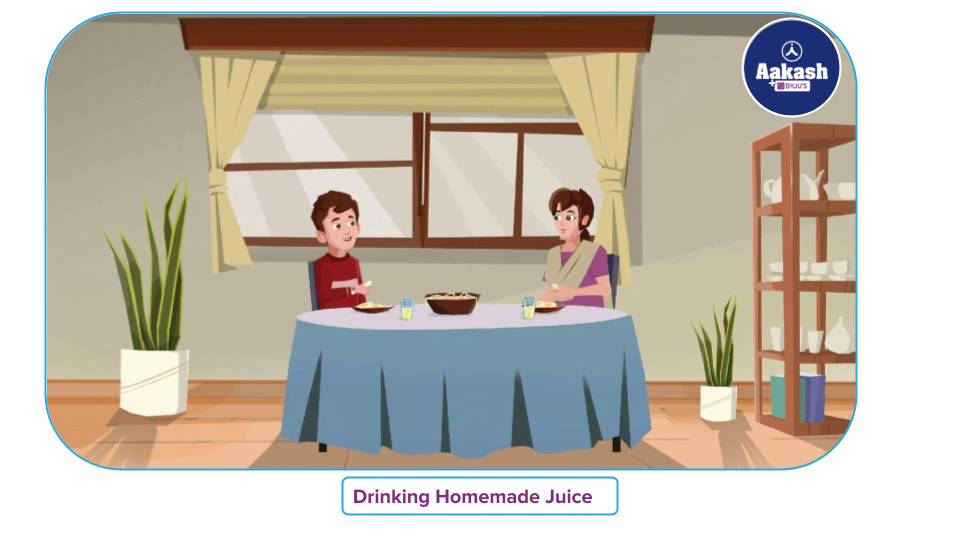
Shopkeeper. uses more water still we drink it If somebody makes a fruit juice with one litre of water per fruit, you don’t like it.
This is due to dilution of the solution.
Have you ever wondered what would be the impact of dilution on conductivity for a strong and weak electrolyte.
Let's discover the answer to this query.
Table of content
- Conductance (G)
- Conductivity/ Specific conductance
- Strong electrolytes
- Weak electrolytes
- Variation of conductivity with dilution in strong and weak electrolytes
- Practice problems
- Frequently asked questions (FAQs)
Conductance (G)
It stands for how easily current can move through the conductor. It is a gauge for how well a conductor can carry electricity. Conduction increases as conductance value increases.
Typically, it is the opposite of resistance.
Mathematically we can write,
Unit of conductance is simen (S)
Conductivity (or specific conductance) of an electrolyte solution is a measure of its ability to conduct electricity. The SI unit of conductivity is siemens per meter (S/m). specific conductance, κ (kappa) is the reciprocal of the specific resistance. Tarikul Shoron
Conductivity/ Specific conductance
The ability of a solution to allow electric current to pass through is referred as the solution's conductivity or specific conductance. SI unit of conductivity is Siemens per meter (S/m).
Mathematically
Where
G= conductance of 1 (unit)3 of conductors or 1 (unit)3 of solution.
l= distance between electrodes
A= area of cross section of electrodes
S.I unit of K
Common unit :
Strong electrolytes
- Strong electrolytes are substances that totally dissociate into ions in a polar solvent. Sodium chloride (NaCl), potassium chloride (KCl), lead bromide (PbBr2), sodium hydroxide (Na(OH)2), potassium hydroxide (KOH), hydrochloric acid (HCl), nitric acid (HNO3), sulfuric acid (H2SO4), and others are some examples.
- Only ions and not much of undissociated electrolyte molecules will be present in the solution. Strong electrolytes only work well as electrical conductors when they are in molten state or in aqueous solutions.
- To measure the electrolyte's relative strength, we can use a galvanic cell. The strength of the electrolyte is directly proportional to the voltage generated.
- The reaction arrow of a strong electrolyte, which solely points toward products, indicates almost complete dissociation. The reaction arrow of a weak electrolyte, on the other hand, points in both directions.
- The general form of the dissociation of strong electrolyte equation is as follows:

Weak electrolytes
- Weak electrolytes can be defined as the electrolytes which don’t dissociate completely into ions in its aqueous solution. Both the electrolyte ions and the unionized molecules will be present in the solution. Weak electrolytes only partially ionized in water (typically 1% to 10%), but strong electrolytes are ionized almost totally (100%)
- Weak electrolytes include (CH3COOH) (acetic acid), (H2CO3) (carbonic acid), NH3 (ammonia), and H3PO4 (phosphoric acid). Electrolytes that are weak acids and bases are electrolytes that are weak. Powerful acids, bases, and salts, on the other hand, are strong electrolytes. Because the amount that does dissolve totally ionized in water, a salt with limited solubility in water can nonetheless be a powerful electrolyte.
- The reaction arrow of a weak electrolyte, which points in both direction. The weak electrolyte equation takes the following general form:
Variation of conductivity with dilution in strong and weak electrolytes
- Irrespective of strong electrolyte or weak electrolyte, value of conductivity decreases with increase in dilution because conductance is of a solution within one cm3 volume of solution.More dilution means less electrolyte within that volume
- The conductivity decrease in case of weak electrolytes on dilution will be lower due to enhanced ionization of the weak electrolytes with dilution
- When we dilute an electrolyte the number of ions per unit volume of the electrolyte decreases.
- We know that conductance is directly proportional to no. of ions present in the solution,.
- Since conductivity is the conductance per unit volume of solution. Hence, conductivity decreases with an increase in dilution.
Practice problems
Q. 1 How conductance is related to number of ions?
A. Conductance is directly proportional to number of ions in solution.
B. Conductance is inversely proportional to number of ions.
C. Conductance is independent of number of ions in solution.
D. None of the above.
Answer: (A)
Solution: It represents the ease by which current can flow through the conductor. It is a measure of degree through which conductor can conduct electricity. Greater the value of conductance, greater us the conduction. Conductance is directly proportional to the number of ions present in the solution.
Q. 2 Which of the following is not example of weak electrolyte?
A. H2SO4
B. CH3COOH
C. H2CO3
D. NH3
Answer: (A)
Solution: When a substance is dissolved in polar solvents like water, it forms an electrically conducting solution. Electrolytes are a class of compounds that fall under this category. Cations and anions, which are uniformly scattered in the solvent, can be removed from the dissolved material. Electrically, this solution is in a state of neutrality. Weak electrolytes include (CH3COOH) (acetic acid), (H2CO3) (carbonic acid), NH3 (ammonia), and H3PO4 (phosphoric acid). Whereas H2SO4 is a strong electrolyte.
Q. 3 M KCl electrolyte was placed in a conductivity cell. 1.23 S cm-1 was the conductivity observed for the above electrolyte. What will be the value of conductivity of the KCl solution if it was diluted 10 times?
A.
B.
C.
D.
Answer: (C)
Solution: I know by looking at the given data you must have started doing some rigorous calculations but wait. Don’t rush into calculations, understand the question properly and carefully look at the options that has given.
We know that upon dilution the value of conductivity decreases irrespective of the type of electrolyte.
Here, KCl is a strong electrolyte and when we dilute it further the value of conductivity will decrease. Hence, the correct answer will be less than 1.23 S cm-1.
Q4. Find out the incorrect representation:
A.
B.
C.
D.
Answer: (B)Solution: The reaction arrow of a strong electrolyte, which solely points toward products, indicates dissociation. The reaction arrow of a weak electrolyte, on the other hand, points in both directions.
Weak electrolyte (aq) ⇆ cation + (aq) + anion - (aq) (for weak electrolytes)
Strong electrolyte (aq) → cation + (aq) + anion - (aq) (for strong electrolyte)
NaCl is a strong electrolyte, hence it can’t be represented with an arrow point both side of the equation.
Frequently asked questions (FAQs)
Q1. Can we manually increase the dissociation of weak electrolyte?
Answer: Yes, we can definitely improve the dissociation of weak electrolytes upon dilution.
Q2. Is dissociation and dissolving same thing?
Answer: When ionic substances are dissolved in water, dissociation occurs, in which the ions that were previously present in the solid state separate, for example NaCl.
Organic chemicals such as glucose and sugars, which are molecular compounds, dissolve in water and establish H-bonds with water, causing their molecules to split from one another, dissolving their solid state structure.
Q3. Acetic acid is extremely soluble in water then why it is considered as a weak electrolyte?
Answer: The acid in vinegar, acetic acid, is particularly water soluble. However, rather than its ionized form, ethanoate, the majority of the acetic acid remains intact as its original molecule (CH3COOH). Acetic acid dissolves in water and ionizes to produce ethanoate and the hydronium ion, but the equilibrium is to the left (reactants are favored). In other words, when ethanoate and hydronium form, they break down into acetic acid and water very quickly:
Due to the small amount of product formed in the form of ethanoate, acetic acid is a weak electrolyte rather than a strong electrolyte.
Q4. How come liquids conduct electricity?
Answer: The conductivity of a solution is directly proportional to the number of ions present in a unit volume of the solution because current is carried forward by the ions.

 Call Now
 Let's Chat
 Share
Share