-
Call Now
1800-102-2727


Electrochemical Series and Feasibility of Reactions – Electrochemical Series, Feasibility of Reactions, Practice Problems and FAQ

Can you arrange the given animals according to how fast they can run?
I am pretty much sure that everyone can.
Everyone is aware that the sloth is the laziest of all land animals, while the cheetah is the fastest.
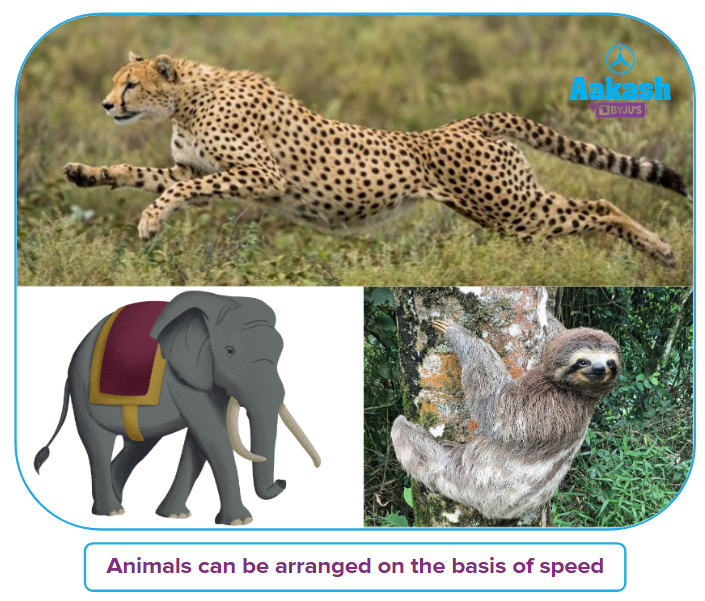
Therefore, the given animals can be ranked based on speed as follows:
Cheetah > Elephant > Sloth
Similarly, elements or species can also be organised into a series based on their electrode potential, and this series is referred to as an electrochemical series.
On this concept page, we will learn about the electrochemical series and the feasibility of reactions in detail.
TABLE OF CONTENTS
- Electrochemical Series
- Nature of Electrode With Respect To SHE (Standard Hydrogen Electrode)
- Predicting the Feasibility of a Redox Reaction
- Practice Problems
- Frequently Asked Questions – FAQ
Electrochemical Series
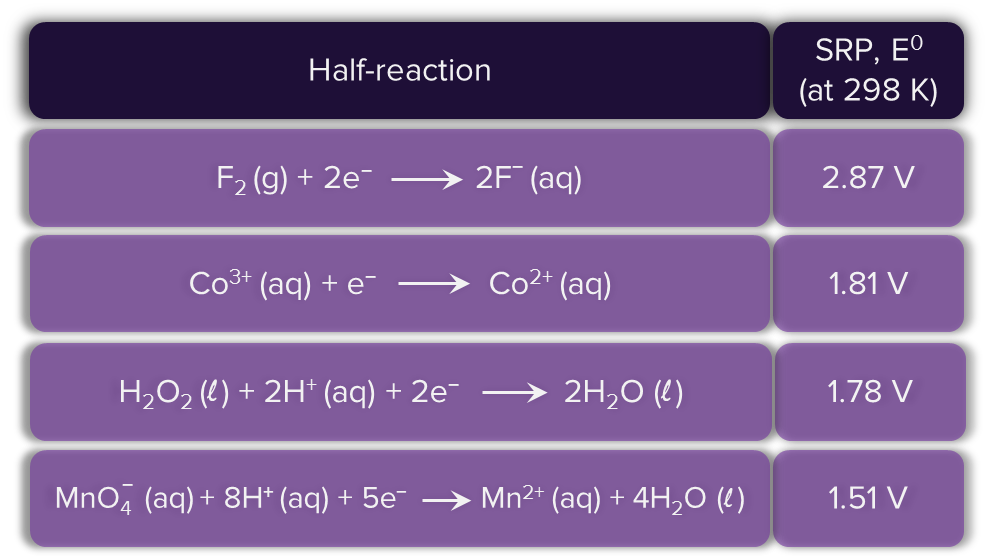
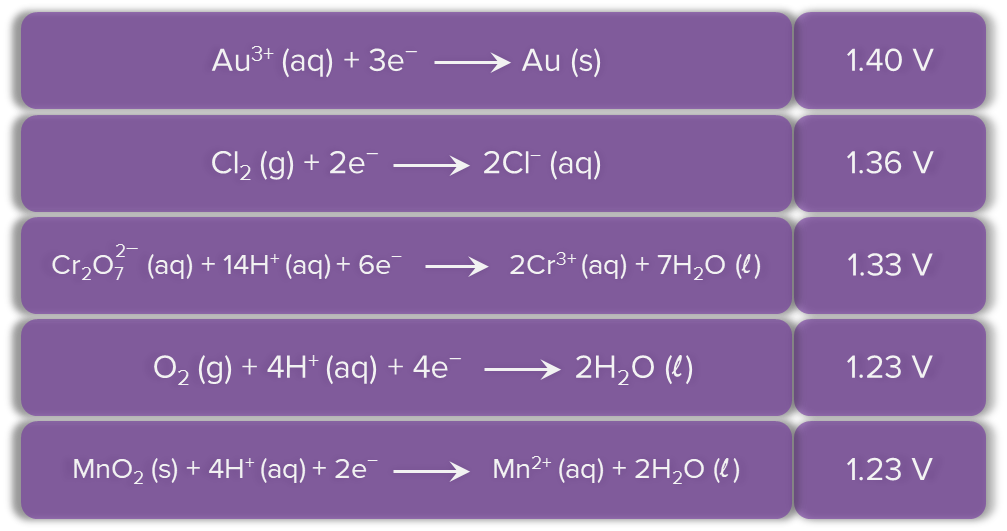
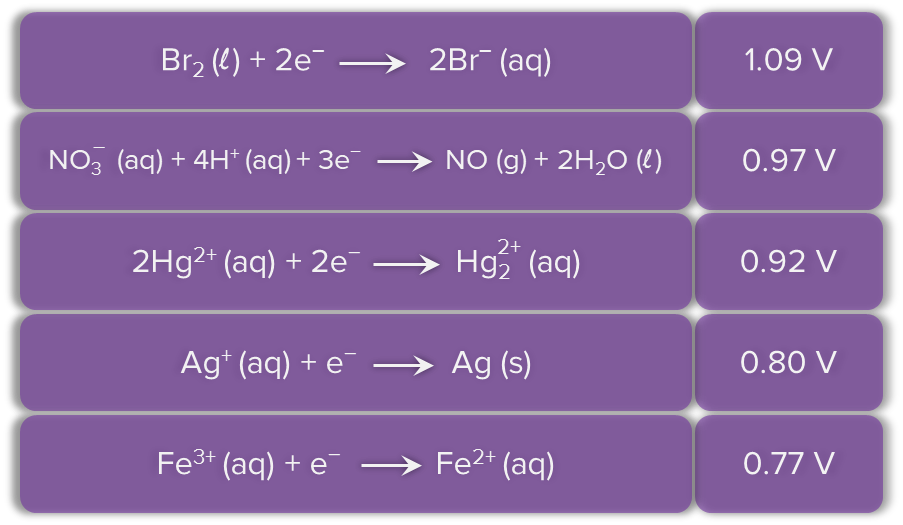
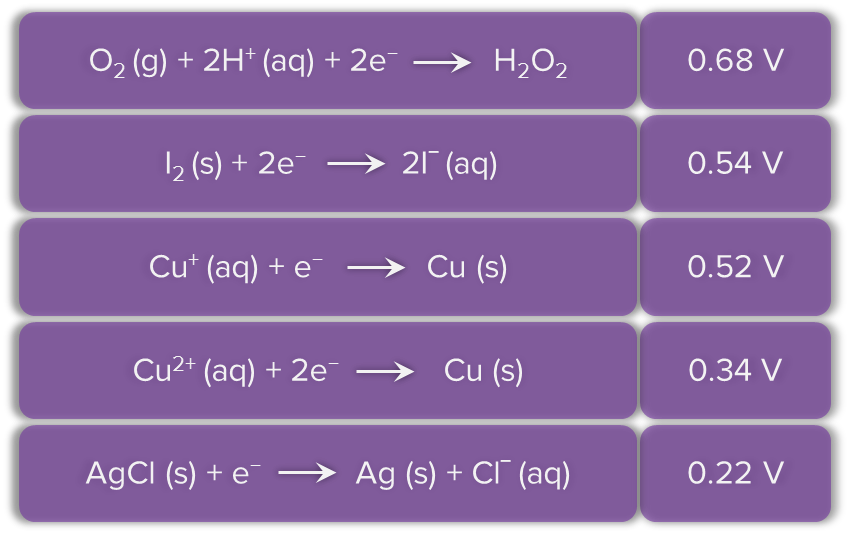
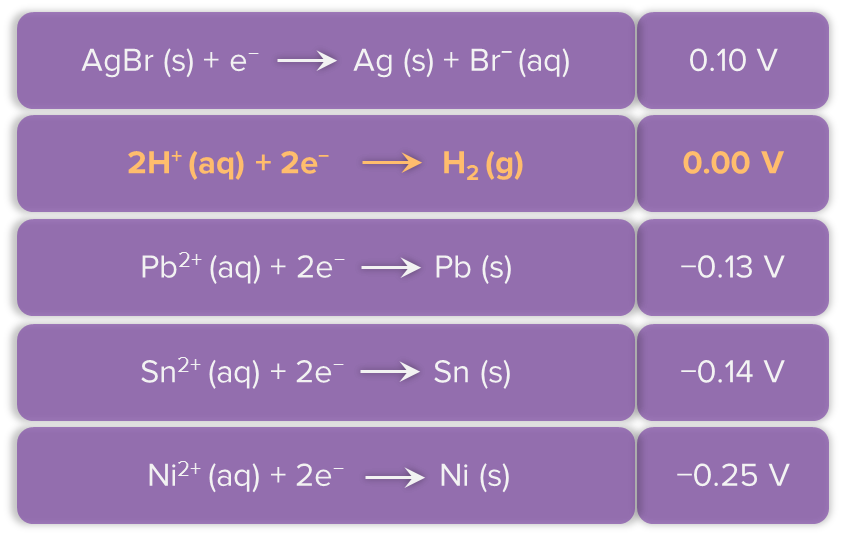
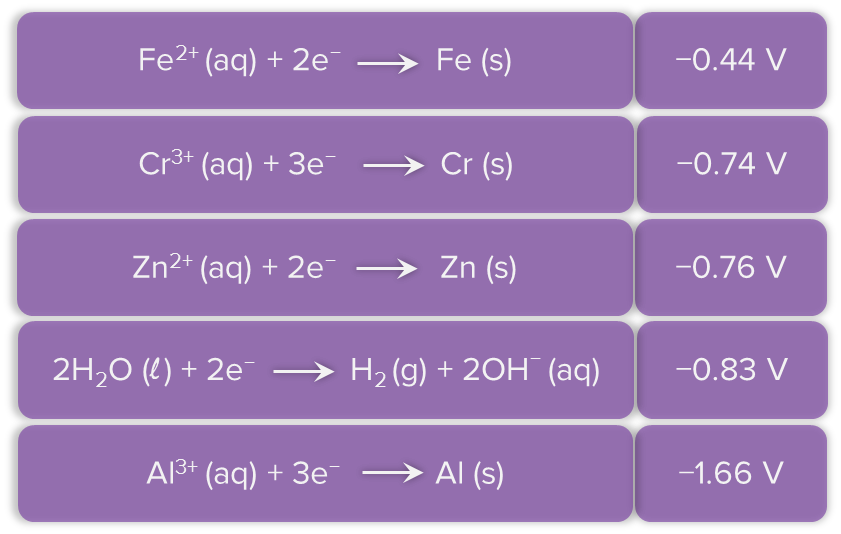
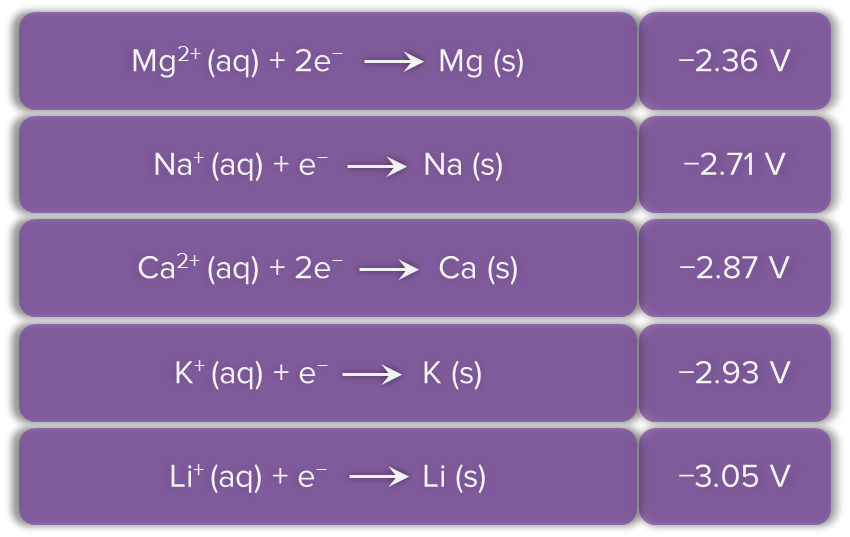
- Electrochemical series, also known as activity series, is a list that describes the arrangement of elements in the order of increasing electrode potential values (reduction potential).
- The series was established by measuring the potential of various electrodes versus a standard hydrogen electrode (SHE).
- The standard electrode potential is obtained by measuring the voltage when the half-cell is connected to the standard hydrogen electrode under standard conditions.
Nature of Electrode With Respect To SHE (Standard Hydrogen Electrode)
Electropositive elements are those that, in contrast to hydrogen, exhibit a higher tendency to lose electrons to their solution. In that case, the reduction potential of hydrogen is more than the electropositive element and in the electrochemical series, electropositive elements are placed above the Standard Hydrogen Electrode Potential.
Similar to this, electronegative elements are those that accept electrons when are in a reaction with hydrogen. In that case, the reduction potential of hydrogen is less than the electronegative element and in the electrochemical series, electronegative elements are placed below the Standard Hydrogen Electrode Potential.
Predicting the Feasibility of a Redox Reaction
The EMF (electromotive force) of the cell based on the provided redox reaction is calculated to determine if a certain redox reaction is possible or not. To happen spontaneously, a redox reaction needs the cell's EMF to be positive. If the EMF is found to be negative, the indicated direct reaction cannot occur; rather, the opposite reaction may occur.
Example:
Let us check the feasibility or spontaneity of this reaction.
In this redox process or redox reaction, the oxidation number of Zinc in ZnSO4(aq)is +2 which changes to 0 in Zn(s). The oxidation number of Zinc decreases by two. It means that there is reduction of Zinc from (+2 to 0).
Also, the oxidation number of Silver in Ag(s) is 0 and changes to +1 in Ag2SO4(aq). The oxidation number of silver increases by one. It means that there is a oxidation of silver from (0 to +1).
From the electrochemical series,
As per the information from redox reaction, silver should be oxidised and zinc should be reduced. Let us find out whether this redox reaction is feasible or not.
EMF is negative. Hence, this redox reaction is not feasible.
But if we reverse the reaction,
As per the information from redox reaction, silver should be reduced and zinc should be oxidised.
EMF is positive. Hence, this redox reaction is feasible.
Recommended Videos
Electrochemistry Class 12 One-Shot JEE (Full Chapter Revision) in 60 mins for JEE Main 2022 Exam
Practice Problems
1. Can you predict whether the given reaction of Ag with sulphuric acid is feasible or not using the electrochemical series? Calculate the EMF of the cell.
a. The redox reaction is not feasible, -0.80 V
b. The redox reaction is feasible, +1.60 V
c. The redox reaction is not feasible, -1.60 V
d. The redox reaction is feasible, -0.80 V
Answer: A
Solution:
As per the reaction, the oxidation number of hydrogen in H2SO4 is +1 which changes to 0 in H2. The oxidation number of hydrogen decreases by one. Also, the oxidation number of silver in Ag(s) is 0 and changes to +1 in Ag2SO4(aq). The oxidation number of silver increases by one.
Hence, as per the given reaction, there is the reduction of H (+1 to 0) and the oxidation of Ag (0 to +1).
EMF is negative. Hence, this redox reaction is not feasible.
So, option A is the correct answer.
2. Can you determine using the electrochemical series whether the given reaction of Fe with sulphuric acid is possible or not? Determine the cell's EMF.
a. The redox reaction is not feasible, -0.44 V
b. The redox reaction is feasible, +0.44 V
c. The redox reaction is not feasible, -0.88 V
d. The redox reaction is feasible, -0.44 V
Answer: B
Solution:
As per the reaction, the oxidation number of hydrogen in H2SO4 is +1 which changes to 0 in H2. The oxidation number of hydrogen decreases by one. Also, the oxidation number of iron in Fe(s) is 0 and changes to +2 in FeSO4(aq). The oxidation number of iron increases by two.
Hence, as per the given reaction, there is the reduction of H (+1 to 0) and the oxidation of Fe (0 to +2).
EMF is positive. Hence, this redox reaction is feasible.
So, option B is the correct answer.
3. Can you evaluate whether or not the given reaction of Ag with Cu is feasible using the electrochemical series? If not, then which reaction should be the correct one?
a. The redox reaction is not feasible,
b. The redox reaction is feasible,
c. The redox reaction is not feasible,
d. The redox reaction is feasible,
Answer: A
Solution:
As per the reaction, the oxidation number of silver in Ag(s) is 0 and changes to +1 in Ag2SO4(aq). The oxidation number of silver increases by one. Also, the oxidation number of copper in CuSO4(aq) is +2 and changes to 0 in Cu(s). The oxidation number of copper increases by two.
Hence, as per the given reaction, there is the reduction of Cu (+2 to 0) and the oxidation of Ag (0 to +1).
EMF is negative. Hence, this redox reaction is not feasible.
If the reaction is reversed,
As per the information from redox reaction, silver should be reduced and copper should be oxidised.
EMF is positive. Hence, this redox reaction is feasible.
So, option A is the correct answer.
4. Can you evaluate whether or not the given reaction of Cr with F is conceivable using the electrochemical series? If not, then which reaction should be the correct one?
a. The redox reaction is not feasible,
b. The redox reaction is feasible,
c. The redox reaction is not feasible,
d. The redox reaction is feasible,
Answer: B
Solution:
As per the reaction, the oxidation number of chromium in Cr(s) is 0 and changes to +3 in Cr3+(aq). The oxidation number of chromium increases by three. Also, the oxidation number of fluorine in F2(g) is 0 and changes to -1 in F-(aq). The oxidation number of fluorine decreases by one.
Hence, as per the given reaction, there is the reduction of F from (0 to -1) and oxidation of Cr from (0 to +3).
EMF is positive. Hence, this redox reaction is feasible.
So, option B is the correct answer.
Frequently Asked Questions – FAQ
1. Can you justify the positive and negative values present in the electrochemical series?
Answer: The electrode at which reduction occurs in relation to a standard hydrogen electrode has a reduction potential that is given a positive sign, and the electrode at which oxidation occurs in relation to a standard hydrogen electrode has a positive oxidation potential or, when expressed as reduction potential, a negative sign.
2. Why is hydrogen's electrode potential assumed to be zero?
Answer: In order to establish an electrode's absolute electrode potential, a whole cell must first be formed. In light of this, hydrogen is selected as the common reference electrode with a zero electrode potential.
3. Are potential differences and EMF the same?
Answer: Although both EMF and potential difference are expressed in volts, their meanings are very different. The primary distinction between EMF and potential difference is that the former refers to the energy per unit charge exerted by an energy source, whilst the latter refers to the energy released when a unit quantity of electricity moves from one place to another.
When no current is flowing, the terminal potential difference is referred to as EMF, or electromotive force.
4. What are some examples of redox reactions in daily life?
Answer: Combustion is a redox process because it is an oxidation-reduction reaction. The internal mechanism of a space rocket is a redox reaction. For instance, methane combustion can be expressed using the chemical equation below.

 Call Now
 Let's Chat
 Share
Share