-
Call Now
1800-102-2727


Protein - Functions, Classification, Importance, Sources, Amino Acids, Practice Problems and FAQs

Protein is required for growth in children and for the maintenance and repair of body tissue in adults, among other things. But, when you think of protein, what's the first item that springs to mind? Is it something that we eat? Is it something that is already present in our body? Is it something we can take for granted? Is it something we can take in the form of supplements? Why is it important? If all these questions come to your mind after listening to word protein then we have here to answer them.
Thousands of different proteins make up each living cell. Proteins are complex polymers of amino acids with a large molecular mass. Let’s try to understand things in detail.
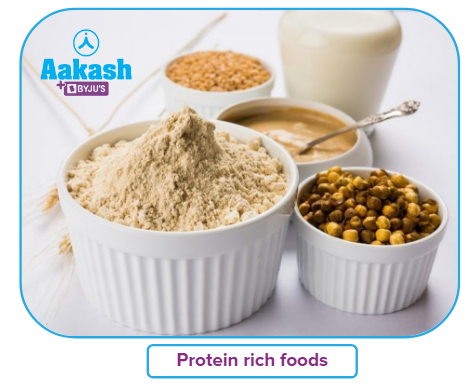
Table of content:
- Protein
- Functions of proteins
- Classification of proteins
- Structure of Proteins
- Importance of protein
- Sources of Protein
- Amino Acids
- Essential and Non-essential Amino acids
- Functions of Amino acids
- Deficiency of Amino acids
- Practice Problems
- Frequently asked questions (FAQs)
Proteins:
Proteins are macromolecules made up of fundamental building blocks called amino acids made up of Peptide bonds. Amino acids contain nitrogen in addition to carbon, hydrogen, and oxygen.
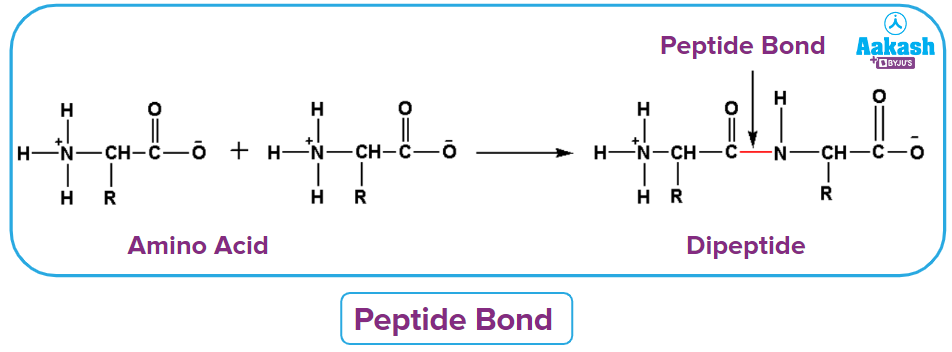
Proteins are big and complex molecules made up of one or more twisted and folded amino acid strands. Proteins are extremely complicated molecules that play a key role in the most fundamental and vital parts of life. Metabolism, mobility, cellular communication, and molecular recognition are among them.
Functions of Proteins:
- The long amino acid strand coils on itself again and again between distinct atoms, forming its highly complicated shape. Folded proteins can join together to form larger, more complex forms.
- The role of a protein molecule in biochemistry is determined by its folded structure. Structural proteins are shaped in such a way that they can form vital biological structures.
- Collagen is a fibre-shaped protein that keeps most of the body's tissues together. Another structural protein, keratin, generates a network of waterproof fibres in the skin's outer layer.
- Shapes in functional proteins allow them to participate in chemical activities in the body. Hormones, growth factors, cell membranes, channels, wand receptors, and enzymes are examples of functional proteins.
Classification of proteins:
Based on molecular structure, it can be classified as:
- Fibrous proteins
- Globular proteins
Let’s understand them one by one.
Fibrous proteins:
When polypeptide chains run parallel to each other and have a fibre-like structure they are known as fibrous proteins. This type of protein is found in Keratin, myosin
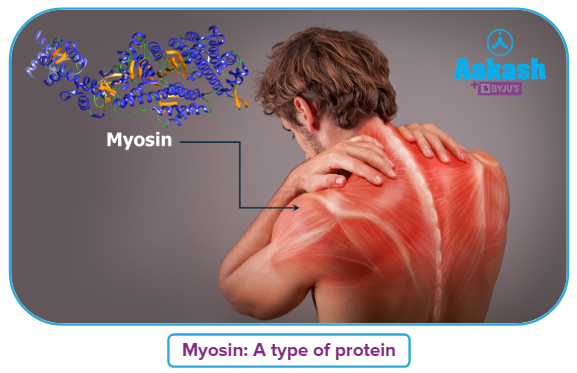
In fibrous protein, chains are held together by hydrogen and disulphide bonds.These are insoluble in water.
Globular proteins:
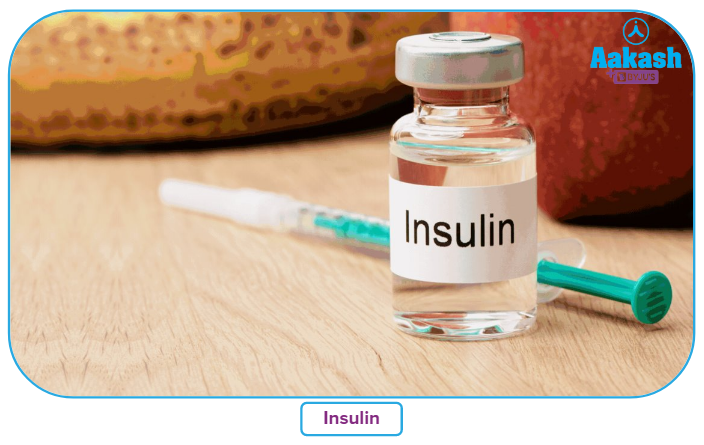
When a folded polypeptide chain forms a spheroidal shape, it is called a globular protein and this is soluble in water. This type of protein is found in Insulin and albumins
Structure of Proteins:
We know that the Proteins are big, complex molecules made up of one or more twisted and folded amino acid strands. Covalent links connect each amino acid to the next amino acid.
Structure of proteins can be classified as:
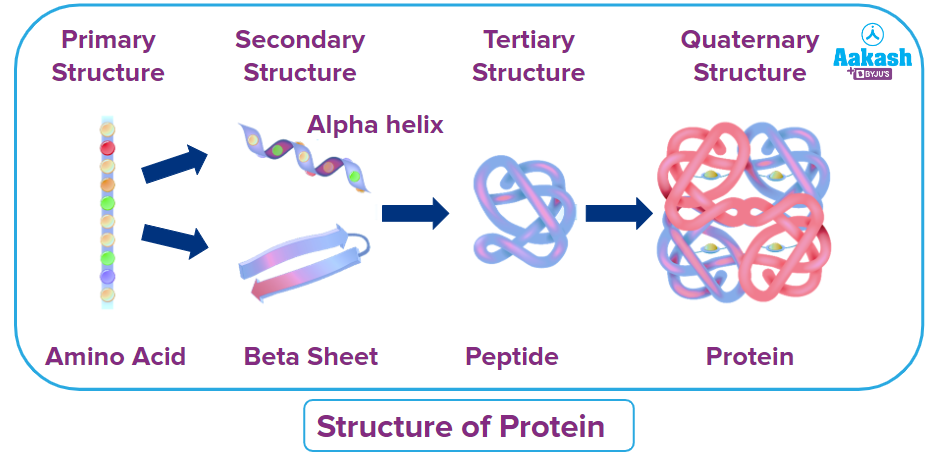
Primary protein - Protein structure is a sequence of amino acids in a linear chain.
Secondary protein - Secondary Protein is the three-dimensional form of local protein fragments. Hydrogen bonding between amino acids and carboxyl oxygen atoms are what basically define it
Beta-Pleated sheets and alpha-Helixes are examples of a protein's secondary structure.
Tertiary protein - Protein structure is formed when the twists and folds of the secondary structure fold again to form a larger three-dimensional structure.
Quaternary protein- A protein's quaternary structure is formed when many protein chains or subunits come together in a compact configuration. There are separate main, secondary, and tertiary structures for each of the subunits. Hydrogen bonds and van der Waals forces between nonpolar side chains hold the subunits together.
Proteins can produce "mixed" molecules by combining with other chemical substances. Glycoproteins, for example, are proteins with sugars attached that are entrenched in cell membranes. Lipid-protein complexes are known as lipoproteins.
Importance of protein:
A high-protein diet can help you lose weight and gain muscle while also lowering blood pressure and lowering your risk of diabetes.
Here are a few more reasons why protein is essential.
- Red blood cells are oxygenated, which aids in the provision of nutrients to your body.
- Hormones are regulated.
- Helps with digestion.
- Exercise recovery and injury healing are accelerated.
Sources of Protein:
- Beans and legumes
- Eggs
- Greek yogurt
- Milk
- Cottage cheese
- Peanuts
- Lentils
- Oats
- Fish
- Beans
We have mentioned Amino acids at many places so let’s see in detail what amino acids are.
Amino acids:
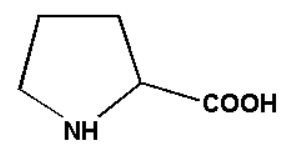
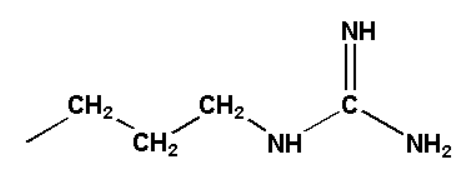
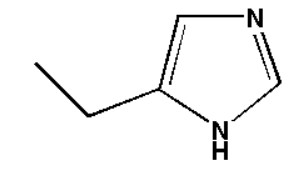
Amino Acids are chemical substances that combine to produce proteins, which is why they are known as the building blocks of proteins. These biomolecules have a role in a variety of biological and chemical functions in the human body and are essential for human growth and development. There are around 300 amino acids found in nature. The amino acids contain amine group as well as carboxylic acid group as shown below
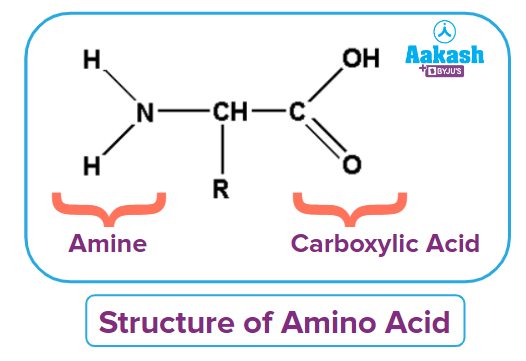
Note: R is an alkyl, aryl group or any other group, but never contains unstable, strained cycles or functional groups.
On the basis of the position of amino group in the chain, these are classified as 𝛼, β, 𝛾, and so on.
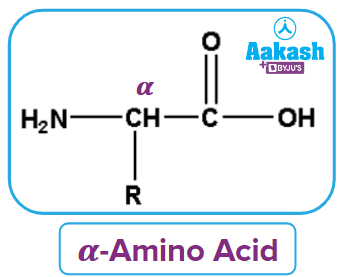
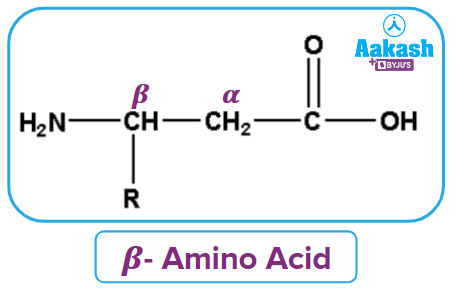
There are around 20 amino acids found in the living system given below.
|
Name of the Amino acid |
Three letter symbol |
One letter code |
Side chain (R) |
|
Glycine |
Gly |
G |
-H |
|
Alanine |
Ala |
A |
-CH3 |
|
Valine |
Val |
V |
-CH(CH3)2 |
|
Leucine |
Leu |
L |
-CH2-CH(CH3)2 |
|
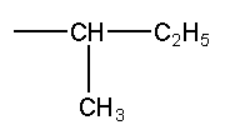
Isoleucine |
Ile |
I |
|
|
Phenyalanine |
Phe |
F |
-CH2-C6H5 |
|
Cysteine |
Cys |
C |
-CH2-SH |
|
Methionine |
Met |
M |
-CH2-CH2-S-CH3 |
|
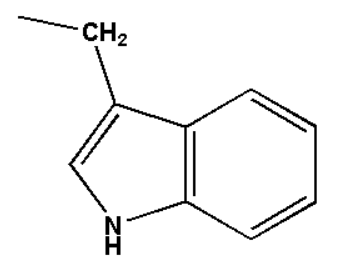
Tryptophan |
Trp |
W |
|
|
Serine |
Ser |
S |
-CH2-OH |
|
Asparagine |
Asn |
N |
-CH2-CO-NH2 |
|
Glutamine |
Gln |
Q |
-CH2-CH2-CO-NH2 |
|
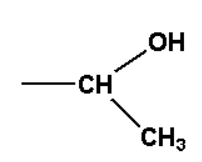
Threonine |
Thr |
T |
|
|
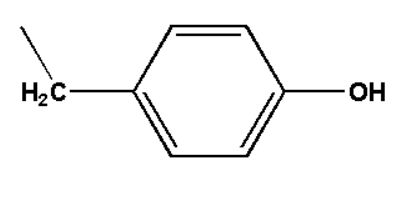
Tyrosine |
Tyr |
Y |
|
|
Proline |
Pro |
P |
|
|
Aspartic acid |
Asp |
D |
-CH2-COOH |
|
Glutamic acid |
Glu |
E |
-CH2-CH2-OH |
|
Arginine |
Arg |
R |
|
|
Histidine |
His |
H |
|
|
Lysine |
Lys |
K |
-CH2-(CH2)3-NH2 |
Essential and Non-essential Amino acids:
Essential amino acids:
Out of a total of 20 amino acids, the human body is capable of synthesising 10 amino acids like: alanine, asparagine, arginine, aspartic acid, glutamic acid, cysteine, glutamine, proline, glycine, serine, and tyrosine.
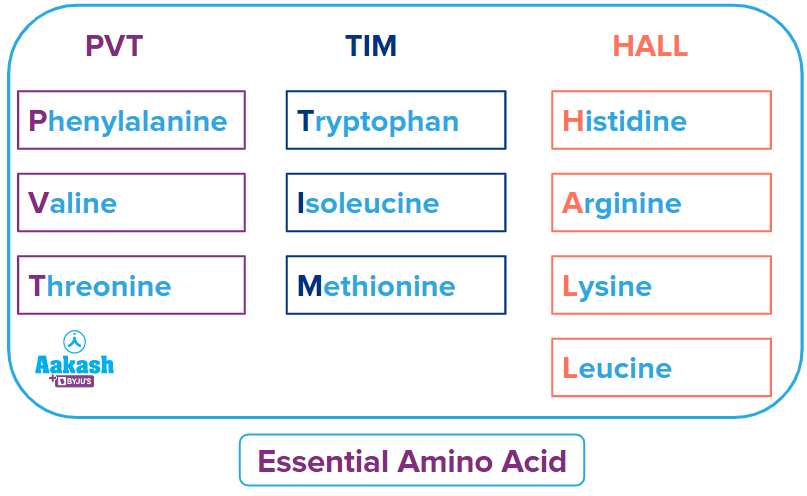
Apart from these, ten more amino acids are required because our bodies are incapable of synthesising them. Isoleucine, histidine, lysine, leucine, phenylalanine, tryptophan, methionine, threonine, Arginine, and valine are all important amino acids.
A trick for remembering them is given below.
Non-essential Amino acids:
The non-essential amino acids are those that the human body can make on its own. In our bodies, we produce ten amino acids.
Some of the amino acids found in the body are alanine, asparagine, arginine, aspartic acid, glutamic acid, cysteine, glutamine, proline, glycine, serine, and tyrosine.
A method for remembering them is given below.
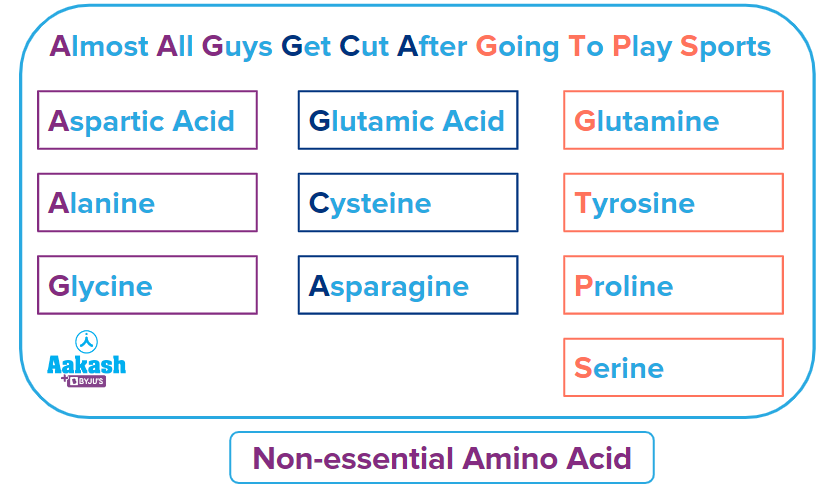
There are 20 alpha amino acids found in nature, all of which have the same structural features: an amino group (), a carboxylate group (-COO-), and hydrogen bonded to the same carbon atom. Their R group side-chain distinguishes them from one another. The carbon of each amino acid is connected to four distinct groups.
Functions of Amino acids:
Both essentials and non-essential amino acids have different functions. Let’s have a look at them separately.
Functions of essential amino acids:
- Phenylalanine aids in the maintenance of a healthy neurological system as well as memory enhancement.
- Valine is a crucial component in increasing muscle growth.
- The amino acid threonine aids in the immune system's function.
- Vitamin B3 and serotonin hormones are both produced by tryptophan. This serotonin hormone is important for hunger control, sleep regulation, and mood enhancement.
- Isoleucine is necessary for the synthesis of haemoglobin, stimulating the pancreas to produce insulin, and carrying oxygen from the lungs to various regions of the body.
- Methionine is used to cure kidney stones, maintain healthy skin, and prevent pathogenic microorganisms from invading the body.
- Protein synthesis and growth hormones are both aided by leucine.
- Lysine is required for the creation and fixation of calcium in bones, as well as the synthesis of antibodies, hormones, and enzymes.
- Histidine is involved in a variety of enzymatic processes as well as the formation of both red (erythrocytes) and white blood cells (leukocytes).
Functions of non-essential amino acids:
- Alanine aids in the elimination of toxins as well as the creation of glucose and other amino acids.
- Cysteine is an antioxidant that gives our bodies resistance and is necessary for collagen production. It has an impact on the skin's texture and suppleness.
- Glutamine is required for the synthesis of nucleic acids – DNA and RNA – and promotes healthy brain function.
- Glycine aids in the normal growth and function of cells, as well as the healing of wounds. It has the function of a neurotransmitter.
- Glutamic acid is a neurotransmitter that plays an important role in the development and function of the human brain.
- Arginine aids in the production of proteins and hormones, kidney cleansing, wound healing, and the maintenance of a healthy immune system.
- Tyrosine is required for the formation of thyroid hormones, as well as the synthesis of a class of neurotransmitters and melanin, natural colours found in our eyes, hair, and skin.
- Serine aids in the growth of muscles and the production of immune system proteins.
- Asparagine is primarily involved in the transfer of nitrogen into our body cells, the creation of purines and pyrimidine for DNA synthesis, the growth of the nervous system, and the improvement of our physical stamina.
- Aspartic acid is a key component of metabolism and the synthesis of other amino acids.
- Proline is primarily engaged in tissue healing, the synthesis of collagen, the prevention of artery wall thickening and hardening (arteriosclerosis), and the regeneration of new skin.
Deficiency of Amino acids:
We know that amino acids are the building elements of proteins, which play a critical part in practically all biological activities. As a result, in order to maintain a healthy and proper body function, we must incorporate all nine essential amino acids in our daily diet. Different pathological illnesses can be caused by an amino acid shortage, including:
- Edema.
- Anaemia.
- Insomnia.
- Diarrhoea.
- Depression.
- Hypoglycemia.
- Appetite Deficiency.
- In the liver, there is a fat accumulation.
- Problems with the skin and hair.
- Headache, weakness, irritability, and exhaustion are some of the symptoms you may experience.
Now that we have understood everything about proteins and amino acids, let’s now check our knowledge.
Related video: https://youtu.be/-uaV__RGczU
Practice Problems:
Q1. Polysaccharides Cellulose fibres are similar to ______, whereas polysaccharide a-amylose is similar to ______ in protein.
A. Helices, Sheets
B. Sheets, Helices
C. Sheets, Hydrophobic core
D. Helices, Turns
Answer: (B)
Solution: Polysaccharides cellulose fibres are similar to Sheets, while the polysaccharide
amylose is similar to Helix in proteins.
The most common type of protein secondary structure is the alpha helix.
In helical proteins, hydrogen bonds are formed between the N-H and C=O groups of amino acids. The second major type of protein secondary structure is the beta-pleated protein sheet. It consists of various beta strands connected by hydrogen bonds between adjacent strands.
Hence, Option B is the correct answer.
Q2. Which of the following is responsible for determining a protein's 3D shape?
A. The peptide bond
B. The amino acid sequence
C. Nature of amino acids
D. Interaction with molecules
Answer: (B)
Solution: A polypeptide's overall three-dimensional structure is referred to as its tertiary structure. The interactions between the R groups of the amino acids that make up the protein are principally responsible for the tertiary structure.
We need to know the sequence of amino acids present in the protein's structure in order to determine the protein's three-dimensional shape.
Hence, Option B is the correct answer.
Q3. Which of the following claims concerning proteins is correct?
A. Amino acids are the building blocks of proteins.
B. Proteins are required for skin, teeth, and bone formation.
C. Protein is the sole nutrition capable of repairing, building, and maintaining bodily tissues.
D. All of the above
Answer: (D)
Solution: The building components of proteins are amino acids. Proteins are necessary for the development of bones, teeth, and skin. The only food that can rebuild, repair, and sustain body tissues is protein.Hence, all the given options are correct.
Hence, Option D is the correct answer.
Q4. What is the name of an amino acid bond?
A. Ionic bond
B. Acidic bond
C. Peptide bond
D. Hydrogen bond
Answer: (C)
Solution: Each amino acid is joined to another amino acid via a covalent connection, sometimes referred to as a peptide bond. As two amino acids are covalently connected by a peptide bond, the carboxyl group of one amino acid and the amino group of the incoming amino acid interact and release a molecule of water.
To create polypeptide chains, amino acids are joined by peptide bonds.
Hence, Option C is the correct answer.
Frequently asked questions (FAQs):
Q1. Name an amino acid that contains sulphur.
Answer: Sulphur-containing amino acids are methionine and cysteine.
Q2. How are tertiary amino acids different from quaternary amino acids?
Answer: Tertiary (third level) - Protein structure is formed when the twists and folds of the secondary structure fold again to form a larger three-dimensional structure.
Quaternary (fourth level) - A protein with more than one folded amino acid chain is called a quaternary structure.
Q3. What is the definition of zwitter ion?
Answer: Even while we commonly write amino acids with a carboxyl group and an amino group, their real structure is ionic and pH dependent. The carboxyl group converts into a carboxylate ion by giving up a proton. An ammonium ion is formed when the amino group is protonated. A zwitterion, or dipolar ion, is the name given to this structure.
Q4. What identifies a protein?
Answer: Proteins are macromolecular polypeptides, which are huge molecules made up of numerous amino acids attached to peptides. The majority of them comprise over 100 amino acids linked together in a lengthy chain of peptides.

NEET Related Links
JEE MAIN Related Links
JEE Advanced Related Links
JEE Advanced Eligibility Criteria
JEE Advanced Chemistry Syllabus
JEE Advanced Registration Dates
CUET Related Links
Important Topics
Anemometer : Measurement of Wind Speed
Angular Acceleration Atomic Theory Audible and Inaudible Sound Average Speed and Average Velocity Average Velocity Avogadros Number Avogadros Hypothesis Azimuthal Quantum Number Balanced Force Bar Magnet Biconvex Lens Boyles Law Buoyancy Calorimeter Carnot Engine Celestial Bodies Centripetal And Centrifugal Force Concave and Convex Lenses Concave Convex Mirrors Contact and Non Contact Force Controlled Thermonuclear Fusion Convection Currents Convex Lens Convex Mirror Destructive Interference Difference Between Conduction Convection and Radiation Difference Between Electric Field and Magnetic Field Difference Between Heat And Temperature Difference Between Series And Parallel Circuits Differences Between Acceleration And Velocity Distance and Displacement Distance Time Graph Electrical Force : Electric Forces and Their Types Electromagnetic Waves : Definition, Equation and Properties of Electromagnetic Waves Electromagnetism Electron Spin Fluid Flow : Bernoullis Equation Derivation and Fluid Mechanics Fluid Friction : Types and Factors of Fluid Friction Frames of Reference : Inertial and Non- Inertial Frame of Reference Frequency and Wavelength Frictional Force Importance of Hydrosphere Instantaneous Speed and Velocity Introduction to Motion Kinetic and Potential Energy Difference Law Of Conservation of Energy Layers of the Earth Light Energy Light Sources List of physics scientists and Their inventionsLoudness of Sound
Magnetic Dipole Moment Magnetic Field Non - Contact Force Non - Renewable Energy Ohms Law Optics P Wave Physics Symbols Plane Mirrors Poissons Ratio Projectile Motion Properties of Water : Anomalous Expansion of Water Radius of Gyration Reflection of Light Reflection of Waves Relative Density Resonance Reverberation Rolling Friction Rotation and Revolution Screw Gauge Semiconductors and Insulators Sliding Friction Speed Time Graphs Static Friction Stefan Boltzmann Law Stress Tension Tension Force Thermometer: Clinical Laboratory Thermometer Types of Rocks Types of Waves Uniform Motion and Non Uniform Motion Unit of Voltage Uses of Convex Lens Uses Of Convex Mirror Uses of Electromagnet Uses of Optical Fibre Wave Wavelength of Light What is Scattering of Light Working of Electric Bell Conventional and Non-conventional Sources of Energy Buoyant Force Bulk Modulus of Elasticity Bernoulli’s Principle Angular Momentum Difference Between Speed And Velocity ForceUnit of Heat
Difference between Distance and Displacement Simple Microscope Derivation Of Equation Of Motion Thermometer: Clinical & Laboratory Thermometer Difference between Concave and Convex LensDerivation Of Lens Maker Formula
Unit Of Pressure Velocity Uses of Plane Mirror
Wave Theory of Light
Unit of Density Unit of Light Unit of Force Unit of Magnetic Field Unit of wavelength Unit of Viscosity Uses of Electroplating Young's Modulus
What is the Scattering of Light
Lenz Law Space Wave Propagation Schrodinger Wave Equation Relation between Fahrenheit and Celsius Refractive Index Potentiometer Working Pascal Law Oscillatory Motion Optical Instruments Newton's Laws of Motion - First Law Modulation and Demodulation Magnetic Flux Lens Formula and Magnification Kaleidoscope Faradays Law Epsilon Naught Value Energy Bands Electrostatics Electroscope AC Generator Unit of Current Lithosphere Bending Equation Derivation Difference Between Pound and Kilogram Semiconductor Devices OTEC - Ocean Thermal Energy Conversion Hall Effect Rectilinear Propagation of Light Difference Between Ammeter and Voltmeter Coefficient of Linear Expansion Ampere’s Law Cyclone and Thunderstorm Save The Environment From Pollution Particle Nature of Light Types of DC Motor Uses Of Transistor Derivation of Phase Rule Unit of Humidity

 Call Now
 Let's Chat
 Share
Share