-
Call Now
1800-102-2727


Waxes: Natural, Synthetic, Economic Importances, Disadvantages, Practice Problems and FAQs

Colouring competitions were fun when we were kids, right?. Do you remember we used to get crayons from the school and had to colour properly the picture given. I think that was the first art work of many of the future artists. If you travel back to your kindergarten days, you might find different types of crayons, in various sizes, colours and shapes, right? But do you know what exactly that crayon is? Yes, they are coloured waxes!! Just remember that all the artworks were not spoiled even though a little bit of water fell over it. What was the reason behind it? The reason is that waxes are waterproof.

Fig: Kid painting using crayons
You know it is the same wax that is used to make many cosmetic products and the shoe polishes. The beautifully lightened candles are also made from the same raw material called wax. Are all these waxes the same? How do we get waxes for the synthesis of these commercially important products? We are going to find out the answer to all the above questions through this article. So let's take a deep dive into the details of waxes.
Table of contents
- Waxes
- Common forms of waxes
- Natural waxes
- Synthetic waxes
- Disadvantages of waxes
- Practice Problems
- FAQs
Waxes
Waxes are a group of simple or neutral lipids. These are formed by the combination of a long chain fatty acid with a long chain monohydric alcohol like cytyl or myricyl alcohol. Lipid monomers are linked to alcohols through ester bonds or amide bonds in them. Hence waxes are esters of fatty acids and non-glycerol aliphatic alcohols. They may contain dihydroxyalcohols, free fatty acids and saturated hydrocarbons. So waxes can be called as the mixtures of esters and ethers derived from higher fatty acids and higher monobasic alcohols.
Fig: Wax
Common chemical and physical properties of waxes
Waxes shows the following chemical and physical properties:
- They are highly hydrophobic and resistant to atmospheric oxidation.
- The wax consists of 27.1% unsaponifiable matter, 34.2% fatty acids, and 29.5% resin acids.
- They have a melting point above about 40 °C.
- Melting of waxes results in low viscosity liquids.
- They are solid at biological temperatures and liquid at high temperatures.
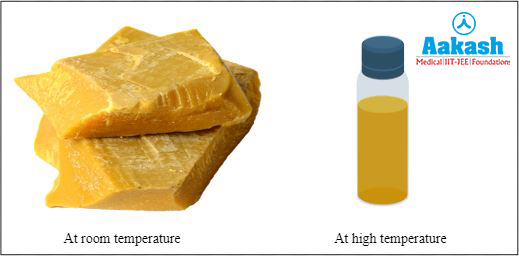
Fig: Wax at different temperatures
Biological functions of waxes
The hydrophobic nature of waxes makes them more valuable among the plants and animals. Some of the major biological functions of waxes are as follows:
- They form a water repellent protective covering on the leaves and fruits of plants, skin and fur of mammals, feathers of birds and the exoskeleton of insects.
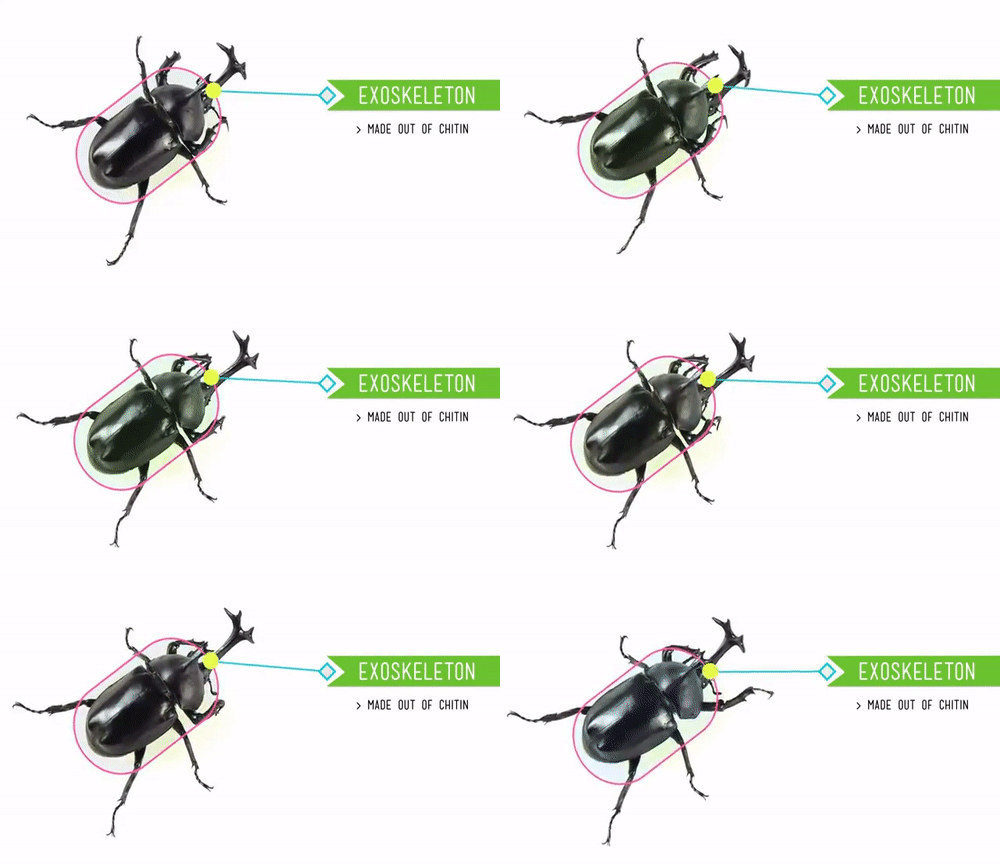
GIF: Exoskeleton of insects
- They are the major constituent of beeswax.
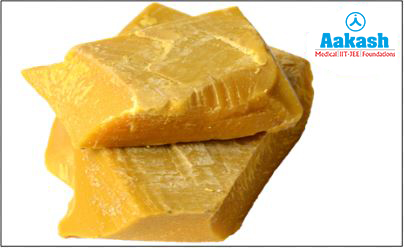
Fig: Beeswax
- They protect plants from water loss and abrasive damages. For example, in cactus, the stem has a protective wax covering.
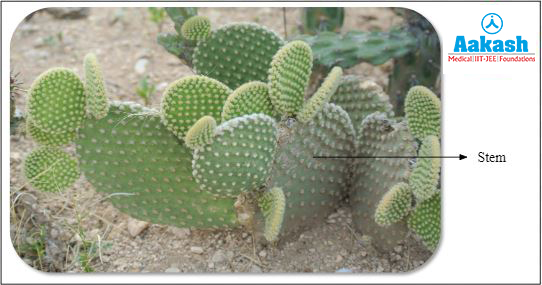
Fig: Cactus
- Animal oils such as sperm whale oil are formed mostly of waxes rather than fats.
- Waxes serve as an energy storage substance in planktons and in some higher aquatic members like whales.
- Cerumen or ear wax is secreted by cutaneous glands for lubricating ear drum.
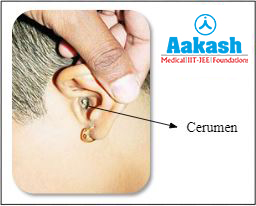
Fig: Ear wax
- Bacteria like the causative agents of tuberculosis (Mycobacterium tuberculosis) and leprosy (Mycobacterium leprae) produce a wax called wax-D which contributes to the pathogenicity of the bacteria.
Common forms of waxes
Waxes can be classified into two on the basis of their origin as follows:
- Natural waxes - Animal and plant origin.
- Synthetic waxes - Artificially made.
Natural waxes
Waxes that are obtained naturally from plants, animals and petroleum are called natural waxes. They contain unsaturated bonds and also include various functional groups like fatty acids, primary alcohols, secondary alcohols, ketones, aldehydes etc. The composition of natural waxes depends on the species and geographic location of the organisms.
Plant waxes
Waxes that are obtained from the plant parts are called plant waxes. The characteristic mixtures of unesterified hydrocarbons predominate over the esters in the waxes that originated from plants. To control the process of evaporation, the wax is secreted into and on the surface of the cuticles of the plants. The major waxes obtained from the plants are as follows:
- Carnauba wax
- Jojoba wax
- Candelilla wax
Carnauba wax
The wax obtained from the leaf cuticles of the Brazilian palm or the Copernicia prunifera is called carnauba wax. It is a hard wax which has a huge commercial value. It is a complex mixture of esters, free fatty acids, alcohols and hydrocarbons.
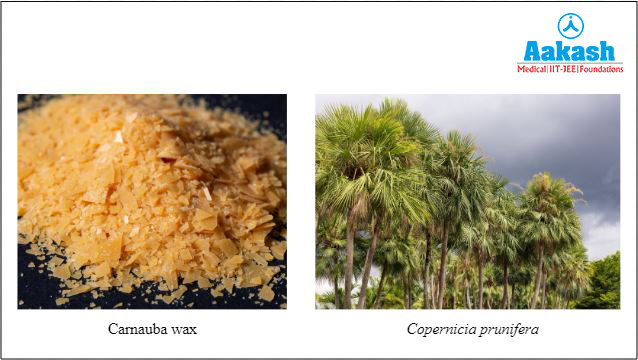
Fig: Carnauba wax and the Brazilian palm
Applications of carnauba wax
The major applications of carnauba wax are as follows:
- It is used as a confectionery (sweets and chocolates) and other food coatings.
- It is used as a polish for cars and furniture.

Fig: Car polishing with carnauba wax
- It is also used as a dental floss coating.
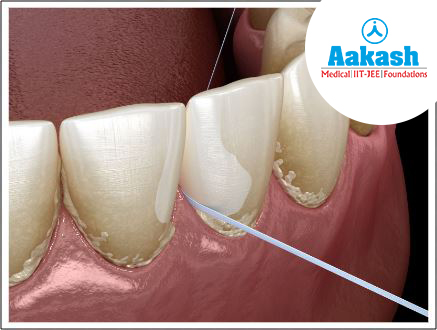
Fig: Dental floss
- It is used as a coating on surfboards (surfboard wax).

Fig: Surf board
Jojoba wax
The wax obtained from the seeds of jojoba plant or Simmondsia chinensis is called jojoba wax. Jojoba wax and jojoba oil are two terms that are used interchangeably, because 98% of pure wax is present in the jojoba oil. As a wax, jojoba wax is composed of mono-esters of long chain fatty acids and alcohols and it has a small fraction of triglyceride esters. It has a high shelf life and is also resistant to high temperatures. Rather than calling it an oil or fat, it is widely called liquid wax.
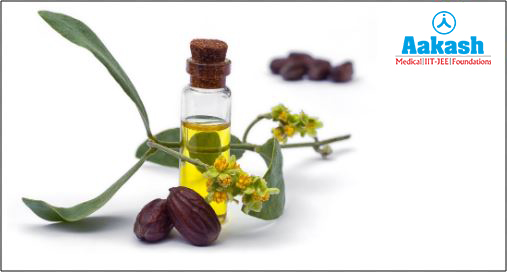
Fig: Jojoba wax and the jojoba plant
Applications of jojoba wax
The major applications of jojoba wax are as follows:
- It is one of the major components in the skin care products, because of its healing properties.
- It is used for the treatment of skin conditions like acne, psoriasis and eczema.
- It is used as a cleanser and moisturiser.
- It is also used in spot treatment, because of the presence of vitamin E.
- It is used as a hair conditioner and acts against dryness, breakage, split ends and dandruff in the hair.
- The purified and filtered form of jojoba oil is used in dental floss.

Fig: Applications of jojoba oil
Candelilla wax
The wax obtained from leaves of small Candelilla shrub or Euphorbia antisyphilitica is called candelilla wax. It is a yellowish brown, opaque and hard wax with a particular aroma. It is composed of hydrocarbons, esters, free acids and resins. Candelia wax is distinguished from carnauba wax, because of the presence of high hydrocarbon content on the candelia wax. It is insoluble in water and soluble in organic solvents like acetone, chloroform, turpentine etc.
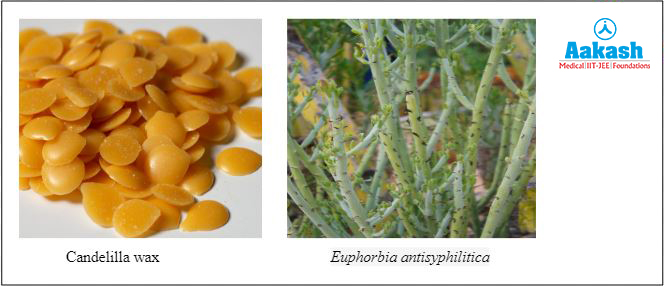
Fig: Candelilla wax and candelilla shrub
Applications of candelilla wax
The major applications of candelilla wax are as follows:
- It is used as a food additive.
- It is used as a binder for chewing gums.
- It is used for making varnish.
- It is mixed with other waxes to harden without raising their melting point.
- It is used as a substitute for beeswax and carnauba wax.
Animal waxes
The natural secretion of animals and insects are commonly called animal waxes. It is formed by the wax esters derived from a variety of fatty acids and carboxylic alcohols. The common animal waxes are as follows:
- Beeswax
- Sperm whale oil
- Lanolin or wool fat
Beeswax
The wax produced by the honey bees to construct the honeycombs of beehives are called beeswax. It is the best known animal wax. This is a mixture of esters, free fatty acids, alcohols and hydrocarbons.
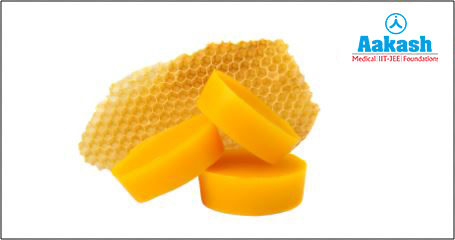
Fig: Beeswax
Chemical composition of bee wax
The major constituent of beeswax is the myricyl palmitate, which is an ester of myricyl alcohol (C30H61OH) and palmitic acid (C15H31COOH).
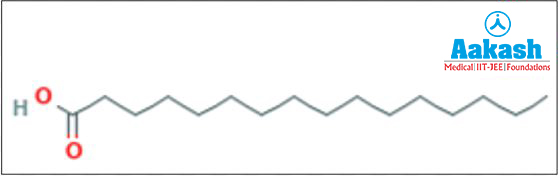
Fig: Palmitic acid
Applications of beeswax
The major applications of beeswax are as follows:
- It is formerly used in the manufacture of ponograph cylinders, which was the earliest commercial medium for recording.
- It is used to make candles also.

Fig: Candles
- It is dissolved in turpentine and used as shoe polish and furniture polish.
- The purified and bleached beeswax is used as a component in cosmetics, pharmaceuticals and even in the production of foods.

FIg: Beeswax lip balm
Sperm whale oil
The oil formed in the head of a sperm whale or Physester macrocephalus is called sperm whale oil. Nearly 75% of it is wax esters and 25% is triglycerides. Saturated and unsaturated fatty acids are also present in it.

Fig: Sperm whale
Applications of sperm whale oil
The major applications of sperm whale oil are as follows:
- It is used as an illuminant in oil lamps.
- It is used as a lubricant, because of its high lubricity and heat stability.
- It is used in the aerospace industry, because of its low freezing point.
- It is used to protect metals from the rust.
Lanolin or wool fat
The protective coating over the wool fibres are called lanolin or wool fat. It is a wax, rather than a fat. It is a complex mixture of free and esterified cholesterol and sterols (lanosterol and agnosterol). Lanolin can take up water, without dissolving. This property makes it valuable as a medium in the manufacture of ointments and cosmetics.
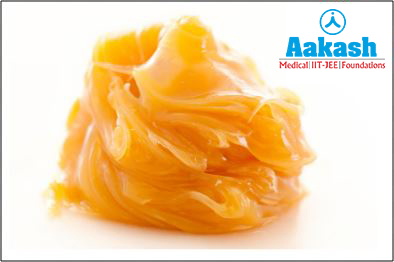
Fig: Lanolin
Applications of lanolin
The other major applications of lanolin are as follows:
- It is used in the treatment of dry skins in babies and also for sore nipples during breastfeeding.
- It is used in industrial products as a protection from rusts.
- It is a popular additive in moustache wax.
- It is used in the manufacture of lip balm.
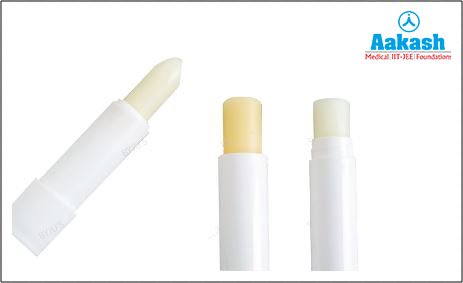
Fig: Lip balm
- It is used to restore woollen garments, which make the garments water and dirt repellent.
Petroleum waxes
The waxes obtained from petroleum, coal or oil shale are called petroleum waxes or paraffin waxes. They contain mixtures of hydrocarbons. It was first created by Carl Reichenbach in 1830 in Germany.
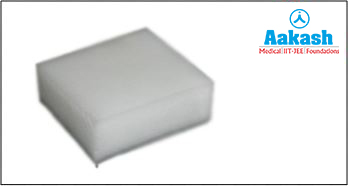
Fig: Paraffin wax
Applications of petroleum waxes
The common applications of petroleum waxes are as follows:
- It is used in the manufacture of chewing gums and cheese wrappings.
- It is used to produce cheap candles.
- It is used in the production of cosmetics because of its waterproof nature.
- It is a lubricant.
- The dyed paraffin waxes are used to make crayons.

Fig: Crayons
Synthetic waxes
Artificially made waxes are called synthetic waxes. They contain homologous series of long chain aliphatic hydrocarbons which lack functional groups. They are synthesised artificially through different methods using various raw materials. The common synthetic waxes are as follows:
- Fatty acid amide waxes
- Fischer-Tropsch waxes
- Polyolefin waxes
Fatty acid amide waxes
The synthetic wax that is made from modified palm and tallow waxes are called fatty acid amide waxes. It is a solid lubricant which is used to improve resin surfaces, because it has an amide group. It is a chemically and thermally stable wax.
Applications of fatty acid amide waxes
The common applications of fatty acid amide waxes are as follows:
- It is used as a lubricating aid in the manufacture of plastics and films.
- It is used as a gelling agent and anti-blocking agent.
Fischer-Tropsch waxes
The synthetic wax formed by the polymerisation of carbon monoxide under high pressure is called Fischer-Tropsch wax. This wax can be synthesised from various natural gases using high temperature reactors. It is the most popular synthetic wax type.
Applications of Fischer-Tropsch waxes
The common applications of Fischer-Tropsch waxes are as follows:
- It is mainly used at gas and coal facilities.
- It is used as mould release agents in plastic processing.
- It is used as a dispersion in the paper industry.
- In printing inks it is used to improve the abrasion resistance.
Polyolefin waxes
The synthetic wax made from various manufacturing processes like thermal degradation, polymerising and monomer synthesis are called polyolefin waxes. It is of low molecular weight and high degree of crystallinity. The common varieties of polyolefin waxes are as follows:
- Polyethylene wax
- Polypropylene wax
- Polyamide
Applications of polyolefin waxes
The common applications of polyolefin waxes are as follows:
- It is used as an additive with other waxes for getting the desired effect of polishing.
- It is used for wrapping goods.
- It is used for coating milk cartons.
- It is used as insulation for telephone cables.
Disadvantages of waxes
The major disadvantage of waxes are as follows:
- Waxes used in cosmetics are mildly irritating to skin in some cases.
- All synthetic waxes are not equally biodegradable.
- Paraffin based candles can cause cancer on a long term exposure as per the recent studies. So soybean candles are preferred as an alternative for this.
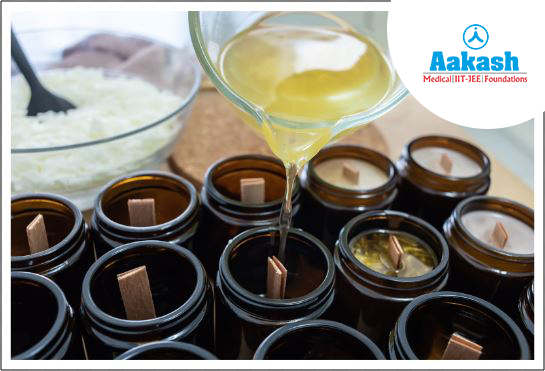
Fig: Preparation of soybean candles
Practice Problems
1. Find the incorrect statement about waxes.
a. Waxes are a group of simple or neutral lipids
b. Waxes are liquid at biological temperatures and solid at high temperatures
c. Waxes protect plants from water loss and abrasive damages
d. Waxes serve as an energy storage substance in plankton
Solution: Waxes are a group of simple or neutral lipids. These are formed by the combination of a long chain fatty acid with a long chain monohydric alcohol like cytyl or myricyl alcohol. The lipid monomers are linked to alcohols through ester bonds or amide bonds in them. Hence waxes are esters of fatty acids and non-glycerol aliphatic alcohols. They are highly hydrophobic and resistant to atmospheric oxidation. They are solid at biological temperatures and liquid at high temperatures. The hydrophobic nature of waxes makes them more valuable among the plants and animals. They form a water repellent protective covering on the leaves and fruits of plants, skin and fur of mammals, feathers of birds and the exoskeleton of insects. They protect plants from water loss and abrasive damages. Animal oils such as sperm whale oil are formed mostly of waxes rather than fats. Waxes serve as an energy storage substance in planktons and in some higher aquatic members like whales. Hence the correct option is b.
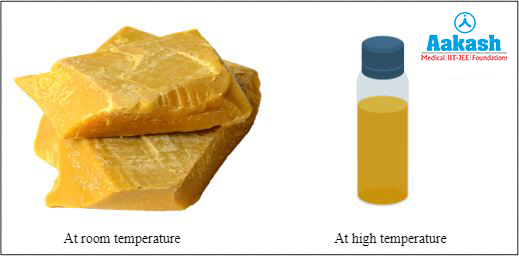
Fig: Wax at different temperatures
2. Match the following column A with column B.
|
Column A |
Column B |
|
I) Carnauba wax |
i) Euphorbia antisyphilitica |
|
II) Jojoba wax |
ii) Simmondsia chinensis |
|
III) Candelilla wax |
iii) Copernicia prunifera |
a. I - iii, II - ii, III - i
b. I - i, II - ii, III - iii
c. I - ii, II - i, III - iii
d. I - i, II - iii, III - ii
Solution: Waxes that are obtained from the plant parts are called plant waxes. The characteristic mixtures of unesterified hydrocarbons predominate over the esters in the waxes that originated from plants. To control the process of evaporation, the wax is secreted into and on the surface of the cuticles of the plants. The major waxes obtained from the plants are carnauba wax, jojoba wax and candelilla wax. The wax obtained from the leaf cuticles of the Brazilian palm or the Copernicia prunifera is called carnauba wax. The wax obtained from the seeds of jojoba plant or Simmondsia chinensis is called jojoba wax. The wax obtained from leaves of small Candelilla shrub or Euphorbia antisyphilitica is called candelilla wax. Hence the correct option is a.
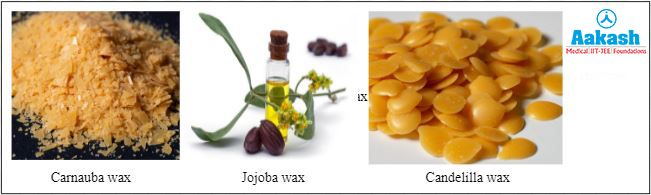
Fig: Plant waxes
3. Which of the following includes the examples of animal wax.
a. Beeswax and jojoba wax
b. Sperm whale oil and lanolin
c. Lanolin and carnauba wax
d. Wool fat and candelilla wax
Solution: The natural secretion of animals and insects are commonly called animal waxes. It is formed by the wax esters derived from a variety of fatty acids and carboxylic alcohols. The common animal waxes are beeswax, sperm whale oil and lanolin or wool fat. The major waxes obtained from the plants are carnauba wax, jojoba wax and candelilla wax. Hence the correct option is b.
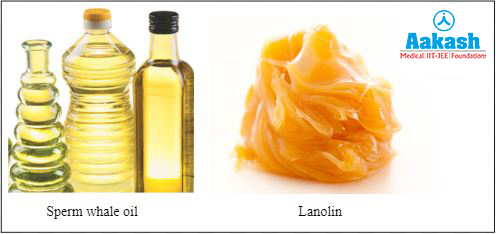
Fig: Animal waxes
4. Which of the following is not a synthetic wax?
a. Fatty acid amide waxes
b. Fischer-Tropsch waxes
c. Petroleum wax
d. Polyolefin waxes
Solution: Artificially made waxes are called synthetic waxes. They contain homologous series of long chain aliphatic hydrocarbons which lack functional groups. They are synthesised artificially through different methods and raw materials. The common synthetic waxes are fatty acid amide waxes, Fischer-Tropsch waxes and polyolefin waxes. The waxes obtained from petroleum, coal or oil shale are called petroleum waxes or paraffin waxes. Petroleum wax is a natural wax. Hence the correct option is c.
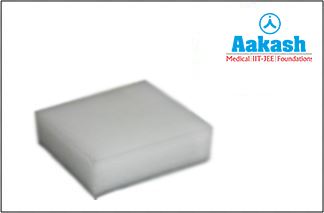
Fig: Paraffin wax
FAQs
1. How candelilla wax is obtained?
Answer: The leaves and stems of the candelilla plant are boiled with dilute sulfuric acid and the resulting product is skimmed from the surface and further processed to obtain the candelilla wax. There is an annual production of 900 tons of candelilla wax.
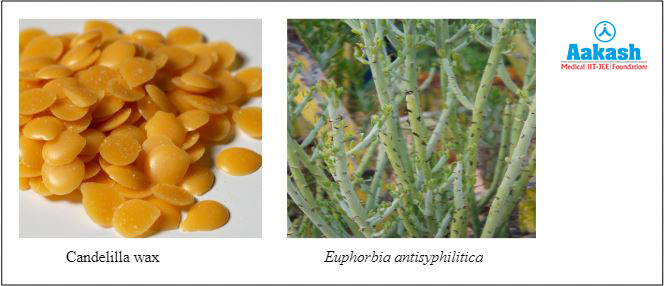
Fig: Candelilla wax and candelilla shrub
2. What is ozocerite?
Answer: Ozocerite or ozokerite is archaically referred to as Earth wax. It is a naturally occurring mineral wax. But it is not considered as a mineral, as it lacks a definite composition and crystalline structure. So it is considered only as a mineraloid (mineral-like substance which lack crystallinity).
3. What is shellac wax?
Answer: A resin secreted by female lac insects (Laccifer lacca) is called shellac. They are found on the trees of Indian and Thailand forests. It is processed and dried to make shellac flakes and then dissolved in alcohol to make the shellac wax. It is used as a food glaze and wood finish.
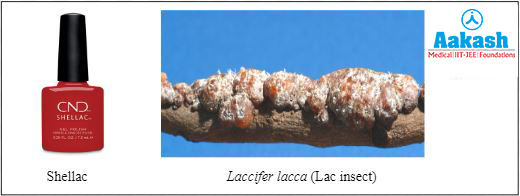
Fig: Shellac wax and lac insect
4. What is montan wax?
Answer: A fossilised wax extracted from coal and lignite is called motan wax. It is a very hard wax, because it has a high concentration of saturated fatty acids and alcohols. They are purified and used in the synthesis of commercially useful products like car polish, lubricants etc.
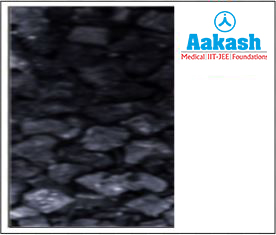
Fig: Montan wax

 Call Now
 Let's Chat
 Share
Share