-
Call Now
1800-102-2727


Water, Practice Problems and FAQs

We drink more water during summers. What is the reason behind this? It is to keep our body hydrated, because more water is lost through sweat to make the body cool in summers. Our body carries 70% of water and we need to drink at least 8 glasses of water per day to be healthy. Otherwise it will lead to some health issues related to dehydration. So we know that water is very important for our survival. Is it only for us? Never!! Water is equally important for the survival of all the living organisms. This makes water an important abiotic factor along with temperature, light and soil.
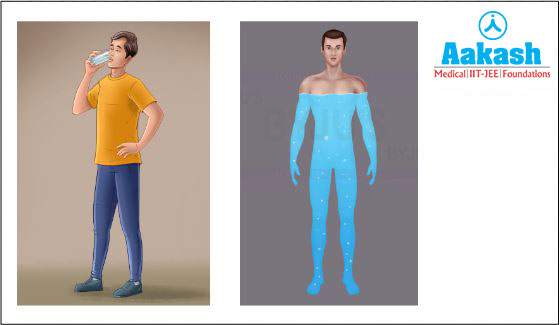
Fig: A person drinking water and water in the human body
The water exists in different forms in the world. It can be liquid form, water vapour, ice etc. The availability of water differs in different biomes. This variation in the form and availability of water affects the life of organisms. This is easily visible if we compare the plants and animals of the desert and a river. Most of the organisms adapt their body according to the availability of water in their habitat. Do you know how? To know more about this we have to understand about the water first. So we will discuss more about the abiotic factor, water in this article.
Table of contents
- Water
- Classification of plants on the basis of the availability of water
- Aquatic animals
- Adaptation to conserve water in terrestrial animals
- Osmoregulation
- Practice Problems
- FAQs
Water
Water is an odourless, tasteless, transparent, colourless and inorganic chemical substance which is an important abiotic component of the Earth. It is the main component of the hydrosphere of the Earth and the body of all the living organisms. The total amount of water found on, over and under the surface of a planet is called the hydrosphere. About 71% of the Earth’s surface is covered by the water and it forms an extensive habitat for the living organisms.

Fig: Presence of water on the Earth
Water cycle
The continuous exchange of water within the hydrosphere and between the atmosphere, soil water, ground water and plants is called a water cycle or hydrologic cycle. Water moves continuously through all the regions. The energy emitted by the sun is the power for the water cycle. The various transfer process in the water cycle are as follows:
- Evaporation
- Transpiration
- Perspiration
- Precipitation
- Run off
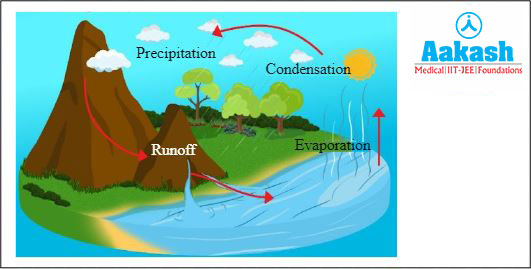
Fig: Water cycle
Evaporation
It is the process by which water is changed from the liquid or solid state into the gaseous state through the transfer of heat energy. The water from the oceans and other water bodies undergo evaporation and liquid water turns into water vapour and moves to the atmosphere.
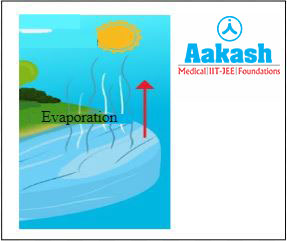
Fig: Evaporation
Transpiration
It is the process by which water in the form of water vapour is removed from the plants through stomata.
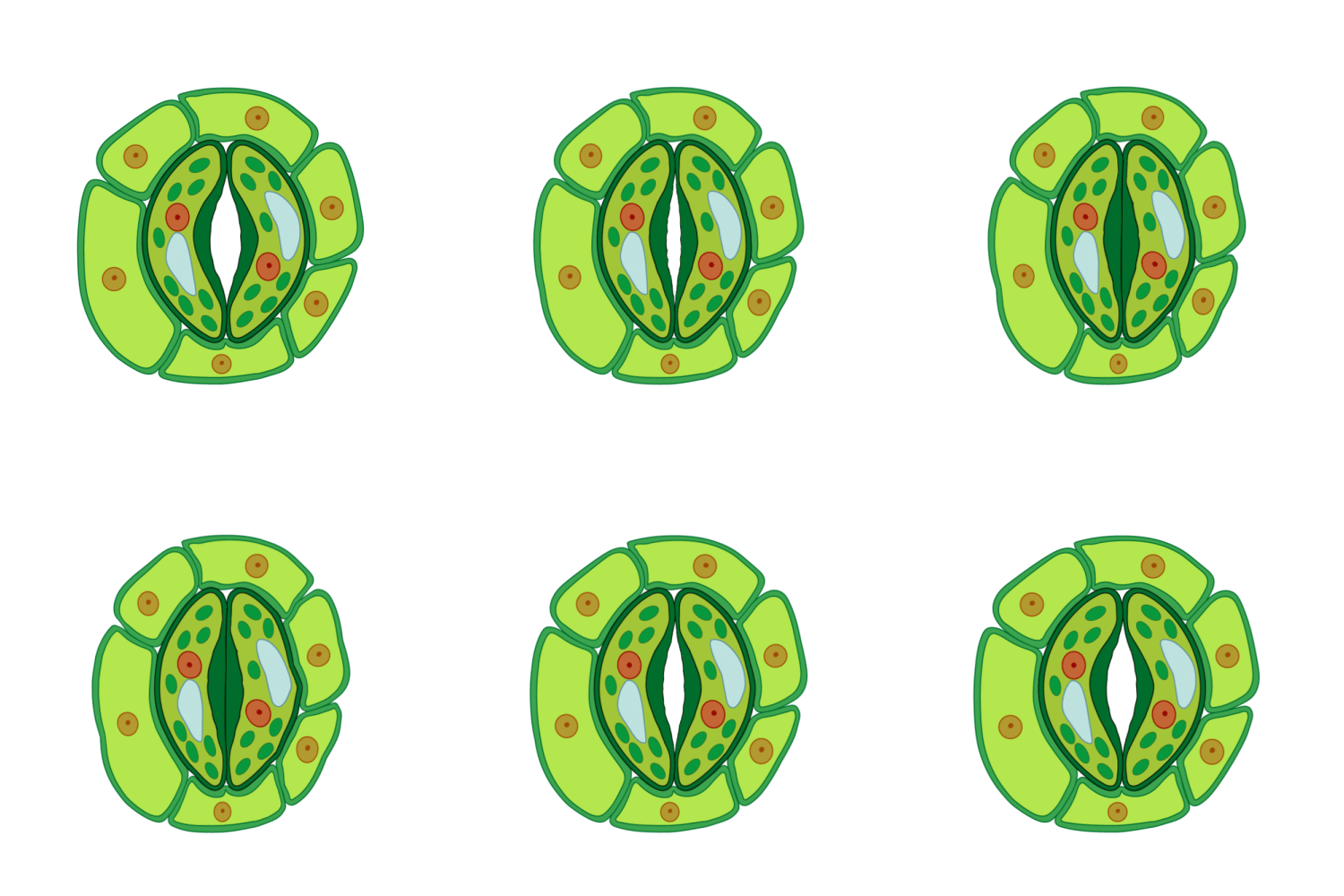
GIF: Stomata
Perspiration
It is the process in which water is given off by the intact skin as water vapour by simple evaporation from the epidermis or as sweat.

Fig: Perspiration
Precipitation
It is the process by which water is released from clouds in the form of rain, snow, freezing rain, sleet, or hail. The water vapour in the air condenses and falls to the Earth or ocean.
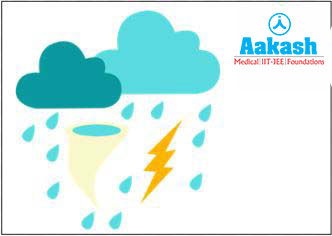
Fig: Precipitation
Run off
The water reaching the surface of the land runs off from it and reaches the sea.
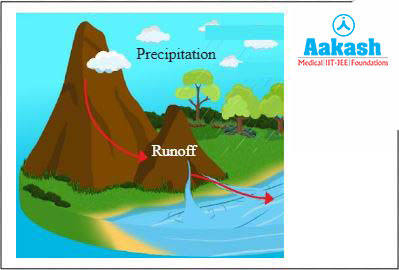
Fig: Run off
Water resources
The natural resources of water that are useful for the survival of living organisms are called water resources. They are potentially useful for the humans since the water from water resources are used by them for agricultural purposes and daily activities like washing, cooking etc. 97% of the total water on the Earth is salt water and 3% is only fresh water. The two thirds of the freshwater is frozen in glaciers and polar ice caps. The remaining fresh water exists as groundwater and only a small fraction of water is present above the ground or in the air. The natural sources of freshwater are as follows:
- Surface water
- Under river flow
- Ground water
- Frozen water
- Rain water
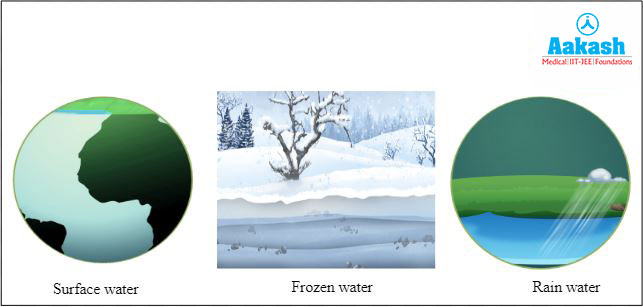
Fig: Water resources
Classification of plants on the basis of the availability of water
On the basis of the availability of water they live in, plants can be classified into three and they are as follows:
- Hydrophytes or aquatic plants
- Mesophytes
- Xerophytes
Aquatic plants
The surface water of Earth is filled with life. The very first life form started in water. The plants that are adapted to live in water are commonly called aquatic plants, hydrophytes or macrophytes. They can live only in water or in soil which is frequently saturated with water. Hence hydrophytes are common components of wetlands. But macrophytes are different from algae and other microphytes. A plant that grows in or near a water resource can be called a macrophyte. These plants are either emergent, submergent or floating. They are primary producers and also form the basic food for many organisms. The multicellular marine algae or the seaweeds are also macrophytes.
Role of macrophytes
The major role of macrophytes are as follows:
- They act as cover for fishes.
- They are substrates for aquatic invertebrates.
- They produce oxygen.
- They provide food for some fishes and other wildlife.
- They are capable of absorbing pollutants too.
Examples of aquatic plants
The most common examples of aquatic plants are as follows:
- Amazon water lily or Victoria amazonica (the largest aquatic plant).
- Duckweed or Lemnoideae (the smallest aquatic plant).
- Lotus or Nelumbo nucifera.
- Water hyacinth or Eichhornia crassipes.
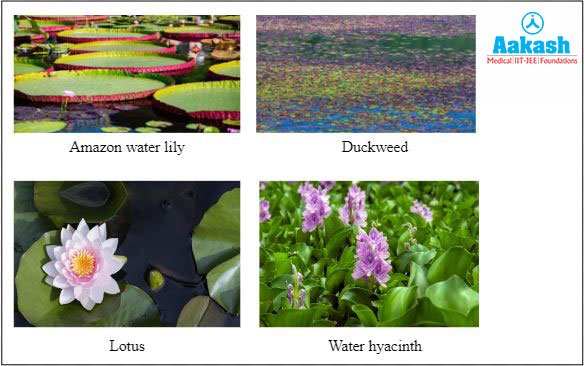
Fig: Aquatic plants
Adaptations of aquatic plants
Special adaptations are required for the plants to survive in the aquatic environment, whether it is submerged or surface floating. The major adaptations of aquatic plants are as follows:
Aerenchyma
The presence of aerenchyma cells which are the lightweight internal packing cells that helps to maintain the buoyancy of the plants. It also helps to allow the circulation of gases.
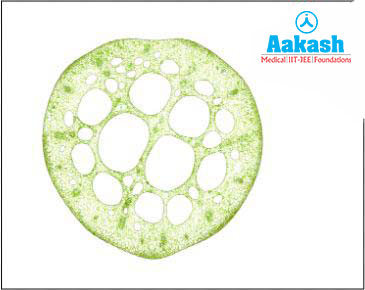
Fig: Aerenchyma cells
Shape of leaves
Presence of floating, ribbon like and finely dissected leaves in submerged plants. They help to balance water currents without damaging the plant body.
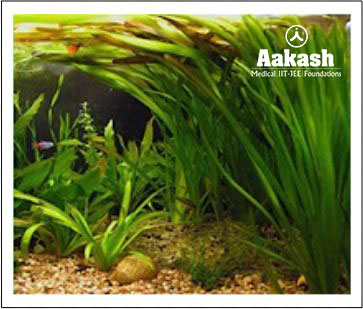
Fig: Submerged plants
Types of roots
Aquatic plants have small sized roots, just to keep the plants in the place.
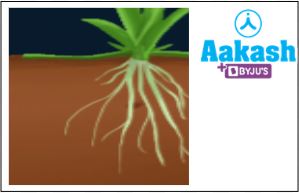
Fig: Small roots
Mucilaginous cells
These are present to provide protection against desiccation, decaying and microbial injuries.
Types of stem
Aquatic plants possess long, hollow and light stems.
Microphytes
The microscopic algae mostly found in freshwater and marine systems are called microphytes. They are often called microalgae. They are unicellular species which can live individually or in groups. The size of the microphytes varies with species and it ranges from a few micrometres to hundreds of micrometres.
Examples of microphytes
The common examples of microphytes are as follows:
- Cyanobacteria
- Diatoms
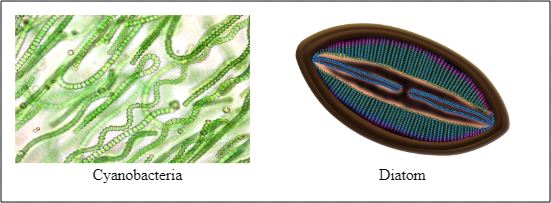
Fig: Examples of microphytes
Adaptations of microphytes
The major adaptations of microphytes are as follows:
- The filamentous body of the Nostoc helps to float in water.
- The mucilaginous sheath around the colonies of cyanobacteria helps the cells to survive in water.
Mesophytes
Plants living in areas with moderate water are called mesophytes. They are terrestrial plants that are not adapted to wet or dry environments. They usually grow in habitats like the rural temperate meadows, because they prefer moderately humid soil and air. They avoid standing in water or water with abundant salts.
Examples of mesophytes
The common examples of mesophytes are as follows:
- Clover (Trifolium)
- Oxeye daisy (Leucanthemum vulgare)
- Goldenrod (Solidago)
- Japanese rose (Rosa multiflora)
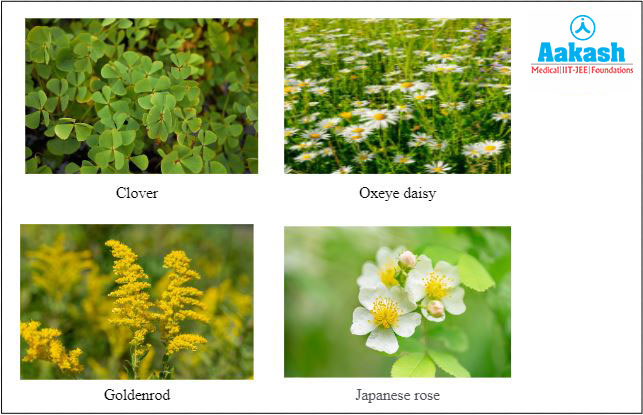
Fig: Mesophytes
Adaptations of mesophytes
The major morphological and anatomical adaptations of mesophytes are as follows:
- Presence of broad, flat and green leaves.
- Extensive fibrous root systems are present to absorb more water.
- Develops penetrating organs like the corms, rhizomes and bulbs that store food and water. So that the mesophytes can use this during drought season.
- Stomata opens and closes according to the availability of water. Hence prevents the chances of wilting.
Xerophytes
Plants growing in arid and semi-arid areas are called xerophytes. They can survive in habitats with very little liquid water. Examples of such habitats are deserts, ice or snow covered regions like the Alps and Arctic.
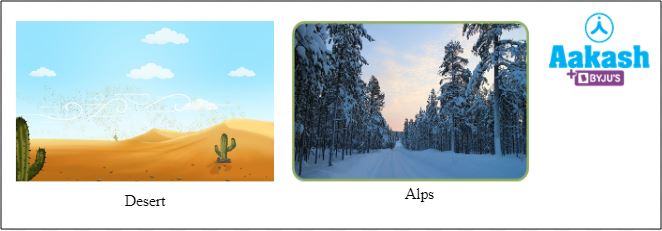
Fig: Habitats of xerophytes
Examples of xerophytes
The major examples of xerophytic plants are as follows:
- Cactus (Opuntia)
- Pineapple (Ananas comosus)
- Gymnosperms like Cycas and Pinus
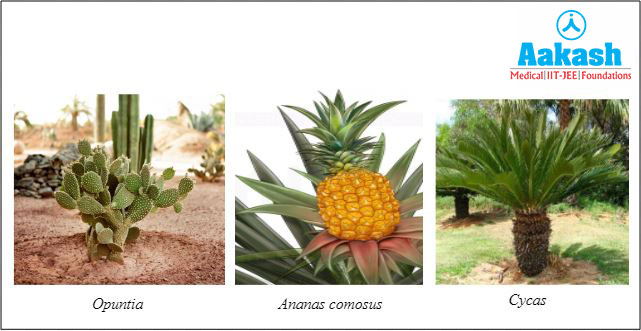
Fig: Xerophytes
Adaptations of xerophytes
Xerophytes or xeromorphic plants have many morphological features and chemical adaptations to conserve and store water during dry periods. The major adaptations of xerophytes are as follows:
Types of roots
Presence of deep spreading roots that can collect and store water from distant places.
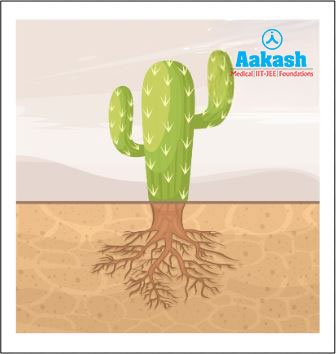
Fig: Spreading roots of cactus
Types of leaves
Leaves are modified into spines in plants like cactus. Some plants possess waxy and thorny leaves.
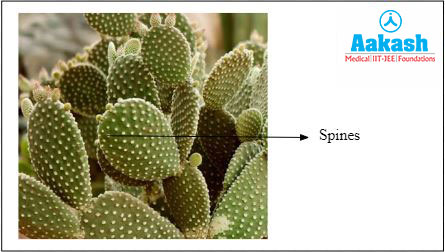
Fig: Cactus
Types of stem
Stems will be fleshy so that it can store water in plants like cactus. There is reduction in the total surface area of the plant parts too. Stem is modified to perform photosynthesis. They use CAM pathway or Crassulacean acid metabolism during photosynthesis.
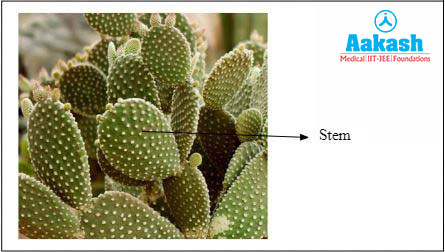
Fig: Cactus
Cuticle
Presence of thick cuticles.
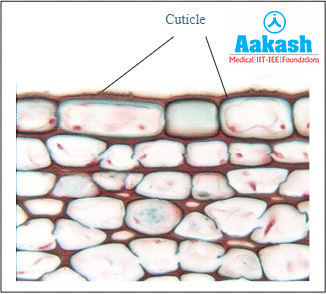
Fig: Cuticle
Sunken stomata
It is present to reduce the water loss through transpiration.
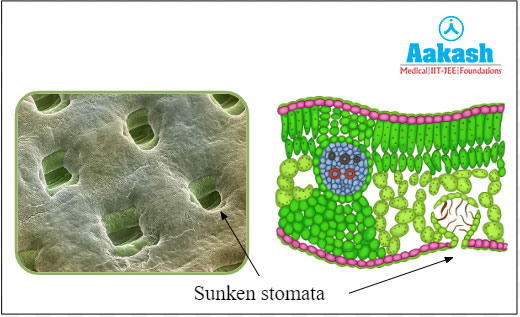
Fig: Sunken stomata
Aquatic animals
The animals that live most of its lifetime or their entire life in water are called aquatic animals. They can be vertebrates or invertebrates. Some insects have aquatic larvae and winged adults. Examples for such insects include mosquitoes, dragon flies, may flies etc.
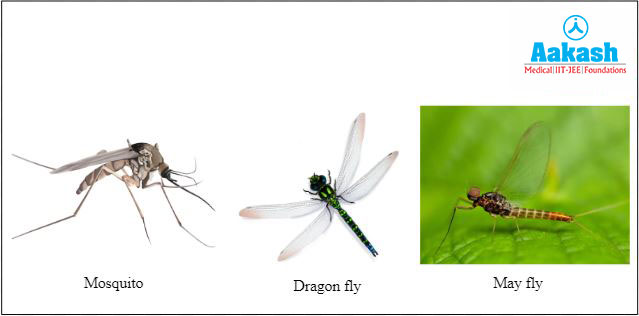
Fig: Insects with aquatic larva
Examples of aquatic animals
The major examples of aquatic animals are as follows:
- Fishes
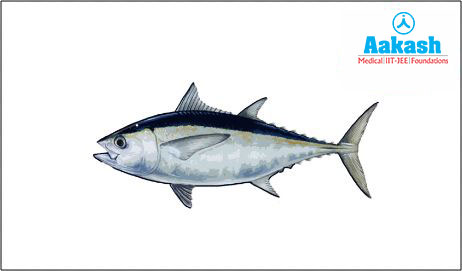
Fig: Fish
- Marine mammals (dolphins, whales, seals etc.)
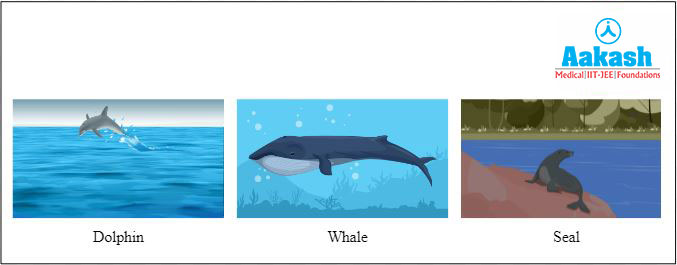
Fig: Marine mammals
- Amphibians (frogs, toads, salamanders etc.)
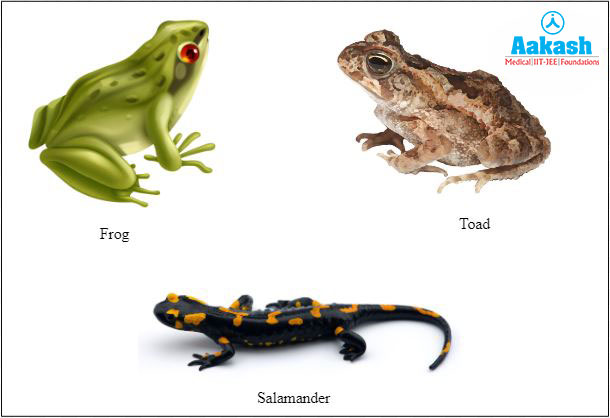
Fig: Amphibians
- Zooplanktons – The heterotrophic animal group of planktonic community is called zooplanktons. It ranges from microscopic zooplanktons to large organisms like jellyfishes.
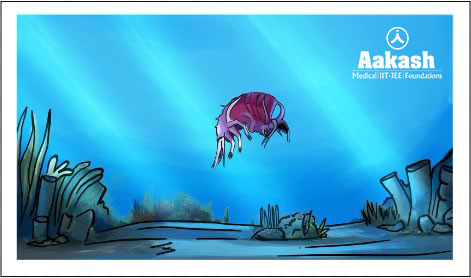
Fig: Zooplanktons
Classification of aquatic animals
The survival of aquatic animals mainly depends on the factors like the composition, solute concentration or pH of water. Among these the solute or salt concentration or salinity determines the surviving capacity of an aquatic animal. Salinity is measured in parts per thousand or ppt. Inland waters have salinity less than 5 ppt and it is 30 - 35 ppt in the sea waters. In some hypersaline lagoons the salinity is greater than 100 ppt.
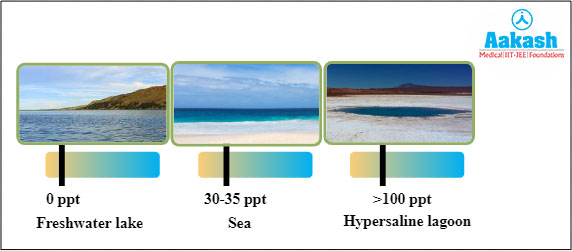
Fig: Salinity in different aquatic environments
Aquatic animals can be classified on the basis of the salinity of water which they can tolerate and they are as follows:
- Euryhaline animals
- Stenohaline animals
Euryhaline animals
The animals that can tolerate a wide range of saline conditions in water in which they live are called euryhaline animals. They can live in freshwater, brackish water or salt water. So they are usually found in habitats like tide pools and estuaries. The salinity changes regularly in these habitats.
Examples of euryhaline animals
The common examples of euryhaline animals are as follows:
- Atlantic stingray or Dasyatis sabina
- Bull shark or Carcharhinus leucas
- Green sea urchin or Strongylocentrotus droebachiensis
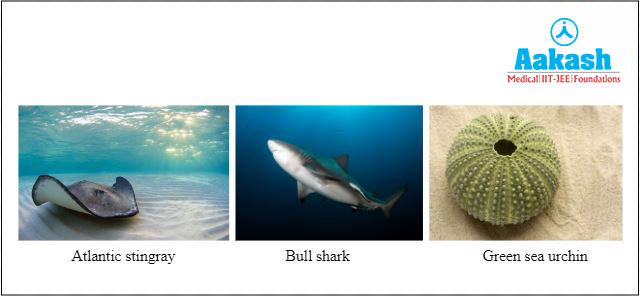
Fig: Euryhaline animals
Stenohaline animals
The animals that can tolerate only slight changes in saline conditions in water in which they live are called stenohaline animals.
Examples of stenohaline animals
The common examples of stenohaline animals are as follows:
- Goldfish or Carassius auratus
- Haddock or Melanogrammus aeglefinus
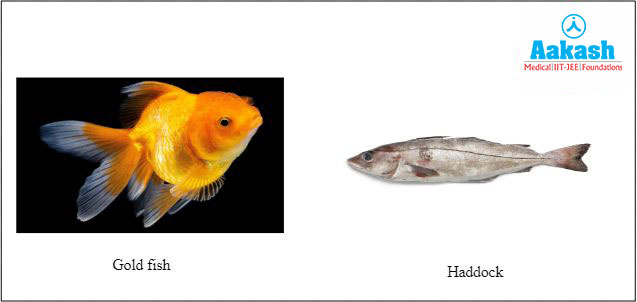
Fig: Stenohaline animals
Adaptations of aquatic animals
Some of the adaptations of aquatic animals are as follows:
- Presence of streamlined body to swim easily.
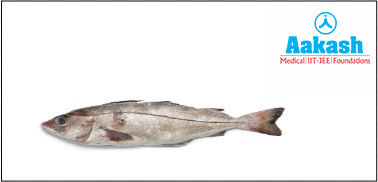
Fig: Streamlined body
- Presence of gills as respiratory organ.
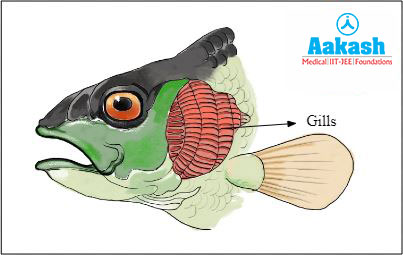
Fig: Fish gills
- Various types of fins like the dorsal fins, pectoral fins, caudal fin, pelvic fins and anal fins are present for locomotion in fishes.
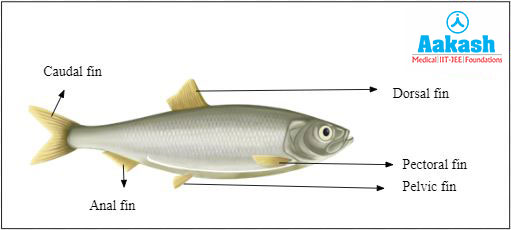
FIg: Types of fins
Adaptation to conserve water in terrestrial animals
Terrestrial or land animals have developed various devices to conserve water in their bodies. Some of the examples for such adaptations are as follows:
- The water produced during the metabolism of fats are stored in the hump of camels.
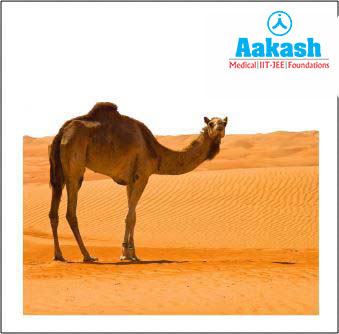
Fig: Camel
- Kangaroo rats (Dipodomys) feed on dry seeds and depend on water produced as a by-product in metabolism.
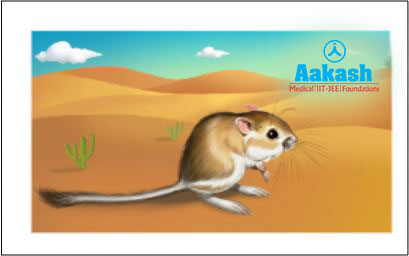
Fig: Kangaroo rat
- Horned lizards or Phrynosoma have spiny or confined skin.
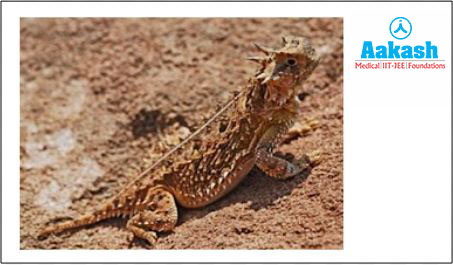
Fig: Phrynosoma
- The spiny skin of Moloch or the thorny dragon can absorb water from the moist sand.
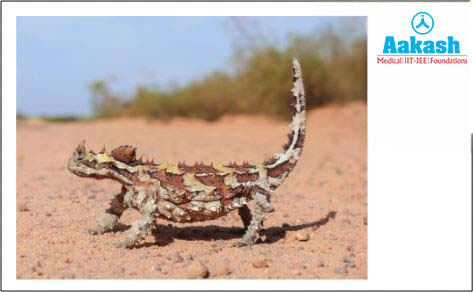
Fig: Moloch
Osmoregulation
The ability of organisms to maintain a relatively constant osmotic concentration is called osmoregulation. The following are the two major types of organisms on the basis of the osmoregulation in their body:
- Osmoconformers
- Osmoregulators
Osmoconformers
Those organisms which cannot maintain a constant osmotic concentration in their body are called osmoconformers. Examples of osmoconformers include most of the marine invertebrates like starfishes, jellyfishes, crabs etc.
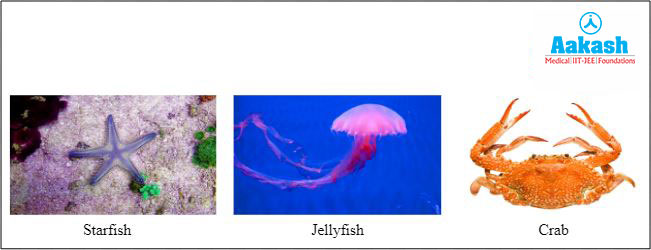
Fig: Osmoconformers
Osmoregulators
Those organisms which can maintain a relatively constant osmotic concentration in their body are called osmoregulators. They are the most common group in the Animal Kingdom. Examples include the freshwater fishes.
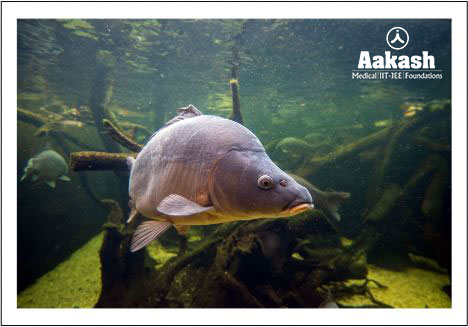
Fig: Osmoregulators
Practice Problems
1. Which of the following is the total water found on, over and under the surface of a planet?
a. Mesosphere
b. Stratosphere
c. Hydrosphere
d. Thermosphere
Solution: Water is an odourless, tasteless, transparent, colourless and inorganic chemical substance which is an important abiotic component of the Earth. It is the main component of the hydrosphere of Earth and in the body of all the living organisms. The total water found on, over and under the surface of a planet is called the hydrosphere. About 71% of the Earth’s surface is covered by the water and it forms an extensive habitat for the living organisms. Hence the correct option is c.
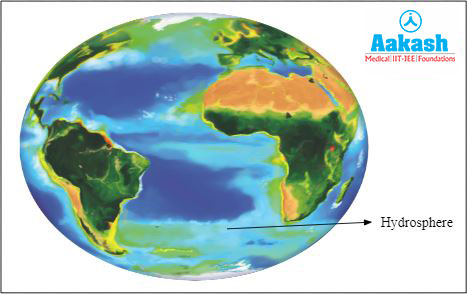
Fig: Hydrosphere
2. Which of the following are the adaptations of aquatic plants?
i) Presence of aerenchyma cells.
ii) Presence of floating, ribbon like and finely dissected leaves.
iii) Presence of mucilaginous cells.
iv) Presence of long, hollow and light stems.
a. i, ii, iii and iv
b. i, ii and iii
c. i, iii and iv
d. ii, iii and iv
Solution: The plants that are adapted to live in water are commonly called aquatic plants, hydrophytes or macrophytes. Special adaptations are required for the plants to survive in the aquatic environment, whether it is submerged or surface floating. They have the presence of aerenchyma cells which are the lightweight internal packing cells that help to maintain the buoyancy of the plants. It also helps to allow the circulation of gases. Presence of floating, ribbon like and finely dissected leaves are seen in submerged plants. They help to balance water currents without damaging the plant body. They have small sized roots, just to keep the plants in the place. Mucilaginous cells are present to provide protection against desiccation, decaying, and microbial injuries. Presence of long, hollow and light stems is also an adaptation of aquatic plants. Hence the correct option is a.
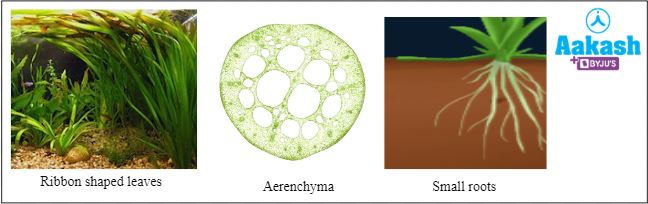
Fig: Adaptations of aquatic plants
3. Which of the following options contain the euryhaline animals?
a. Atlantic stingray and bull shark
b. Green sea urchin and goldfish
c. Atlantic stingray and Haddock
d. All the above
Solution: The animals that can tolerate a wide range of saline conditions in water in which they live are called euryhaline animals. They can live in freshwater, brackish water or salt water. So they are usually found in habitats like tide pools and estuaries. The salinity changes regularly in these habitats. The major examples of euryhaline animals are Atlantic stingray, bull shark, green and sea urchin. The animals that can tolerate only slight changes in saline conditions in water in which they live are called stenohaline animals. The major examples of stenohaline animals are Goldfish and Haddock. Hence the correct option is a.
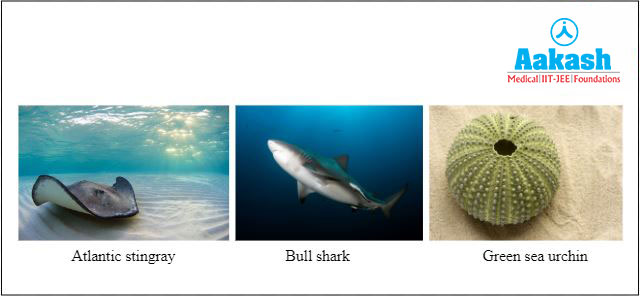
Fig: Euryhaline animals
4. Which of the following is incorrect about the adaptation to conserve water in terrestrial animals?
a. The water produced during the metabolism of fats are stored in the hump of camels
b. Kangaroo rats feed on dry seeds and depend on metabolic water
c. Horned lizards or Phrynosoma have spiny or confined skin
d. Various types of fins like the dorsal fins, pectoral fins, and caudal fins are present for locomotion
Solution: Terrestrial or land animals have developed various devices to conserve water in their bodies. The metabolic water produced during the breakdown of fats are stored in the hump of camels. Kangaroo rats feed on dry seeds and depend on metabolic water. Horned lizards or Phrynosoma have spiny or confined skin. The spiny skin of Moloch can absorb water from the moist sand. These are the adaptations of terrestrial animals. Various types of fins like the dorsal fins, pectoral fins, and caudal fins are the adaptations of aquatic animals. Hence the correct option is d.
FIg: Types of fins
FAQs
1. What is hydrology?
Answer: The scientific study of the movement and distribution of water along with the management of water on the Earth and other planets is called hydrology. It also deals with the water cycle, water resources and environmental watershed sustainability. Hydrologist is a practitioner of hydrology.
2. Which water is best for the human body?
Answer: Spring water is considered as the best water to drink. It provides vital nutrients. Spring is the point of exit of ground water from the top of the Earth’s crust.
3. Which is the richest country for water?
Answer: The highest freshwater resources are found in Brazil. It accounts for 12% of the freshwater resources of the world. The reason for this is the presence of the Amazon tropical rainforest. Brazil has 70% of total fresh water. The Amazon river passes through this forest.
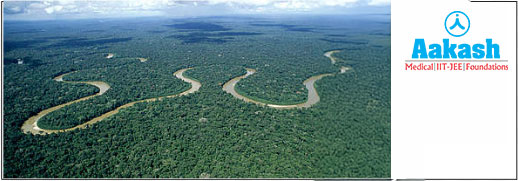
Fig: Amazonian rain forest
4. Which country has the highest number of rivers?
Answer: Bangladesh is the country with the highest number of rivers. About 700 rivers are present in the country. Bangladesh is known as the ‘land of rivers’.

 Call Now
 Let's Chat
 Share
Share