-
Call Now
1800-102-2727


TYPES of Biodiversity: Genetic, Species and Ecological Diversity, Practice Problems and FAQs

We all like picnics or tour trips. From your institution or along with your parents you might have visited a zoo or jungle ?
Here, you might have seen a lot of creatures like different kinds of animals, plants, insects, birds etc.
Have you ever wondered that these many creatures are living with us on the same planet, Earth?
You know there are different varieties of food that we enjoy. We have around 50,000 varieties of rice and 1000 varieties of mangoes in India alone.
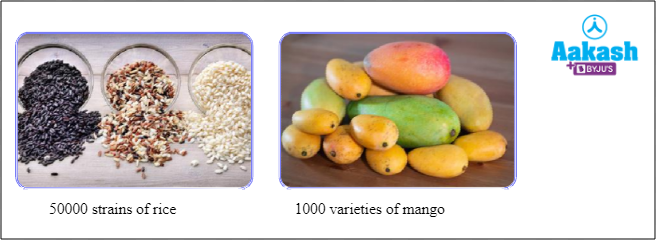
Fig: Diversity in rice and mangoes
Do you know what term is given collectively to all the creatures on Earth?
Yes, it is known as biodiversity, the different living creatures on the Earth. In this topic, we discuss the different types of biodiversity.
Table of contents
- Biodiversity
- Genetic diversity
- Species diversity
- Ecological diversity
- Practice Problems
- FAQs
Biodiversity
We are living on the planet Earth which is a shelter for many different types of species. There are approximately 28,000 species of fishes, 20,000 species of ants, 50,000 genetically different strains of rice are found.
Biodiversity is described as the total number of living organisms such as plants, animals and microorganisms present on the Earth. Edward O. Wilson was the sociobiologist that gave the term ‘biodiversity’. Therefore, he is known as the father of biodiversity.

Types of biodiversity
The biodiversity is of three different types as follows:
- Genetic diversity
- Species diversity
- Ecological diversity
Genetic diversity
The genetic diversity is the diversity present at the genetic level of the organism. Within a species, there is a variation in the genes of an organism or variation between the organism of a population. It is referred to as genetic diversity.
The common example of genetic diversity is humans. We humans belong to the same species but different from each other. This is because of the different genetic makeup at an individual level.
Another example of genetic diversity is seen in the medicinal plant, Rauwolfia vomitoria. This plant produces a chemical called reserpine. It is grown in different regions of the Himalayas. The diversity seen in the concentration of reserpine produced by different plants of the species.
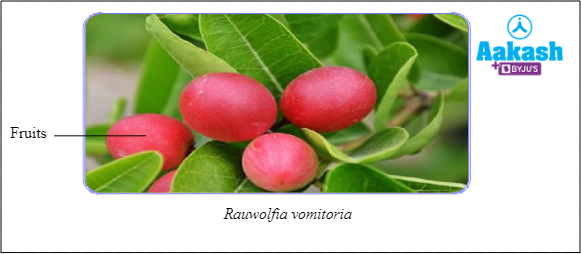
Fig: Genetic diversity
Species diversity
Species diversity is described as the variation seen in species in an ecosystem. The species diversity is measured in terms of species richness.
Species richness
It is considered normally as the number of species present in an area at that particular time.
Species richness = Number of species/Area
The example of species diversity is seen in the amphibian species of the Western Ghats, that have a greater amphibian species diversity as compared to the Eastern Ghats.
IUCN data of species richness
The total number of plant and animal species described so far is considered slightly more than 1.5 million as per the 2004 IUCN data. More than 70% of species recorded are animals and no more than 22% of species are plants. The land area of India is 2.4% of the world's land area. The contribution of India to the global species diversity is considered as 8.1%. Out of this, India possesses approximately 45,000 species of plants and 90,000 species of animals. It is estimated that India has more than 1,00,000 species of plants and 3,00,000 species of animals which are not discovered yet.
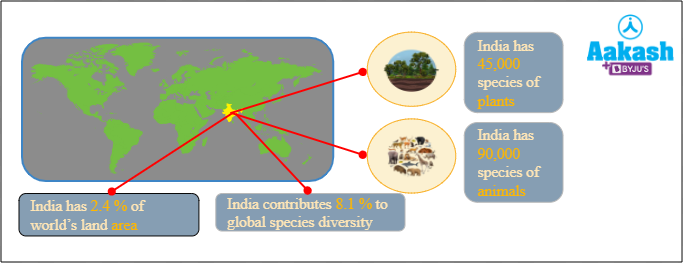
Fig: Species diversity in India
Global species diversity
Globally, among animals, the species rich taxonomic group is insects and they cover more than 70% of the total animal diversity. This means that out of ten animals, seven are insects. Insects possess the greatest diversity even among the invertebrates. If we talk about the vertebrate population in the world, fishes possess the maximum species diversity. In the case of plant diversity in the world, fungi and angiosperms exhibit almost the same amount of diversity.
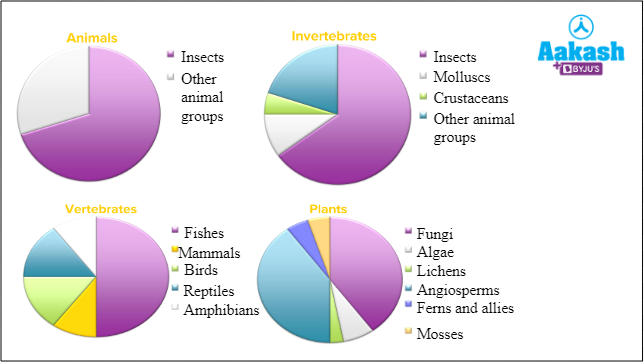
Fig: Species diversity
Ecological diversity
Ecological diversity is described as the variations in the ecosystem within a geographical location. It is the diversity among the different ecosystems in a region. The ecological diversity is interrelated yet distinct. It can be studied separately to understand the interrelationships that sustain life on Earth.
The examples of ecological diversity in India are Alpine meadows in the Himalayan regions, rainforest in the northeast, mangroves in the South and East and Desert in the west.
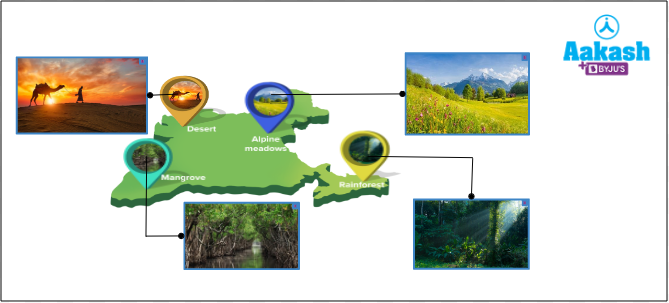
Fig: Ecological diversity
Practice Problems
Q1. A person travels to different regions like Himalayas, desert and mangroves in India. In this case, which diversity a person is exploring?
A. Genetic diversity
B. Species diversity
C. Ecological diversity
C. None of the above
Solution: Ecological diversity is described as the variations in the ecosystem within a geographical location. It is the diversity among the different ecosystems in a region. If a person travels in different regions of India, then the person is exploring ecological diversity. In the Himalayas, alpine meadows are present, deserts are present in the west part of India and mangroves are commonly found in South and East parts of India. Hence, the correct option is c.
Q2. In India, mango is the most edible fruit in summers. Around 1000 varieties of mangoes are found in India. This is an example of which type of diversity?
A. Genetic diversity
B. Species diversity
C. Ecological diversity
D. Both a and b
Solution: 1,000 different types of varieties of mango arise in India due to variation in genetic composition in each variety. Therefore, this is an example of genetic diversity. The genetic diversity is the diversity at genetic level. Within a species, there is a variation in the genes of an organism or variation between the organism of a population is referred to as genetic diversity.
FAQs
Q1. What are the different types of diversity?
Answer: Biodiversity is described as the total number of living organisms such as plants, animals and microorganisms present on the Earth. There are three different types of diversity as follows:
- Genetic diversity: It is the diversity at genetic level. Within a species, there is a variation in the genes of an organism or variation between the organism of a population. It is referred to as genetic diversity.
- Species diversity: It is described as the variation seen in species in an ecosystem. The species diversity is measured in terms of species richness.
- Ecological diversity: It is described as the variations in the ecosystem within a geographical location. It is the diversity among the different ecosystems in a region.
- What is the major difference between diversity and biodiversity?
Answer: Diversity is a general term used to describe different things or variations. On the contrary, biodiversity is a biological term that refers to the variations seen in living organisms especially.
Q3. How is biodiversity important to humans?
Answer: Biodiversity is essential to humans because it supports the basic and societal needs. Different types of plants provide a variety of food and nutrition. It also supports economic opportunities. For example, ecological diversity supports tourism that helps to grow economically.
Q4. What do you understand about the term ‘ecological diversity’?
Answer: Ecological diversity is described as the variations in the ecosystem within a geographical location. It is the diversity among the different ecosystems in a region. The examples of ecological diversity in India are Alpine meadows in the Himalayan regions, Rainforest in the Northeast, Mangroves in the South and East and Desert in the West.
Q5. Define species richness?
Answer: Species richness is considered as the number of species present in an area at that particular time.
Species richness = Number of species/Area
Q6. Who is considered as the father of biodiversity? Write down the reason for the same?
Answer: Edward O. Wilson is the sociobiologist who gave the term ‘biodiversity’. Therefore, he is known as the father of biodiversity.

 Call Now
 Let's Chat
 Share
Share