-
Call Now
1800-102-2727


Temperature, Practice Problems and FAQs

The animals, birds and plants that we see in our country are entirely different from other places. Have you ever noticed these variations? These variations can be seen even within the organisms of the same country. Take the case of our country, India. We have deserts in Rajasthan and the snow mountains in the Himalayas. These two regions have extreme climates. Among these, where can we observe a camel? It can be mostly seen in deserts. Right? What is the reason behind this? It is because the body of camels (Camelus dromedarius) are adapted to survive in the desert. Can you see a yak (Bos grunniens) in the desert? No way!! They need a cold climate to survive.
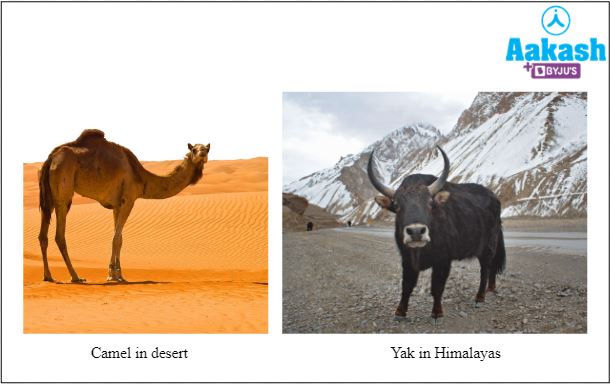
Fig: Camel and yak
So it is clear that the temperature is different in various places and it can affect the lives of living organisms. Hence temperature is an important abiotic factor, which is the nonliving part of an ecosystem. We are going to discuss more about the temperature in this article.
Table of contents
- Temperature
- Range of temperature tolerance
- Effect of temperature on plants
- Effect of temperature on animals
- Practice Problems
- FAQs
Temperature
Temperature is an ecologically relevant and most important environmental abiotic factor. The survival of the organisms are affected by the temperature they live in, because temperature can control the enzymatic activities inside the body of an organism. Temperature can also control other factors and they are as follows:
- Reproduction
- Embryonic development
- Migration
- Behavioural characteristics of the organisms
The difference in temperature causes variations in geography, it will also make the organisms adapt to that particular environment.
Global variations in temperature
From cold winters to hot summers the average temperature changes on the land. When we move from the equator towards the pole the temperature decreases. It is more than 50oC in tropical regions and sub-zero in polar regions.
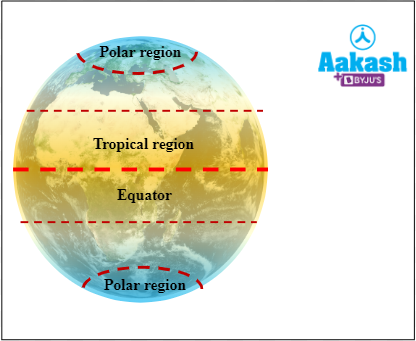
Fig: Temperature variation on the Earth
Factors affecting temperature of an area
Temperature directly influences the climatic conditions of a region. The atmospheric temperature of an area depends on the following factors:
- Latitude
- Altitude
- Topography
- Vegetation
- Humidity
- Slope
Climatic zones
Four climatic zones are formed from equator to poles depending on the temperature of each area. They are as follows:
- Tropical region
- Subtropical region
- Temperate region
- Subpolar region
- Polar region
Tropical region
The region that lies over the equator is called a tropical region. It has high temperatures throughout the year. The average temperature ranges from 25 to 28°C.
Subtropical region
The region that lies to the north and south of the equator is called subtropical region. It has mild winters and hot summers. The average temperature of warmest months is about 27°C.
Temperate region
The region between the subtropical and subpolar regions is called the temperate region. It has pleasant summers and frosty and snowy winters. The average monthly temperature is above 10°C in warmest months and above −3°C in colder months.
Subpolar region
The region between the temperate and polar regions is called the subpolar region. This region has long cold winters. It also has short and warm to cool summers. The temperature in winter may drop below −50°C in this region and the temperature in summer may exceed 26°C.
Polar region
The regions around the North Pole and the South Pole are called polar regions. These regions do not have trees. It has permanent snow which melts in the upper strata only during summer to provide space for growth of plants. The average temperature in summer at the North Pole is 0°C. The average temperature in winter drops to −40°C here. The South Pole regions are colder than the North Pole regions. In summer the average temperature is −28.2°C here.
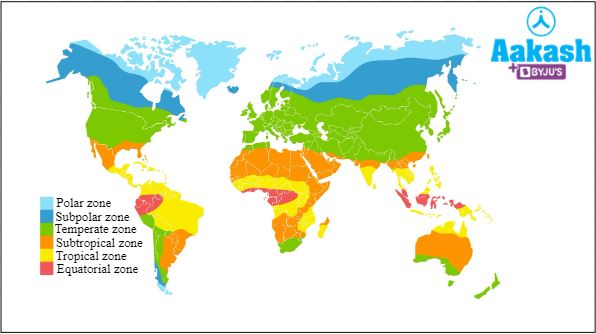
Fig: Climatic zones
Different biomes on the basis of variations in temperature
On the basis of the temperature, in each part of the Earth, various biomes are formed. A biome is a large community that includes vegetation and wildlife adapted to specific climate conditions. Precipitation here includes rainfall, snow and sleet (rain containing some ice). Not only the temperature, the intensity and duration of light is also a reason for the formation of different biomes. This variation in temperature and light is due to the rotation of Earth around the sun and the tilt of its axis. This will also affect the annual precipitation. All these factors lead to the formation of the different types of biomes as follows:
- Desert
- Tropical rainforest
- Temperate forest
- Tundra
- Taiga
- Savanna
- Grassland
Desert
Deserts are characterised by less than 50 centimetres of rainfall annually. This biome is extremely hot during the day and very cold at night. By the time the wind gets into deserts, it has little moisture. If rain falls also, it stays dry in deserts because the sand absorbs the water. Desert biome is a dry, sandy or rocky area with sparse vegetation. The day temperature touches 50 to 60oC. The temperature of desserts is more compared to other biomes. Examples of organisms include plants like cactus and animals like camels, snakes etc.

Fig: Desert
Tropical rainforest
These regions receive maximum precipitation in the form of rainfall (200 - 400 cms annually). Since tropical rainforests have so many plants, there is lots of transpiration (loss of water in the form of water vapour). Water vapour hovering over rainforests leads to more rain. In addition to this it is located near the equator and hence the availability of temperature and water are higher. This biome is very warm with an average daily temperature of 28°C. Examples of organisms in this biome include trees like mango trees and animals like rabbits, foxes etc.

Fig: Rain forest
Temperate forest
These regions receive about 70 to 250 cms of precipitation annually. The climate of a temperate forest is highly variable depending on the location of the forest. The climate of temperate forests is mostly wet. These biomes occupy the second position in the amount of rain received. They often have two distinct seasons like one long wet winter, and a short drier summer. Organisms include plants like maple and animals like raccoons, porcupines etc.

Fig: Temperate forest
Tundra
Tundra is characterised by severe winters with a mean temperature between –35oC and +13oC. These regions have the lowest average temperature. They are characterised by extremely cold temperatures (-34 to -6oC). The topsoil layer is covered by snow most of the time in this biome which is called permafrost.
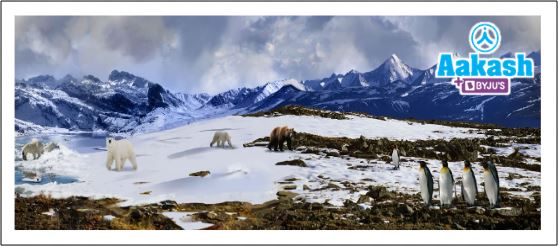
Fig: Tundra
Taiga
It is a forest from the subarctic cold region. This region is located in the Northern Hemisphere just south of the Arctic Circle. It lies between temperate forests of the south and the tundra of the north. Canada, Alaska, Siberia and Scandinavia have taigas.
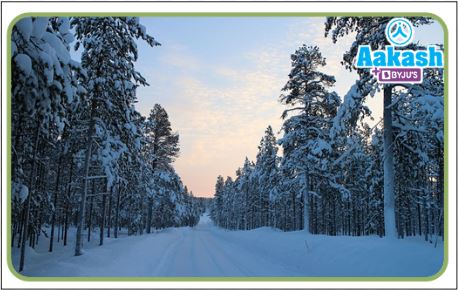
Fig: Taiga
Savanna
Savannas normally grow in the tropical regions 8° to 20° from the Equator. These areas have well developed grass cover interspersed with scattered shrubs and small trees. The average rainfall is 80 to 150 cms. Savannas are present in South America, Africa, Australia, Madagascar, and India.
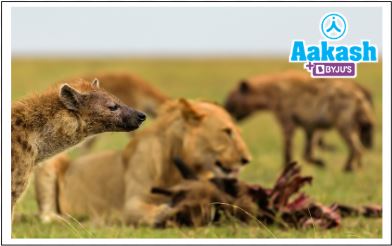
Fig: Savanna
Grassland
These biomes occur in the regions where the climate is cold in the winter and hot in summers. The average rainfall ranges from 25.4 to 101.6 centimetres annually. It is of different types based on the plant species such as Pampas in South America, Steppes in Europe and Asia, Veldts in South Africa and Tussocks in New Zealand and Australia. The average temperature ranges from -20°C to 30°C here.
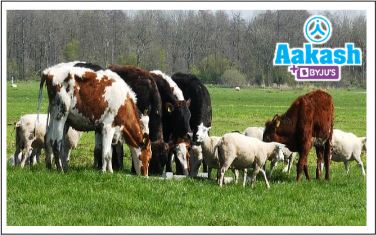
Fig: Grassland
Thermal vents
There are some habitats that have temperatures beyond 100o C. Examples are the thermal springs and deep-sea hydrothermal vents.
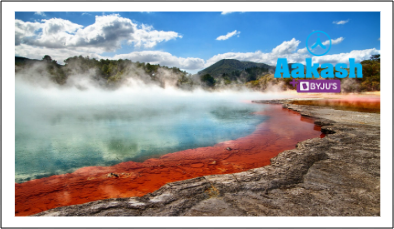
Fig: Thermal vent
Types of organisms on the basis of difference in temperature
On the basis of the four climatic zones from equator to poles there are four types of living organisms. They are classified as follows:
- Megatherms
- Mesotherms
- Microtherms
- Hekistotherms
Megatherms
The organisms that are found in the tropical zone are called megatherms. They are adapted to high temperatures throughout the year. Examples include plant species of tropical rainforest.
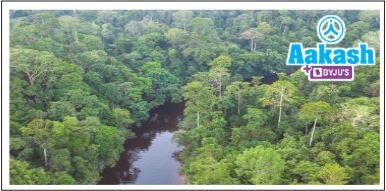
Fig: Tropical rainforest
Mesotherms
The organisms that are found in the subtropical zone are called mesotherms. They are adapted to mild winters and high summer temperatures. Examples include dinosaurs, tuna etc.
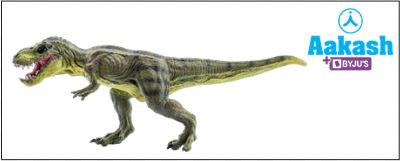
Fig: Dinosaur
Microtherms
The organisms that are found in the temperate zone are called microtherms. They are adapted to the areas where winter temperature is low but the summer temperature is moderate. Examples include the plant species of the Alpine region.
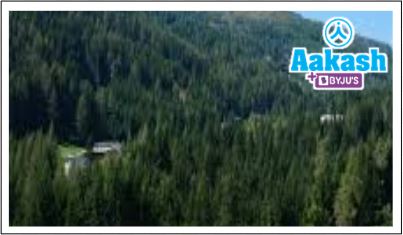
Fig: Alpine region
Hekistotherms
The organisms that are found in the Polar region are called microtherms. They are adapted to a brief summer period. The temperature of that period should be below 10oC. They also need a long snowy period. Examples include mosses, sedges, lichens and grasses.
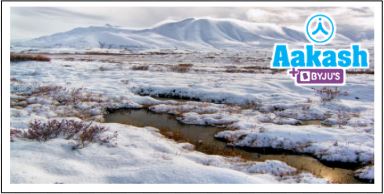
Fig: Polar region
Range of temperature tolerance
The range of temperature tolerance lies between 10oC to 48oC. But this range can vary according to the difference in the metabolic activities of organisms at different temperatures. This range can go below 0oC and also go as high as 88oC. Some of the examples of organisms at different ranges of temperature are as follows:
- Organisms like hot spring bacteria, cyanobacteria and algae can withstand a temperature up to 90oC.
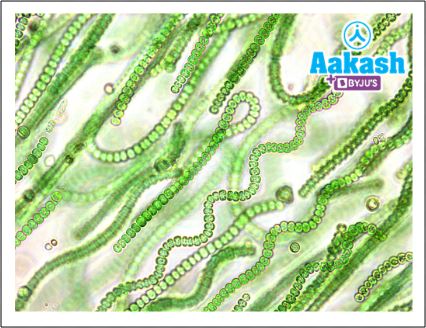
Fig: Cyanobacteria
- Mango trees can not grow in temperate countries like Canada and Germany.
- Tuna fish (Thunnini) are not caught beyond tropical water.
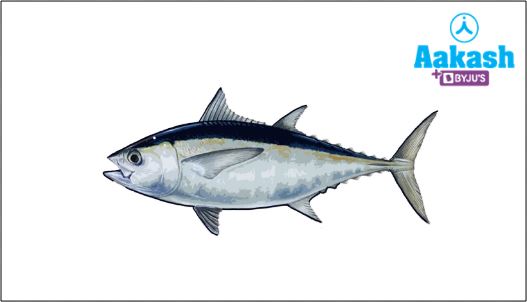
Fig: Tuna fish
- High temperature places like the deserts are suitable for organisms like camels, certain snakes and lizards.
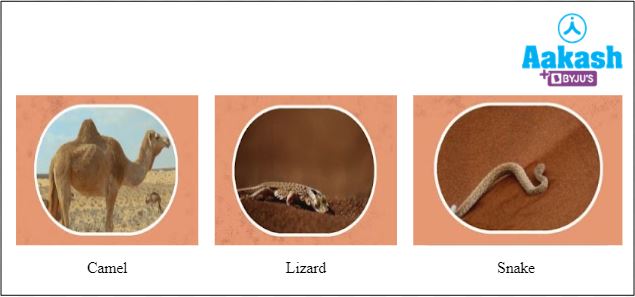
Fig: Desert animals
- Penguins (Spheniscidae) thrive better in polar regions with temperatures below freezing point.

Fig: Penguins
Cardinal limits of temperature
On the basis of effect of temperature on the metabolic activities, three cardinal limits of temperature have been identified and they are as follows:
- Optimum temperature
- Maximum temperature
- Minimum temperature
Optimum temperature
The range of temperature at which the rate of physiological activities is maximum in an organism is called optimum temperature.
Maximum temperature
The highest temperature limit tolerated by an organism beyond which physiological activities stop is called maximum temperature.
Minimum temperature
The lowest temperature limit for an organism after which physiological activities stop is called the minimum temperature.
Classification of organisms on the basis of cardinal limits of temperature
On the basis of cardinal limits of temperature, organisms can be classified into two as follows:
- Eurythermal organisms
- Stenothermal organisms
Eurythermal organisms
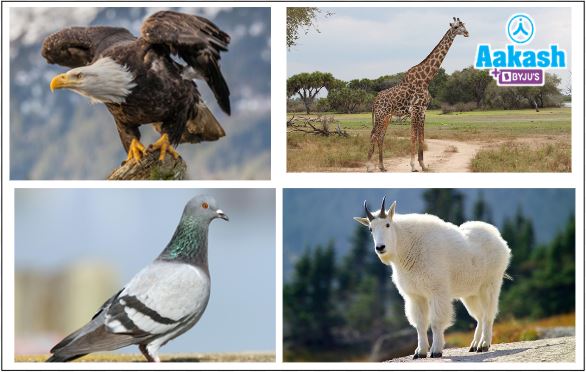
Those organisms that can tolerate a wide range of temperatures are called eurythermal organisms. Examples include most mammals and birds.

Fig: Eurythermal organisms
Stenothermal organisms
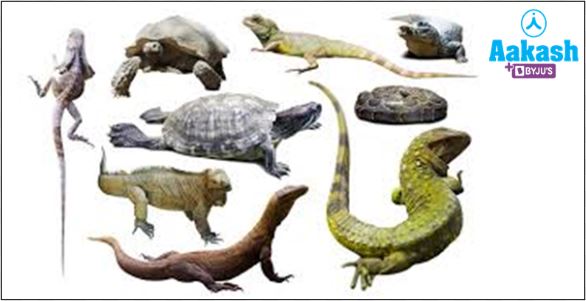
Those organisms that can survive within a narrow range of temperature, because of the requirement of nearly constant temperature are called stenothermal organisms. Examples include lizards, amphibians like frogs and polar bears.
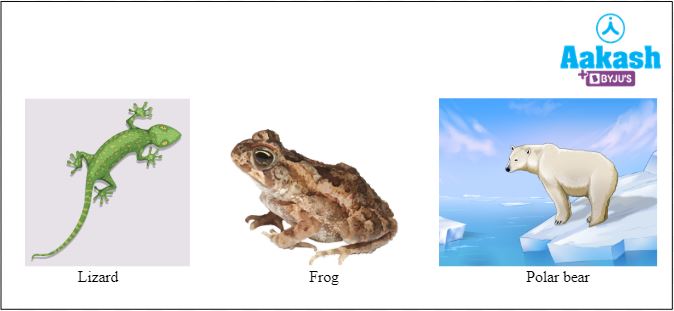
Fig: Stenothermal organisms
Effect of temperature on plants
Plants develop many adaptations for protection from high temperatures. The temperature variations affect their growth, metabolism, reproduction and transpiration processes.
Adaptations of plant according to the temperature
The high temperature and low temperature makes the plants adapt accordingly. So they develop many specialised or advanced structures in order to protect themselves from freezing and desiccation.
Protection from freezing
Physiological changes take place in the tissues that can prevent the freezing of the bound water by increasing the osmotic concentration. This can lower their freezing point. Freezing is avoided by dried seeds, fruits and cysts by eliminating more water.

Fig: Dried seeds
Protection from desiccation
Some of the plants develop the following adaptations to protect themselves from the high temperatures:
- Thick cuticle
- Scurfy or dense hairy coat
- Thick leaves
- Thick corky bark
- Mucilage
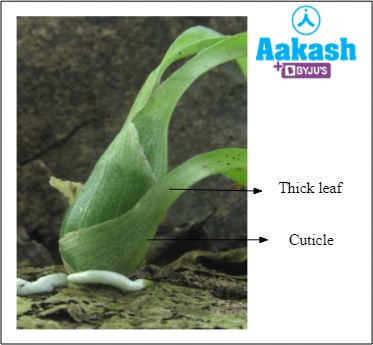
Fig: Orchid
Growth of plants and temperature
The growth and development of plants are affected by both high and low temperatures. The growth of the plant gets retarded by high temperature. If the temperature is high, the plants suffer dehydration and desiccation inside the tissues. If the temperature is low, it will affect the activities of the enzymes and thereby the nutrient intake of the plants get reduced.
Metabolism in plants and temperature
The process like photosynthesis and respiration are affected by the increase or decrease in temperature beyond optimum. Enzymes inside the plants get denatured above 42oC and their activities are slowed down below 20oC.
Reproduction in plants and temperature
Germination and flowering of the plants are connected with the temperature. For example, apple trees require a temperature below 7oC for a period of around 800 hours to flower. In most of the plant species, the seeds require low temperature before germination.
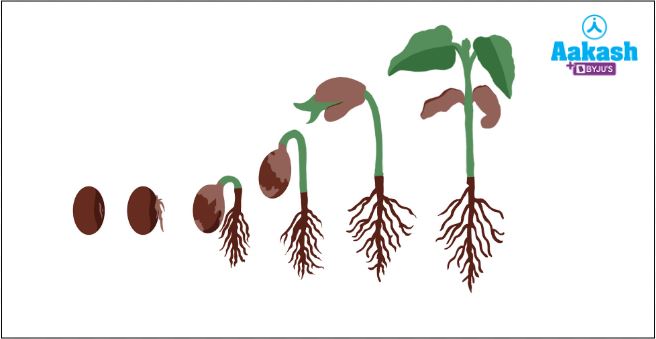
Fig: Seed germination
Transpiration in plants and temperature
The rate of transpiration increases with the increase in temperature. So the rate of transpiration and temperature are directly proportional. If plants are exposed to extreme temperature for a long time, it will cause more water loss and thereby stress, which leads to the wilting of plants. Transpiration occurs through stomata.
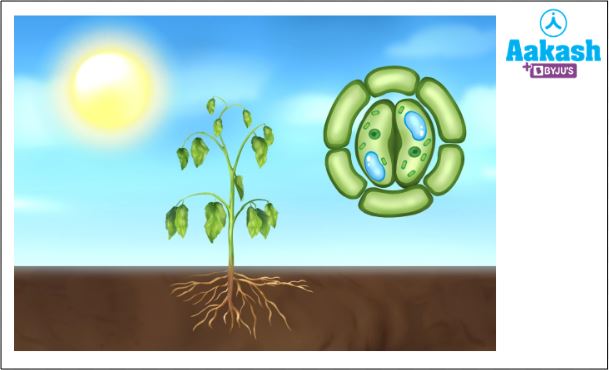
Fig: Wilting of plant due to excess transpiration
Effect of temperature on animals
Many changes can occur in animals when there is a change in the normal temperature of their habitat. These changes can be morphological or physiological. It can affect their metabolism, reproduction, growth, development and even behaviour. The sex ratio of the organisms in a particular region and their distribution can also be affected by change in temperature.
Morphological adaptations in animals in response to temperature
The effect of temperature on the morphology of organisms can be explained through the following rules:
- Bergman’s rule
- Allen’s rule
- Jordan's rule
- Gloger’s rule
Bergman’s rule
Bergman’s rule describes the changes in the body size of an organism according to the temperature. This rule states that the size of the bodies of birds and mammals of cold regions are larger than those of warmer regions. For example, the body of birds like penguins is larger than the hummingbirds.
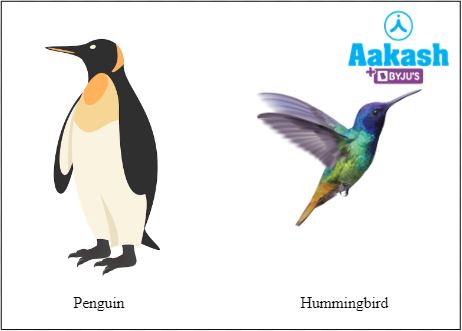
Fig: Examples for Bergman’s rule
Allen’s rule
Allen’s rule describes the effect of temperature on the extremities in the body. According to this rule the tail, snout, ears and legs of mammals of colder regions are relatively shorter than those in the warmer regions. For example, the extremities of polar bears are smaller.
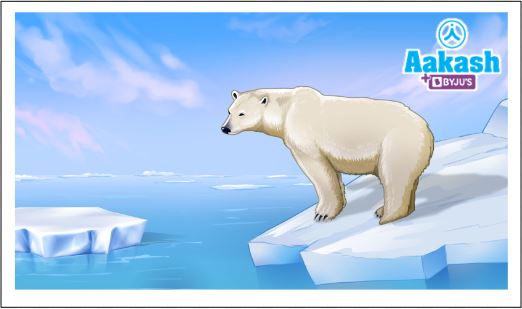
Fig: Example for Allen’s rule
Jordan's rule
Jordan's rule explains the effect of temperature on the skeletal system of animals. Jordan's rule states that the fishes found in the water of lower temperature tend to have more vertebrae than those found in the warmer waters.
Gloger’s rule
Gloger’s rule deals with the relationship between the colouration in animals and the temperature of their habitat. According to this rule, the mammals, birds and insects of tropical regions are darker in colour and heavily pigmented than those of Arctic regions. For example, the colour of owls in colder regions is lighter than in the tropical tropical region.
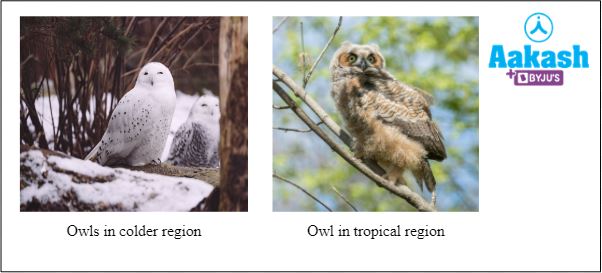
Fig: Examples for Gloger’s rule
Metabolism in animals and temperature
The biological catalysts that can accelerate the chemical reactions are called enzymes. Inside the body of every living organism, all the metabolic functions and thereby the physiological functions are controlled by the enzymes.
Temperature can affect the functioning of enzymes. For the proper functioning of an enzyme it needs an optimum temperature. But if the temperature is very high, it can denature or destroy the enzyme, because enzymes are proteins. Hence the metabolic pathways of an organism gets blocked and might lead to the death of the organism. This is one reason why temperature is considered as an important abiotic factor.
Reproduction in animals and temperature
Temperature can affect the maturation of gonads in a large number of animals. The breeding of animals can also be controlled by the temperature. The breeding pattern of animals varies, some animals prefer summer, some prefer winter, while some have two breeding periods (autumn and spring). Beyond an optimum temperature fecundity decreases. Grasshoppers can increase the number of eggs laid by 20 to 30 times more than usual, when the temperature increases from 22oC to 32oC.
Growth and development in animals and temperature
With the increase in temperature, the rate of growth in an organism increases. This happens up to an optimum level of temperature. Beyond the optimum level, the rate of growth declines or stops. This is due to the diminished metabolic activities. With rising temperatures, the incubation period of eggs decreases.
Behaviour of animals and temperature
In order to reduce the heat loss, the cold blooded animals tend to stay in groups in cold climates. Crocodiles and snakes take winter basking in the sun to raise their body temperature. The animals like the ticks, rattle snake and pit viper locate their warm blooded prey through the heat emitted by the prey.
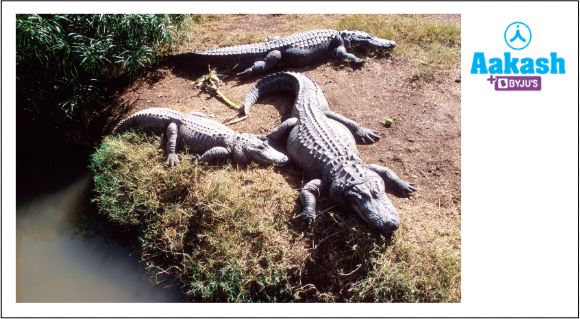
Fig: Crocodiles basking in the sun
Sex ratio in animals and temperature
Daphnia is a genus included in the planktonic crustaceans. At normal temperature, only female Daphnia are produced parthenogenetically. But at higher temperatures both male and female Daphnia are produced equally.
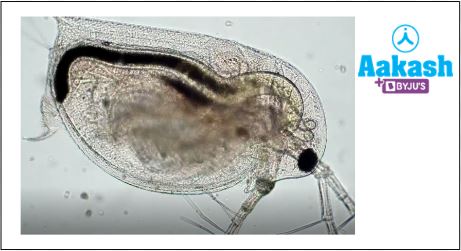
Fig: Daphnia
Distribution of animals and temperature
Temperature imposes a restriction on the distribution of animals. Some of the examples are as follows:
- Corals can be seen in the sea water with temperature more than 2oC.
- Ice fish (Channichthyidae) live only in cold water and tuna fishes are seen only in tropical seas.
- Snow leopards are found only in mountainous regions.
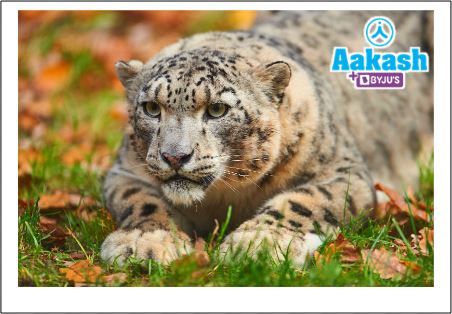
Fig: Snow leopards
Practice Problems
1. Which of the following is the region present between the temperate and polar regions?
a. Tropical region
b. Subpolar region
c. Subtropical region
d. Temperate region
Solution: The region between the temperate and polar regions is called the subpolar region. This region has long cold winters. It also has short and warm to cool summers. The temperature in winter may drop below −50°C in this region and the temperature in summer may exceed 26°C. Hence the correct option is b.
2. Which of the following is incorrect about the effects of temperature on plants.
a. Thick cuticles, thick leaves and dense hairy coats are adaptations of plants against high temperature
b. Enzymes inside the plants get denatures above 42oC and their activities are slowed down below 20oC
c. Germination and flowering of the plants are connected with the temperature
d. The rate of transpiration and temperature are indirectly proportional
Solution: Some of the plants develop adaptations to protect themselves from the high temperature like the thick cuticle, scurfy or dense hairy coat, thick leaves, thick corky bark and mucilage. Enzymes inside the plants get denatured above 42oC and their activities are slowed down below 20oC. Germination and flowering of the plants are connected with the temperature. For example, apple trees require a temperature below 7oC for a period of around 800 hours to flower. The rate of transpiration increases with the increase in temperature. So the rate of transpiration and temperature are directly proportional. If plants are exposed to extreme temperature for a long time, it will cause more water loss and thereby stress, which leads to the wilting of plants. Hence the correct option is d.
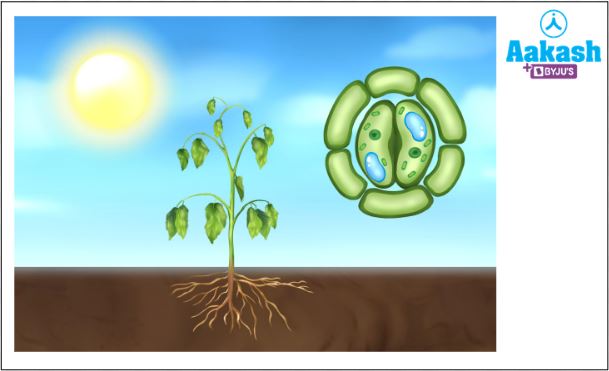
Fig: Wilting of plant due to excess transpiration
3. The small extremities of a polar bear are described through which of the following rules?
a. Bergman’s rule
b. Allen’s rule
c. Jordan's rule
d. Gloger’s rule
Solution: Allen’s rule describes the effect of temperature on the extremities in the body. According to this rule the tail, snout, ears and legs of mammals of colder regions are relatively shorter than those in the warmer regions. For example, the extremities of polar bears are smaller. Hence the correct option is b.
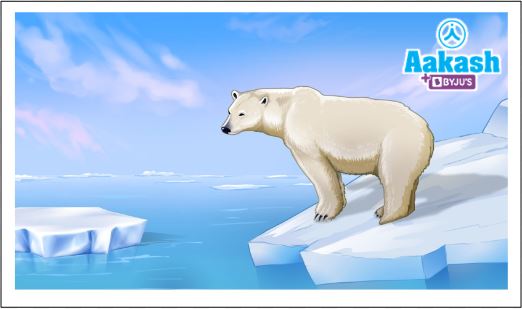
Fig: Polar bear
4. Which of the following is true about the distribution of animals according to the changes in temperature?
a. Corals can be seen in the sea water with temperature more than 2oC
b. Ice fish live only in cold water and tuna fishes are seen only in tropical seas
c. Snow leopards are found only in mountainous areas
d. All the above
Solution: Temperature imposes a restriction on the distribution of animals. Like the corals that can be seen in the sea water with temperature more than 2oC, ice fish that live only in cold water and tuna fish that occur only in tropical seas. Snow leopards that are found only in mountainous areas are also an example for the distribution of animals according to particular temperature. Hence the correct option is d.
FAQs
1. What is cyclomorphosis?
Answer: The change in the body shape with seasonal temperature changes is called cyclomorphosis. It can be observed in small aquatic forms like Cladocera, Daphnia etc.
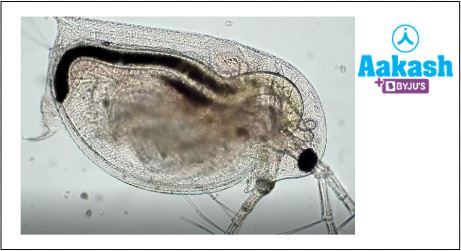
Fig: Daphnia
2. What is thermoperiodicity?
Answer: Thermoperiodicity is the regular response of organisms to changes in temperature that occurs at specific intervals of time. There are two types of thermoperiodicity. They are as follows:
- Diurnal thermoperiodicity – It is the response of organisms to changes in the day and night temperatures.
- Seasonal thermoperiodicity – It is the response of organisms to change in temperature occurring in different seasons.
3. What is thermoregulation?
Answer: The ability of an organism to keep their body temperature within specific boundaries, even if the temperature around them is different is called thermoregulation. Depending on the effect of external temperature over the body, there are two types of organisms and they are ectotherms and endotherms.
4. What are the differences between ectotherms and endotherms?
Answer: The major differences between ectotherms and endotherms are as follows:
|
Ectotherms |
Endotherms |
|
They are called cold blooded animals or poikilotherms |
They are called warm-blooded animals or homeotherms |
|
They match their body temperature with external temperature |
They maintain their body temperature more or less constant |
|
They become extra active when the external temperature is low to make their body temperature rise |
They remain active throughout the year |
|
These animals undergo hibernation during winter (winter sleep) and aestivation during summer (summer sleep) |
They do not hibernate or aestivate |
|
Examples include fishes, amphibians, and reptiles |
Examples include birds and mammals |
|
|
|

 Call Now
 Let's Chat
 Share
Share