-
Call Now
1800-102-2727


Syphilis: Causative Agent, Symptoms, Diagnosis, Treatment and Prevention, Practice Problems and FAQs

When we think of condoms, the first thing that comes to our mind is birth control. But did you know that condoms can also help in protecting us from some fatal diseases? Certain communicable diseases such as gonorrhoea, syphilis, chlamydiasis, genital herpes, AIDS, etc majorly spread through sexual contact with infected individuals but protected sexual encounters using a condom can help prevent the transmission of such diseases.
One of the most common sexually transmitted diseases is syphilis which will be the focus of our discussion in this article. Did you know syphilis is also known as the ‘greater imitator’? This is because it induces symptoms which are common to many different diseases. So what are these symptoms? How can we diagnose and treat them? Let us get into the details of this disease.
Table of contents
- STDs
- Syphilis
- Prevention of syphilis
- Practice problems
- FAQs
STDs/ STIs
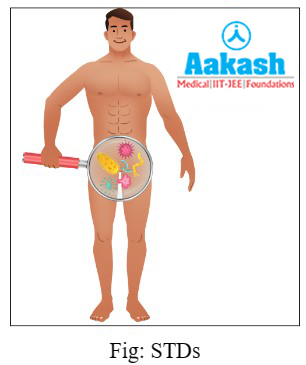
STDs or STIs are sexually transmitted diseases or infections that are transmitted during sexual intercourse or through body fluids. Examples of some STDs and their causative agent are given in the table below-
|
Disease |
Causative agent |
|
Chlamydiasis |
Chlamydia trachomatis |
|
Gonorrhoea |
Neisseria gonorrhoeae |
|
Syphilis |
Treponema pallidum |
|
AIDS |
Human Immunodeficiency Virus (HIV) |
|
Genital warts |
Human Papilloma Virus (HPV) |
|
Genital herpes |
Human Simplex Virus (HSV) |
|
Hepatitis B |
Hepatitis B Virus (HBV) |
|
Trichomoniasis |
Trichomonas vaginalis |
Syphilis
Causative agent
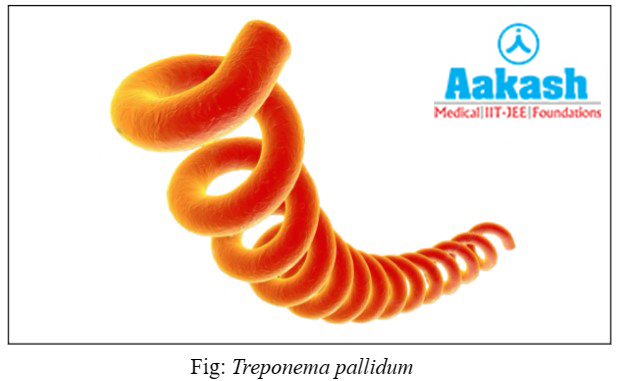
Syphilis is caused by Treponema pallidum which is a spirochaete (flexible spirally twisted) bacteria.
Mode of transmission
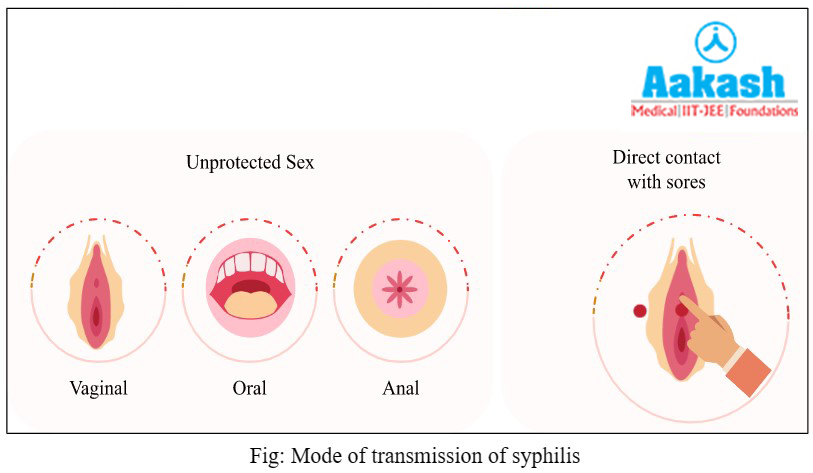
This disease spreads from one person to another by direct contact with a syphilitic sore, called chancre, during sexual intercourse/ sexual contact. It can also be transmitted by exchange of blood or through the placenta from mother to the growing foetus.
Symptoms
Syphilis advances in stages.
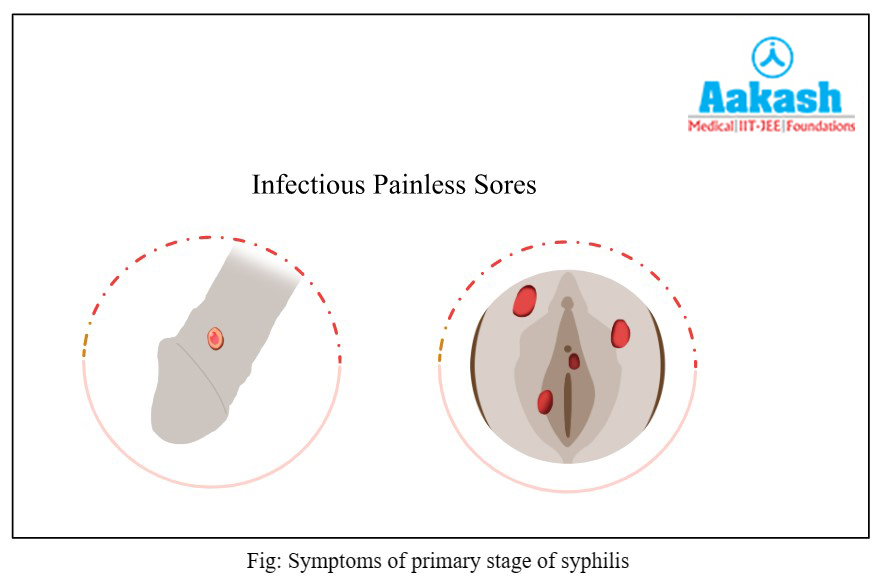
- Primary stage- marked by many painless, firm and round sores (chancre) on the genitalia or mouth (in case of oral sex). These chancres last for 3-6 weeks and heal without treatment. However, the infection proceeds to the secondary stage.
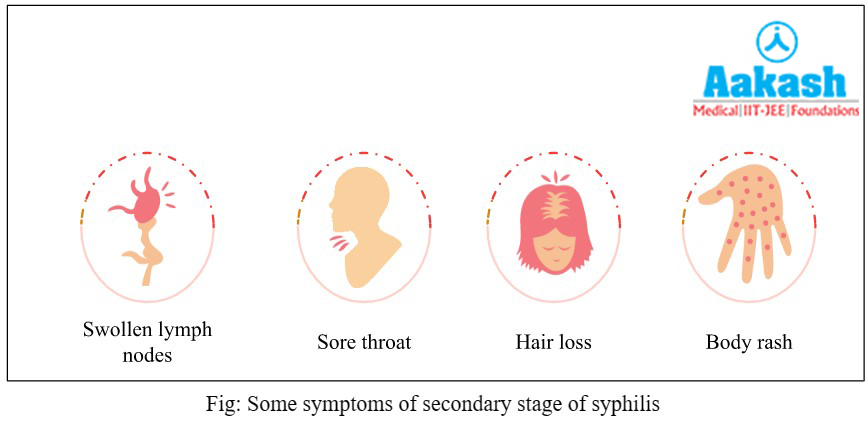
- Secondary stage - skin rashes or lesions on the mucous membrane (mouth, vagina, or anus) are the common symptoms during this stage. These lesions can appear several weeks after the chancre heals or they can also appear while the primary chancre is still healing. Fever, muscle and joint aches, swollen lymph nodes, sore throat, fatigue, weight loss are also few other symptoms one might feel. These symptoms can disappear even without treatment but the infection will surely progress to later stages if no treatment is administered.
- Latent stage - it is the hidden stage. There are no visible signs or symptoms. It can last for years.
- Tertiary stage - rarely does a patient reach this stage of the disease. It can appear 10-30 years after a person gets the infection. It can be fatal. This stage can affect various organs like - brain, eyes, nerves, heart, blood vessels, liver, bones, etc. And the symptoms also vary according to the organ system affected.
If the nervous system has been affected, it indicates neurosyphilis. Symptoms include- severe headache, numbness, weakness in muscles and difficulty in moving muscles, confusion, problems with making memories or decisions.
If the disease invades the eyes, it leads to ocular syphilis. The symptoms include - redness in the eye, eye pain, floating spots in the visual field, sensitivity to light, blurry vision or blindness can also occur.
Otosyphilis occurs when the ears are affected. It can lead to loss of hearing, vertigo and ringing or hissing feeling in the ears.
Diagnosis of syphilis
Identifying clinical symptoms helps in diagnosis of syphilis but this is not possible in the early stages. Confirmation can occur either via blood tests or by carrying out direct visual tests with the help of dark field microscopy of the serous fluid collected from a chancre. The latter helps in immediate diagnosis but is not commonly used due to lack of equipment and the complexity of the procedure.
Blood tests can be nontreponemal tests or treponemal tests. Nontreponemal tests include rapid plasma reagin (RPR) tests and venereal disease research laboratory (VDRL) but these tests can give false positives with viral infections such as measles and chickenpox. Thus, for confirmation of syphilis treponemal tests such as fluorescent treponemal antibody absorption test (FTA-Abs) and treponemal pallidum particle agglutination (TPHA) which test the presence of antibodies against the pathogen, are used. These tests can detect the antibodies 2-5 weeks after the initial infection.
Treatment for syphilis
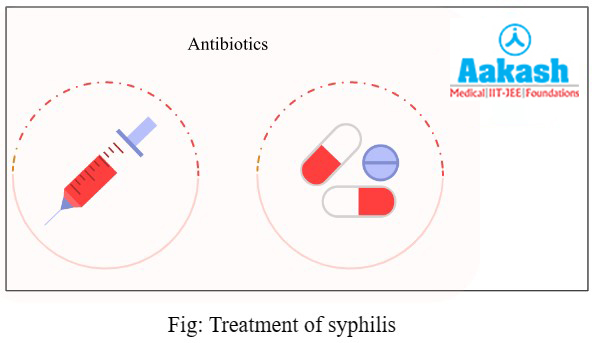
Syphilis is a bacterial disease and can be treated by administration of strong doses of specific antibiotics. The antibiotics have to be injected intra- muscularly (IM) and the dosage differs based on the stage of infection.
- Primary, secondary, or early latent syphilis can be treated using a single dose of IM benzathine penicillin G 2.4 million units.
- Tertiary and latent syphilis and HIV infected patients can be can with weekly IM benzathine penicillin G 2.4 million units for 3 weeks.
- Neurosyphilis can be treated with IV penicillin G aqueous 18-24 million units daily for 14 days. Or, procaine penicillin G 2.4 million units IM once daily and probenecid 500 mg orally four times a day for 10-14 days.
However, benzathine penicillin is a treatment of choice. Procaine penicillin is the second choice. In case penicillin can’t be used, doxycycline, azithromycin and ceftriaxone could be alternate options.
Prevention of Syphilis
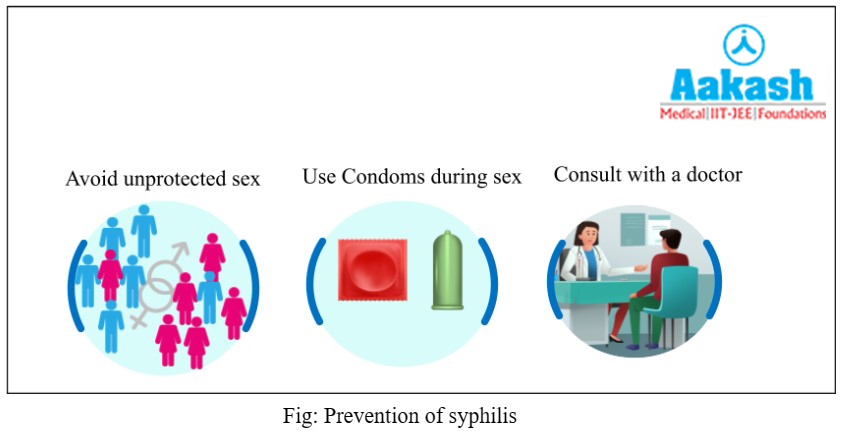
- Have protected sex (use condom)
- Avoid sex with unknown/ multiple partners
- Get tested if any symptoms appear
- Get complete treatment if diagnosed with syphilis
- Avoid recreational drugs
Practice problems
Q1. Select the correct one regarding genital herpes, HIV and syphilis.
a. All are sexually transmitted infections
b. All are completely curable
c. Only HIV and herpes can be cured completely
d. Only syphilis spreads through sexual contact
Solution: Genital herpes, HIV and syphilis are diseases that are transmitted through sexual contact. Hence all of them are STIs. HIV and herpes can not be cured completely.
Hence, the correct option is a.
Q2. The sexually transmissible disease, Syphilis
a. Is caused by a virus
b. Cannot be cured in early stages
c. Can cause organ degeneration
d. Never shows any symptoms
Solution: Syphilis is a STD caused by a bacterium. It can be treated and cured by the use of antibiotics. The symptoms of the infection are clearly visible in the primary, secondary and tertiary stages. Only in the latest phase the symptoms are hidden, but the pathogen is still present inside te body and the disease progresses. In the tertiary stages, the bacterium affects various organs like the brain, eyes, ears and can cause organ degeneration.
Hence, the correct option is c.
Q3. Which of the following diseases is caused by a bacterium and can be cured completely if detected early?
a. AIDS
b. Genital herpes
c. Hepatitis
d. Syphilis
Solution: AIDS, Genital herpes and Hepatitis are caused by viruses and cannot be completely cured. Syphilis is caused by the bacterium Treponema pallidum and it can be cured completely with proper dosage of antibiotics if detected early. Thus, the correct option is d.
Q4. Who is more vulnerable to get an STD?
a. People with one sexual partner
b. People who have frequent unprotected sexual intercourse
c. Child born to an uninfected mother
d. People who rarely require blood transfusions
Solution: Some people are more at the risk of getting an STD. These include - people with multiple/ unknown sexual partners, those who do not use condoms during sexual intercourse, child born to an infected mother, sex workers, people who require regular blood transfusion due to some kind of illness (sickle cell anemia, thalassaemia, leukemia). Thus, the correct option is b.
FAQs
Q1. Can syphilis affect the cardiovascular system?
Solution: If syphilis is not treated completely, it can lead to irreversible neurological and cardiovascular complications. Neurosyphilis can manifest as meningitis, stroke, cranial nerve paralysis. Cardiovascular syphilis can manifest as aortitis (inflammation of the aorta), aortic regurgitation (aortic valves don’t close tightly, thus some of the blood flows back from aorta to left ventricle) or carotid ostial stenosis.
Q2. Who can get an STD?
Solution: Any individual in the reproductive age group (15- 45 years generally) who are sexually active can get an STD if they have unprotected sexual intercourse.
Q3. Can syphilis recur?
Solution: Yes, even after complete treatment syphilis can come back. So, one should get themselves checked for the infection even after complete treatment to make sure the treatment was successful.
Q4. What is Jarisch- Herxheimer reaction?
Solution: If the patient is undergoing syphilis treatment using penicillin, after a few initial treatments they can experience this condition. It happens because the dying organisms release toxins leading to cytokine induction. The patients suffer from fever, headache, muscle pain, tachycardia (abnormally high heart rate), rash and malaise. The reaction starts almost a few hours of starting the treatment and spontaneously resolves within 24 hours. Anyone undergoing syphilis treatment must be warned about this.
Youtube link: https://youtu.be/PnqrSl1Jkhk

 Call Now
 Let's Chat
 Share
Share