-
Call Now
1800-102-2727


Organ and Organ System: Unicellular and Multicellular Organisms, Levels of Organisation and Examples in Humans, Practice Problems and FAQs

We get some types of infections, if we don't maintain hygiene. Have you ever got a bacterial infection like dysentery? If yes, then have you ever thought about the size of these organisms, how large they can be? Do they have organs like us?.
These organisms are very small and have a cellular level of organisation, that means they are composed of only a single cell. This single cell will perform all the activities including reproduction, excretion, growth etc. They are too small and affect multicellular organisms like us in a very bad way.
Similarly, there are different types of organisms that have different levels of organisation. The level of organisation in the body of simple animals like Hydra is the tissue level of organisation. Animals are multicellular organisms in which cells form the basic structural and functional unit of the body. A group of cells having the same structure, function and origin together form a tissue.
However, in complex animals like us, tissues, organs and organ systems work together to make the animal a functional living organism. Wow, that’s great. So let’s take a deep dive into the details of levels of organisation with examples in this article.
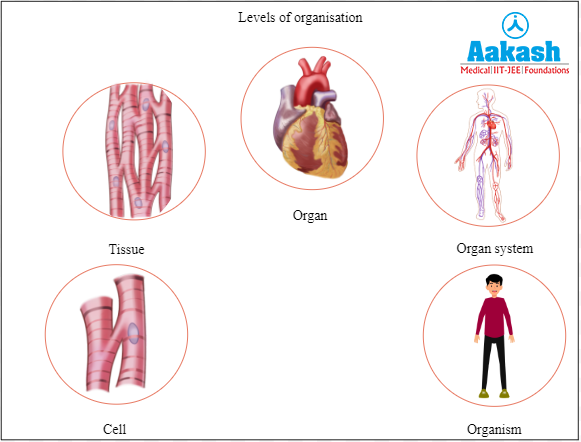
Fig: Levels of organisation
Table of contents:
- Basic features of animals
- Difference between unicellular and multicellular organisms
- Levels of organisation
- Organ and organ system level of organisation
- Examples of organ system level of organisation in humans
- Practice Problems
- FAQs
Basic features of animals
Animals possess eukaryotic cells that have well-defined nuclei. The cells of animals lack cell walls. Animals are multicellular, which means they are made up of many cells. They possess specialised tissues. Animals are heterotrophic in nature which means they depend on other organisms for their food. They have proper control and coordination in their body, that means they have a nervous system. They show motility. They usually exhibit sexual reproduction, which involves fusion of gametes from opposite sexes.
Difference between unicellular and multicellular organisms
|
Unicellular organisms |
Multicellular organisms |
|
Unicellular organisms have a single cell |
Multicellular organisms possess many cells |
|
Body organization is simple |
Body organization is complex |
|
A single cell carries out all the necessary life processes and functions |
Multiple cells are grouped together and each group performs different body functions |
|
Division of labour is observed at the cellular level where various cells and cell organelles perform their respective functions |
Division of labor is observed at the tissue, organ, and organ system levels depending on the type of organism. |
|
Examples include bacteria, cyanobacteria, yeast etc. |
Examples include lions, tigers, human beings, etc. |
Levels of organisation
|
Levels of organisation |
Description |
Possible category (Members of phylum) |
Images |
|
Cellular level of organisation |
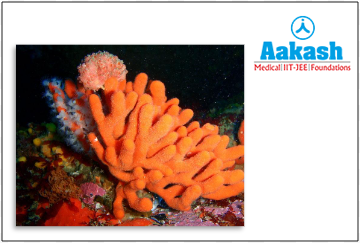
Body structure is composed of cells. They present loosely and perform different functions. They are not organised into tissues or organs. Division of labour can be seen between the cells. Examples include choanocytes, pinacocytes etc. |
Porifera (sponges) |
Fig: Sponges - Phylum Porifera |
|
Tissue level of organisation |
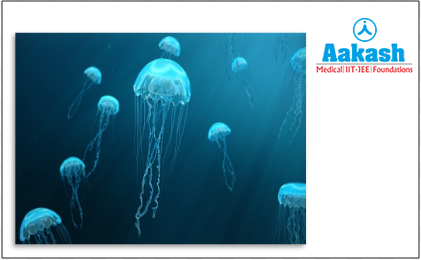
Cells performing similar functions are grouped together to form tissues. |
Coelenterata and Ctenophora |
Fig: Jellyfish - Phylum Cnidaria |
|
Organ level of organisation |
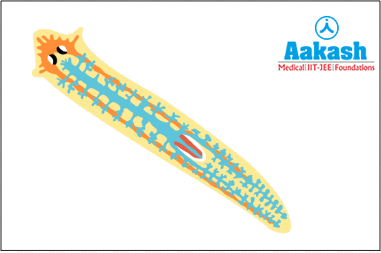
Tissues performing the same type of functions aggregate or join to form organs which perform certain physiological functions. |
Platyhelminthes |
Fig: Flatworms - Phylum Platyhelminthes |
|
Organ system level of organisation |
Organs involved in achieving a specialised function form the organ system. Examples include digestive system, circulatory system etc. |
Aschelminthes, Annelida, Arthopoda, Mollusca, Echinodermata, Hemichordata and Chordata |
Fig: Humans - Phylum Chordata |
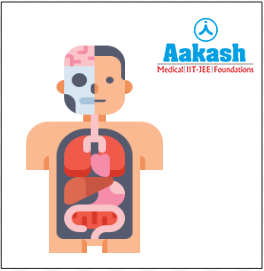
Organ and organ system level of body organisation
It is seen in higher organisms.
Organ
Each organ is composed of multiple tissues. The constituent tissues can be of one or more types. The tissues are organised in organs to achieve a specific function. Different organs are specialised to perform unique functions.
Examples of common organs
Examples of common organs in animals are given below:
- Heart: Pumps blood to different body parts.
- Lungs: Helps in exchanges of gases, uptakes oxygen-rich air and eliminates carbon dioxide-rich air (a metabolic waste product).
- Skin: Act as a barrier between the body parts and atmosphere. It is the protective layer.
Example for presence of different types of tissues in an organ
The heart is composed of all the four types of tissues as follows:
- Epithelial tissue
- Muscular tissue
- Connective tissue
- Neural tissue
The tissues constituting the heart include cardiomyocytes and connective tissue. The walls of the heart are formed by three layers which include epicardium, myocardium and endocardium. Thus, the heart is composed of multiple tissues. It is specialised in pumping action due to the presence of nodal tissues which generate impulses.
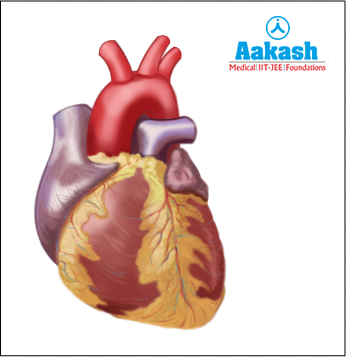
Fig: Heart
Organ system
Several organs are grouped together to form an organ system. The organ system performs a particular physiological function in an organism. This ensures a better coordination and conduction of life processes in an organism. The increasing complexity of levels of organisation across different phyla of the animal kingdom as we move from Porifera to Chordata signifies underlying evolutionary processes.
Examples of organ systems
Examples of organ systems in certain animals are enlisted below:
Blood vascular system
The heart and the blood vessels (arteries, veins and capillaries) together constitute the cardiovascular system or blood vascular system. The cardiovascular system circulates blood throughout the body. Absorbed nutrients, gases and other substances are transported through the blood.
Respiratory system
Nose, larynx, pharynx, trachea, bronchi, bronchioles and lungs collectively constitute the respiratory system. As a whole, the system helps in the exchange of gases between the body and the environment. Oxygen-rich atmospheric air is taken inside from which oxygen is taken up by the body tissues. On the other hand, carbon dioxide, a metabolic waste of the body, is transported outside.
Major organ systems of the human body
The major organ systems of the human body are enlisted below:
- Digestive system
- Respiratory system
- Cardiovascular system
- Excretory system
- Reproductive system
- Immune system
- Nervous system
- Skeletal system
- Muscular system
Example of organ system level of body organisation in humans - Blood vascular system
The blood vascular system or circulatory system is a prominent organ system of our body. The components of the organ system are enlisted below:
- Cardiomyocytes
- Cardiac tissue
- Heart
- Circulatory system
Cardiomyocytes
They are the fundamental units of the conducting system of the heart. Specialised cardiomyocytes form the cardiac conduction system which is responsible for controlling the rhythmic beating of the heart.
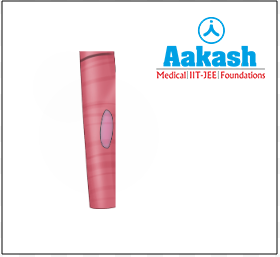
Fig: Cardiomyocyte (Cell)
Cardiac tissue
It is the tissue which constitutes the heart. The tissue is formed of a group of similar cells along with the intercellular substances that perform specific functions.
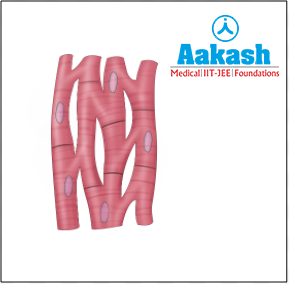
Fig: Cardiac tissue
Heart
It is the major organ of the circulatory system. It is composed of different types of tissues and is contractile in nature.
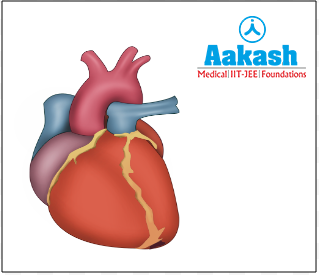
Fig: Heart (Organ)
Circulatory system
Heart along with the blood vessels aid in the transportation of blood throughout the body. This forms the circulatory system.
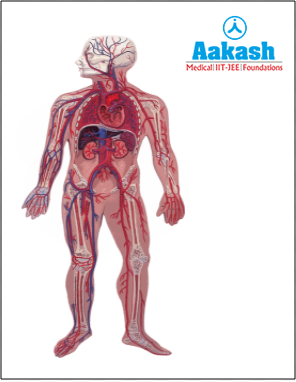
Fig: Organ system
Organism
Circulatory system along with various other body systems performing different physiological functions form the entire organism.

Fig: Organism
Practice Problems
1. Identify the function of organ skin in the human body.
- Pumps blood throughout the body
- Exchange gases
- Form a barrier between atmosphere and body parts
- Excrete waste products
Solution: In humans, skin acts as a barrier between the atmosphere and body parts. It protects the internal organs. Hence, the correct option is c.
2. The functional unit of the cardiovascular system is _____________.
- Cardiomyocytes
- Osteocytes
- Chondrocytes
- Hepatocytes
Solution: The functional units of the conducting system of the heart are cardiomyocytes. Hence, the correct option is a.
3. In organ level of organisation, which structure is grouped to perform a specific function?
- Cell
- Tissue
- Organ system
- Both a and b
Solution: In organ level of organisation, tissues are grouped together to perform a specific function. Hence, the correct option is b.
4. From the following options, which is not an example of an organ?
- Heart
- Lung
- Skin
- Digestive system
Solution: From the given options, the digestive system is an example of an organ system. It includes various organs, such as oesophagus, mouth, stomach, small intestine, large intestine, anus etc. Hence, the correct option is d.
5. Define organ system level of organisation?
Answer: An organ system is made up of several organs that are grouped together. It performs specific physiological functions in the body of the organism.
6. Give some examples of organs in the human body?
Answer: In the human body different organs are present that perform their specific functions. Some examples are: heart, lung, kidney, skin, eye, ear etc.
7. What is an organism?
Answer: Organism is termed as an individual form of life. It possesses various organ systems that work together.
FAQs
1. Which is considered as the most interesting organ in the human body?
Answer: Liver is considered as the most interesting organ in the human body. It performs three main jobs as follows:
- It filters harmful things like toxins from blood.
- It stores fuel for the body in the form of glycogen.
- It produces bile which helps in emulsification of fat.
- It plays a role in more than hundreds of other bodily functions.
- Which is considered as the largest organ in the human body?
Answer: The skin is considered as the largest organ in the human body.
3. Can we consider hair as an organ?
Answer: Hair is considered as an accessory organ of the skin. It is made of columns of tightly packed dead cells called keratinocytes. It is found in most parts of the body.
4. Name some organs without that a person can live?
Answer: We can lead a fairly normal life without one lung, a kidney, spleen, the fibula bones from each leg, appendix, adenoids, tonsils, gallbladder, some lymph nodes, and some ribs.

 Call Now
 Let's Chat
 Share
Share