-
Call Now
1800-102-2727


Coronary Artery - Structure, Functions and Diseases

We all are aware of the fact that the heart is pumping blood to all parts of our body. However, blood vessels are the road to the blood supply. The coronary arteries are blood vessels that supply blood to the heart. Our heart needs oxygen-rich blood to function effectively. They are divided into right and left coronary arteries.
Table of Contents:
- What is Coronary Artery?
- Location of Coronary Artery
- Structure of Coronary Artery
- Composition of Coronary Arteries
- Coronary Artery Diseases
- Causes for Coronary Artery Diseases
- Practice Problems On Coronary Artery
- Frequently Asked Questions
What is Coronary Artery?
The coronary arteries are blood vessels which help to transport the oxygenated blood to the heart. They are the branches of the aorta, the main artery in the body. It supplies blood to the heart muscle and other organs of the body. There are two branches, a right coronary artery and a left main coronary artery in the heart.
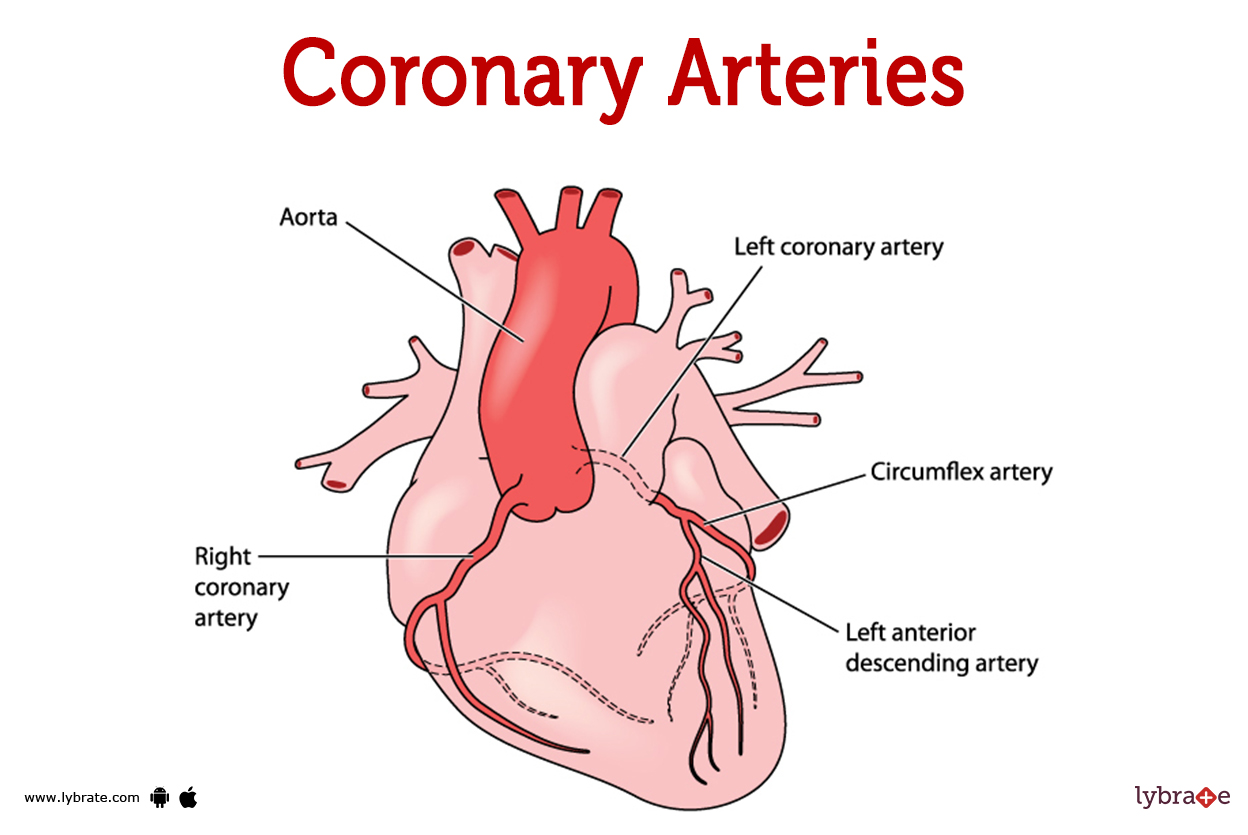
Source: Lybrate
Location of Coronary Artery
The coronary arteries are located inside the heart muscles. They start from the aortic root, the first part of the left ventricle of the heart. From the left ventricle, the oxygenated blood leaves the heart and circulates through the body. Thus coronary arteries are the first branch of the heart.
Structure of Coronary Artery
The coronary arteries are composed of two branches. They are the right and left coronary arteries.
- Right coronary artery (RCA)
It is present on the right side of the heart. It originates from the right cusp of the aortic valve and reaches down to the crux of the heart. The RCA plays an important role by supplying the blood to the right atrium and right ventricle of the heart, where deoxygenated blood goes prior to reaching the lungs.
Its branches supply the sinoatrial (SA) and atrioventricular (AV) nodes, which send electrical signals to the heart to notify of contraction. RCA branches transport blood to one-third of the interventricular septum, the wall between the heart's lower chambers.
- Left main coronary artery (LMCA)
It is present on the left side of the heart. It supplies the blood to the left atrium and left article of the heart. The oxygenated blood comes from the lungs to LMCA before the heart pumps it to other parts of the body. LMCA branches transport blood to two-thirds of the interventricular septum.
Composition of Coronary Arteries
The coronary arteries consist of the following three layers:
- Tunica intima: It is the innermost layer that has contact with the blood to flow smoothly within the arteries.
- Media: It is the elastic middle layer which helps in expanding and contracting the arteries to maintain blood pressure.
- Adventitia: It is the outermost layer which contains several tiny vessels to transport nutrients and oxygen to the heart cells.
Coronary Artery Diseases
Coronary Artery diseases are common heart diseases that affect the coronary arteries of the heart. It can cause atherosclerosis, a plaque in the arteries. If the arteries are clogged, the blood is prevented from getting to the heart, which can ultimately lead to a heart attack or stroke.
Acute coronary syndrome is a disease caused by the sudden loss of blood flow to the heart. A heart attack is an example of acute coronary syndrome. Aneurysms occur when there is a bulge in a blood vessel. Coronary spasm is a condition that occurs by the sudden tightening of the artery muscles. It leads to a temporary block in the arteries, which can cause chest pain.
Causes for Coronary Artery Diseases
The main cause of coronary artery disease is the deposition of fats and cholesterol on the inner walls of the coronary arteries. This forms a plaque and blocks the blood from reaching the heart. It also causes blood clots when the plaque enlarges and bursts. Some of the other causes that lead to the damage of coronary arteries include:
- High blood pressure
- Usage of tobacco or smoking
- Unhealthy lifestyle
- Diabetes or insulin resistance
Practice Problems On Coronary Artery
Q1. Which of the following is not the layer of coronary arteries?
A. Tunica intima
B. Endodermis
C. Media
D. Adventitia
Ans: B. Endodermis
The term "endodermis" refers to a layer found in plant roots and is not a component of coronary arteries.
Q2. Which of the following is transported by coronary arteries?
A. Oxygen
B. Blood
C. Oxygenated blood
D. Deoxygenated blood
Ans: C. Oxygenated blood
The coronary artery transports oxygenated blood to the heart muscle for efficient function.
Q3. Which of the following is a bulge in the blood vessels?
A. Heart attack
B. Plaque
C. Aneurysms
D. Coronary spasms
Ans: C. Aneurysms
Aneurysms occur when there is a bulge in a blood vessel.
Frequently Asked Questions
Q1. How many chambers are present in the heart?
Answer : The two upper chambers and two lower chambers are the four chambers of the heart. The two upper chambers are the left and right atriums, and the two lower chambers are the left and right ventricles.
Q2. How to prevent coronary artery diseases?
Answer : A person can prevent coronary diseases by the following:
- Quit smoking
- Consume healthy food and avoid oily or fat-rich foods
- Regular exercise and stay active
- Maintain body mass index.
Q3. What are the treatments for coronary diseases?
Answer : Coronary diseases can be cured by medication. In any serious condition, atherectomy, angioplasty and bypass surgery are common treatments for coronary diseases.

 Call Now
 Let's Chat
 Share
Share