-
Call Now
1800-102-2727


Gravitational force, properties, principle of superposition, Solved examples, FAQs

Ever wondered why a stone thrown towards the sky comes back to the ground? It doesn’t always remain in the sky. The mere simple instance of an apple falling on the ground from a tree led to the discovery of gravitation. Every object seems to fall on the ground irrespective of its size. Gravitation is much more than a regular phenomenon, it has various theories and principles revolving around it. But what is the reason behind everything falling on the ground? In this article we will decode the mystery behind gravitational force.
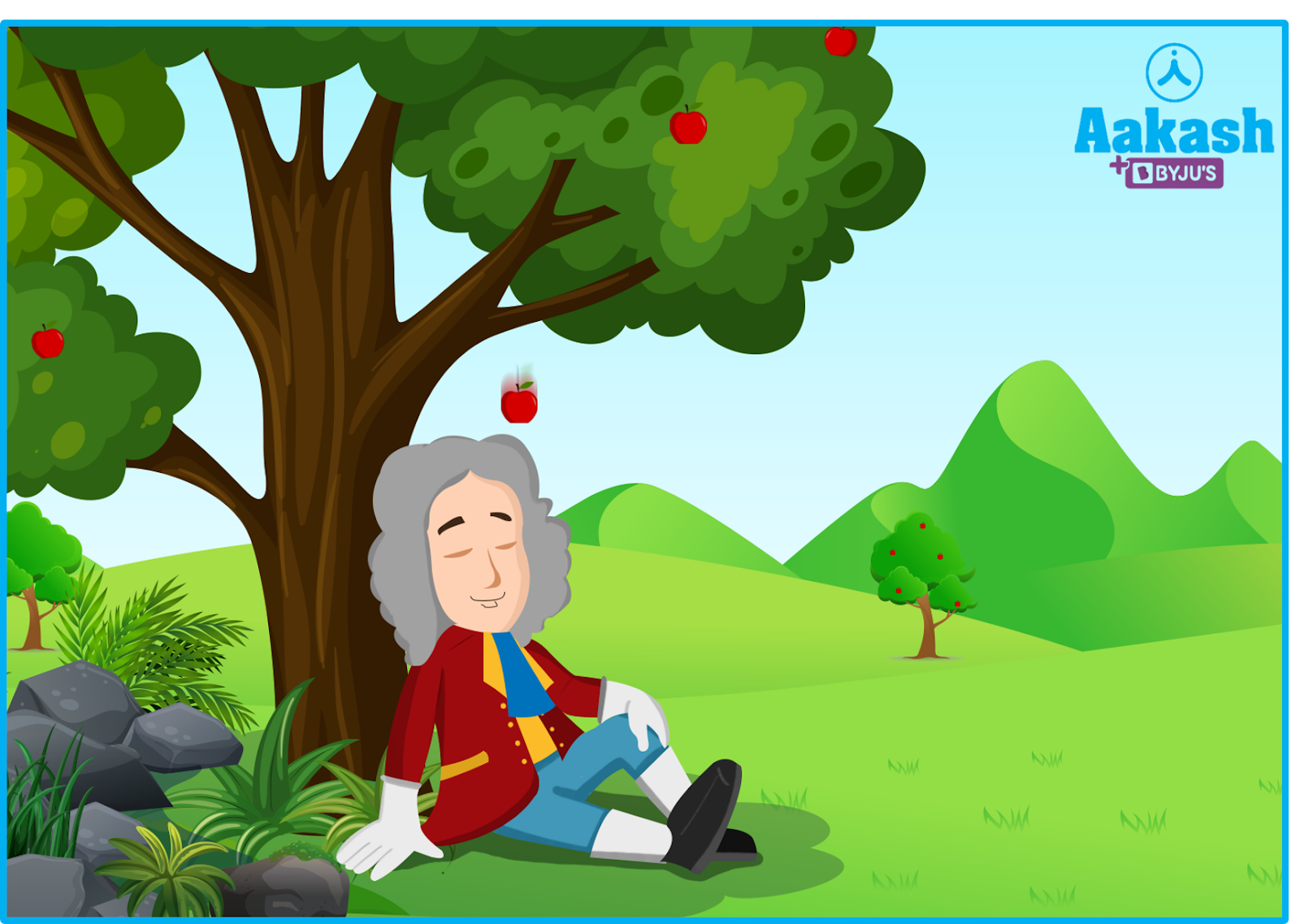
Table of contents:
- What is Gravitational Force?
- Gravitational Force Formula
- Properties of Gravitational force
- Principle of superposition
- Physical significance or examples of Gravitational force
- Real-World Applications: Why Does This Matter?
- Solved examples
- FAQ
What is Gravitational Force?
Throughout the universe, every object attracts another object towards itself. This force of attraction is called the force of gravitation. Discovered by Sir Issac Newton, Gravity is nothing but a force of attraction between any two bodies that exist in a universe. Anything that has mass has gravity. Gravity is a force which has an infinite range of influence.
Black holes pack so much mass into such a small volume that their gravity is strong enough to pull anything towards it. Black holes even prevent the light from escaping.
Gravitational Force Formula
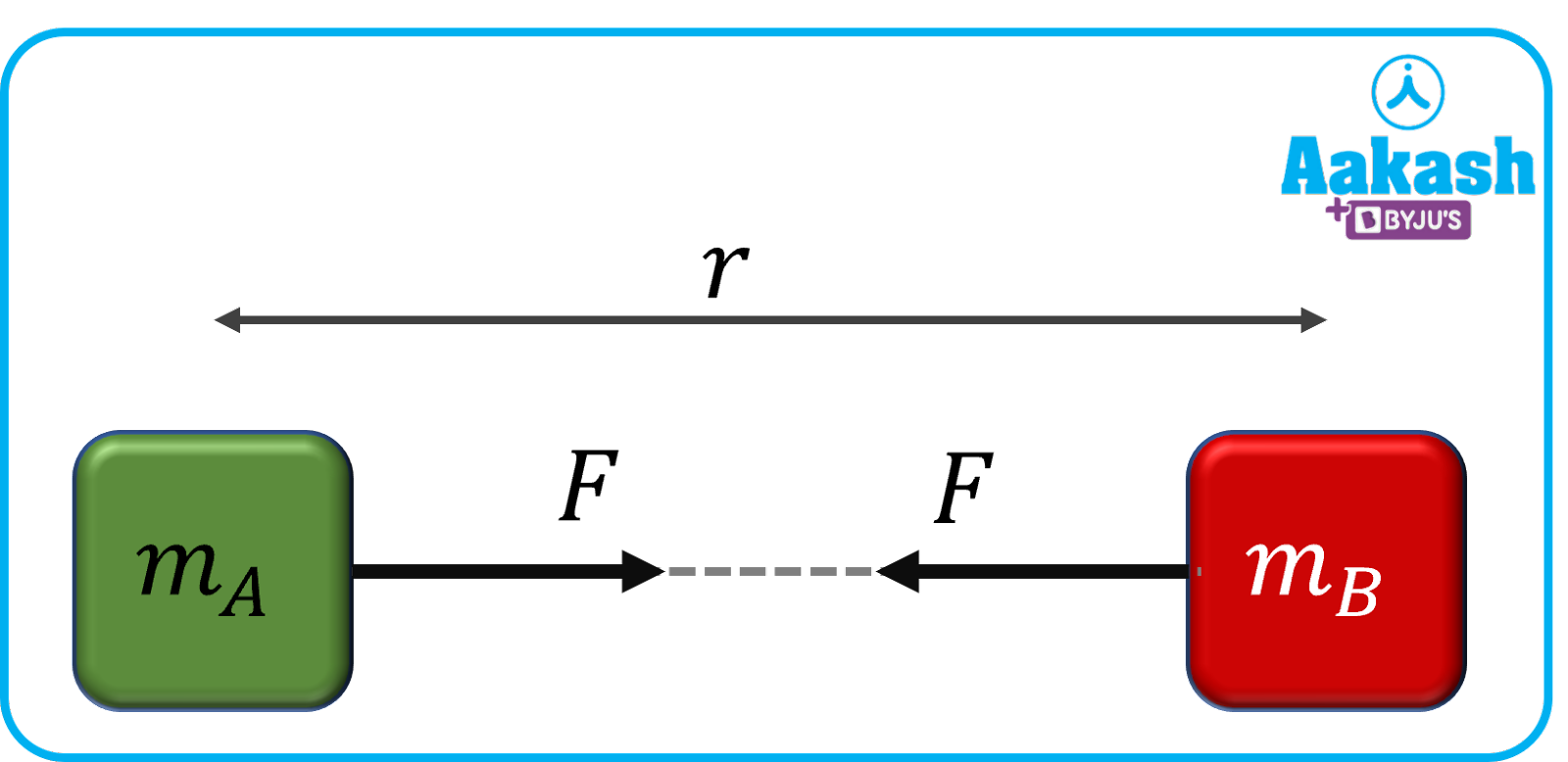
Let there be two bodies of mass mA and mB separated by a centre of mass to centre of mass distance r. The gravitational force between them is mathematically defined as
where G is gravitational constant and its value is 6.6710-11 Nm2/kg2
Newton’s Universal Law of Gravitation
In the late 17th century, Sir Isaac Newton realized that this pull isn't just happening on Earth; it’s everywhere. He proposed that the force of attraction between two objects depends on two main things:
1. How heavy they are: More mass means a stronger pull.
2. How far apart they are: The further away they are, the weaker the pull.
Properties of Gravitational Force
- It is a central force which means that the gravitational force will act along the line joining the centres of two bodies.
- Gravitational force is always attractive in nature.
- It does not depend on the surrounding medium.
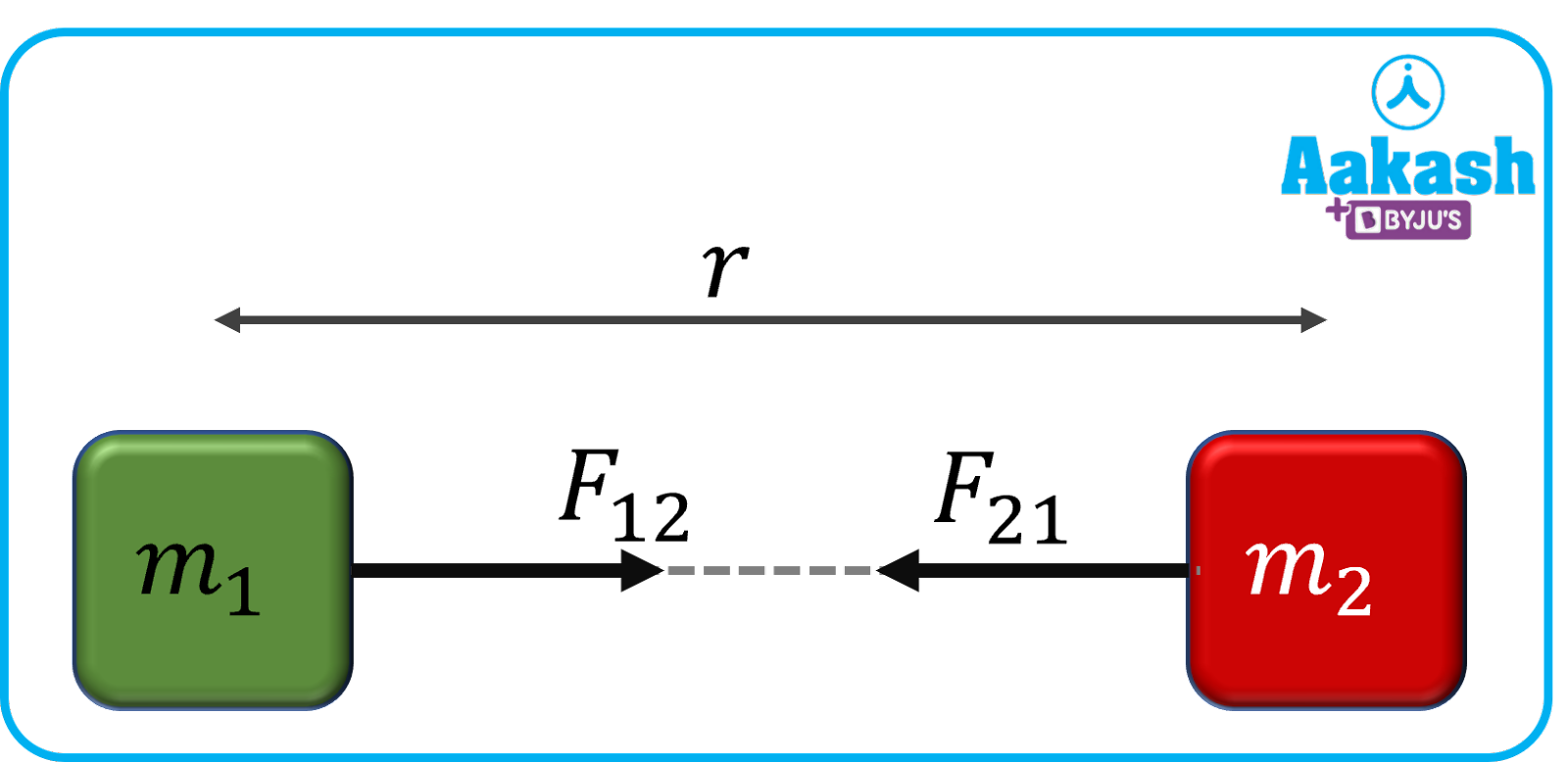
- The mutual gravitational forces acting on two bodies will be equal in magnitude but opposite in direction.
Where, is the force on body 1 due to body 2 and is the force on body 2 due to
body 1.
- It is a very weak force.
Principle of superposition
“In a system, if there are more than two masses placed at different distances exerting gravitational forces on each other, then the net gravitational force on any body can be calculated by the vector sum of individual gravitational force due to other masses in that system.”
Consider 3 masses m1, m2 and m3 are placed at a distance of and from another mass m0 as shown,

Then, the net gravitational force acting on mass m0 due to all other masses,

Where, Gravitational force on m0 due to m1
Gravitational force on m0 due to m2
Gravitational force on m0 due to m3
Physical significance or examples of Gravitational Force
Gravitational force is the force that pulls two bodies together. Let us see a few examples where we can see gravity around us:
- The force of attraction between earth and the sun.
- Gravitational force makes the moon revolve around the earth.
- Tides in the sea are caused due to the gravitational attraction of the moon.
- Gravitational force keeps us on the ground. It is greater than the centrifugal force on us due to earth’s rotation.
Real-World Applications: Why Does This Matter?
Gravitation isn't just a chapter in a textbook; it’s the reason the world works the way it does:
• Atmosphere: Gravity holds our air in place. Without it, we wouldn't have oxygen to breathe.
• Tides: The gravitational pull of the Moon on our oceans creates high and low tides.
• Planetary Orbits: Kepler’s Laws explain that planets move in elliptical paths because of the Sun's gravity.
• Weather Satellites: Polar satellites orbit at about 500–600 km to collect data for weather forecasting in India.
Practice Problems
- Find the gravitational force of attraction between the moon and earth if the mass of the moon is 1/81 times the mass of the earth. G=6.6710-11 Nm2/kg2, radius of the moon's orbit is 3.58105 km. Mass of earth is 6 1024 kg.
Solution: Using Newton’s Law of Gravitation
Where, G=6.67 10-11 Nm2/kg2 (Gravitational constant)
me= Mass of the Earth
mm= Mass of the Moon
r = Radius of the Moon’s orbit
- The weight of the boy on earth is 150 N and on a certain planet A is 25 N. Take g=10 m/s2 on earth. Find the mass of the boy on both earth and planet A.
Solution.
Given that the weight of boy on earth is 150 N.
So, the mass of the boy on the earth
Now mass does not vary and it will remain the same on both the planets.
- Two identical spherical balls of radius r and density are touching each other. Then the gravitational force is proportional to,
a) r4 b) c) d) r2
Solution: Since the balls are identical the masses will be the same. Let the mass of each ball is m and the volume of balls is V.

The mass will be,
Consider both the masses as point masses placed at their centres.
Now from Newton’s law of gravitation,
Therefore, F ∝ r4
Hence the correct option is (a).
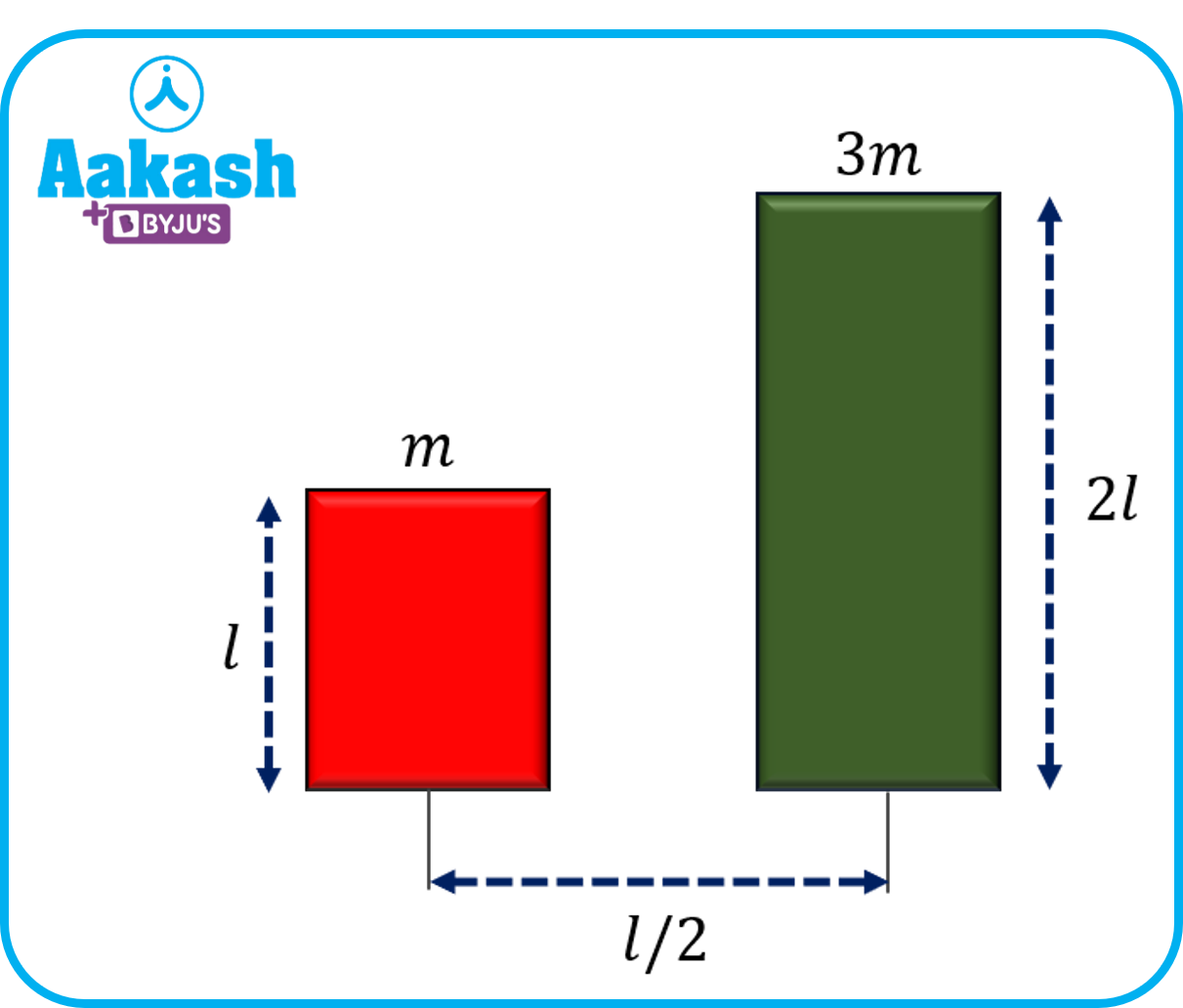
- Two blocks of same width are kept l/2 distance apart as shown in the figure. The mass of each block is m and 3m respectively. Find the expression for gravitational force between them.
Solution:
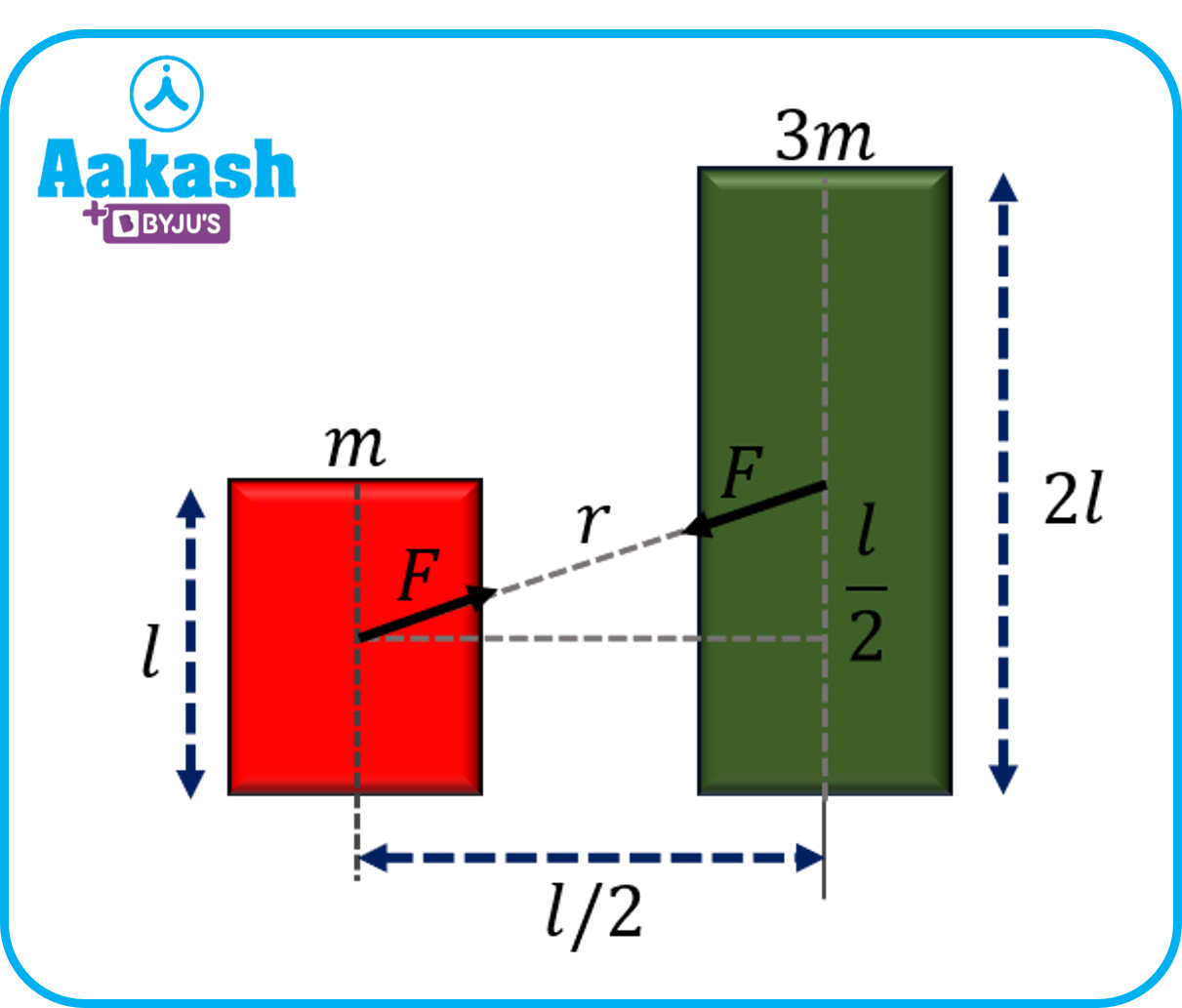
Since the gravitational force is a central force and acts along a line joining the centres of two bodies, the distance between their centres of mass (r) is to be considered in the calculation of the gravitational force acting between them.
As seen from the diagram,
Then the gravitational force between the blocks is,
FAQs
Q. Who discovered the law of gravity?
A. It is Sir Isaac Newton who realized the universal law of gravitational attraction.
Q. Is gravitational force a vector quantity?
A. Yes, gravitational force is a vector quantity. Its direction is along the line joining the centres of two bodies under consideration.
Gravitational force on a body A due to another body B is along the line joining their centres and from A towards B.
Q. What is anti-gravity?
A. In general it may seem that anti-gravity is all about some force that acts opposite to gravitational force. But this is actually created by some artificial means such as viz, magnetic effect, aerodynamic lift etc. This creates a force which levitates the object creating an illusion that no gravitational force exists.
Q. What is the Dimensional formula of gravitational force?
A. Since gravitational force is also a force, dimensional formula of gravitational force is [M1L1T-2].
Q. Why is gravitational potential energy always negative?
It is negative because the gravitational force is strictly attractive in nature. The value is set to zero at infinity, and since work is done by the field as an object moves closer, the potential energy decreases below zero.
Q. Where would I weigh the most on Earth?
You would weigh the most at the Poles. This is because the Earth is not a perfect sphere; the poles are closer to the Earth's center, making the acceleration due to gravity (g) higher there than at the equator.

 Call Now
 Let's Chat
 Share
Share