-
Call Now
1800-102-2727


Spectrophotometer Principle – Beer-Lambert's Law, Instrumentation, Working, Types and Applications

While strolling on the beaches during your next visit to any coastal city, take a glance at the ocean waves sweeping past your feet and on the coastal sands. You would notice the waves quickly retreat back leaving the sand and your feet wet if the sand has absorbed a bit of water from the gigantic waves and left the rest to retreat back to the ocean. The amount of water absorbed can be considered proportional to the amount of sand present on the beach at a particular place.
Consider light to be like the sea waves! (Thankfully, light has the dual nature of particles as well as waves). When light strikes a surface (or a sample), some amount of light is absorbed, (some amount is reflected, which can be nullified) and the rest is transmitted! The amount of light absorbed can be directly related to the concentration of the sample present. This wonderful phenomenon forms the basis of spectrophotometry. It is an amazing technique, frequently used in analytical chemistry.

When the Antarctic ozone "hole" was discovered in 1985, atmospheric chemist Susan Solomon initiated the first ever expedition, in 1986 with the intention of making a chemical analysis of the Antarctic atmosphere with the help of spectroscopy! The expedition found that Ozone layer depletion took place during the polar sunrise. Also, they found the quantity of chemically active chlorine present at the stratospheric level, applying the same method.
Gordon M. B. Dobson created the first device (now known as a Dobson spectrophotometer) for regular total ozone measurement in the 1920s.
Let’s find more about the principle of spectrophotometers on this concept page.
TABLE OF CONTENTS
- Spectrophotometry – Introduction
- Beer-Lambert’s Law
- Spectrophotometer – Principle
- Spectrophotometer – Instrumentation
- Spectrophotometer – Working
- Spectrophotometer – Types
- Spectrophotometer – Applications
- Practice Problems
- Frequently Asked Questions – FAQ
Spectrophotometry – Introduction
Spectrophotometry is a method used to quantify relative energy (emitted, transmitted, or reflected) as a function of wavelength in the electromagnetic spectrum. In spectrophotometry, a device called a spectrophotometer is used, combining two components: a spectrometer that generates light with a certain wavelength and a photometer that gauges the amount of light that is transmitted or absorbed. The spectrophotometer measures the light intensity absorbed by a sample by passing a light beam through it.
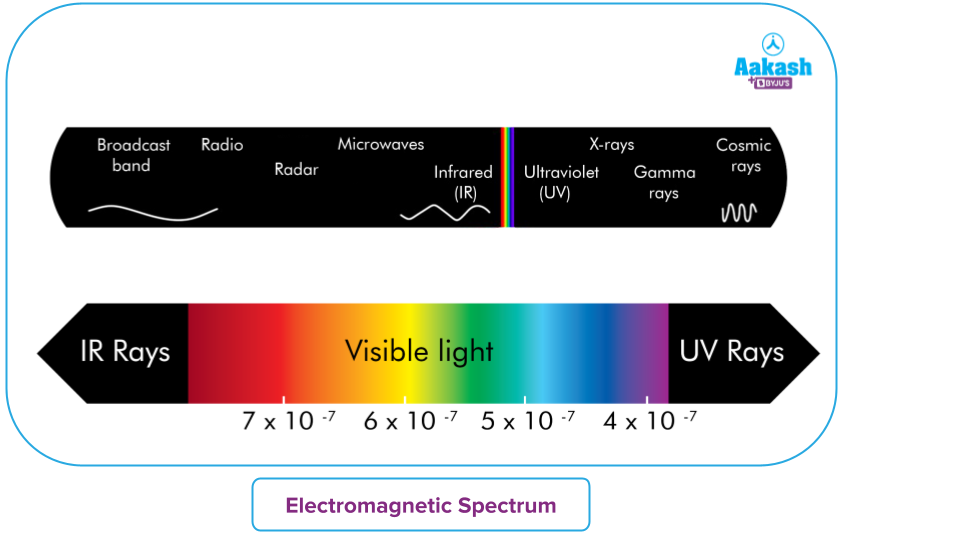
It is used to measure absorbance at different wavelengths. It is comparable to a calorimeter, with the exception that monochromatic light is produced using a prism or diffraction grating. It may work in the electromagnetic spectrum's UV (ultraviolet), visible spectrum, and IR (infrared) regions.
Spectrophotometers are utilised in almost every industrial and commercial industry, thus their potential applications are endless. However, liquids, plastics, paper, metals, and textiles are where it is most commonly used. This makes it easier to make sure that the colour choice holds true from the beginning to the end result.
Beer-Lambert’s Law
The Beer-Lambert law connects the absorbance of light to the characteristics of the medium it is passing through. This rule is used for the spectrophotometric analysis of a mixture of unknown samples.
Modern science uses the Beer-Lambert Law's derivation extensively used in contemporary laboratories for organic chemistry, drug testing, and quantification assays. This law forms the basis of Spectrophotometry.
Beer’s Law
According to this rule, the concentration of the solute in the solution is directly proportional to the amount of light absorbed.
Lambert’s Law
This rule states that the light absorption is inversely related to the length or thickness of the solution being studied.
Beer-Lambert’s Law
A monochromatic light is made to pass through a solution having incident intensity ‘I0’ and transmitted intensity ‘I’ (after passing out of the sample solution). Thus, the transmittance of the solution is given by the ratio of the two and has a value between 0 to 1
∴
The solution’s absorption is related to transmittance in the following way:
Or,
The concentration (c), molar absorption coefficient (ε), and optical path length of a solution (l) are all linearly correlated with absorbance according to the Beer-Lambert equation.
∴ A=εcl
A= Absorbance
ε= Molar absorption coefficient (M-1cm-1)
l= optical path length
The Beer-Lambert Law states that the amount of light absorbed is directly proportional to the concentration of the solute in the solution and absorbance of the solution under investigation.
The molar absorption coefficient, a sample-dependent characteristic, measures how effective the sample is as an absorber at a specific wavelength of light. The length of the cuvette used to measure absorbance is commonly 1 cm, and the concentration is simply the moles L-1 (M) of the sample dissolved in the solution.
It is to be noted here that cuvettes are tiny vials used for the analysis of samples using a spectrophotometer. They are usually composed of glass, quartz, or plastic. They provide a high degree of clarity, allowing the light to pass through the sample so that the spectrophotometer can read the sample accurately. They are UV-transparent, inexpensive and disposable.
Spectrophotometer – Principle
When an incoming beam of light of intensity I0 passes through a solution, some of the light is reflected (Ir), some of the light is absorbed (Ia), and the remaining light is transmitted (It)
Thus, I0= Ir+Ia+It
In colorimeters and spectrophotometers, Ir is ignored and measurements are sufficient to identify the Ia. Using cells with the same characteristics serves to maintain a steady quantity of light reflected (Ir), so it is not measured. Only (I0) and (It) are measured.
The two fundamental rules of photometry (Beer’s law and Lambert’s law) upon which the spectrophotometer is built may be used to demonstrate the mathematical link between the concentration of the material and the amount of light absorbed. Hence, comes the combined Beer-Lambert law.
Beer-Lambert's law, which says that the amount of light absorbed by a colour solution is directly proportional to the solution's concentration and the length of a light path through the solution, serves as the foundation for the Spectrophotometer's operation.
A ∝ cl
∴ A=εcl ,
The quantity of specific compounds that prevent light from passing through the solution is indicated by the amount of light that goes through it.
The interaction of light with molecules' electrical and vibrational states results in light absorption. Because each type of molecule has a unique set of energy levels related to the structure of its chemical bonds and nucleus, it will absorb light at a particular wavelength or energy, giving rise to distinctive spectrum characteristics.
Spectrophotometer – Instrumentation
A spectrophotometer is made up of seven necessary components.
Light source: Three distinct light sources are frequently used in spectrophotometers to provide light with various wavelengths. A tungsten lamp is the most typical light source used in visible spectrum spectrophotometers. The hydrogen and deuterium lamps are frequently used sources of ultraviolet light. The best sources of infrared (IR) radiation are Nernst filaments or globars.
Monochromator: The light from the light source is divided using a prism or diffraction grating in order to choose the specific wavelength. The monochromator is an optical device that converts multicoloured light, such as that from the sun or light from lamps, into monochromatic light with distinct bands. It could have a prism or grate. The chosen wavelength can be selected using a slit or wavelength selector. If the slit is fixed, the correct wavelength is obtained by rotating the prism or grating.
Absorption Cell/Sample Holder: The coloured solutions are kept in test tubes or cuvettes. During the visible region measurement, a glass or corex glass cuvette may be used. We need to utilise a quartz cell to measure in the UV range. Although cells with greater or smaller optical routes are also available, the standard optical path in spectrophotometry is 10 mm. Although cylindrical cells are also available, we typically employ rectangular cells.
Beam Splitter: Only a double beam spectrophotometer has a beam splitter. The single beam of light emanating from the light source is divided into two beams using this device.
Mirror: A double beam spectrophotometer requires a mirror. It is utilised to steer the split light into two parts, coming from the beam splitter in the proper direction. Thus one beam illuminates the reference standard and the other illuminates the sample.
Photodetector System: The detector system generates an electric current when light strikes it, which is reflected in the galvanometer reading. Photomultiplier tubes are incredibly sensitive light detectors used in spectrophotometry that can detect light in ultraviolet, visible, and near-infrared spectrums. It serves as the spectrophotometer's detector. The tube is coated with several types of materials.
Measuring Device: The galvanometer is the measuring instrument that receives the current from the detector. The metre reading and light intensity are exactly related.

Spectrophotometer – Working
- A spectrophotometer must first be calibrated before it can be used, and this is done by using standard solutions with the solute's known concentration in the test solution.
- For this, the cuvettes are filled with the standard solutions and set in the cuvette holder of the spectrophotometer.
- A beam of light with a certain wavelength that is designated for the assay is directed in the direction of the solution.
- The light beam travels through a sequence of mirrors, prisms, and diffraction gratings before arriving at the solution. The spectrophotometer uses these mirrors to guide light as it travels through the instrument.
- A prism separates the light beam into different wavelengths, and a diffraction grating allows the necessary wavelength to pass through it and reach a cuvette containing either the test or the standard solutions. The reflected light is examed by it and contrasts it with a known standard answer.
- One wavelength of monochromatic light enters the cuvette, where some of it is reflected, some of it is absorbed by the solution, and the remainder is transmitted through the solution and falls on the photodetector system.
- The galvanometer receives electrical impulses that are converted by the photodetector system into measurements of the transmitted light intensity.
- Galvanometers measure electrical impulses and present the results in digital format. The optical density or absorbance of the solution under analysis is the digital representation of the electrical impulses.
- More light will be absorbed by the solution if the absorption is higher, and more light will be transmitted through the solution if the absorption is lower.
- This influences the galvanometer reading and reflects the solute concentration in the solution. One may quickly find the solution's concentration by entering all the data into the formula in the section below.
Spectrophotometer – Types
There are majorly two types of spectrophotometers. Single beam and Double beam Spectrophotometer.
- Single-Beam Spectrometer: A single beam of light is used by single beam spectrophotometers to work in the wavelength range of 325 nm to 1000 nm. The test answer and blank are read in the same direction since the light only goes in one direction.
- Double-Beam Spectrophotometer: The wavelength range of a double beam spectrophotometer is 185 to 1000 nm. Two photocells are present. This device divides the monochromator's light output into two beams. Both the reference beam and the sample reading beam are employed. It gets rid of the mistake brought on by variations in light output and detector sensitivity.
The beam splitters that divide the monochromatic light into two beams, one for the test solution and one for the standard solution and the other for the test solution, are included in double beam spectrophotometers. This allows for the simultaneous measurement of the absorbance of the standard and the test solution as well as the comparison of any number of test solutions to a single standard. It produces more precise and accurate readings and gets rid of inaccuracies brought on by variations in light output and detector sensitivity.
Spectrophotometer – Applications
Numerous spectrophotometer and spectrophotometry techniques are employed in a variety of scientific disciplines, including chemistry, physics, and biology. Examples include simultaneous spectrophotometry, reflectance spectrophotometry, differential spectrophotometry, and spectrophotometric titration.
- The majority of spectrophotometers are utilised in the UV and visible spectrums, while some of these devices can also work in the near-infrared. Due to the presence of tryptophan, tyrosine, and phenylalanine, the quantity of a protein may be determined by measuring the absorbance or optical density (A) at 280 nm.
- Information on tissue haemoglobin concentrations and oxygenation status is available through reflectance spectroscopy. Based on haemoglobin absorption properties, reflectance spectroscopy should be able to identify neoplastic tissue since malignant tissue has the innate ability to stimulate angiogenesis.
- Differential spectrophotometry is used majorly in the analysis of solid, liquid and biotechnological forms of pharmaceuticals. Two approaches employ differential spectrophotometry.
High absorbency method: This technique is used to analyse highly concentrated solutions.
Low absorbency technique: For similarly diluted fluids, a low absorbency approach is used.
External alterations have little effect on concentration while using either strategy.
- Without separating the coloured solutions, the simultaneous spectrophotometric technique is applied to quantify the absorbance of a combination.
- Analysing chromium and manganese from a sample of steel without separating the elements is a typical example of the use of simultaneous spectrophotometric determination. Chromium produces K2Cr2O7 with an absorption maximum of 440 nm after oxidation, while manganese produces KMnO4 with an absorption maximum of 545 nm.
- In a similar manner, spectrophotometry analysis may separate palladium and platinum from a combination. With SnCl2 in HClO4, both metals combine to create complexes with absorbance maxima at 635 and 405 nm, respectively.
- By measuring the optical density or its absorbance, the spectrophotometer is frequently used to determine the concentration of coloured as well as colourless chemicals.
- The rate of creation and disappearance of the light-absorbing compound in the visible and UV regions of the electromagnetic spectrum may also be utilised to determine the reaction's progress by evaluating the absorption spectrum in the visible and UV regions
- In several biochemical investigations including the extraction of DNA, RNA, and proteins as well as enzyme kinetics and biochemical analysis, spectrophotometry is a crucial method.
Practice Problems
1. Find the percentage transmittance for a given solution whose optical density is 1.
- 100
- 10
- 1
- 1000
Answer: B
Solution: The absorption of the solution is related to transmittance in the following way.
A=- log10T
Given that, A = 1
So, 1=- log10T
⇒
⇒
∴ % T=10
So, option B is the correct answer.
2. Which instrument among the following is used to measure the amount of light absorbed by a sample?
- Polarimeter
- Potentiometer
- Ammeter
- Spectrophotometer
Answer: D
Solution: In spectrophotometry, a device called a spectrophotometer is used, combining two components; a spectrometer that generates light with a certain wavelength and a photometer that gauges the amount of light that is transmitted or absorbed. The spectrophotometer measures the light intensity absorbed by a sample by passing a light beam through it. It is used to measure absorbance at various wavelengths as a spectrophotometer.
Potentiometers measure potential difference and ammeters measure current. A polarimeter measures the angle of rotation of plane polarised light when it passes through an optically active substance.
So, option D is the correct answer.
3. What is the principle of the reflectance spectrophotometer?
Answer: Reflectance spectrometer is a quantitative spectrophotometric method that measures the concentration of the reaction product by measuring the light reflected from the surface of a colourimetric reaction. Spectrophotometers of this sort are used to gauge the reflectance of various materials. Reflectance measurements are very useful for establishing a benchmark against which to compare the colour of various samples.
4. What is the role of detectors in spectrophotometry?
Answer: The amount of ultraviolet or visible light absorbed by the sample molecules is measured using detectors.
For example, the main detector used nowadays in UV-VIS spectrophotometers is the photomultiplier tube. It has a cathode, an anode, and several dynos. When a photon enters a tube, it collides with the cathode and emits electrons. These electrons are subsequently accelerated in the direction of the second dynode, creating more electrons that are accelerated in the direction of the third dynode and so on. The anode is where the electrons are eventually gathered. Each initial photon has now generated many electrons. Amplification and measurement are done on the generated current.
Frequently Asked Questions – FAQ
1. What are the possible sources of error in a spectrophotometer?
Answer: The major possible sources of inaccuracy in practising spectrophotometry include contamination, temperature changes, vibrations, line voltage variations, ambient/environmental impacts on the photometer and sample, and heating of the sample by the photometer. There are methods and means to test and get rid of all these elements, which may affect the measurement outcome.
2. What does a spectrophotometric blank mean?
Answer: A sample that doesn't contain the significant analyte is referred to as a blank. It is a solution that has negligible absorbance. It is considered a comparative standard. For instance, the protein has to be dissolved in a solvent if you're using UV-VIS to assess the amounts of Green Fluorescent Protein. A sample of the solvent alone serves as the blank.
3. What distinguishes a spectrophotometer from a spectrometer?
Answer: The most important component of a spectrophotometer for calculating various items is a spectrometer. A spectrophotometer is a sophisticated instrument that consists of a light source, a method of gathering light that has interacted with the items being measured, and a measuring spectrometer. You may find out which wavelengths of light are absorbed and which wavelengths are reflected by using a spectrometer. A spectrophotometer calculates the relative amount of light at each wavelength that is absorbed or reflected.
4. What is ‘stray light’ in a spectrophotometer?
Answer: Any light that reaches the detector and is beyond the wavelength band chosen by the monochromator for analysis is referred to as stray light. It develops as a result of instrument malfunction, light scatter, or diffraction by samples or optical components. Without making a distinction between different wavelengths, a spectrophotometric detector responds to the overall amount of light energy that it receives. So it is technically removed through enhanced utilities.

 Call Now
 Let's Chat
 Share
Share