-
Call Now
1800-102-2727


Solubility of Sulphates and Nitrates of S Block Elements

In terms of luxurious skin care regimes and rituals, we hear a lot about self-pampering. Many of them insist on investing in high-quality skincare products such as exfoliants, moisturisers, and so on!
Do you know that the cosmetic industry makes extensive use of sulphate-based products? Because of its benefits, it is a key ingredient in many products, including facial cleansing gels, shower gels, personal hygiene products, liquid hand soaps, toothpaste, exfoliants, shampoos, and conditioners. They clean, foam, and are simple to rinse. They leave a fresh scent.
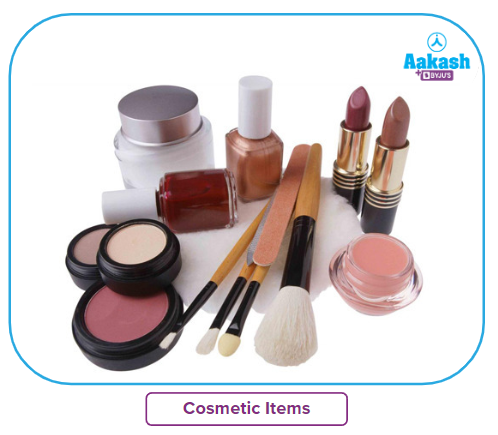
And the vast majority of them are relatively harmless. Such breakthroughs would not have been possible if scientists and researchers did not understand the solubilising properties of the main group sulphates (from s-block elements).
Nitrates are essential to our abundant agricultural yield because they produce rich nitrogenous fertilisers. They also make fantastic explosives!!
TABLE OF CONTENTS
- Hydration Enthalpy and Lattice Enthalpy in Alkali Metals
- Solubility of Sulphates of Group - 1
- Solubility of Nitrates of Group - 1
- Hydration Enthalpy in Alkaline Earth Metals
- Solubility of Sulphates of Group - 2
- Solubility of Nitrates of Group - 2
- Practice Problems
- Frequently Asked Questions - FAQ
Hydration Enthalpy and Lattice Enthalpy in Alkali Metals
It is important to understand hydration enthalpy and lattice enthalpy of an element before decoding its solubility order.
- Hydration enthalpy is defined as the amount of enthalpy released when one mole of gaseous ions dissolves in a large amount of water i.e. infinitely diluted.
- Hydration enthalpy is released after gaining stability because of the electrostatic attraction between water molecules and metal cations (ion-dipole interaction). The more the electrostatic attraction between the metal cation and the water molecules, the more the hydration enthalpy.
- Lattice enthalpy is defined as the enthalpy needed to break apart an ionic solid into its constituting ions in gaseous form. Basically, it is the measure of how strongly ionic the compound is. The stronger the ionic bond, the greater the lattice enthalpy.
- Lattice enthalpy depends on the sum of the radii of cation and anion. Lattice enthalpy is inversely proportional to the radius of both the cation and the anion.
- Lattice enthalpy is also directly proportional to the magnitude of the charge held by the constituent ions, i.e. the greater the charge, the stronger the force of attraction, and the stronger the lattice.
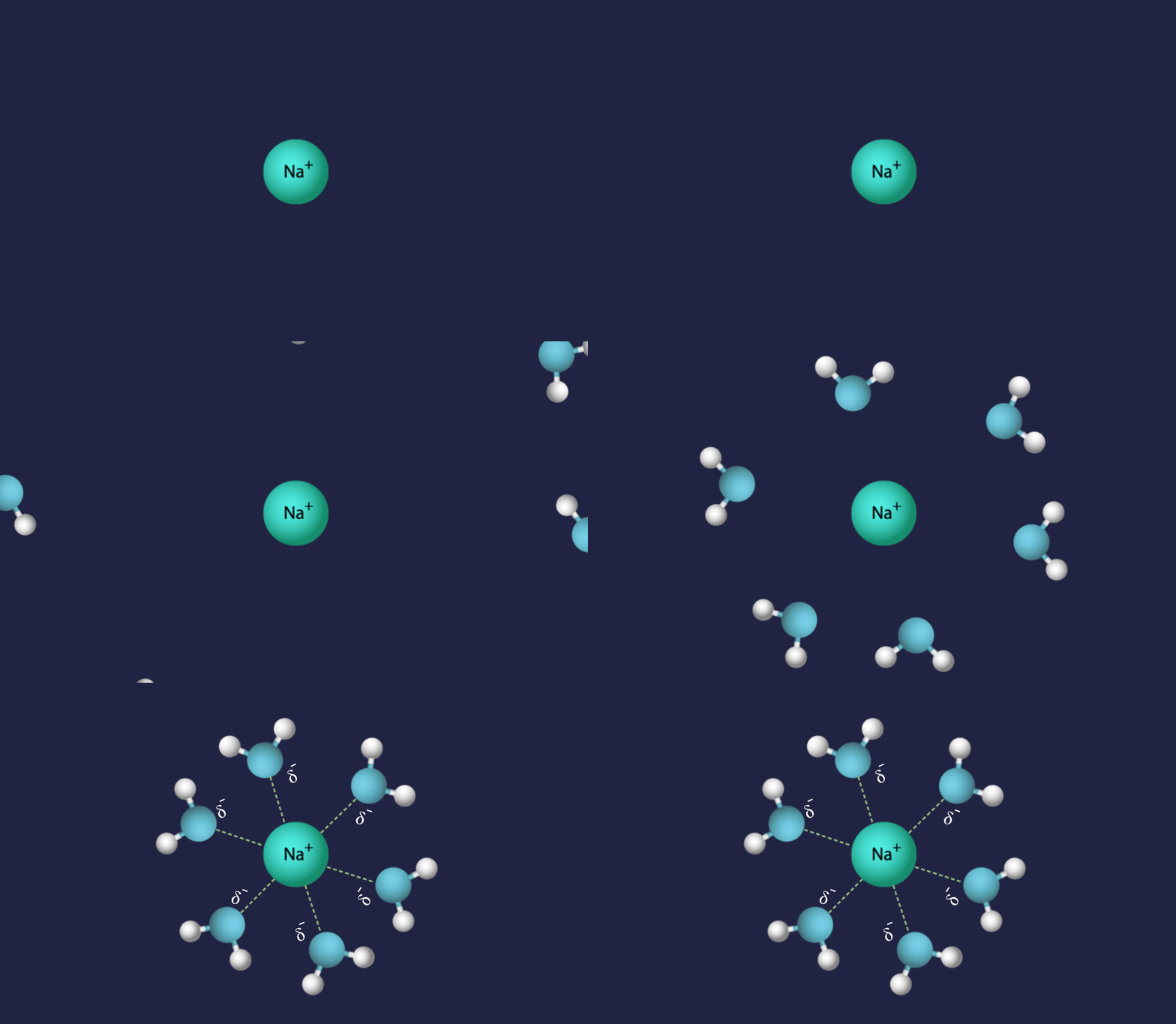
- The smaller the ion, the higher the charge density, the stronger the electrostatic attraction between water molecules and metal cations, and the higher the hydration enthalpy.
- Hence, on moving down the group, the hydration enthalpy of alkali metal ions decreases with the increase in ionic size as charge density decreases.
- Thus, the correct order of the hydration enthalpy of alkali metals is given as follows:
Li+ > Na+ > K+ > Rb+ > Cs+
- Hydration decrease with increasing size. So, Cs+ion is the least water-soluble alkali metal ion.
- Smaller ions have a higher charge density and can be hydrated by more water molecules. This releases a higher enthalpy of hydration and makes the hydrated ions more stable.
The overall solubility of a particular salt of an oxoacid (like sulphates, nitrates or carbonates) depends on the overall effect of these two competing factors i.e., hydration enthalpy and lattice enthalpy.
Solubility of Sulphates of Group - 1
As we move down the group of alkali metals, we will observe that the solubility of alkali metal sulphates increases. This is due to a more rapid decrease in the lattice enthalpies when compared to the hydration enthalpies.
Sulphate (SO42-) is a divalent, large anion, and as we go down the group, the ionic size of alkali metals also increases. So, the overall lattice strength weakens and the overall solubility increases.
Among the sulphates of the first group, Li2SO4 will be the most covalent and hence, has the least solubility. As we go down the group, the ionic nature increases and so does the solubility. The order of solubility of sulphates of alkali metals is:
Li2SO4 < Na2SO4 < K2SO4 <Rb2SO4 < Cs2SO4
Solubility of Nitrates of Group - 1
Nitrate (NO3-) is also highly polarised by the smallest sized Li+ and hence, it is the most covalent nitrate (LiNO3) and is the least soluble.
As we go down the group, the ionic radii increase, and hence the ionic character increases. Also, the overall decrease in lattice enthalpy is greater as compared to the hydration enthalpy. Hence, the solubility increases down the group.
The solubility order of nitrates is LiNO3 < NaNO3 < KNO3 < RbNO3 < CsNO3
Hydration Enthalpy in Alkaline Earth Metals
- The energy released when one mole is dissolved in water to get it hydrated is known as hydration enthalpy. Hydration enthalpy is directly related to ionic charge and is inversely related to the ionic radius (ionic size).
- For divalent alkaline earth metal ions (M2+), the smaller the ionic size, the greater the hydration enthalpy. The smaller the ions, the higher the charge density, which results in a stronger attraction with water, i.e., hydration enthalpies of alkaline earth metal ions decrease with the increase in ionic size.
- Thus, the correct order of hydration enthalpy is:
Be2+ > Mg2+ > Ca2+ > Sr2+ > Ba2+
- Due to the increase in hydrated radius, Be has the minimum mobility in an aqueous medium. The order of mobility is:
Be2+ < Mg2+ < Ca2+ < Sr2+ < Ba2+
- The compounds of alkaline earth metals are more extensively hydrated than those of alkali metals due to a higher charge density compared to alkali metals.
Solubility of Sulphates of Group - 2
The sulphates of alkaline earth metals are mostly white solids and stable to heat.
- The solubility of sulphates of group - 2 elements in water decreases down the group. Since the hydration enthalpies decrease to a greater extent (due to an increase in ionic size) down the group, so does solubility, as found for alkaline earth metal sulphates. BeSO4 and MgSO4 are readily soluble in water.
- The solubility decreases from CaSO4 to BaSO4. The order of solubility in water is:
BeSO4 > MgSO4 >> CaSO4 >> SrSO4 > BaSO4
- BeSO4 and MgSO4 are readily soluble. CaSO4 is moderately soluble, SrSO4 and BaSO4 are almost insoluble in water.
- MgSO4.7H2O is known as Epsom salt. It is used as a laxative.
- CaSO4.2H2O is known as gypsum.
Solubility of Nitrates of Group - 2
- Hydrated nitrates, such as Ca(NO3)2.4H2O can be obtained by treating the oxides, hydroxides, and carbonates with nitric acid and crystallising the salt from the resulting aqueous solution.
- Nitrates of alkaline earth metals are soluble in water. When you go from top to bottom in the group of alkaline earth metals, the solubility of nitrates decreases. This is due to the more rapid decrease in the hydration enthalpies as compared to the lattice enthalpies.
- The order of solubility of nitrates in water is:
Be(NO3)2 > Mg(NO3)2 > Ca(NO3)2 > Sr(NO3)2 > Ba(NO3)2
Practice Problems
Q1. Which is the least soluble sulphate among the following?
- Li2SO4
- Na2SO4
- Rb2SO4
- K2SO4
Answer: Due to the smallest size and high polarising power of an Li+ ion, Li2SO4, will be the most covalent and hence has the least solubility.
So, option A) is the correct answer.
Q2. Which of the following anhydrous sulphates in their dehydrated form is used in the production of cement?
- K2SO4
- BeSO4
- CaSO4
- MgSO4
Answer: CaSO4.2H2O also known as gypsum or calcium sulphate dihydrate is an important ingredient in making cement.
Tricalcium aluminate (Ca3Al2O6), a component of portland cement, combines with water very rapidly forming the hydrated Ca3Al2O6.6H2O. After the initial setting, the paste becomes soft and the added gypsum retards the dissolution of tricalcium aluminate by forming insoluble calcium sulphoaluminate 3 CaO.Al2O3.xCaSO47H2O.
This reaction prevents the high concentration of alumina in the cement solution and hence slows down the early initial setting of cement. This increases the overall strength of concrete formed.
So, option C) is the correct answer.
Q3. Predict the order of solubility of the group - 1 nitrates.
Answer: As we go down the group, the ionic radii increase, and hence the ionic character increases.
Also, the overall decrease in lattice enthalpy is greater as compared to the hydration enthalpy. Hence, the solubility increases down the group.
The solubility order of group - 1 nitrates is LiNO3 < NaNO3 < KNO3 <RbNO3 < CsNO3
Q4. Which among the following has the highest solubility of sulphates of alkaline earth metals?
- BeSO4
- MgSO4
- CaSO4
- BaSO4
Answer: The solubility of sulphates in water decreases down the group. Since the hydration enthalpies decrease to a greater extent (due to an increase in ionic size) down the group, so does the solubility, as found for alkaline earth metal sulphates. So, BeSO4 is the most soluble of all.
So, option A) is the correct answer.
Frequently Asked Questions - FAQ
Question 1. How are sulphates of alkali metals obtained?
Answer: Sulphates of alkali metals are actually salts of oxoacid - sulphuric acid. Hence, it can be obtained by either a direct combination of the metal with the acid or by the acid-base reaction.
Na + H2SO4 --> Na2SO4 + H2
NaOH + H2SO4 --> Na2SO4 + H2O
Question 2. Why does the solubility of nitrates decrease down the group?
Answer: Nitrates of alkaline earth metals are soluble in water. When you go from top to bottom in the group of alkaline earth metals, the solubility of nitrates decreases. This is due to the more rapid decrease in the hydration energies as compared to the lattice energies. The order of solubility of nitrates in water is
Be(NO3)2 > Mg(NO3)2 > Ca(NO3)2 > Sr(NO3)2 > Ba(NO3)2
Question 3. Which are more soluble? Sulphates of alkali metals or sulphates of alkaline earth metals?
Answer: The solubility of sulphates and also of carbonates of alkaline earth metals is lower than that of alkali metal carbonates and sulphates. This is because of the fact that, owing to the greater polarising power of small-sized group 2 ions, the alkaline earth metal sulphates are more covalent than those of alkali metals.
Question 4. How is the solubility of a compound expressed?
Answer: Solubility is expressed in terms of g L-1 or g mL-1 or molarity, M. It is expressed in grams of solute per 100 grams of solution or grams of solute per litre of solution, and also in moles of solute per litre of solution. This ratio is called "molarity."
Related Topics
|
Sodium Chloride |
Alkali Metals |
|
Sodium Hydroxide |
Sodium Carbonate |
|
Thermal Stability |
Calcium Carbonate |

 Call Now
 Let's Chat
 Share
Share