-
Call Now
1800-102-2727


Crystalline vs Amorphous: Definition of Solid, Classification of Solids, Difference Between Crystalline and Amorphous Solids, Practice Problems and FAQs

Do you like ice cream?
What is your favourite ice cream flavour?


Mine is vanilla ice cream. Imagine you went to ice cream parlour to have one vanilla ice cream and one fruit and nut ice cream.
What is the major difference that you observed between these two flavours?
Well, I know you will come up with lot of answers. Did you notice that in every scoop of vanilla ice cream you felt the same taste but in fruit and nut sometimes the flavour was of cashew while sometimes it was of roasted almonds. The vanilla flavour was evenly distributed throughout the ice cream. Hence, you were getting the same taste in every scoop.
This is called as long-range phenomenon..
Solids are classified into two categories that are crystalline and amorphous.
Which one will have long-range order?
Well, if you answered it, then let’s understand it in a proper way with a precise comparison between crystalline and amorphous solids.
Table of content
- Definition of solid
- Classification of Solids
- Crystalline & Amorphous Solids
- Practice Problems
- Frequently Asked Questions - FAQ
Definition of solid
A solid is defined as that form of matter which possesses rigidity and hence possesses a definite shape and a definite volume.
The three states of matter that is solid, liquid and gas have different arrangements of particles. But we know that these states of matter are interconvertible.
Let’s understand what are the factors which decide whether a compound will exist as solid, liquid or gas?
Classification of Solids
Based on the nature of order present in the arrangement of their constituent particles, solids are classified into two categories:

Crystalline & Amorphous Solids
|
Properties |
Crystalline Solids |
Amorphous Solids |
|
Definition |
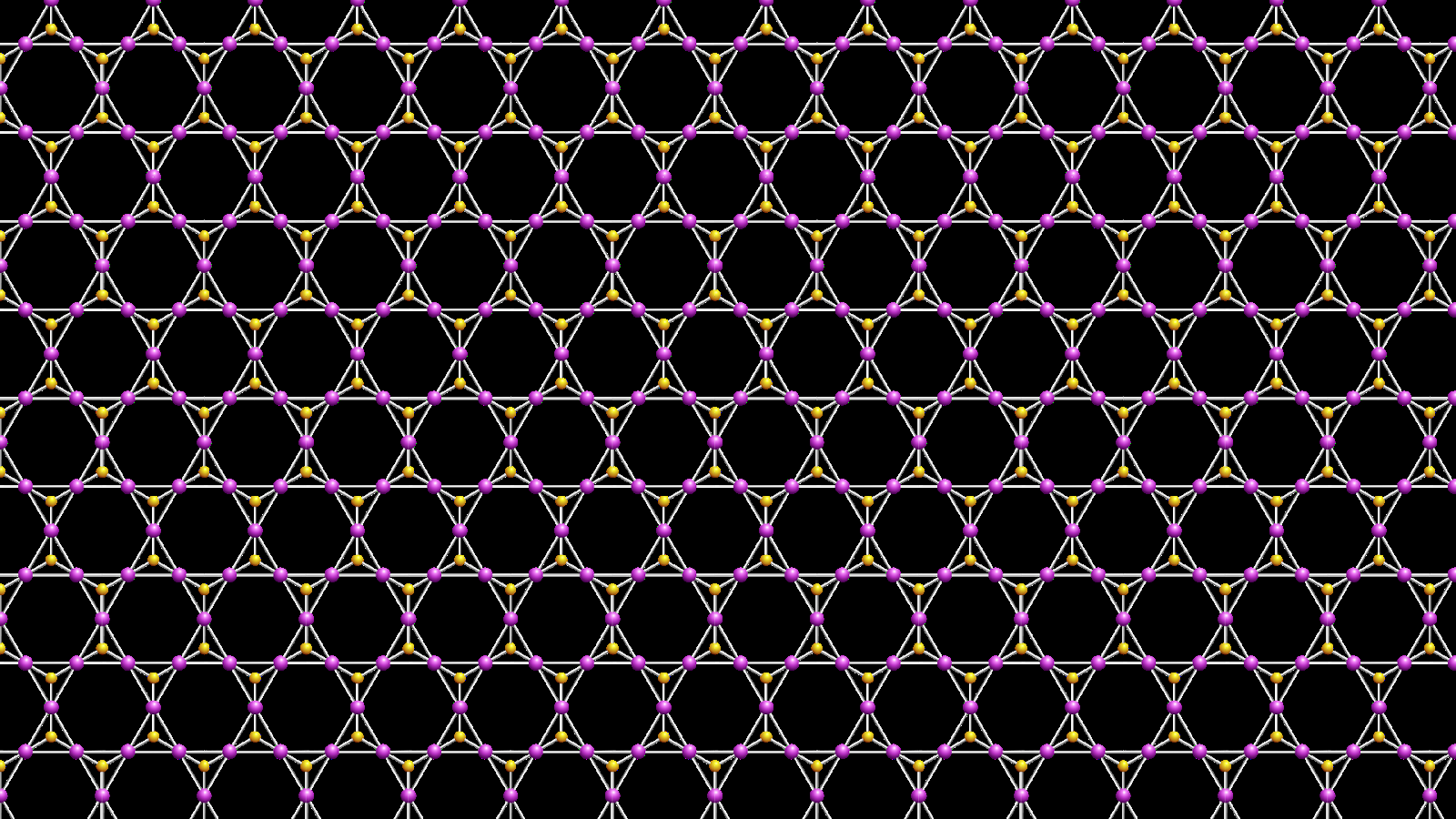
A crystalline solid is a substance whose constituent particles are arranged in an orderly fashion which repeats itself over very long distances.
|
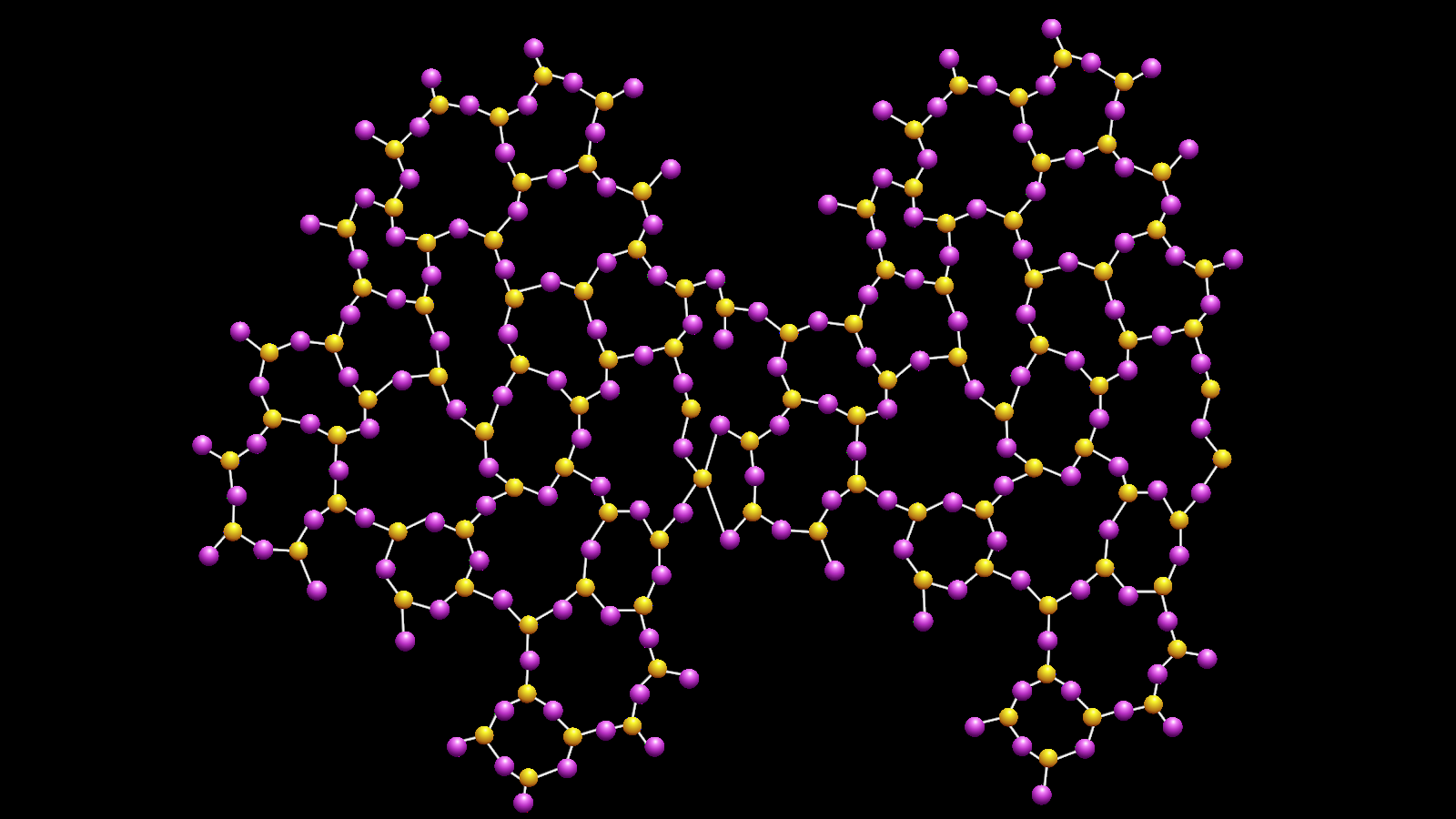
The solids in which the constituent particles are not arranged in an orderly fashion are called amorphous solids.
|
|
Types of solid |
True solids |
Pseudo solids or supercooled liquids |
|
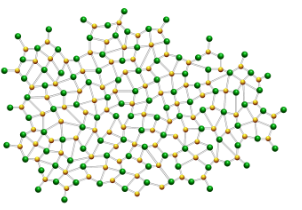
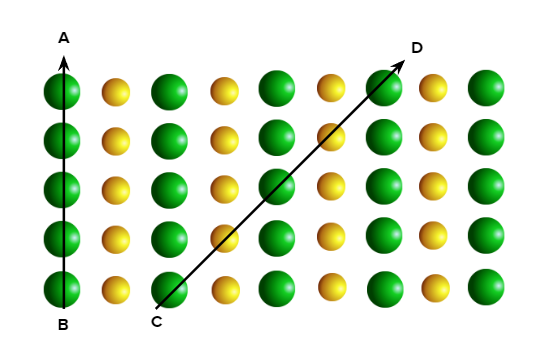
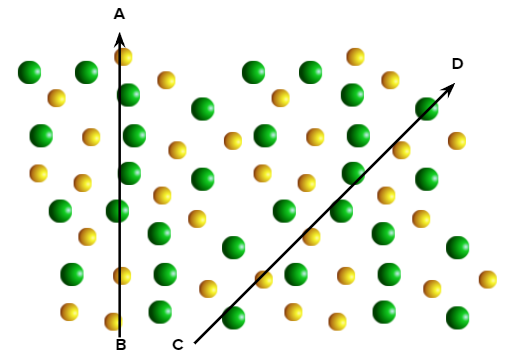
Arrangement of particles |
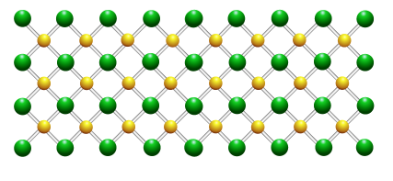
Long-range order The constituent particles are arranged in a definite geometric pattern in all three dimensions. The order is so regular that knowing the arrangement at any one site, the arrangement at any other site can be predicted. This is called long-range order
|
Short-range order Here, the constituent particles are arranged in a regular pattern in a small region. It is not possible to predict the structure by looking at the arrangement of one site. This is called short-range order.
|
|
Melting point |
They possess a sharp and definite melting point. |
They do not have sharp melting points. Amorphous solids melt gradually over a temperature range. |
|
Heat of fusion |
They possess a definite heat of fusion. |
They do not have definite heat of fusion. |
|
Physical properties |
Anisotropic: In crystalline solids, properties like electrical conductivity, thermal expansion and refractive index are non-identical in all directions.
|
Isotropic: In amorphous solids properties like electrical conductivity, thermal expansion and refractive index are identical in all directions being average.
|
|
Cutting with a knife |
When cutting is done with a sharp edge, the two new halves which are formed will have smooth and characteristic surfaces. |
When cutting is done with a sharp edge, we will get irregular surfaces on the two resulting halves. |
|
Compressibility |
Applying mild force will not change the shape of crystalline solids as they are rigid. |
Applying mild force will change the shape of amorphous solids as they are not rigid. |
|
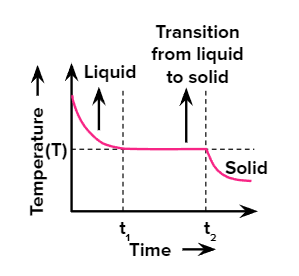
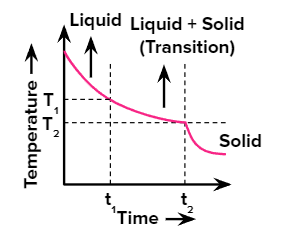
Cooling curves |
The cooling curve of crystalline solid is not smooth. There is a break at the point
|
The cooling curve of amorphous solid is smooth without any break.
|
|
Examples |
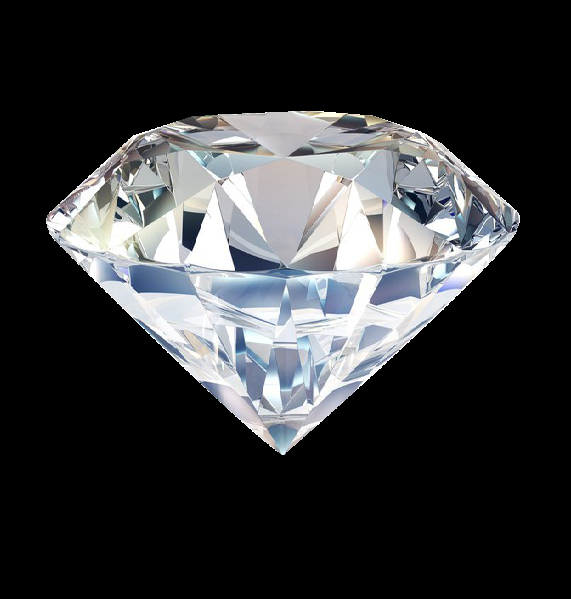
Quartz, CaF2, alum, SiO2, calcite, sugar, mica, diamonds, snowflakes, rock, etc.
|
Plastics, glass, rubber, metallic glass, polymers, gel, fused silica, pitch tar, thin-film lubricants, etc. 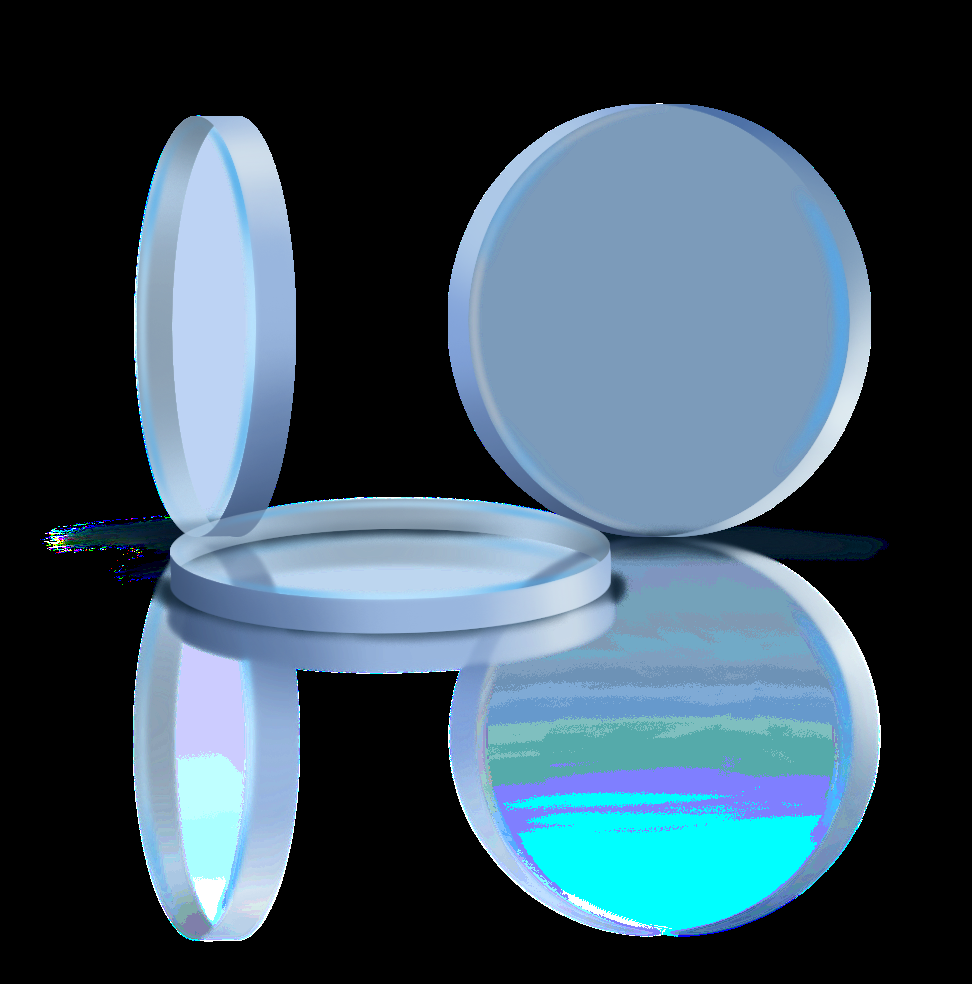
|

Practice Problems
Q1. Which of the following is not a property of solid
- Least inter particle force of attraction.
- High melting point
- High boiling point
- None of the above.
Answer: (A)
Solution: The force of attraction and repulsion between the constituent particles of solid state are very high as compared to liquid state and gaseous state. This force of attraction keeps the particles closer to each other.
Q2. Which of the following is not an example of crystalline solid?
- SiO2
- CaF2
- Quartz
- Plastic
Answer: (D)
Solution: Quartz, CaF2, alum, SiO2, calcite, sugar, mica, diamonds, snowflakes, rock, etc.are the examples of crystalline solids. Plastic is an example of amorphous solid.
Q3. Why are optical fibres preferred over ordinary glass?
Answer:
- Optical fibres are obtained by drawing glass into fibres thinner than even human hair but still possess very high mechanical strength.
- The advantage of optical fibres is that, unlike ordinary glass like that of window panes which stops light in less than one metre, optical fibres light over kilometres without any noticeable decrease in intensity.
Q4. Which of the following is true about the value of refractive index of quartz glass?
- Same in all directions
- Different in different directions
- Cannot be measured
- Always zero
Answer: A)
Quartz is an amorphous solid. All the physical properties such as refractive index, thermal expansion and electrical conductivity have the same value in all directions. Hence, the value of refractive index of quartz glass is the same in all directions.
Frequently Asked Questions - FAQ
Q1. Is diamond a crystalline or amorphous solid?
Answer: Diamond is a natural crystal composed of pure carbon. The carbon atoms in diamond are arranged in a regular pattern and anisotropy property is observed, which makes the diamond a crystalline solid.
Q2. Why is glass considered a supercooled liquid?
Answer: When glass is made, the material is quickly cooled from its liquid state but does not solidify when the temperature falls below its melting point. At this point, the material is a supercooled liquid, a state between liquid and glass. Because glass is an amorphous solid and amorphous solids have a tendency to flow. As a result, it is assumed that the glass is a supercooled liquid.
Q3. Is coal a crystalline or amorphous solid?
Answer: Coal is an amorphous solid as there is no regular pattern of arrangement of carbon atoms. Other examples of amorphous solids are coke, plastic, rubber and fibreglass.
Q4. How to convert crystalline solids into amorphous solids?
Answer: Crystalline solids can be converted to amorphous solids by melting the crystalline solid and then cooling the melt at room temperature.
Q5. Why do solids have a definite volume?
Answer: The constituent particles of a solid have fixed positions. Which means they are not free to move. They only move in their mean positions. Hence, when the volume is measured at any instance it will show a definite value.
Q6. Why are solids incompressible?
Answer: The constituent particles of a solid are very closely packed. The inter-particle distances are so small that if we try to bring them closer, repulsion starts between their electron clouds. Hence, they are incompressible.
Related Topics
|
Dielectric properties of solids |
Voids |
|
Crystal Defects |
Types of Unit Cell & Crystal Lattice |
|
Crystalline solids |
Magnetic properties |

NEET Related Links
JEE MAIN Related Links
JEE Advanced Related Links
JEE Advanced Eligibility Criteria
JEE Advanced Chemistry Syllabus
JEE Advanced Registration Dates
CUET Related Links
Important Topics
Anemometer : Measurement of Wind Speed
Angular Acceleration Atomic Theory Audible and Inaudible Sound Average Speed and Average Velocity Average Velocity Avogadros Number Avogadros Hypothesis Azimuthal Quantum Number Balanced Force Bar Magnet Biconvex Lens Boyles Law Buoyancy Calorimeter Carnot Engine Celestial Bodies Centripetal And Centrifugal Force Concave and Convex Lenses Concave Convex Mirrors Contact and Non Contact Force Controlled Thermonuclear Fusion Convection Currents Convex Lens Convex Mirror Destructive Interference Difference Between Conduction Convection and Radiation Difference Between Electric Field and Magnetic Field Difference Between Heat And Temperature Difference Between Series And Parallel Circuits Differences Between Acceleration And Velocity Distance and Displacement Distance Time Graph Electrical Force : Electric Forces and Their Types Electromagnetic Waves : Definition, Equation and Properties of Electromagnetic Waves Electromagnetism Electron Spin Fluid Flow : Bernoullis Equation Derivation and Fluid Mechanics Fluid Friction : Types and Factors of Fluid Friction Frames of Reference : Inertial and Non- Inertial Frame of Reference Frequency and Wavelength Frictional Force Importance of Hydrosphere Instantaneous Speed and Velocity Introduction to Motion Kinetic and Potential Energy Difference Law Of Conservation of Energy Layers of the Earth Light Energy Light Sources List of physics scientists and Their inventionsLoudness of Sound
Magnetic Dipole Moment Magnetic Field Non - Contact Force Non - Renewable Energy Ohms Law Optics P Wave Physics Symbols Plane Mirrors Poissons Ratio Projectile Motion Properties of Water : Anomalous Expansion of Water Radius of Gyration Reflection of Light Reflection of Waves Relative Density Resonance Reverberation Rolling Friction Rotation and Revolution Screw Gauge Semiconductors and Insulators Sliding Friction Speed Time Graphs Static Friction Stefan Boltzmann Law Stress Tension Tension Force Thermometer: Clinical Laboratory Thermometer Types of Rocks Types of Waves Uniform Motion and Non Uniform Motion Unit of Voltage Uses of Convex Lens Uses Of Convex Mirror Uses of Electromagnet Uses of Optical Fibre Wave Wavelength of Light What is Scattering of Light Working of Electric Bell Conventional and Non-conventional Sources of Energy Buoyant Force Bulk Modulus of Elasticity Bernoulli’s Principle Angular Momentum Difference Between Speed And Velocity ForceUnit of Heat
Difference between Distance and Displacement Simple Microscope Derivation Of Equation Of Motion Thermometer: Clinical & Laboratory Thermometer Difference between Concave and Convex LensDerivation Of Lens Maker Formula
Unit Of Pressure Velocity Uses of Plane Mirror
Wave Theory of Light
Unit of Density Unit of Light Unit of Force Unit of Magnetic Field Unit of wavelength Unit of Viscosity Uses of Electroplating Young's Modulus
What is the Scattering of Light
Lenz Law Space Wave Propagation Schrodinger Wave Equation Relation between Fahrenheit and Celsius Refractive Index Potentiometer Working Pascal Law Oscillatory Motion Optical Instruments Newton's Laws of Motion - First Law Modulation and Demodulation Magnetic Flux Lens Formula and Magnification Kaleidoscope Faradays Law Epsilon Naught Value Energy Bands Electrostatics Electroscope AC Generator Unit of Current Lithosphere Bending Equation Derivation Difference Between Pound and Kilogram Semiconductor Devices OTEC - Ocean Thermal Energy Conversion Hall Effect Rectilinear Propagation of Light Difference Between Ammeter and Voltmeter Coefficient of Linear Expansion Ampere’s Law Cyclone and Thunderstorm Save The Environment From Pollution Particle Nature of Light Types of DC Motor Uses Of Transistor Derivation of Phase Rule Unit of Humidity

 Call Now
 Let's Chat
 Share
Share