-
Call Now
1800-102-2727


Amines - Amines, Their Structure, Classification, Basicity, Uses, Practice Problems and FAQs

There are countless fancy hair color options available nowadays, from deep burgundy to rich champagne. In fact, you don't need to second-guess yourself any longer before getting your hair coloured lavender, marine blue, or even pink.
After all, everyone around you is flaunting hip shades.
But hold on! Do you take the time to research the components of your hair color before buying it?
Several semi-permanent and permanent hair colors contain a substance known as paraphenylenediamine (PPD). So, amine serves as the primary component of hair dye.
Table of Contents:
- Amines
- Structure of Amine
- Classification of Amines
- IUPAC Nomenclature of Amines
- Basicity of Amines
- Daily Life uses of Amine
- Practice Problems
- Frequently Asked Questions
Amines:
An amine is often a functional group with a nitrogen atom that has a lone pair. Because nitrogen can form bonds with up to three hydrogen atoms, amines functionally mimic ammonia. Additionally, it has a variety of properties dependent on carbon connection.
In essence, they are produced by replacing one or more hydrogen atoms in ammonia with an alkyl or aryl group, giving them the names alkylamines and arylamines, respectively.
Structure of Amine:
With a lone pair and 5 valence electrons, nitrogen is trivalent in nature in amines. According to VSEPR (Valence Shell Electron Pair Repulsion) theory, the hybridisation of nitrogen in amines is sp3, The structure should be tetrahedral in nature which is the typical shape for most sp3 hybridized compounds but it is pyramidal in shape.
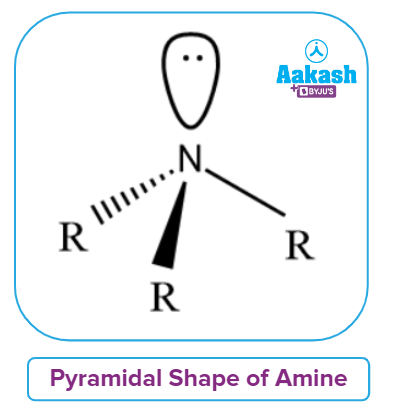
Each of the three sp3 hybridized nitrogen orbitals overlap with an orbital of carbon or hydrogen. The C-N-H angle in amines is less than 109o due to the existence of a lone pair, which is an optimal angle of tetrahedral geometry. Amines have an angle of roughly 107o. The reason behind this angle can be explained on the basis of steric hindrance created by bulky lone pair present in amine.
Classification of Amines:
Amines can be categorized into 5 different groups based on how an ammonia molecule replaces the hydrogen atoms.
- Primary Amine
- Secondary Amine
- Tertiary Amine
- Quaternary Amine
- Cyclic Amine
Primary Amine:
When one hydrogen of ammonia is replaced by an alkyl or aryl group, it is known as Primary Amine. Primary amine contains two hydrogen atoms directly bonded to Nitrogen.
Example: Aniline, Methylamine etc.
Secondary Amine:
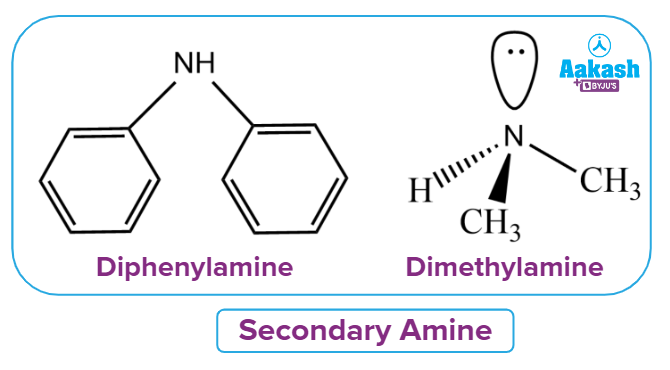
When two hydrogen atoms of ammonia are replaced by an alkyl or aryl group, it is known as Secondary Amine. Secondary amine contains one hydrogen atom directly bonded to Nitrogen.
Example: diphenylamine, dimethylamine etc.
Tertiary Amine:
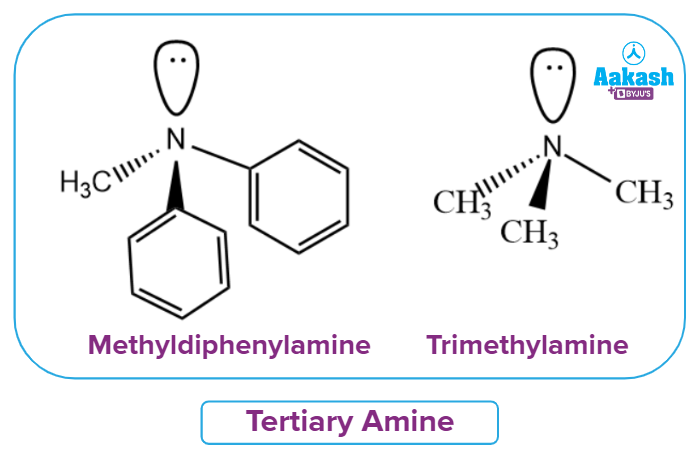
When all three hydrogen atoms of ammonia are replaced by an alkyl or aryl group, it is known as tertiary Amine. Tertiary amine contains no hydrogen atom directly bonded to Nitrogen.
Example: methyl diphenylamine, trimethylamine etc.
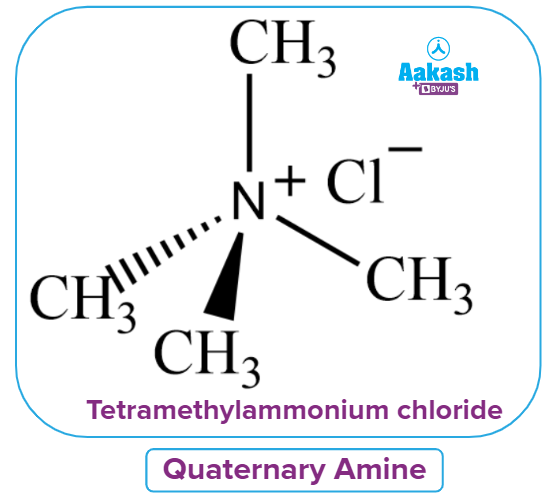
Quaternary Amine:
When all three hydrogen atoms of ammonia along with lone pair are replaced by an alkyl or aryl group, it is known as Quaternary Amine.
Example: Tetramethylammonium chloride etc.
Cyclic Amines:
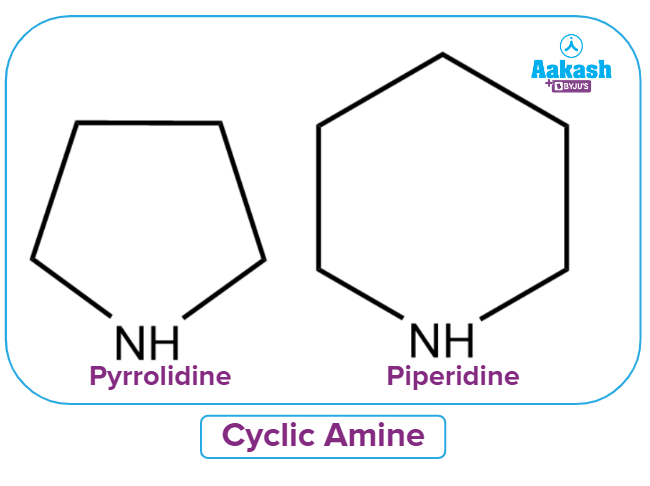
When the ammonia group is present in the cyclic structure, it is known as Cyclic Amine.
Example : Piperidine, Pyrrolidine etc.
IUPAC Nomenclature of Amines:
They are alkyl derivatives of ammonia. These are formed by replacing one, two or all three hydrogen atoms in ammonia with the alkyl group. They are also known as alkanamine. The name is derived by replacing e from an alkane with an addition of a suffix ‘amine’.
|
Amine |
IUPAC Name |
|
NH2CH3 |
Methanamine |
|
NH2CH2CH3 |
Ethanamine |
|
NH(CH3)2 |
N-methylmethanamine |
|
N(CH3)3 |
N, N-dimethylmethanamine |
Basicity of Amines:
Primary and secondary amines both exhibit some acidity because they share protic hydrogens with ammonia. In contrast, tertiary amines lack protic hydrogen and do not have any acidity.
The amine molecule in an aqueous solution is extremely alkaline.
The basicity of amine depends on three factors in general and they are as follows:
- Inductive Effect - More the alkyl groups, more is the inductive effect, more is the basicity of amine.
So, the order of basicity of amine is NH2R<NH(R)2<N(R)3
- Steric Hindrance - More the alkyl groups, the more is the steric hindrance of an alkyl group, less is the basicity of amine.
So, the order of basicity of amine is NH2R>NH(R)2>N(R)3
- Solubility - More the number of hydrogen atoms directly attached to nitrogen, more is the solubility of alkyl group, more is the basicity of amine.
So, the order of basicity of amine is N(R)3<NH(R)2<NH2R
The overall basicity of amine is when R group is methyl is: NH3<N(CH3)3<NH2CH3<NH(CH3)2
The overall basicity of amine is when R group is ethyl is: NH3<NH2CH2CH3<N(CH2CH3)3<NH(CH2CH3)2
Daily Life uses of Amine:
Amines are used often in daily life. Here are some examples of amine uses:
- It is employed in the production of drugs, the purification of drinking water, and the creation of herbicides and insecticides.
- It has a role in the synthesis of amino acids, which are essential for the development of proteins in living things.
- Amines can also be used to create a wide range of vitamins.
- It regulates the sensation of hunger and is essential for the brain's general processing speed.
- Amines are used to manufacture analgesics, which are medications that relieve pain. Morphine and Demerol are examples of analgesic medicines.
Related Video Link: Amines Class 12 Chemistry One-Shot (Full Chapter Revision) Concepts +JEE Questions | JEE Mains 2022
Practice Problems:
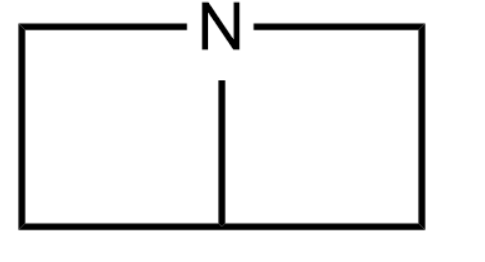
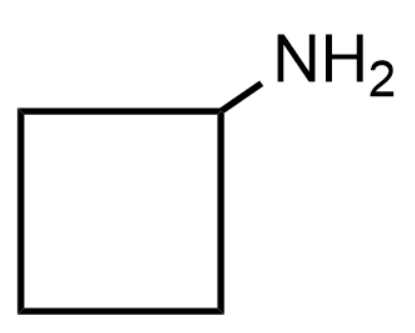
Q1. Which of the following given amine is secondary amine?

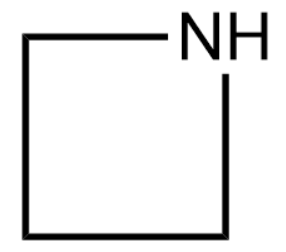
Answer : (D)
Solution: Secondary amine is formed when an alkyl or aryl group replaces two of the hydrogen atoms in ammonia. One hydrogen atom is directly linked to nitrogen in a secondary amine.
In option (A), there is no hydrogen attached directly to the nitrogen atom. Hence it is not a secondary amine. It is actually a tertiary amine.
In option (B), there are two hydrogens attached directly to the nitrogen atom. Hence it is also not a secondary amine. It is actually a primary amine.
In option (C), there is no hydrogen attached directly to the nitrogen atom. Hence it is not a secondary amine. The nitrogen is sp2 hybridized and hence can not be classified under primary, secondary and tertiary amine.
In option (D), there is one hydrogen attached directly to the nitrogen atom. Hence it is a secondary amine.
Hence, the correct answer is option (D).
Q2. Which of the following given amine is primary amine?
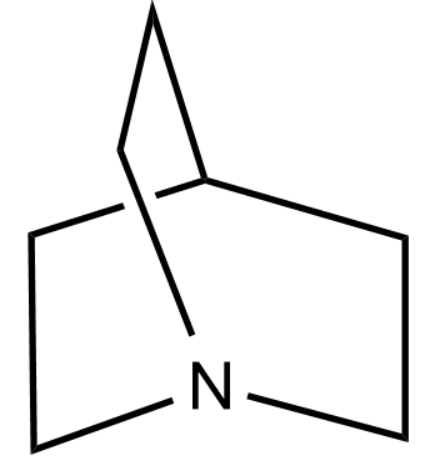
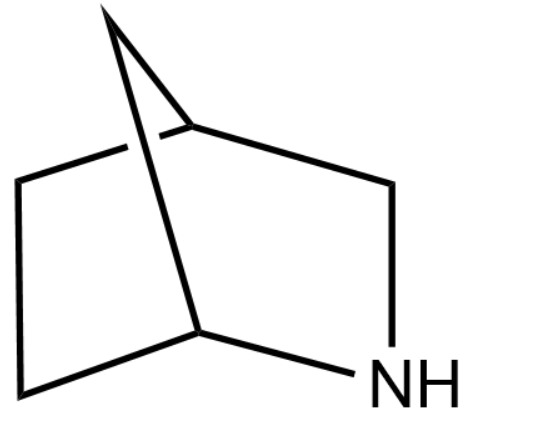
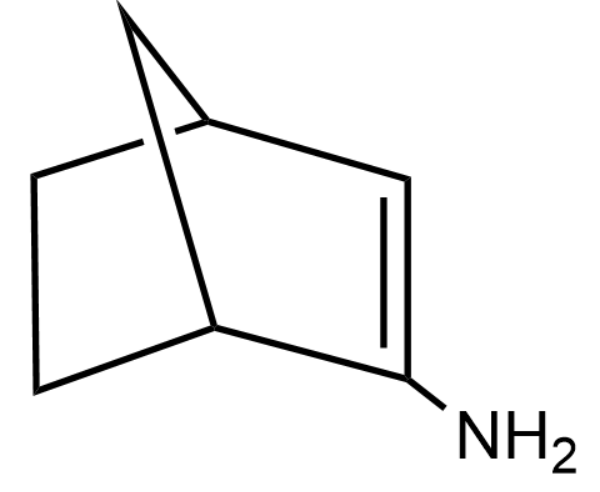
Answer : (D)
Solution: Primary amine is formed when an alkyl or aryl group replaces one of the hydrogen atoms in ammonia. Two hydrogen atoms are directly linked to nitrogen in a secondary amine.
In option (A) and (B), there is no hydrogen attached directly to the nitrogen atom. Hence these are not secondary amines. These are actually tertiary amines.
In option (C), there is one hydrogen attached directly to the nitrogen atom. Hence it is a secondary amine.
In option (D), there are two hydrogens attached directly to the nitrogen atom. Hence it is a primary amine.
Hence, the correct answer is option (D).
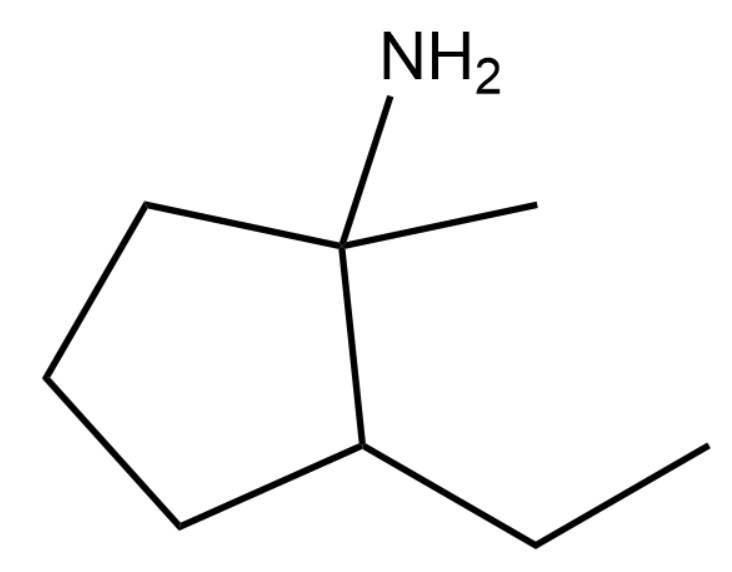
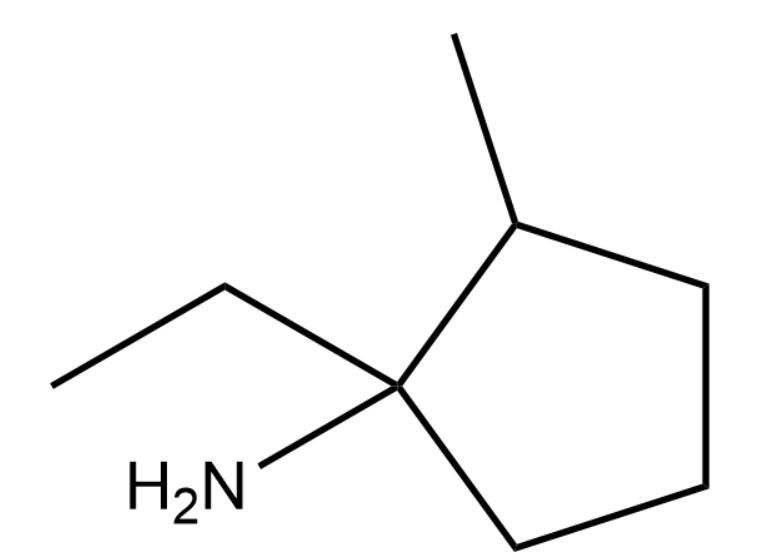
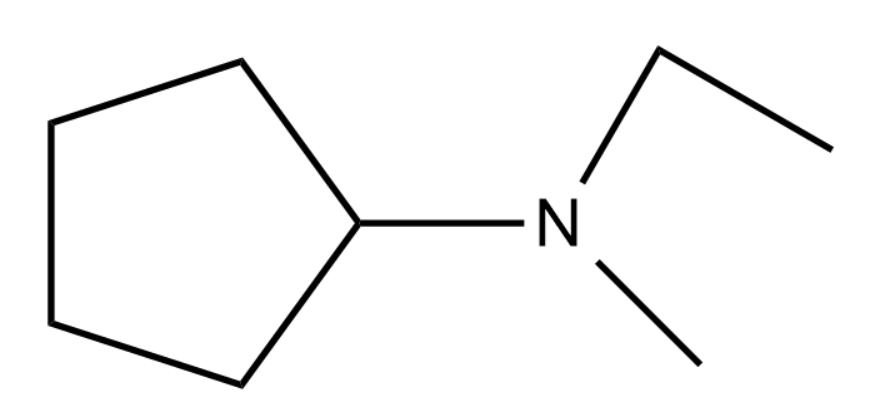
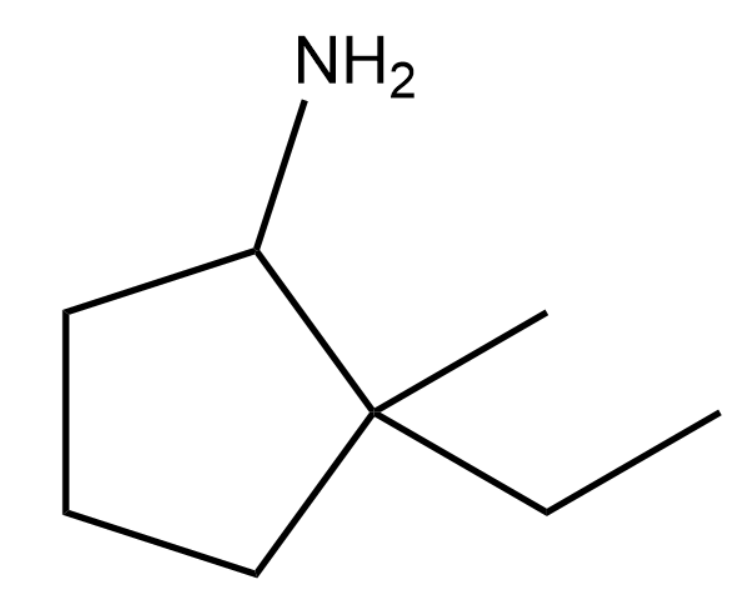
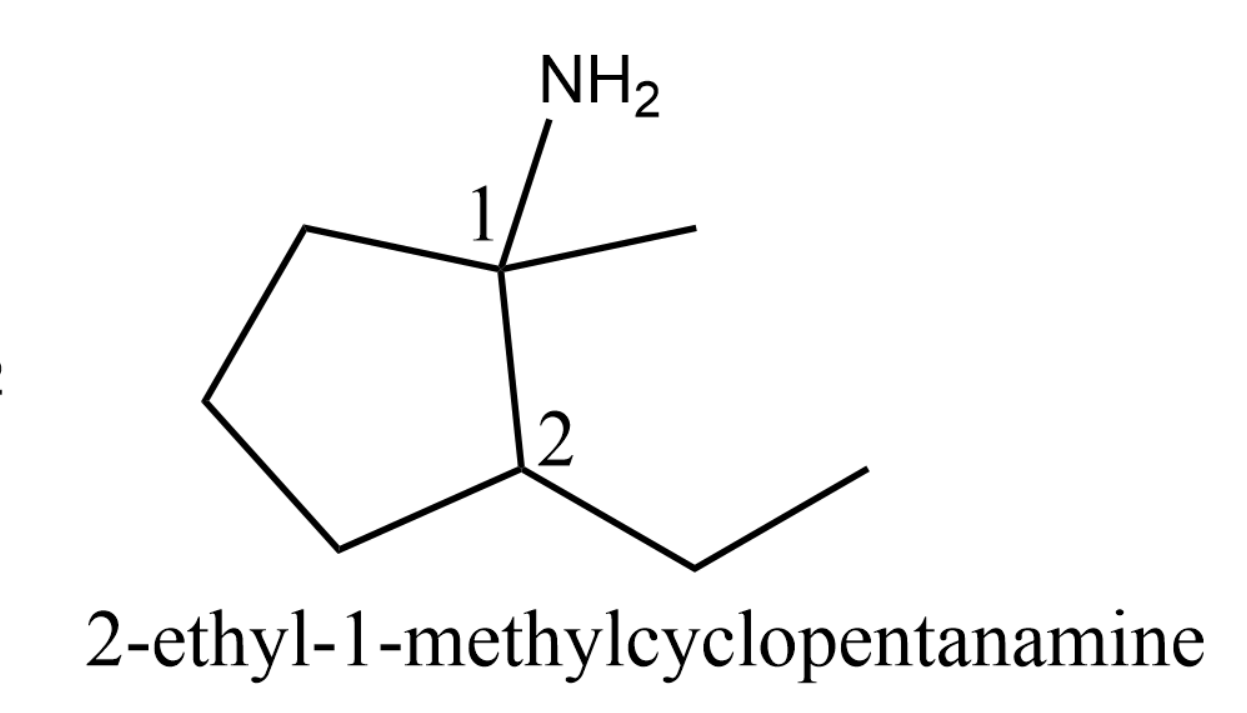
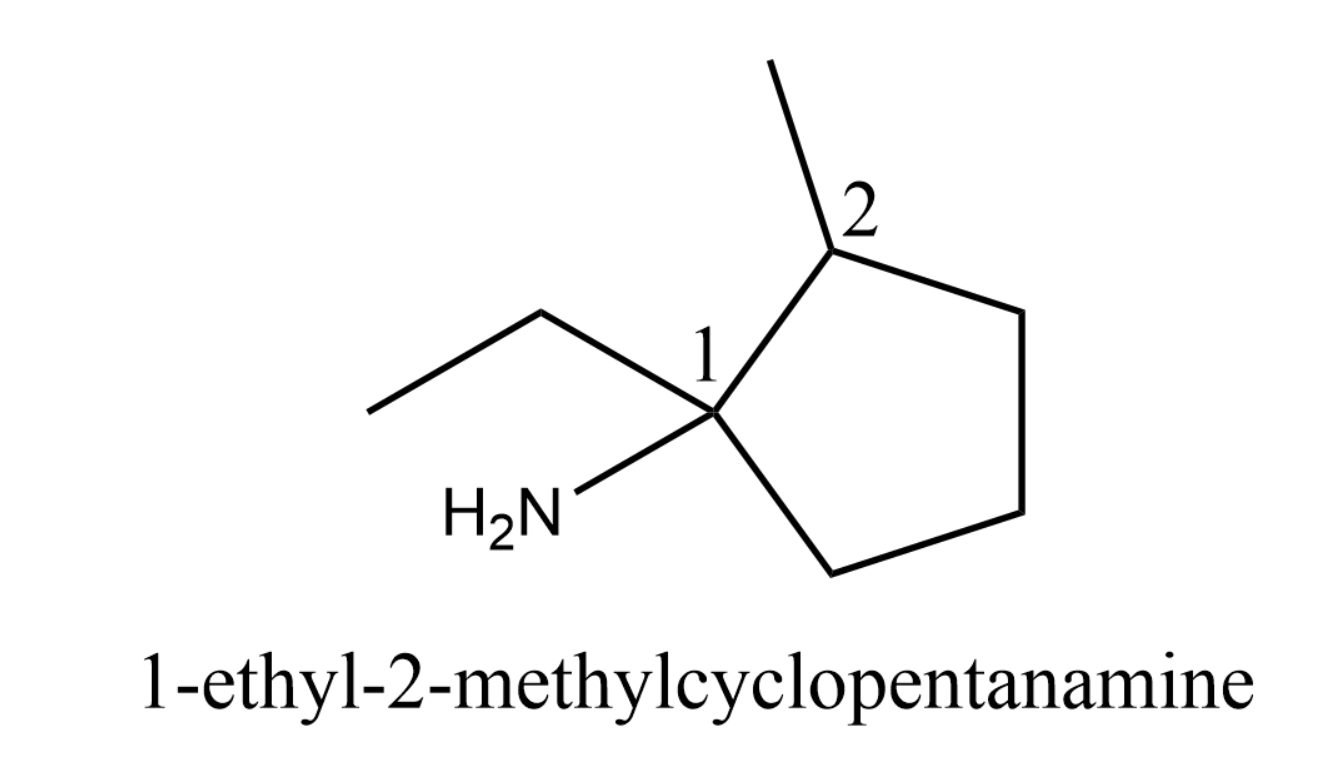
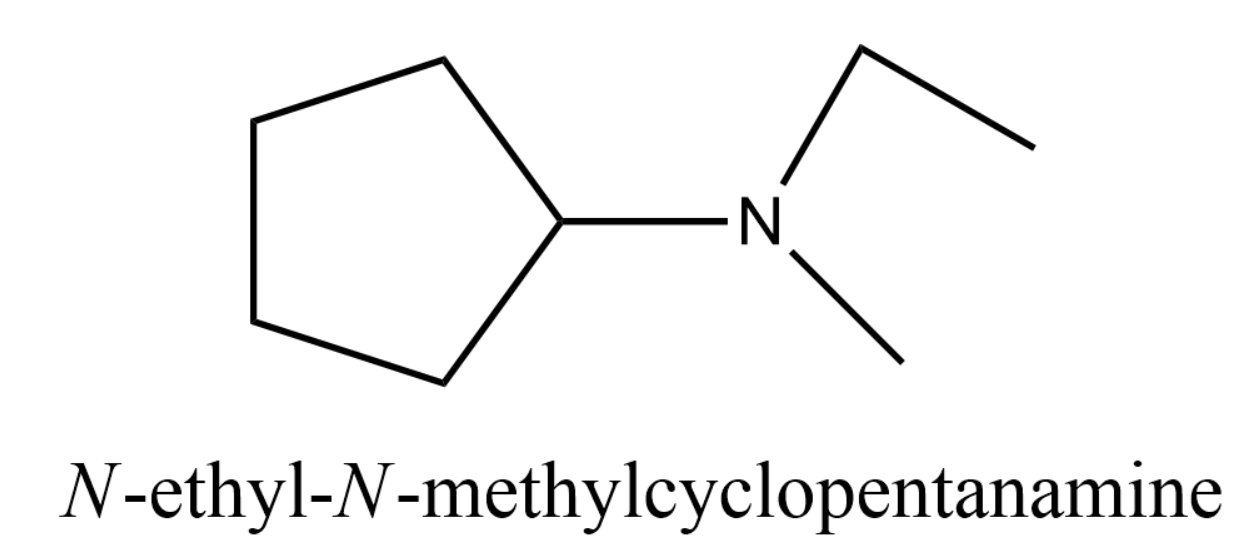
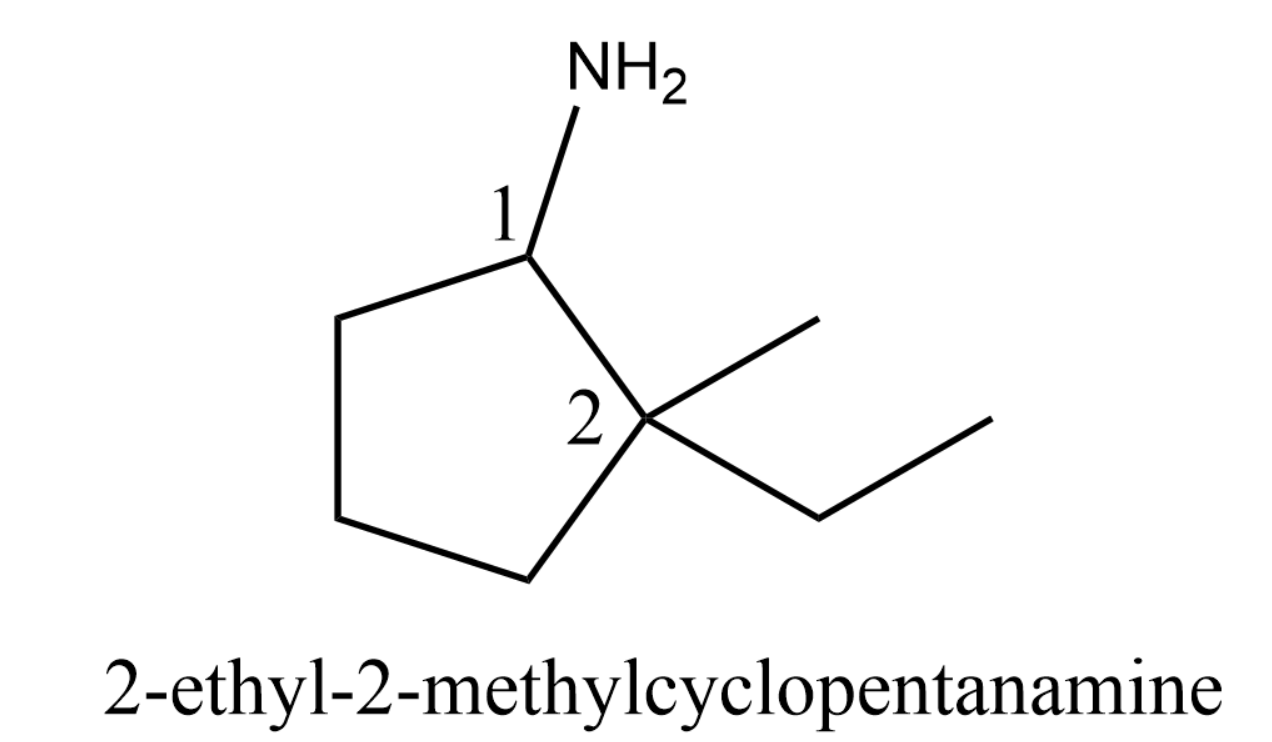
Q3. Which of the following compounds has IUPAC named N-ethyl-N-methylcyclopentanamine?
Answer : (C)
Solution: In option (A), The correct IUPAC name is 2-ethyl-1-methylcyclopentanamine as ethyl substituent is present at the 2nd position and methyl substituent is present at the Ist position.
In option (B), The correct IUPAC name is 1-ethyl-2-methylcyclopentanamine as ethyl substituent is present at the Ist position and methyl substituent is present at the 2nd position.
In option (C), The correct IUPAC name is N-ethyl-N-methylcyclopentanamine as ethyl substituent and methyl substituent are present at the Nitrogen.
In option (D), The correct IUPAC name is 2-ethyl-2-methylcyclopentanamine as both the substituents are present at the 2nd position.
Hence, the correct answer is option (C)
Q4. Which of the following is the incorrect order of basicity?
a.
b.
c.
d.
Answer : (D)
Solution: The basicity of amine depends on three factors in general and they are as follows:
- More the alkyl groups, more is the inductive effect, more is the basicity of amine.
- More the alkyl groups, the more is the steric hindrance of an alkyl group, less is the basicity of amine.
- More the number of hydrogen atoms directly attached to nitrogen, more is the solubility of alkyl group, more is the basicity of amine.
The overall basicity of amine is: (when R group is methyl)
The overall basicity of amine is: (when R group is ethyl)
Hence, option (A) and (B) are a correct representation of basicity order.
The basicity order NH3<NH2CH3<NH2CH2CH3 given in option (C) is also correct on the basis of the inductive effect that is more prominent over steric hindrance and solubility.
Hence, the incorrect order is in option (D) and is the correct answer for the given question.
Frequently Asked Questions-FAQs:
1. What distinguishes an amine from an amide?
Answer: Organic substances can be divided into amides and amines. The presence of a carbonyl group distinguishes amines from amides; amines lack carbonyl groups connected to the nitrogen atom and have the formula RNH2, whereas amides have a carbonyl group attached to a nitrogen atom and have the formula R-CO-NH2.
2. Are amines toxic?
Answer: The majority of the aliphatic amines included in food are typically used to make amino acids, which are the building blocks of proteins. Therefore, compounds are not particularly harmful by nature. However, some aromatic amines might be toxic by nature and can irritate the skin.
3. How does the body react to amines?
Answer: Amines are taken in many medicines but when ingested in high amounts along with nutrients, It is seen that the biogenic amines can result in respiratory problems, headaches, tachycardia, hypo- or hypertension, and allergic responses. Amines are vasoactive substances that can affect blood pressure in both humans and animals when consumed in large doses.
4. How can be distinguished primary, secondary and tertiary amines?
Answer: The Hinsberg test is a chemical procedure that is frequently used to identify primary, secondary, and tertiary amines. A Hinsberg reagent reacts with an amine when there is an aqueous alkali present.

NEET Related Links
JEE MAIN Related Links
JEE Advanced Related Links
JEE Advanced Eligibility Criteria
JEE Advanced Chemistry Syllabus
JEE Advanced Registration Dates
CUET Related Links
Important Topics
Anemometer : Measurement of Wind Speed
Angular Acceleration Atomic Theory Audible and Inaudible Sound Average Speed and Average Velocity Average Velocity Avogadros Number Avogadros Hypothesis Azimuthal Quantum Number Balanced Force Bar Magnet Biconvex Lens Boyles Law Buoyancy Calorimeter Carnot Engine Celestial Bodies Centripetal And Centrifugal Force Concave and Convex Lenses Concave Convex Mirrors Contact and Non Contact Force Controlled Thermonuclear Fusion Convection Currents Convex Lens Convex Mirror Destructive Interference Difference Between Conduction Convection and Radiation Difference Between Electric Field and Magnetic Field Difference Between Heat And Temperature Difference Between Series And Parallel Circuits Differences Between Acceleration And Velocity Distance and Displacement Distance Time Graph Electrical Force : Electric Forces and Their Types Electromagnetic Waves : Definition, Equation and Properties of Electromagnetic Waves Electromagnetism Electron Spin Fluid Flow : Bernoullis Equation Derivation and Fluid Mechanics Fluid Friction : Types and Factors of Fluid Friction Frames of Reference : Inertial and Non- Inertial Frame of Reference Frequency and Wavelength Frictional Force Importance of Hydrosphere Instantaneous Speed and Velocity Introduction to Motion Kinetic and Potential Energy Difference Law Of Conservation of Energy Layers of the Earth Light Energy Light Sources List of physics scientists and Their inventionsLoudness of Sound
Magnetic Dipole Moment Magnetic Field Non - Contact Force Non - Renewable Energy Ohms Law Optics P Wave Physics Symbols Plane Mirrors Poissons Ratio Projectile Motion Properties of Water : Anomalous Expansion of Water Radius of Gyration Reflection of Light Reflection of Waves Relative Density Resonance Reverberation Rolling Friction Rotation and Revolution Screw Gauge Semiconductors and Insulators Sliding Friction Speed Time Graphs Static Friction Stefan Boltzmann Law Stress Tension Tension Force Thermometer: Clinical Laboratory Thermometer Types of Rocks Types of Waves Uniform Motion and Non Uniform Motion Unit of Voltage Uses of Convex Lens Uses Of Convex Mirror Uses of Electromagnet Uses of Optical Fibre Wave Wavelength of Light What is Scattering of Light Working of Electric Bell Conventional and Non-conventional Sources of Energy Buoyant Force Bulk Modulus of Elasticity Bernoulli’s Principle Angular Momentum Difference Between Speed And Velocity ForceUnit of Heat
Difference between Distance and Displacement Simple Microscope Derivation Of Equation Of Motion Thermometer: Clinical & Laboratory Thermometer Difference between Concave and Convex LensDerivation Of Lens Maker Formula
Unit Of Pressure Velocity Uses of Plane Mirror
Wave Theory of Light
Unit of Density Unit of Light Unit of Force Unit of Magnetic Field Unit of wavelength Unit of Viscosity Uses of Electroplating Young's Modulus
What is the Scattering of Light
Lenz Law Space Wave Propagation Schrodinger Wave Equation Relation between Fahrenheit and Celsius Refractive Index Potentiometer Working Pascal Law Oscillatory Motion Optical Instruments Newton's Laws of Motion - First Law Modulation and Demodulation Magnetic Flux Lens Formula and Magnification Kaleidoscope Faradays Law Epsilon Naught Value Energy Bands Electrostatics Electroscope AC Generator Unit of Current Lithosphere Bending Equation Derivation Difference Between Pound and Kilogram Semiconductor Devices OTEC - Ocean Thermal Energy Conversion Hall Effect Rectilinear Propagation of Light Difference Between Ammeter and Voltmeter Coefficient of Linear Expansion Ampere’s Law Cyclone and Thunderstorm Save The Environment From Pollution Particle Nature of Light Types of DC Motor Uses Of Transistor Derivation of Phase Rule Unit of Humidity

 Call Now
 Let's Chat
 Share
Share